

Search results for 'st ar'


-
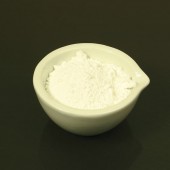
Alumina Hydrate Light
Starting at: £8.30
Alumina Hydrate is an inert pigment with highly absorbent properties, which can be ground into oil paint as an almost colourless extender. It is often used as an additive in commercial oil paints, particularly in conjunction with transparent or lake pigments, as it provides stability and a homogenous consistency without effecting colour or gloss, although it may effect the pigment strength. When combined with linseed oil, it produces an almost transparent painting medium for extending oil colours. Sometimes referred to as Lake Base. Learn More -
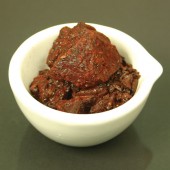
Dragon's Blood Pieces
Starting at: £25.40
Dragon's Blood is a natural, resin, mentioned by Pliny in his Natural History. It has a weak tinting strength, and its rich red colour can be fugitive in direct sunlight. It is fully soluble in alcohol, and can be used to add a warm, transparent tone to spirit varnishes. Also available in powdered form.
Learn More -
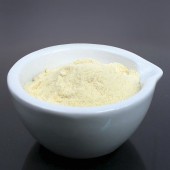
Powdered Rosin
Starting at: £13.90
Rosin is the powdered form of colophony, which is a by-product of the distillation of turpentine. Its primary application is to create tonal areas on metal plates as an aquatint resist. It is also an additive in etching grounds, where it gives a hard surface to the otherwise soft wax. Learn More -
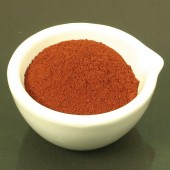
Dragon's Blood Powder
Starting at: £28.10
Dragon's Blood is a natural, resin, mentioned by Pliny in his Natural History. It has a weak tinting strength, and its rich red-colour can be fugitive in direct sunlight. It is fully soluble in alcohol, and can be used to add a warm, transparent tone to spirit varnishes. Also available in lump form.
Learn More -
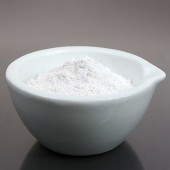
French Chalk
Starting at: £5.50
French Chalk is a term commonly used to describe talcum powder and is also known as talc. This grade is very fine magnesium silicate It is sometimes used as a filler in pastels, to make soft sticks that produce velvety marks as it has a soapy like consistency.
Learn More -
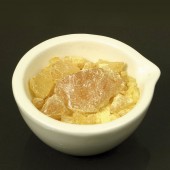
Colophony
Starting at: £7.30
Colophony is a by-product of the distillation of turpentine. It is soluble in most solvents, but considered an adulterant in varnishes and paints, as it forms a weak surface that is prone to darkening and cracking. It is, however, a key ingredient in wax-based etching grounds, imparting hardness, and can be used in powdered form (rosin) to make aquatints. Learn More -
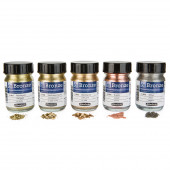
Schmincke Oil Bronze, 50 ml
Starting at: £25.10
For brilliant metal effects on oil paintings. Also suitable for wood, metal and gypsum surfaces. Use with Schmincke Bronze Medium (recipe below). Learn More -
![Roberson Glass muller, medium (7 cm) and small (5 cm) [without logo]](https://www.cornelissen.com/media/catalog/product/cache/1/small_image/170x/9df78eab33525d08d6e5fb8d27136e95/i/m/img-6584.jpg)
Roberson Glass Mullers
Starting at: £25.00
Roberson Glass Mullers are handmade using high quality-glass.
Mullers act as flat-bottomed pestles, which are used to grind pigment into a binding medium, suspending it evenly to create a uniform covering of binder around each pigment particle. Using a muller and slab, rather than simply mixing pigment and binder together, will create a more homogenised and stable paint.
Roberson Glass Mullers are handmade using superior boro silicate laboratory glass, which is 40% harder, more heat resistant, and offers better clarity than soda-lime glass. The base of each muller is ground perfectly flat, and sand-blasted to create a fine tooth to facilitate the grinding of pigments.Use in conjunction with a Cornelissen Glass Slab to make paint efficiently. The sand-blasted texture of the muller and plate helps to push and distribute the pigment throughout the binder quickly. This will mean less grinding, and more painting!
NOTE: Sizes may vary slightly as these are handmade products.
Learn More -
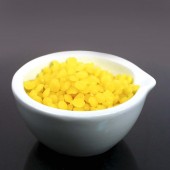
Natural Beeswax
Starting at: £11.20
Beeswax is derived from melted honeycomb, and is available in two grades. Bleached Beeswax Pellets are white, having been bleached by the sun, and are an appropriate choice for using with pale colours, although they may revert to yellow over time. Natural Beeswax Pellets are yellow in colour, and offer a more flexible structure with a higher resin content. Beeswax has a melting point of 63-66°c, and may turn brown if over-heated. It is the most widely used wax in artists' materials, having a wide range of applications. Please see below for more details.
Learn More -
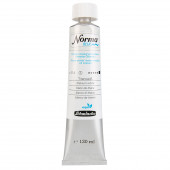
Schmincke Norma Blue, Titanium White S1,120ml
£21.60NORMA Blue can simply be painted and cleaned with water as they are water-mixable (water miscible). Highly pigmented and lightfast, with a buttery consistency. Vegan, low odour, anti-allergenic, environmentally friendly. Learn More -
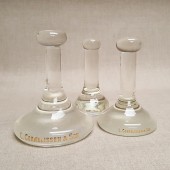
Cornelissen Glass Mullers
Starting at: £24.50
Cornelissen Glass Mullers are handmade using superior boro silicate laboratory glass, which is 40% harder, more heat resistant, and offers better clarity than soda-lime glass. The base of each muller is ground perfectly flat, and sand-blasted to create a fine tooth to facilitate the grinding of pigments. The tall handle features an ergonomic top, to ease fatigue when grinding large amounts of pigment. Mullers act as flat-bottomed pestles, which are used to grind pigment into a binding medium, suspending it evenly to create a uniform covering of binder around each pigment particle. Using a muller and slab, rather than simply mixing pigment and binder together, will create a more homogenised and stable paint. Use in conjunction with a Cornelissen Glass Slab to make paint efficiently. The sand-blasted texture of the muller and plate helps to push and distribute the pigment throughout the binder quickly. This will mean less grinding, and more painting! Learn More -
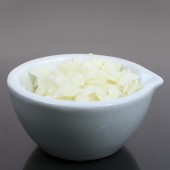
Bleached Beeswax
Starting at: £12.30
Beeswax is derived from melted honeycomb, and is available in two grades. Bleached Beeswax Pellets are white, having been bleached by the sun, and are an appropriate choice for using with pale colours, although they may revert to yellow over time. Natural Beeswax Pellets are yellow in colour, and offer a more flexible structure with a higher resin content. Beeswax has a melting point of 63-66°c, and may turn brown if over-heated. It is the most widely used wax in artists' materials, having a wide range of applications. Please see below for more details.
Learn More -
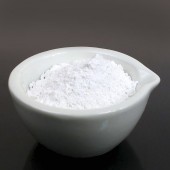
Gesso di Bologna
Starting at: £12.00
Gesso di Bologna is a bright white Calcium Sulphate, or gypsum, from Italy, which can be used as a substitute for whiting in the preparation of gesso. It is ground to a particularly fine powder, which makes it a suitable ground for gilding, as the small size of the particles allows for greater compression when burnishing. Learn More -
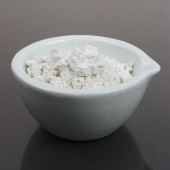
Whiting
Starting at: £4.00
Whiting is powdered Calcium Carbonate, which can be mixed with rabbit skin glue to create a chalk-based ground for oil, tempera, distemper or encaustic painting. Traditionally, whiting was an important ingredient when preparing painting surfaces in the north of Europe, as opposed to gypsum (Calcium Sulphate), which was widely used south of the Alps. Learn More -
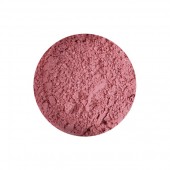
Rose Madder Genuine Pigment
Starting at: £15.80
NR9 Rose Madder is an alizarin lake pigment made by precipitating dye extracted from madder root onto an inert base. It has largely been replaced by synthetic alizarin pigments, but it is still used as an ingredient in some commercially-available paints. It provides a very transparent pigment, with a weak tinting strength, which can be used in all lime-free media, although it is very slow-drying in oil. It is fugitive to sunlight, so paintings containing Madder should be stored appropriately, but it remains one of the most lightfast plant-based pigments. It requires a wetting agent to aid dispersion. Larger quantities are available by request Learn More -
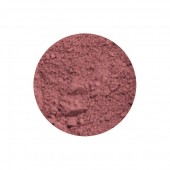
Madder Lake Genuine Pigment
Starting at: £10.20
NR9
Madder Lake pigment is derived from dye that has been extracted from the root of the madder plant, and attached to alum as a base. It has largely been replaced by synthetic alizarin pigments, but it is still used as an ingredient in some commercially-available paints. It provides a very transparent pigment, with a weak tinting strength, which can be used in all lime-free media, although it is very slow-drying in oil. It is fugitive to sunlight, so paintings containing Madder should be stored appropriately, but it remains one of the most lightfast plant-based pigments. It requires a wetting agent to aid dispersion.
Larger quantities are available by request
Learn More -
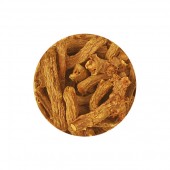
Madder Root Pieces
Starting at: £27.80
NR9
The madder plant was once widely cultivated for the red dye extracted from its roots. Its earliest known use is in ancient Egypt, and there is evidence of its widespread adoption in Europe from the medieval period. Madder Lake, the pigment that is derived from the root, has now largely been replaced by synthetic alizarin pigments, but it is still used as an ingredient in some commercial paints. It provides a very transparent pigment, with a weak tinting strength, which can be used in all lime-free media, although it is very slow-drying in oil. It is fugitive to sunlight, so paintings containing Madder should be stored appropriately, but it remains one of the most lightfast plant-based pigments.
Larger quantities are available by request.
Learn More -
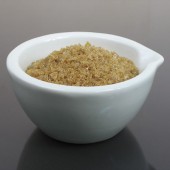
Rabbit Skin Glue
Starting at: £13.00
For sizing canvas prior to priming with an oil based primer. Do not use under acrylic primer. Soak overnight in water. Heat in double boiler (do not boil). Ratio water:size 13:1. Use while still warm. Rabbit Skin Glue does not contain preservatives. 340 - 360 Bloom Learn More
-
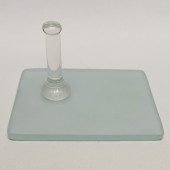
Cornelissen Mini Glass Muller and Slabs
Starting at: £28.00
Use Cornelissen Mini Glass Mullers in conjunction with a Cornelissen Glass Slab to make paint efficiently. The sand-blasted texture of the muller and plate helps to push and distribute the pigment throughout the binder quickly. This means less time grinding, more time painting! Learn More -
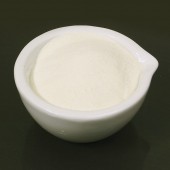
Casein Lactic
Starting at: £18.80
Casein is a protein derived from dried milk, which has been used in painting since ancient times. It can be combined with Ammonium Carbonate to form an emulsion, which acts as a durable, non-resoluble binder for pigments, producing a matte, fast-drying paint, similar in appearance to egg tempera. We use casein as a binder for our L. Cornelissen & Son Pigment Colour Charts, as it is a medium that clearly showcases the characteristics and behaviour of each pigment in its pure form. Casein paints can be applied in thin layers to watercolour paper, but would require a more rigid support, such as a gesso panel, to be applied thickly, as the comparative inflexibility of the paint layer means that it can be prone to cracking. Subsequent layers of paint should be more diluted to aid adhesion, and impasto effects are not recommended. It is possible to varnish casein paintings using an acrylic or damar varnish to obtain a glossy surface if desired, although this is not a necessary step. Casein can also be used as an ingredient in gesso, and is a suitable binder for fresco secco techniques.
Some pigments may require a wetting agent in order to fully disperse within the binder, in which case alcohol may be used.
Learn More -

Cornelissen Virtual Gift Voucher
£25.00The Cornelissen Virtual Gift Voucher will arrive with the recipient in the form of an email containing a virtual gift code. This code will be emailed immediately after the order is placed. Please see the range of values available below. Vouchers can be redeemed fully or partly and do not expire. Alternatively, please call us on 020 7636 1045 or email info@cornelissen.com to request one of the following:Physical Gift Voucher (a paper voucher with a code for use only in the shop, for any value).
Combination Gift Voucher (a paper voucher with separate codes for use online or in the shop, for the values listed on the website).
If you purchase a Physical or Combination Gift Voucher, this will be sent to you in the post. Learn More -

Painter's Handbook
£25.00By Mark David Gottsegen. A guide to artists’ materials as well as a thorough resource presenting techniques for using them and recipes for making them. (355 pages) Learn More -
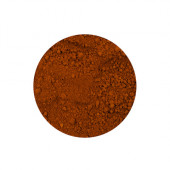
-
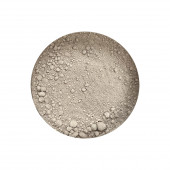
Buff Titanium Pigment
Starting at: £4.75
-
-
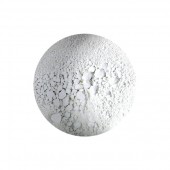
Titanium White Pigment
Starting at: £4.00
Titanium White, or Titanium Doixide, is an artificial mineral pigment introduced in the 1920s. It is valued for its opacity, good lightfastness, and stability in all media. Its high tinting strength can render it a dominant colour in mixtures. It is very slow drying in oil, and creates a somewhat brittle paint film, though more flexible than Zinc White. Its brightness makes it a popular addition to gesso.
Toxicity: B
Learn More -
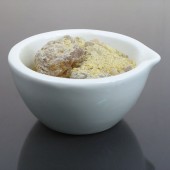
Gum Copal Manila
Starting at: £6.00
Gum Copal Manila is derived from the resin of a coniferous tree native to the Philippines. It is not to be confused with other copals, which are the product of fossilised plant materials. It can be dissolved in alcohol to make a spirit varnish, to be used as a substitute for shellac, or as a fixative for pastel and charcoal drawings. Please note, that when used as a fixative it may darken the colour of the image. Learn More -
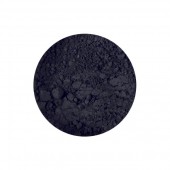
Ivory Black Pigment
Starting at: £4.50
Ivory Black is a natural pigment of impure carbon, derived from charred animal bones. It is semi-transparent, very lightfast, and offers good tinting strength. It is a particularly slow-drying pigment, which forms a soft, rather brittle paint film in oil.
Compared to other blacks, such as Vine Black, Ivory Black possesses warmer, brownish undertones. It should not be used at full-strength in an underpainting, as subsequent layers are likely to crack. Otherwise, it is a very useful all-purpose black for many types of paint, excluding mortar, fresco or cement.
Toxicity: B
Learn More -
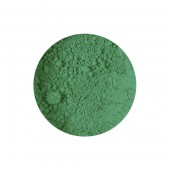
Viridian Green Pigment
Starting at: £6.50
Viridian Green is a synthetic inorganic pigment, similar in composition to Chromium Oxide. However, unlike Chromium Oxide, Viridian contains water molecules within its crystal structure, imparting a greater degree of transparency. Sometimes referred to as Verte Eméraude, Viridian was discovered in France in 1838, patented in 1859, and made available in the UK in 1862. It is stable in all media, and offers excellent lightfastness and good tinting strength. It requires a high oil content, and dries slowly to form a hard, fairly flexible paint film.
Toxicity B
Learn More -
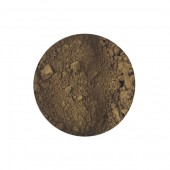
Burnt Umber Pigment
Starting at: £4.00
PBr7
Burnt Umber is a natural earth pigment from Italy, composed of iron oxide, manganese, and aluminium silicate. It is a form of Raw Umber that a has undergone a process of calcination, becoming warmer, more transparent and easier to disperse. It has a good tinting strength, and is very lightfast, quick-drying, and stable in all media. In oils it forms a hard, fairly flexible paint film, though it may be difficult to use in acrylic mediums.
Toxicity: B
Learn More
Currently Shopping by:
- Category: Pigments, Gums, Resins Remove This Item
Shopping Options
- Category
-
- Artists Quality Pigment Sets (2)
- Artists Quality Pigments Blacks (7)
- Artists Quality Pigments Blues (11)
- Artists Quality Pigments Earths (24)
- Artists Quality Pigments Greens (9)
- Artists Quality Pigments Reds (12)
- Artists Quality Pigments Violets (4)
- Artists Quality Pigments Whites (4)
- Artists Quality Pigments Yellows (14)
- The Early Colour Pigments (20)
- Equipment (7)
- Fillers, Chalks, and Abrasives (8)
- Gums and Resins (13)
- Limeproof Pigments (28)
- London Pigment (13)
- Pearl Lustre Pigments (3)
- Small Pigment Sizes (2)
- Storage Containers (3)
- Waxes, Adhesives and Sizes (14)
- Price
-
- £0.00 - £9.99 (106)
- £10.00 - £19.99 (31)
- £20.00 - £29.99 (23)
- £30.00 - £39.99 (9)
- £40.00 - £49.99 (3)
- £50.00 - £59.99 (2)
- £90.00 and above (1)
- Manufacturer
-
- Cornelissen (150)
- London Pigment (13)
- Roberson (1)
- Schmincke (7)
You have no items in your shopping basket.

- Search Brands
-