

Search results for 'before and after'
5 Item(s)
Grid List

-
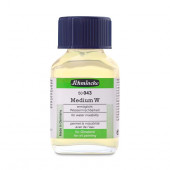
Schmincke Medium W
Starting at: £10.50
Schmincke Medium W is an odourless, jelly-like ("lean") medium for mixing oil colours with water instead of organic solvents such as turpentine or turpentine substitute. It increases gloss and transparency, reduces viscosity and harmonizes the drying process.
Dosage: 50%
Thinner: Water
Learn More -
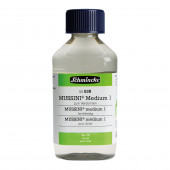
Schmincke Mussini Medium 1
Starting at: £9.45
Low-fat (lean) painting and thinning medium for oil colours. Recommended for thin grounds and for creating transparent layers over gouache, tempera and acrylic paintings. Thins with minimal affect on drying time and gloss. Dosage: 10% to max. 20% Contains: Safflower oil, natural and synthetic resins, mineral spirit. Learn More -
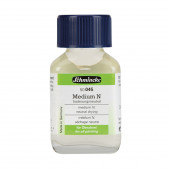
Schmincke Medium N
Starting at: £9.45
This product does not contain turpentine, and is therefore suitable for artists with allergies. A 'neutral', nearly non-yellowing painting and thinning medium for oil colours. Applicable for all painting techniques except for ground motifs on slightly absorbent undergrounds (not “lean” enough). Low impact on drying time. Thinner: Terpin (50023) (max. 30%). Dosage: 10 to max. 20%. Learn More -
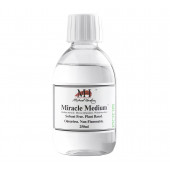
Michael Harding Miracle Medium
Starting at: £12.00
MM0 Miracle Medium is a solvent-free, odourless, vegan, and plant-based Medium that serves as an alternative to traditional turpentine. This medium offers artists a natural and sustainable option for thinning oil paints, cleaning brushes, and glazing (see our MM2 Quick Dry Dammar Varnish Miracle Medium) without the use of harsh chemicals or toxic fumes. CAN EXTEND DRYING TIME. ADD 5-10% TO OIL COLOUR AS NEEDED. Oil paint artists use MM0 Miracle Medium in several ways: Artists may dip their brush in MM0 Miracle Medium before applying it to the paint to achieve the desired consistency. Clean brushes: MM0 Miracle Medium can be used to clean oil paint brushes. After painting, artists may rinse their brushes in MM0 Miracle Medium to remove excess paint and then wash the brushes with soap and water – Use as a painting medium to mix with oil paints, enhancing flow and transparency – Clean brushes by dipping them in the medium and wiping them clean. – Dilute or thin oil paints without the use of traditional solvents. – CAN EXTEND DRYING TIME. ADD 5-10% TO OIL COLOUR AS NEEDED. – Available in 100ml, 250ml and 1 Litre. Learn More -
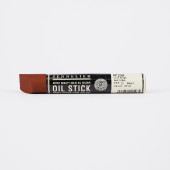
Sennelier Oil Sticks
Starting at: £7.65
Solid artists' quality oil paint sticks. (Ø = 3/4 ; length = 5" ) SENNELIER Extra-Fine Solid Oil Sticks can be used alone or in combination with oil colours in tubes. The oil stick colours can be used for an entire painting. They are applied directly to any traditional oil-painting support, such as canvas, wood panel or fine art paper. They need the same archival priming (acrylic gesso or oil ground) that oil paint requires. Surfaces: Before use, the surface film of the oil stick must be peeled off. It will form again after a few days of non-use, protecting and conserving the colour. The oil sticks must be applied in a thin film application of no more than 1mm thick. Once applied they can be painted over with oil stick or oil paint and if desired be diluted with turpentine. Oil stick Medium, a colourless oil stick, may be used to produce transparent effects and glazes. Once applied, the oil stick surface will dry in 2 to 5 days, depending on the atmospheric conditions Varnishing: If varnishing is desired, you must wait 6 months (as in traditional oil paint) until the colour is completely dry, before giving the painting a final coat of picture varnish. Use a soft brush to varnish so that the oil stick marks are not disturbed. SENNELIER Extra-Fine Solid Oil Stick colours are either opaque (O) or transparent (T) depending on the nature of the pigment in each colour. Oil Sticks do not change during storage and require no special precautions except to be kept away from any source of heat, which could adversely affect the stick. Application Techniques After applying the colour with the point or the edge of the oil stick, colours can be mixed directly on the support using the following methods: • Blending, with brush, finger, or drawing stump. With or without turpentine • Wash-drawing, dilute colours with turpentine or mineral spirit • Retouching, with oil stick, palette knife or brush • Textures, thick application oil stick colour. Retouch with a brush or palette knife •Sgraffito, scratching a layer of fresh paint with a point (brush handle, palette knife, etc.) to reveal the layer below. Sgraffito is related to engraving, and is used not only for revealing the under-layers of paint but also to scratch and clean unsatisfactory parts of the painting •Interior Decoration, on glass, ceramics etc. Use for decorative purposes only Learn More
5 Item(s)
Grid List
Currently Shopping by:
- Category: Oils & Acrylics Remove This Item
Shopping Options
- Category
-
- Oil Colours (1)
- Solvents and Balsams (2)
- Mediums and Siccatives (4)
- Price
-
- £0.00 - £9.99 (3)
- £10.00 and above (2)
- Manufacturer
-
- Michael Harding (1)
- Schmincke (3)
- Sennelier (1)
You have no items in your shopping basket.

- Search Brands
-