

Search results for 'gilding materials fo'
14 Item(s)
Grid List

-
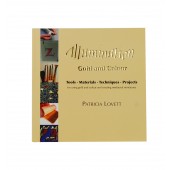
Illumination Gold and Colour Book
£15.00Patricia Lovett is one of the world’s leading authorities on the techniques and practical processes of making mediæval manuscripts. She lectures and teaches all over the world on calligraphy and illumination, and has written about a dozen books on these subjects, as well as producing a DVD – Illumination – Tools, Materials, Techniques, Projects. Patricia has run calligraphy courses as well as those on traditional manuscript gilding and painting techniques, and was awarded an MBE for her services to heritage crafts and calligraphy. This book takes the beginner and those with more experience through step-by-step processes to produce simple and easy projects using cheap metals and modern adhesives, and also to create mediæval miniatures and illuminated scrolls on vellum (animal skin). Learn More -

Techniques of Icon and Wall Painting
£40.00Techniques of Icon and Wall Painting - Egg Tempera, Fresco, Secco by Aidan Hart. The most comprehensive description to date of the techniques, formulae and history of Icon and Wall Painting. The book is beautifully designed and over its 490 pages, there are 450 coloured images and 180 drawings. Cornelissen materials are included in the text and in the images. Learn More -
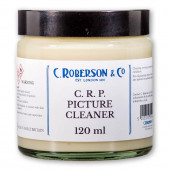
Roberson CRP Picture Cleaner
Starting at: £19.00
Cleansing/Reviving/Preserving wax paste for oil paintings, sculptures, any painted & polished surfaces except drawings, water colours or pastels. Learn More -
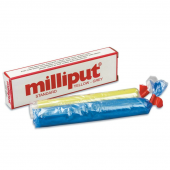
Milliput
Starting at: £4.80
2 part, epoxy resin moulding material for prepairing surfaces and mouldings. Store in a cool, dry place. Shelf life is 2-3 years. Hardener may yellow if it dries out. This is due to the resin leeching out to the surface of the stick. If this happens, kneading with fingers will make it smooth and white again. Learn More -
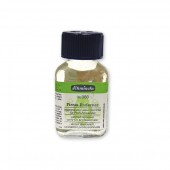
Schmincke Varnish Remover
Starting at: £10.15
Varnish remover. For softening old varnish and colour layers. Strong solvent should be used by experienced persons only. Learn More -
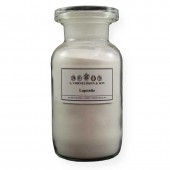
Laponite ®
Starting at: £34.40
For cleaning marble. Mix with water to thick paste. LAPONITE® is a registered trademark of BYK Additives Ltd Learn More -
-
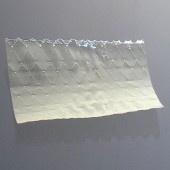
Gelatine Leaf
Starting at: £5.30
A pure form of glue from animal tissue. Used for sizing paper. Used in gliding and for weak sizes in isolating layers in tempera painting. Learn More -
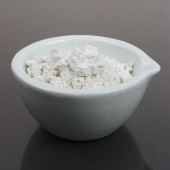
Whiting
Starting at: £4.00
Whiting is powdered Calcium Carbonate, which can be mixed with rabbit skin glue to create a chalk-based ground for oil, tempera, distemper or encaustic painting. Traditionally, whiting was an important ingredient when preparing painting surfaces in the north of Europe, as opposed to gypsum (Calcium Sulphate), which was widely used south of the Alps. Learn More -
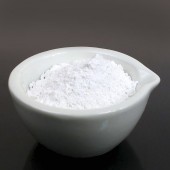
Gesso di Bologna
Starting at: £12.00
Gesso di Bologna is a bright white Calcium Sulphate, or gypsum, from Italy, which can be used as a substitute for whiting in the preparation of gesso. It is ground to a particularly fine powder, which makes it a suitable ground for gilding, as the small size of the particles allows for greater compression when burnishing. Learn More -
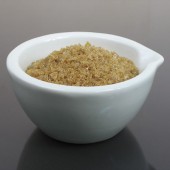
Rabbit Skin Glue
Starting at: £13.00
For sizing canvas prior to priming with an oil based primer. Do not use under acrylic primer. Soak overnight in water. Heat in double boiler (do not boil). Ratio water:size 13:1. Use while still warm. Rabbit Skin Glue does not contain preservatives. 340 - 360 Bloom Learn More
-
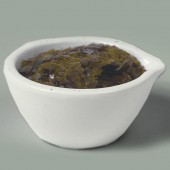
Clear Dewaxed Shellac
Starting at: £9.20
Shellac is a natural resin that is deposited by the female lac insect on the branches of trees in India and Thailand. It is soluble with alcohol, but not with mineral spirits or turpentine. It forms a tough yet flexible film, with many applications. It is suitable as a top coat for gilding when applied thinly, a sealant for porous surfaces, an isolating layer for tempera paintings, a base for pigmented inks, a protective layer for collograph plates, and a warm varnish for wooden floors and furniture. As it is prone to darkening with age, it is not recommended as a varnish for oils, and its solubility can reduce over time. There are various grades of shellac. When mixed with alcohol, it may initially form a cloudy mixture, due to traces of wax in the shellac, but this should become clear once it has dried. The highest grades of shellac are Clear Dewaxed Shellac, which has been de-coloured using the carbon filtering method, Lemon Shellac, and Orange Shellac, which are pale in colour. Button Shellac is less refined and therefore produces a reddish varnish. It was, in fact, widely used as a red dye before synthetic dyes became available. Learn More -
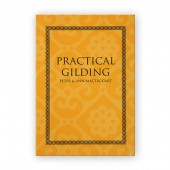
Practical Gilding
£11.95By Peter & Ann Mactaggart. This book is an attempt to set down detailed descriptions and explanations of the traditional, professional methods of both oil and water gilding in a way that can be followed by another craftsman. It does not discuss some of the methods that have been suggested recently for amateur use. (74 pages) Learn More -
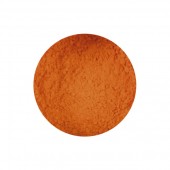
Lead Red Pigment (Minium)
Starting at: £7.30
Call to Order
PR105
Lead Red is an early articficial pigment that dates back to antiquity. It is created by heating Lead White or Litharge at a constant temperature of 480ºC over a prolonged period of time. It is a fast-drying colour, with good tinting strength and opacity, and has been widely used as an underpaint for gilding and in industry. However, it is highly toxic and generally unstable, so has fallen out of use in favour of Cadmium pigments. The acid in linseed oil causes Lead Red to darken, and it can solidify when stored in a tube. In water-based mediums, it can turn black.
Toxicity D Lead is a highly poisonous metal which, if inhaled, ingested, or introduced to the blood through cuts in the skin, builds up in the body and can affect multiple parts of the body, including the digestive and nervous systems.
PERMITTED USES Over 18s only. Proof of age required. Restoration of art works and protected buildings when alternatives unsuitable.
IMPORTANT Please refer to the MSDS (Material Safety Data Sheet) below. Dispose of product as hazardous waste.
SHIPPING Please note, we are not able to send this product outside the UK.
Learn More
14 Item(s)
Grid List
Shopping Options
- Category
- Price
-
- £0.00 - £9.99 (6)
- £10.00 - £19.99 (6)
- £30.00 - £39.99 (1)
- £40.00 and above (1)
- Manufacturer
-
- Cornelissen (9)
- Milliput (1)
- Roberson (1)
- Schmincke (1)
You have no items in your shopping basket.

- Search Brands
-