
Pigments, Gums, Resins


-
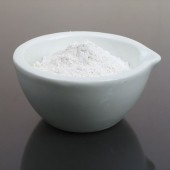
Plaster of Paris
Starting at: £6.00
For moulding when mixed with the same volume of water. Sets quickly and will not shrink. Learn More -
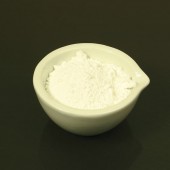
Alumina Hydrate Light
Starting at: £8.30
Alumina Hydrate is an inert pigment with highly absorbent properties, which can be ground into oil paint as an almost colourless extender. It is often used as an additive in commercial oil paints, particularly in conjunction with transparent or lake pigments, as it provides stability and a homogenous consistency without effecting colour or gloss, although it may effect the pigment strength. When combined with linseed oil, it produces an almost transparent painting medium for extending oil colours. Sometimes referred to as Lake Base. Learn More -
-
-
-
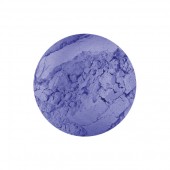
Lapis Lazuli Pigment
Call to Order
PB29
Lapis Lazuli is a natural mineral pigment, mined in Afghanistan and South America. For many centuries it was the most reliable blue pigment available, and became particularly significant during the Medieval and Renaissance periods, when its inclusion in a work of art denoted the wealth and status of the patron, or the holiness of a painting's subject. In commercial paint production it has largely been replaced by the more affordable Ultramarine Blue, although it still has a place on modern palettes due to its unique soft violet tone. It is a transparent pigment, with a low tinting strength.
[We will have stock of Lapis Lazuli in September. If you would like to be called when it is available, please use our contact form to let us know.]
Learn More -
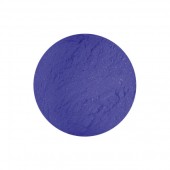
Smalt Dark Pigment
Starting at: £5.30
PB32
Smalt is a kind of cobalt blue glass or frit, and its use as a pigment dates from the 1600s in the glass-making regions of Saxony. We offer two shades, light and dark, which are determined by the particle size of the pigment; the more finely ground the powder, the paler the colour. Before the introduction of Ultramarine Blue, Smalt was available in a wide variety of grades. It is a very transparent pigment, which is easily overwhelmed in mixtures due to its weak tinting strength. It works best in water based media. When ground in oil, it can become almost invisible in dried oil-paint films because its refractive index is so close to that of linseed oil.
Larger quantities are available by request.
Learn More -
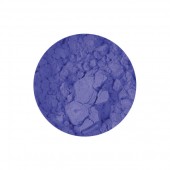
Smalt Light Pigment
Starting at: £5.20
PB32
Smalt is a kind of cobalt blue glass or frit, and its use as a pigment dates from the 1600s in the glass-making regions of Saxony. We offer two shades, light and dark, which are determined by the particle size of the pigment; the more finely ground the powder, the paler the colour. Before the introduction of Ultramarine Blue, Smalt was available in a wide variety of grades. It is a very transparent pigment, which is easily overwhelmed in mixtures due to its weak tinting strength. It works best in water based media. When ground in oil, it can become almost invisible in dried oil-paint films because its refractive index is so close to that of linseed oil.
Larger quantities are available by request.
Learn More -
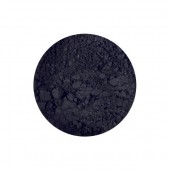
Ivory Black Genuine Pigment
Starting at: £38.00
PBk9
Genuine Ivory Black is produced by burning reclaimed ivory, such as piano keys. These are antique, mainly Victorian pieces, using ivory with started out as hippo or walrus teeth, and offers a higher carbon content and greater tinting strength than modern-day equivalents, which are usually derived from animal bones. It is a particularly slow-drying pigment.
Larger quantities are available by request. While stocks last.
Learn More -
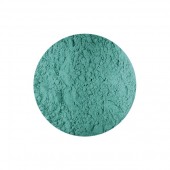
Verdigris Pigment
Starting at: £4.90
Verdigris is an artificial pigment that dates from antiquity. Originally, it was produced by exposing copper to vinegar; nowadays acetic acid is used. It is acidic, so can contribute to the deterioration of paper supports. For this reason, it is more suited to oil or tempera painting than it is to watercolour. In tempera painting, it should be bound in animal glue or isinglass glue rather than egg york. When used in oil painting it should be held in a resin oil or balsam such as Venice Turpentine, as it can turn brown when ground directly into linseed oil. It is a fast-drying, transparent pigment, with a visible crystalline structure.
Larger quantities are available by request.
Learn More -
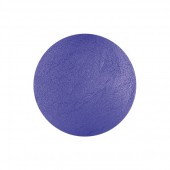
Egyptian Blue Pigment
Starting at: £5.90
Egyptian Blue is stable in all media, highly transparent, with a weak tinting strength. A synthetically produced calcium copper silicate, it is considered to be the earliest artificial pigment, dating from antiquity and widely used in ancient Egypt. Larger sizes available on request Learn More -
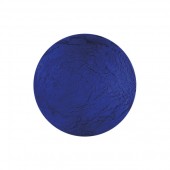
Blue Verditer Pigment
Starting at: £7.50
** While stocks last ** Blue Verditer, sometimes referred to as Bremen Blue, is a synthetic form of Azurite, or copper-calcium carbonate. It has a weak tinting strength and is sligtly transparent. It works best in water-based binders, as the acidity of linseed oil can cause discolouration.
Learn More
Larger sizes available on request -
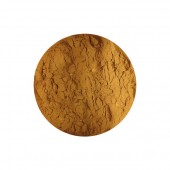
Realgar Pigment
Starting at: £12.75
Call to Order
Realgar, like Orpiment, is sulphide of arsenic, and these two substances are often found in close proximity to each other in nature. Realgar exists in small deposits throughout the world and has been used for its colour since ancient times, although its extreme toxicity means that it has been superseded by cadmiums in modern painting. It is an opaque pigment with poor tinting strength. Larger quantities are available by request.
Toxicity D
PERMITTED USES Over 18s only. Proof of age required. Restoration of art works and protected buildings when alternatives unsuitable.
IMPORTANT Please refer to the MSDS (Material Safety Data Sheet) below. Dispose of product as hazardous waste.
SHIPPING Please note, we are not able to send this product outside the UK.
Learn More -
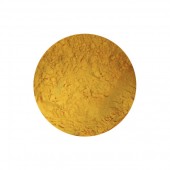
Lead Tin Yellow Dark Pigment
Starting at: £4.80
Call to Order
Lead Tin Yellow Dark Pigment. Larger sizes available. Please ask for quotation.Toxicity D Lead is a highly poisonous metal which, if inhaled, ingested, or introduced to the blood through cuts in the skin, builds up in the body and can affect multiple parts of the body, including the digestive and nervous systems.
PERMITTED USES Over 18s only. Proof of age required. Restoration of art works and protected buildings when alternatives unsuitable.
IMPORTANT Please refer to the MSDS (Material Safety Data Sheet) below. Dispose of product as hazardous waste.
SHIPPING Please note, we are not able to send this product outside the UK.
Learn More -
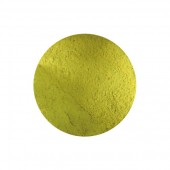
Lead Tin Yellow Light Pigment
Starting at: £4.80
Call to Order
Bright yellow first used in the Middle Ages as a replacement for Orpiment. Suitable for oil based media. Larger sizes available. Please ask for quotation.Toxicity D Lead is a highly poisonous metal which, if inhaled, ingested, or introduced to the blood through cuts in the skin, builds up in the body and can affect multiple parts of the body, including the digestive and nervous systems.
PERMITTED USES Over 18s only. Proof of age required. Restoration of art works and protected buildings when alternatives unsuitable.
IMPORTANT Please refer to the MSDS (Material Safety Data Sheet) below. Dispose of product as hazardous waste.
SHIPPING Please note, we are not able to send this product outside the UK.
Learn More -
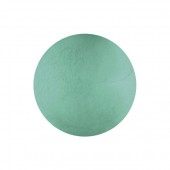
Synthetic Malachite Pigment
Starting at: £4.20
Synthetic Malachite is an artificial mineral pigment, copper carbonate, chemically based on Malachite. It has a medium tinting strength and good opacity. Larger sizes available on request Learn More -
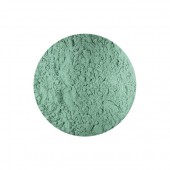
Genuine Malachite Pigment
Starting at: £14.90
Malachite is a naturally occurring copper carbonate, closely related to Azurite. It has a weak tinting strength, is quite opaque, and works best in aqueous media. Larger sizes available on request. Learn More -
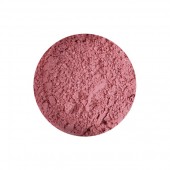
Rose Madder Genuine Pigment
Starting at: £15.80
NR9 Rose Madder is an alizarin lake pigment made by precipitating dye extracted from madder root onto an inert base. It has largely been replaced by synthetic alizarin pigments, but it is still used as an ingredient in some commercially-available paints. It provides a very transparent pigment, with a weak tinting strength, which can be used in all lime-free media, although it is very slow-drying in oil. It is fugitive to sunlight, so paintings containing Madder should be stored appropriately, but it remains one of the most lightfast plant-based pigments. It requires a wetting agent to aid dispersion. Larger quantities are available by request Learn More -
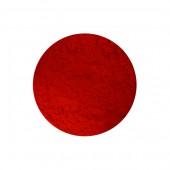
Cinnabar Pigment
Starting at: £16.00
Call to Order
PR106
Cinnabar, composed of mercuric sulphide, is a mineral pigment found in crusts or veins in sites of volcanic activity. It has good tinting strength and opacity but, like many red pigments, it dries very slowly in oil media. Due to its high toxicity, it is no longer an ingredient in commercial paints, but is a prominent colour in historical palettes. Generally, Cinnabar refers to the natural mineral, while Vermilion refers to the synthetic pigment. Cinnabar has been mined since at least the tenth millennium BC, and used as a painting material, gemstone, and ritual object by many cultures around the globe.
Toxicity D
PERMITTED USES Over 18s only. Proof of age required. Restoration of art works and protected buildings when alternatives unsuitable.
IMPORTANT Please refer to the MSDS (Material Safety Data Sheet) below. Dispose of product as hazardous waste.
SHIPPING Please note, we are not able to send this product outside the UK.
Learn More -
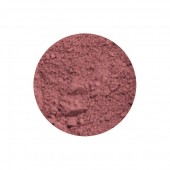
Madder Lake Genuine Pigment
Starting at: £10.20
NR9
Madder Lake pigment is derived from dye that has been extracted from the root of the madder plant, and attached to alum as a base. It has largely been replaced by synthetic alizarin pigments, but it is still used as an ingredient in some commercially-available paints. It provides a very transparent pigment, with a weak tinting strength, which can be used in all lime-free media, although it is very slow-drying in oil. It is fugitive to sunlight, so paintings containing Madder should be stored appropriately, but it remains one of the most lightfast plant-based pigments. It requires a wetting agent to aid dispersion.
Larger quantities are available by request
Learn More -
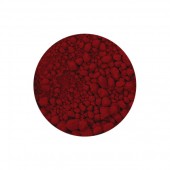
Carmine Red Genuine Pigment
Starting at: £10.00
NR4
Carmine has been used as a dye and pigment since antiquity. Originally derived from the kermes insect, it was replaced by cochineal following the discovery of the Americas. It has a good tinting strength and is very transparent, although it is fugitive to light.
Larger quantities are available by request.
Learn More -
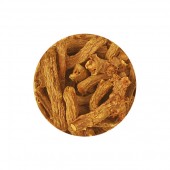
Madder Root Pieces
Starting at: £27.80
NR9
The madder plant was once widely cultivated for the red dye extracted from its roots. Its earliest known use is in ancient Egypt, and there is evidence of its widespread adoption in Europe from the medieval period. Madder Lake, the pigment that is derived from the root, has now largely been replaced by synthetic alizarin pigments, but it is still used as an ingredient in some commercial paints. It provides a very transparent pigment, with a weak tinting strength, which can be used in all lime-free media, although it is very slow-drying in oil. It is fugitive to sunlight, so paintings containing Madder should be stored appropriately, but it remains one of the most lightfast plant-based pigments.
Larger quantities are available by request.
Learn More -
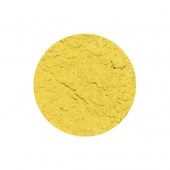
Litharge Pigment
Starting at: £8.00
Call to Order
PY46
Litharge is lead monoxide, also known as Massicot. It is an opaque pigment, with a weak tinting strength. Its toxicity and fugitive nature means that it is rarely used as a pigment. Instead, its fast drying time means that it has been used as a siccative in oil mediums. The colour tends to darken in all media, and it is also unstable in its dry form, as the powder can lighten when exposed to air.
Toxicity D Lead is a highly poisonous metal which, if inhaled, ingested, or introduced to the blood through cuts in the skin, builds up in the body and can affect multiple parts of the body, including the digestive and nervous systems.
PERMITTED USES Over 18s only. Proof of age required. Restoration of art works and protected buildings when alternatives unsuitable.
IMPORTANT Please refer to the MSDS (Material Safety Data Sheet) below. Dispose of product as hazardous waste.
SHIPPING Please note, we are not able to send this product outside the UK.
Learn More -
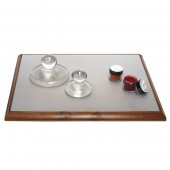
Mixing Slab
Starting at: £24.00
A glass slab with wooden cradle for the grinding of pigments.
The friction created between the sand-blasted surfaces of the glass slab and muller facilitates the thorough mixing of pigment and medium, creating a consistent and strong paint body. This slab can be used to manufacture many types of paint including watercolours, egg tempera and oils.
Mulling is of particular importance when making oil paint; simply mixing pigment and oil together using a palette knife will result in an unstable substance with poor plasticity, which contains a large amount of excess oil and unevenly distributed pigment particles. Thorough mulling in a figure-of-eight motion will enable the pigment to be fully combined into the binder, strengthening the resultant paint film.
PLEASE NOTE: The separate glass slabs are in stock but it is a call to order item due to the fact that we cannot guarantee its safe delivery, however well we package it. Please ring us to discuss your delivery options. In combination with the glass frame, delivery is more secure but we still cannot guarantee a delivery without breakage.
Learn More -
![Roberson Glass muller, medium (7 cm) and small (5 cm) [without logo]](https://www.cornelissen.com/media/catalog/product/cache/1/small_image/170x/9df78eab33525d08d6e5fb8d27136e95/i/m/img-6584.jpg)
Roberson Glass Mullers
Starting at: £25.00
Roberson Glass Mullers are handmade using high quality-glass.
Mullers act as flat-bottomed pestles, which are used to grind pigment into a binding medium, suspending it evenly to create a uniform covering of binder around each pigment particle. Using a muller and slab, rather than simply mixing pigment and binder together, will create a more homogenised and stable paint.
Roberson Glass Mullers are handmade using superior boro silicate laboratory glass, which is 40% harder, more heat resistant, and offers better clarity than soda-lime glass. The base of each muller is ground perfectly flat, and sand-blasted to create a fine tooth to facilitate the grinding of pigments.Use in conjunction with a Cornelissen Glass Slab to make paint efficiently. The sand-blasted texture of the muller and plate helps to push and distribute the pigment throughout the binder quickly. This will mean less grinding, and more painting!
NOTE: Sizes may vary slightly as these are handmade products.
Learn More -
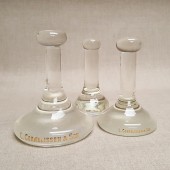
Cornelissen Glass Mullers
Starting at: £24.50
Cornelissen Glass Mullers are handmade using superior boro silicate laboratory glass, which is 40% harder, more heat resistant, and offers better clarity than soda-lime glass. The base of each muller is ground perfectly flat, and sand-blasted to create a fine tooth to facilitate the grinding of pigments. The tall handle features an ergonomic top, to ease fatigue when grinding large amounts of pigment. Mullers act as flat-bottomed pestles, which are used to grind pigment into a binding medium, suspending it evenly to create a uniform covering of binder around each pigment particle. Using a muller and slab, rather than simply mixing pigment and binder together, will create a more homogenised and stable paint. Use in conjunction with a Cornelissen Glass Slab to make paint efficiently. The sand-blasted texture of the muller and plate helps to push and distribute the pigment throughout the binder quickly. This will mean less grinding, and more painting! Learn More -
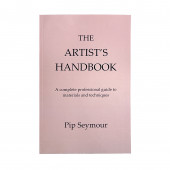
Artist's Handbook
£30.00By Pip Seymour. The Artist’s Handbook provides artists with in-depth, practical information on the materials, equipment and skills necessary for all areas of artistic practice. Topics covered include advice on how to select appropriate art materials, including paints, brushes, canvases and drawing materials; techniques for making your own paints, glue, varnishes and paper; advice on how to achieve the best results from both manufactured and hand-made materials; the best methods of storing and preserving finished artworks, and health and safety precautions. 520 pages. Learn More -

Painter's Handbook
£25.00By Mark David Gottsegen. A guide to artists’ materials as well as a thorough resource presenting techniques for using them and recipes for making them. (355 pages) Learn More -
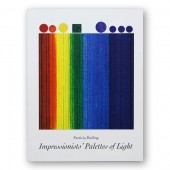
Impressionists' Palettes of Light
£8.65Impressionists' Palettes of Light by Patricia Railing. This little book reproduces palettes by several of the plein-air Impressionist painters, describing the pigments used, and includes short excerpts by the scientists whose work was the foundation of the new painting – on complementary colours, optical mixing, and the pigment-colour correspondence. It closes with colour swatches of the pigments, provided by the London artists’ colourmen, L. Cornelissen & Son. Learn More -
Pigment Early Colour 10 grams Azurite
£15.00Call to Order
Pigment Early Colour 10 grams Azurite Learn More
You have no items in your shopping basket.