
Cornelissen


-
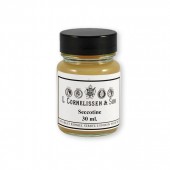
Seccotine 30 ml
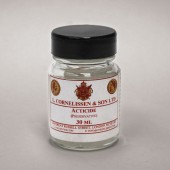
£8.50Refined liquid fish glue for use as a size for gilding on paper. It can also be used as a glue for paper and as a binder in gesso for raised illumination. Seccotine is made from the skin of the Atlantic deep sea cod fish. It remains flexible after drying.
Learn More -
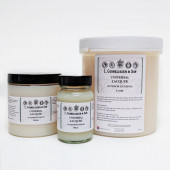
Cornelissen Universal Lacquer
Starting at: £15.10
Use to protect metal & silver leaf, white gold, Ormoline paint & Robersons Liquid Metal range. Provides extra protection on exterior projects & high-wear areas. It dries crystal clear with a satin finish, and is non-yellowing. Learn More
-
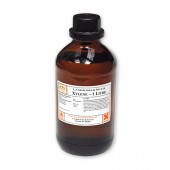
Xylene 1 litre
£18.00Call to Order
Strong solvent used in picture conservation and restoration. Learn More -
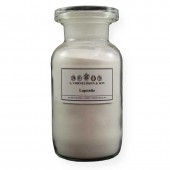
Laponite ®
Starting at: £34.40
For cleaning marble. Mix with water to thick paste. LAPONITE® is a registered trademark of BYK Additives Ltd Learn More -
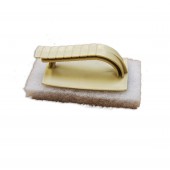
Screen Cleaning Brush
£9.00Cleaning brush. Abrasive cleaning pad for cleaning, degreasing and reclaiming screens. This brush is safe on all mesh types. Learn More -
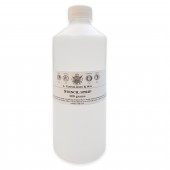
Stencil Strip 500ml
£10.00Call to Order
Stencil strip, this is a concentrated organic emulsifying stripper that is made using natural mineral salts. It quickly removes all stencil emulsions and capillary films. Can be diluted up to 1:10 with water. Always wear gloves and goggles, and avoid contact with skin and eyes.PERMITTED USES Over 18s only. Proof of age required. E-mail: info@cornelissen.com Learn More
-
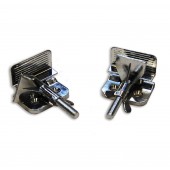
Hing Clamps (per pair)
£16.00Hinge clamps, these are zinc plated aluminium clamps for attaching screens to any surface to create printing bed. Clamp surface is 60mm wide, and will securely hold a frame depth of min: 12mm and max: 45mm. The clamps have counter sunk screw holes 6mm diameter and 30mm a part (centres). Clamp opens up to 90 degrees. Learn More -
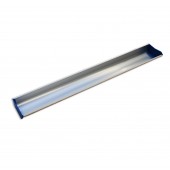
Aluminium Coating Trough 18" with ends
£31.00Coating Trough, used to coat screens with Photographic Emulsion. Shaped to allow the weight of the coating trough to be supported by the thumb, the palm and all four fingers for a steady and even coat. Features a dual sided coating edge for either a sharp edge thin coat for higher mesh counts, or a rounded dull edge for coating lower mesh count screens. Learn More -
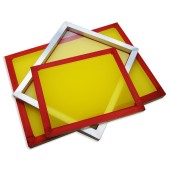
Aluminium Ready Stretched Screen
Starting at: £39.00
Pre-stretched aluminium screens. Our screens use the highest quality monofilament polyester mesh and are available in 43T (for fabric), 90T (for paper) and 120T (for finest detail on paper). The mesh appears in different colours, white is for fabric and yellow is for the higher mesh counts, the colour this makes registering with stencils underneath the screen easier. The screen is made of quality aluminium with a profile of 20mm x 30mm x 1.2mm thick. Learn More -
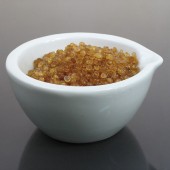
Pearl Glue
Starting at: £6.50
Pearl Glue is a traditional animal-based wood glue made from bone, used for veneering, joinery and antique restoration. 170-200 bloom. Learn More
-
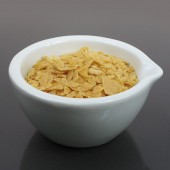
Carnauba Wax Yellow
Starting at: £6.50
Carnauba Wax is the hardest wax commonly used in the production of artists' materials, with a melting point of 83-86°c. It is derived from a tree native to South America, and is available in a natural colour (grey), or a refined colour (pale yellow). Small amounts of carnauba wax are commonly used in both oil painting mediums and encaustic painting, usually in conjunction with beeswax to add toughness, durability and sheen to the paint film. It creates an inflexible surface, so works best on rigid supports such as gesso panels, and it should be noted that it will raise the melting point of encaustic mixtures. It can produce a glossy finish; as such it is used in waxes and polishes for shoes, cars, musical instruments, furniture, and wooden floors, especially when mixed with beeswax and turpentine. Learn More -
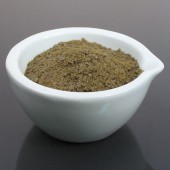
Carnauba Wax Grey
Starting at: £8.40
Carnauba Wax is the hardest wax commonly used in the production of artists' materials, with a melting point of 83-86°c. It is derived from a tree native to South America, and is available in a natural colour (grey), or a refined colour (pale yellow). Small amounts of carnauba wax are commonly used in both oil painting mediums and encaustic painting, usually in conjunction with beeswax to add toughness, durability and sheen to the paint film. It creates an inflexible surface, so works best on rigid supports such as gesso panels, and it should be noted that it will raise the melting point of encaustic mixtures. It can produce a glossy finish; as such it is used in waxes and polishes for shoes, cars, musical instruments, furniture, and wooden floors, especially when mixed with beeswax and turpentine. Learn More -
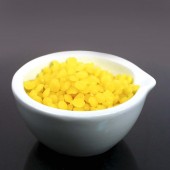
Natural Beeswax
Starting at: £11.20
Beeswax is derived from melted honeycomb, and is available in two grades. Bleached Beeswax Pellets are white, having been bleached by the sun, and are an appropriate choice for using with pale colours, although they may revert to yellow over time. Natural Beeswax Pellets are yellow in colour, and offer a more flexible structure with a higher resin content. Beeswax has a melting point of 63-66°c, and may turn brown if over-heated. It is the most widely used wax in artists' materials, having a wide range of applications. Please see below for more details.
Learn More -
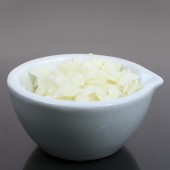
Bleached Beeswax
Starting at: £12.30
Beeswax is derived from melted honeycomb, and is available in two grades. Bleached Beeswax Pellets are white, having been bleached by the sun, and are an appropriate choice for using with pale colours, although they may revert to yellow over time. Natural Beeswax Pellets are yellow in colour, and offer a more flexible structure with a higher resin content. Beeswax has a melting point of 63-66°c, and may turn brown if over-heated. It is the most widely used wax in artists' materials, having a wide range of applications. Please see below for more details.
Learn More -
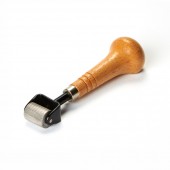
Artools Roulette, Crossed Lines, Mushroom Handle, No. 6C
£20.10Artools Roulette, Crossed Lines, Mushroom Handle, No. 6C Learn More -
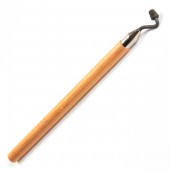
Artools, Roulette, Fine, Crossed Lines, No. 14
£14.20Artools, Roulette, Fine, Crossed Lines, No. 14 Learn More -
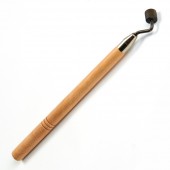
Artools Roulette, Coarse, Crossed Lines, No. 7
£14.10Artools Roulette, Coarse, Crossed Lines, No. 7 Learn More -
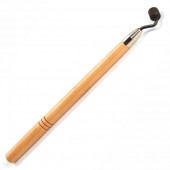
Artools Roulette, Fine, Crossed Lines, No. 1
£14.10Artools Roulette, Fine, Crossed Lines, No. 1 Learn More -
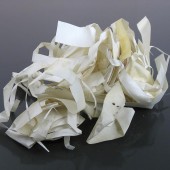
Parchment Clippings
Starting at: £9.90
Parchment Clippings, usually waste goatskin vellum, were utilised throughout the Middle Ages to make an animal hide glue. This continued to be commonly used as a sizing for canvas before rabbit skin glue came to prominence in the nineteenth century. Parchment glue is comparable to isinglass glue, as it also produces a very pale, almost transparent glue with a degree of flexibility. Our parchment clippings are a mixture of vellum scraps, and may include goatskin, calfskin and sheepskin. Cennino Cennini gives a recipe for gesso using parchment in his treatise about painting; please see below for our recipe. Learn More -
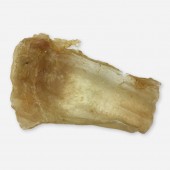
Isinglass
Starting at: £30.10
Call to Order
Isinglass is derived from the dried swim bladders of fish, with Salianski Isinglass being the highest grade available. In the Russian Icon tradition, it commonly provided the glue component in gesso recipes, and was sometimes mixed with pigment to make tempera paints, due to its high binding strength. It can be used to make a pale, clear glue, which is less prone to darkening than other animal glues, and which is particularly flexible, making it a useful material for repairing textiles.
Learn MoreWe are currently unable to source this product.
-
-
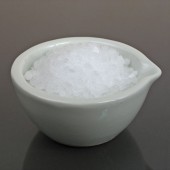
Paraffin Wax
Starting at: £6.60
Paraffin Wax is a by-product of the petro-chemical industry. It has a low melting point of 50-60°c and a brittle texture, making it unsuitable for encaustic painting or as an additive to oil paints, but it can be used to impart softness to lithographic crayons. As a petroleum product, it is more inert than animal or vegetable waxes, and is therefore not saponified (turned into soap) by alkali substances. Learn More -
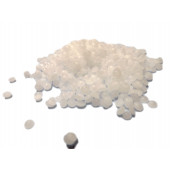
Microcrystalline Wax
Starting at: £8.50
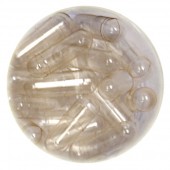
Microcrystalline Wax is related to paraffin wax, and is used as a plasticiser in some recipes. It is characterised by the fineness of its crystals in contrast to the larger crystal of paraffin wax. It is generally more viscous, denser, tackier and more elastic than paraffin waxes, and has a higher melting point. Learn More -
-
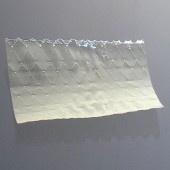
Gelatine Leaf
Starting at: £5.30
A pure form of glue from animal tissue. Used for sizing paper. Used in gliding and for weak sizes in isolating layers in tempera painting. Learn More -
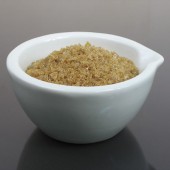
Rabbit Skin Glue
Starting at: £13.00
For sizing canvas prior to priming with an oil based primer. Do not use under acrylic primer. Soak overnight in water. Heat in double boiler (do not boil). Ratio water:size 13:1. Use while still warm. Rabbit Skin Glue does not contain preservatives. 340 - 360 Bloom Learn More
-
-
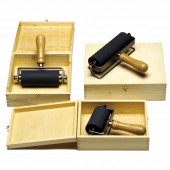
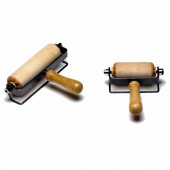
Superior Extra Soft Rubber Rollers
Starting at: £227.40
Extra Soft (35 shore) NBR rubber rollers suitable for fine relief printing (lino, wood engraving and wood cut) and intaglio applications. The surface of the soft rubber is machined several times with a special grinder to achieve the complete smoothness of the rollers. Solid heavy metal handle. Each roller is supplied in secure wooden box. Learn More -
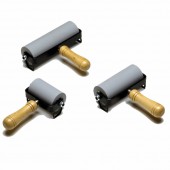
Superior Medium Soft Rubber Rollers
Starting at: £142.90
Call to Order
Medium/Soft Superior NBR Rubber Rollers available in 3 different width and 60mm diameter. Suitable for all fine printmaking applications including wood engraving, lino cut and wood cut. Solid metal handle. Learn More -
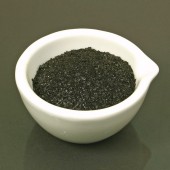
Van Dyke Crystals
Starting at: £8.40
Van Dyke Crystals are a natural, water-based wood dye, made from walnut husks. They produce a colour ranging from a very light brown to dark brown depending upon concentration. Traditionally used for colouring oak, mahogany and walnut. Learn More
Shopping Options
- Category
-
- Pigments, Gums, Resins (165)
- Oils, Acrylics (16)
- Canvas, Supports (15)
- Watercolour, Gouache, Egg Tempera (11)
- Pastels (1)
- Drawing, Calligraphy (42)
- Gilding, Restoration (106)
- Printmaking (54)
- Brushes (31)
- Paper (9)
- Studio, Books (39)
- Signwriting, Specialist Decorating (9)
- Price
-
- £0.00 - £999.99 (437)
- £1,000.00 - £1,999.99 (1)
- £2,000.00 - £2,999.99 (1)
- £3,000.00 - £3,999.99 (1)
- £4,000.00 and above (1)
- Color
-
- Green (1)
- Search Brands
-
You have no items in your shopping basket.