

Search results for 'al'


-
-
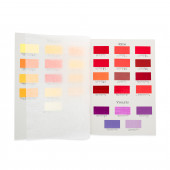
Cornelissen Pigment Colour Chart
£40.00Cornelissen Pigment Colour Chart. 85 pigment samples displayed in a 6 page 300 gsm A4 booklet, including 'permanence' and 'colour index' references. Colour swatches have been made using a casein binder. Learn More -
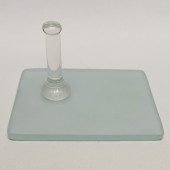
Cornelissen Mini Glass Muller and Slabs
Starting at: £24.00
Use Cornelissen Mini Glass Mullers in conjunction with a Cornelissen Glass Slab to make paint efficiently. The sand-blasted texture of the muller and plate helps to push and distribute the pigment throughout the binder quickly. This means less time grinding, more time painting! Learn More -
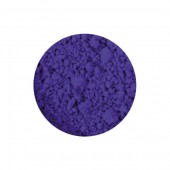
Ultramarine Blue Dark Pigment
Starting at: £4.00
PB29
Ultramarine Blue Dark is an artificial mineral pigment that is produced by heating clay, soda, sulphur and coal to high temperatures. Its name comes from outremer, or over-the-sea, as a reference to the highly-prized Lapis Lazuli pigment which had been imported into Europe from Afghanistan since the Middle Ages. First manufactured in France and Germany in 1828, synthetic Ultramarine provided a brilliant and affordable blue to artists, and it remains one of the most popular blues on artists' palettes today.
It is a transparent pigment, with a high tinting strength and excellent lightfastness. It reacts to alkali, therefore it is not suitable for use in lime-fresco; we do offer a Limeproof Ultramarine Blue for this purpose. It is stable in all other media, although it can be tricky to grind in oil. Instead of creating a thick, buttery paste, it can remain stringy and deteriorate when stored in a tube. To correct this, many commercial paint manufacturers include additives and waxes in their recipes; if you intend on grinding your own paint, you could try replacing 10-15% of your Linseed Oil with Poppy Oil to improve the consistency. Ultramine Blue provides a slow-drying, fairly hard paint film, which can tend towards brittleness.
Toxicity: B
Learn More -
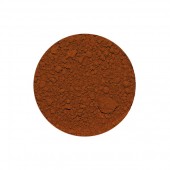
Pozzuoli Red Pigment
Starting at: £5.20
Pozzuoli Red is a natural earth pigment that was originally found in the volcanic areas in Pozzuoli, Italy. It was unique for its cement-like setting qualities due to naturally occurring silica. Modern Pozzuoli Red refers to the warm red colour rather than this physical characteristic.
Toxicity: B
Learn More -
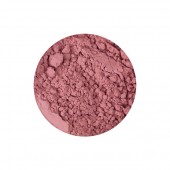
Potters Pink Pigment
Starting at: £22.00
PR233
Potter's Pink is an artificial mineral pigment produced by roasting tin oxide with various other oxides. It was first discovered in the pottery region of Staffordshire in the late-1700s, and in the following century Winsor & Newton introduced Potter's Pink into their watercolour range under the name "pink colour". It went on to become a popular addition to watercolour palettes, offering an opaque, lightfast colour with a weak tinting strength and a medium level of oil absorption.
Toxicity A
Learn More -
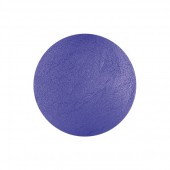
Egyptian Blue Pigment
Starting at: £5.90
Egyptian Blue is stable in all media, highly transparent, with a weak tinting strength. A synthetically produced calcium copper silicate, it is considered to be the earliest artificial pigment, dating from antiquity and widely used in ancient Egypt. Larger sizes available on request Learn More -
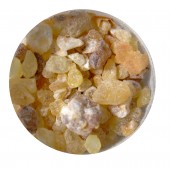
-
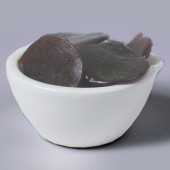
Button Shellac
Starting at: £8.40
Shellac is a natural resin that is deposited by the female lac insect on the branches of trees in India and Thailand. It is soluble with alcohol, but not with mineral spirits or turpentine. It forms a tough yet flexible film, with many applications. It is suitable as a top coat for gilding when applied thinly, a sealant for porous surfaces, an isolating layer for tempera paintings, a base for pigmented inks, a protective layer for collograph plates, and a warm varnish for wooden floors and furniture. As it is prone to darkening with age, it is not recommended as a varnish for oils, and its solubility can reduce over time. There are various grades of shellac. When mixed with alcohol, it may initially form a cloudy mixture, due to traces of wax in the shellac, but this should become clear once it has dried. The highest grades of shellac are Clear Dewaxed Shellac, which has been de-coloured using the carbon filtering method, Lemon Shellac, and Orange Shellac, which are pale in colour. Button Shellac is less refined and therefore produces a reddish varnish. It was, in fact, widely used as a red dye before synthetic dyes became available. Learn More -
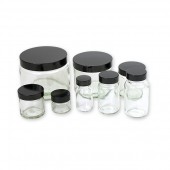
Squat & Powder Jars
Starting at: £0.75
Squat and Powder Jars in glass and plastic. *Please note, our glass jars are fragile, although they are packed very carefully we cannot guarantee they will arrive safely. Cases of jars are stored offsite, please allow extra time for your order to be processed and dispatched. Learn More -
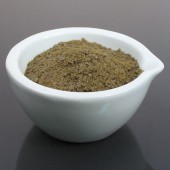
Carnauba Wax Grey
Starting at: £8.40
Carnauba Wax is the hardest wax commonly used in the production of artists' materials, with a melting point of 83-86°c. It is derived from a tree native to South America, and is available in a natural colour (grey), or a refined colour (pale yellow). Small amounts of carnauba wax are commonly used in both oil painting mediums and encaustic painting, usually in conjunction with beeswax to add toughness, durability and sheen to the paint film. It creates an inflexible surface, so works best on rigid supports such as gesso panels, and it should be noted that it will raise the melting point of encaustic mixtures. It can produce a glossy finish; as such it is used in waxes and polishes for shoes, cars, musical instruments, furniture, and wooden floors, especially when mixed with beeswax and turpentine. Learn More -
Vine Black Pigment
Starting at: £4.70
PBk8
Vine Black is derived from charred vines, forming an organic pigment of pure carbon. It has been in use since antiquity, providing a cold black with bluish undertones, which creates a blue-grey when mixed with white. It is a very lightfast, slow-drying colour with a medium tinting strength. It requires a wetting agent to disperse properly, and is not suitable for use in fresco, mortar or cement, as the water-soluble impurities within the pigment can create efflorescence.
Toxicity: A
Learn More -
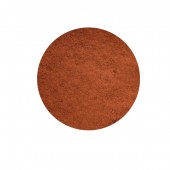
Burnt Green Earth Pigment
Starting at: £8.00
PG23 Burnt Green Earth is a semi-transparent pigment that is stable in all media, although it may be difficult to incorporate into an acrylic binder. A calcined form of Green Earth, it has a low tinting strength, long drying time, and is very lightfast. Toxicity: B Limeproof Learn More -
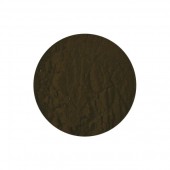
Van Dyke Brown Pigment
Starting at: £4.50
Van Dyke Brown pigment is know for its poor lightfastness and instability in all mediums. Our Van Dyke Brown, also known as Cassel Earth, offers the same dark brown colour and transparency as the traditional pigment, but without the drawbacks usually associated with its longevity and use. It is made from lignite, or brown coal, from the Alsace region in France.
Toxicity: B
Learn More -
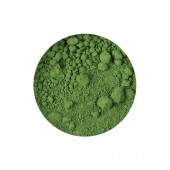
Chromium Oxide Pigment
Starting at: £4.50
Chromium Oxide is a synthetic mixed-metal oxide pigment. It is stable in all media and has an average drying speed in oil, forming a hard, fairly flexible paint film. It is opaque, with a low tinting strength. It has been widely available since the mid-nineteenth century, following its introduction in 1809.
Please note, unfortunately we are not able to send this product outside the UK.
Learn More -

Painter's Handbook
£25.00By Mark David Gottsegen. A guide to artists’ materials as well as a thorough resource presenting techniques for using them and recipes for making them. (355 pages) Learn More -
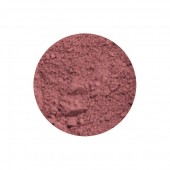
Madder Lake Genuine Pigment
Starting at: £10.20
NR9
Madder Lake pigment is derived from dye that has been extracted from the root of the madder plant, and attached to alum as a base. It has largely been replaced by synthetic alizarin pigments, but it is still used as an ingredient in some commercially-available paints. It provides a very transparent pigment, with a weak tinting strength, which can be used in all lime-free media, although it is very slow-drying in oil. It is fugitive to sunlight, so paintings containing Madder should be stored appropriately, but it remains one of the most lightfast plant-based pigments. It requires a wetting agent to aid dispersion.
Larger quantities are available by request
Learn More -
-
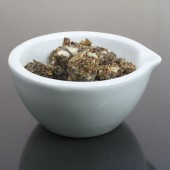
Gum Benzoin
Starting at: £14.70
Gum Benzoin is used as a fixative, slowing the dispersion of essential oils and other materials into the air. Is occasionally called for in some old varnish recipes where it was employed primarily for its odour. Learn More -
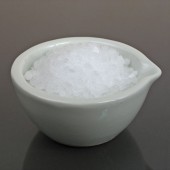
Paraffin Wax
Starting at: £6.60
Paraffin Wax is a by-product of the petro-chemical industry. It has a low melting point of 50-60°c and a brittle texture, making it unsuitable for encaustic painting or as an additive to oil paints, but it can be used to impart softness to lithographic crayons. As a petroleum product, it is more inert than animal or vegetable waxes, and is therefore not saponified (turned into soap) by alkali substances. Learn More -
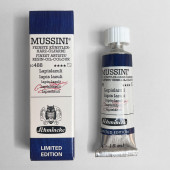
Schmincke Mussini Lapis Lazuli Limited Edition 15 ml
£38.00Schmincke Mussini Limited Edition Lapis Lazuli 15 ml Learn More -
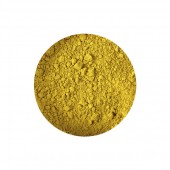
Yellow Ochre Pigment
Starting at: £4.00
PY43
Yellow Ochre is a natural earth pigment that has been in use since prehistoric times. It is derived from iron-rich clay deposits that are present all over the world; our Yellow Ochre comes from the hilly regions around Verona, Italy. As a pigment, it is semi-opaque, extremely lightfast, and stable in all media. It has a medium to slow drying rate in oil, creating a tough, flexible paint film. Yellow Ochre is similar in composition to Raw Sienna, but whereas Yellow Ochre contains a higher proportion of clay, Raw Sienna contains a higher proportion of silica. As a natural material, the exact colour and qualities of the resultant pigments can vary, but generally this compositional difference creates a paler, more opaque Yellow Ochre, and a darker, more transparent Raw Sienna.
Toxicity B
Learn More -
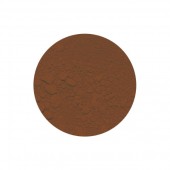
Cadmium Brown Pigment
Starting at: £10.00
PR108
Cadmium Brown is a shade of Cadmium Red, a synthetic organic pigment that has been in use since the 1920s. It is formed by heating cadmium sulphide and selenium, the hue is determined by the level of calcination and proportion of selenium. It is very opaque, and lightfast, with a high tinting strength. It absorbs a small amount of oil, and dries very slowly to form a hard, flexible paint film.
Larger quantities are available by request.
Limeproof
Toxicity: C
Learn More -
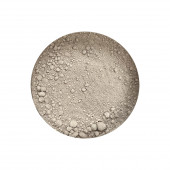
Buff Titanium Pigment
Starting at: £4.75
-
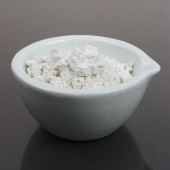
Whiting
Starting at: £4.00
Whiting is powdered Calcium Carbonate, which can be mixed with rabbit skin glue to create a chalk-based ground for oil, tempera, distemper or encaustic painting. Traditionally, whiting was an important ingredient when preparing painting surfaces in the north of Europe, as opposed to gypsum (Calcium Sulphate), which was widely used south of the Alps. Learn More -
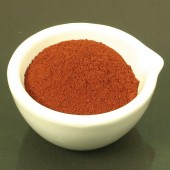
Dragon's Blood Powder
Starting at: £28.10
Dragon's Blood is a natural, resin, mentioned by Pliny in his Natural History. It has a weak tinting strength, and its rich red-colour can be fugitive in direct sunlight. It is fully soluble in alcohol, and can be used to add a warm, transparent tone to spirit varnishes. Also available in lump form.
Learn More -
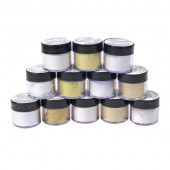
Pearl Lustre Pigments 1 kg
Starting at: £94.00
Call to Order
Pearl Lustre Pigments 1 kg. Colour swatch on the left indicates colour on a White Background and Colour on a Black Background on the right. Learn More -
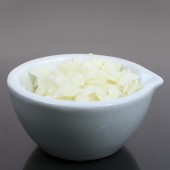
Bleached Beeswax
Starting at: £12.30
Beeswax is derived from melted honeycomb, and is available in two grades. Bleached Beeswax Pellets are white, having been bleached by the sun, and are an appropriate choice for using with pale colours, although they may revert to yellow over time. Natural Beeswax Pellets are yellow in colour, and offer a more flexible structure with a higher resin content. Beeswax has a melting point of 63-66°c, and may turn brown if over-heated. It is the most widely used wax in artists' materials, having a wide range of applications. Please see below for more details.
Learn More -
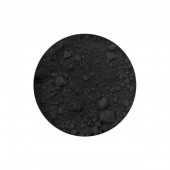
Mars Black Pigment
Starting at: £5.70
PBk11
Mars Black is an artificial mineral pigment composed of hydrated ferric oxides. Like other Mars colours, it provides a very opaque, permanent colour, which is stable in all media. It has an average drying time in oil, forming a hard, fairly flexible film, making it more suitable for impasto application than carbon-based black pigments, which tend to be brittle. It also wets more easily than other black pigments, and possesses a warm, brownish undertone.
Toxicity: B
Limeproof
Larger quantities are available by request.
Learn More -
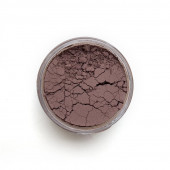
Caput Mortuum Pigment
Starting at: £4.50
Caput Mortuum is a transparent, lightfast pigment that is stable in all media. Colours described as Caput Mortuum can vary greatly; our pigment is a soft purple-brown, made from a mixture of natural iron oxides. It is believed that Caput Mortuum has its roots in ancient Egypt, when colour was derived from remains that had been embalmed in asphaltum.
Toxicity B
Learn More
Currently Shopping by:
- Category: Pigments, Gums, Resins Remove This Item
Shopping Options
- Category
-
- Artists Quality Pigment Sets (2)
- Artists Quality Pigments Blacks (7)
- Artists Quality Pigments Blues (12)
- Artists Quality Pigments Earths (24)
- Artists Quality Pigments Greens (9)
- Artists Quality Pigments Reds (12)
- Artists Quality Pigments Violets (4)
- Artists Quality Pigments Whites (4)
- Artists Quality Pigments Yellows (14)
- The Early Colour Pigments (22)
- Equipment (11)
- Fillers, Chalks, and Abrasives (11)
- Gums and Resins (16)
- Limeproof Pigments (28)
- London Pigment (14)
- Pearl Lustre Pigments (3)
- Small Pigment Sizes (2)
- Storage Containers (5)
- Waxes, Adhesives and Sizes (18)
- Price
-
- £0.00 - £9.99 (124)
- £10.00 - £19.99 (37)
- £20.00 - £29.99 (19)
- £30.00 - £39.99 (10)
- £40.00 - £49.99 (3)
- £50.00 - £59.99 (2)
- £90.00 and above (1)
- Manufacturer
-
- Cornelissen (168)
- London Pigment (14)
- Roberson (1)
- Schmincke (8)
You have no items in your shopping basket.

- Search Brands
-