

Search results for 'la'


-
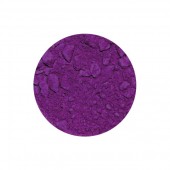
Cobalt Violet Dark Pigment
Starting at: £14.00
Cobalt Violet Dark Pigment (PV14). Synthetic inorganic pigment. Semi-transparent. High tinting strength. Excellent Lightfastness. Low oil absorption with fast drying rate. All media including ceramics. Used since late 19th Century.
Limeproof
Toxicity: C
Please note, unfortunately we are not able to send this product outside the UK.
Learn More -
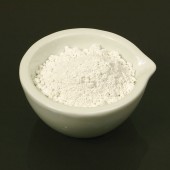
Gypsum
Starting at: £5.70
Gypsum is powdered Calcium Sulphate, a traditional ingredient in gesso grounds used in southern Europe. One of the advantages of preparing your painting surface with gypsum is that it allows for a particularly even absorption of the paint film. It can also be added to acrylic primers to increase absorbency or add tooth to a surface. Learn More -
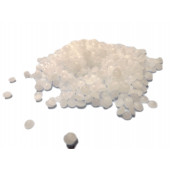
Microcrystalline Wax
Starting at: £8.50
Microcrystalline Wax is related to paraffin wax, and is used as a plasticiser in some recipes. It is characterised by the fineness of its crystals in contrast to the larger crystal of paraffin wax. It is generally more viscous, denser, tackier and more elastic than paraffin waxes, and has a higher melting point. Learn More -
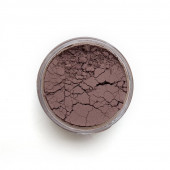
Caput Mortuum Pigment
Starting at: £4.50
Caput Mortuum is a transparent, lightfast pigment that is stable in all media. Colours described as Caput Mortuum can vary greatly; our pigment is a soft purple-brown, made from a mixture of natural iron oxides. It is believed that Caput Mortuum has its roots in ancient Egypt, when colour was derived from remains that had been embalmed in asphaltum.
Toxicity B
Learn More -
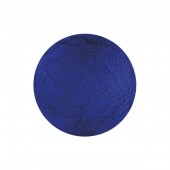
Blue Verditer Pigment
Starting at: £7.50
** While stocks last ** Blue Verditer, sometimes referred to as Bremen Blue, is a synthetic form of Azurite, or copper-calcium carbonate. It has a weak tinting strength and is sligtly transparent. It works best in water-based binders, as the acidity of linseed oil can cause discolouration.
Learn More
Larger sizes available on request -
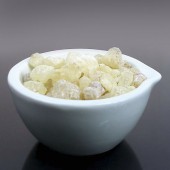
Gum Damar
Starting at: £10.00
Damar is a pale, almost colourless tree resin, which is soluble in turpentine, but not in alcohol or mineral spirits. It can be used as a varnish or as a glossy painting medium in conjunction with vegetable oils, and is generally preferable to other resin-based varnishes, such as mastic varnish, as it retains its colourless appearance for a longer period of time. In encaustic painting, the inclusion of damar resin imparts toughness and gloss to the paint surface. Learn More -
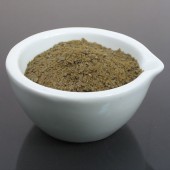
Carnauba Wax Grey
Starting at: £8.40
Carnauba Wax is the hardest wax commonly used in the production of artists' materials, with a melting point of 83-86°c. It is derived from a tree native to South America, and is available in a natural colour (grey), or a refined colour (pale yellow). Small amounts of carnauba wax are commonly used in both oil painting mediums and encaustic painting, usually in conjunction with beeswax to add toughness, durability and sheen to the paint film. It creates an inflexible surface, so works best on rigid supports such as gesso panels, and it should be noted that it will raise the melting point of encaustic mixtures. It can produce a glossy finish; as such it is used in waxes and polishes for shoes, cars, musical instruments, furniture, and wooden floors, especially when mixed with beeswax and turpentine. Learn More -
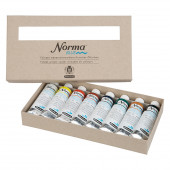
Schmincke Norma Blue Set 8 x 35 ml, Cardboard Box
£59.75Water-mixable (water miscible), highly pigmented, lightfast paints with a buttery consistency. Vegan, low odour, anti-allergenic, environmentally friendly. Learn More -
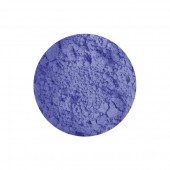
Cerulean Blue Pigment
Starting at: £14.50
PB35
Cerulean Blue is an artificial mineral pigment that is prepared by heating a mixture of Cobalt Chloride and Potassium Stannate. It was first synthesised in the early nineteenth century, becoming more widely used from 1870, when Rowney introduced Coeruleum Blue into their range. It produces a very bright, clear, and unusually opaque blue, hence its name, which is derived from the Latin for "sky-blue", or perhaps "heaven-blue". It has a very low tinting strength meaning that, although it is stable in all media, some artists may choose to bind it in poppy rather than linseed oil, so that the colour isn't affected by the colour of the binder. It creates a fairly flexible paint film, and is a fast-to-medium drying pigment.
Limeproof
Toxicity: B
Learn More -
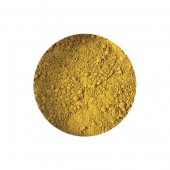
Raw Sienna Pigment
Starting at: £4.00
PBr7
Raw Sienna is a natural earth pigment that dates back to antiquity. Our Raw Sienna comes from areas of Tuscany where the earth has been coloured by iron-rich minerals. It provides a good tinting strength, excellent lightfastness, and a fast to medium drying rate in oil. It is stable in all media but, like umber pigments, can be difficult to disperse in an acrylic binder. It is similar in composition to Yellow Ochre, but whereas Yellow Ochre contains a higher proportion of clay, Raw Sienna contains a higher proportion of silica. As a natural material, the exact colour and qualities of the resultant pigments can vary, but generally this difference creates a paler, more opaque Yellow Ochre, and a darker, more transparent Raw Sienna.
Toxicity: B
Learn More -
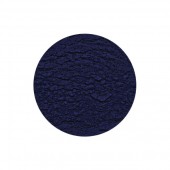
Phthalo Turquoise Pigment
Starting at: £17.00
Phthalo Turquoise Pigment (PB15.3, PG7, PW21). Mixture of Phthalo Green, Phthalo Blue and Blanc Fixe. Transparent. Excellent Lightfastness. Requires wetting agent. Toxicity B Learn More -
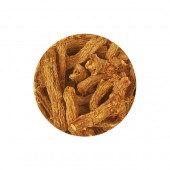
Madder Root Pieces
Starting at: £27.80
NR9
The madder plant was once widely cultivated for the red dye extracted from its roots. Its earliest known use is in ancient Egypt, and there is evidence of its widespread adoption in Europe from the medieval period. Madder Lake, the pigment that is derived from the root, has now largely been replaced by synthetic alizarin pigments, but it is still used as an ingredient in some commercial paints. It provides a very transparent pigment, with a weak tinting strength, which can be used in all lime-free media, although it is very slow-drying in oil. It is fugitive to sunlight, so paintings containing Madder should be stored appropriately, but it remains one of the most lightfast plant-based pigments.
Larger quantities are available by request.
Learn More -
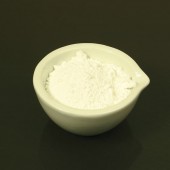
Alumina Hydrate Light
Starting at: £8.30
Alumina Hydrate is an inert pigment with highly absorbent properties, which can be ground into oil paint as an almost colourless extender. It is often used as an additive in commercial oil paints, particularly in conjunction with transparent or lake pigments, as it provides stability and a homogenous consistency without effecting colour or gloss, although it may effect the pigment strength. When combined with linseed oil, it produces an almost transparent painting medium for extending oil colours. Sometimes referred to as Lake Base. Learn More -
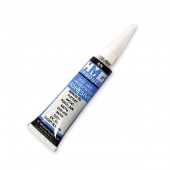
HMG Acrylic Restoration Adhesive
£6.00HMG Acrylic Restoration Adhesive. Heat and waterproof adhesive for repairs to pottery, wood, porcelain, leather etc. Not suitable for use on rubber. 14ml. Learn More -
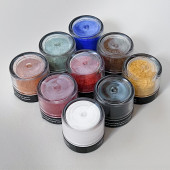
Cornelissen Iconographer's Pigment Set, with Aidan Hart
£41.00Nine pigments, especially selected for L. Cornelissen & Son by Aidan Hart, renowned icon painter, writer and lecturer. Learn More -
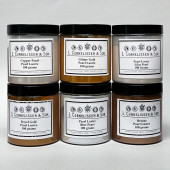
Cornelissen Pearl Lustre Pigments 100g
Starting at: £12.90
Pearl Lustre Pigments 100g. Colour swatch on the left indicates colour on a White Background and Colour on a Black Background on the right. Learn More -
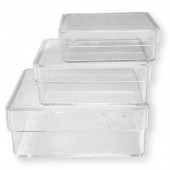
Transparent Containers
Starting at: £1.20
Rigid high quality boxes manufactured in clear Polystyrene. Medium and large sizes are ideal for storing loose nibs. Learn More -
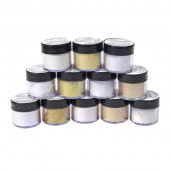
Pearl Lustre Pigments 1 kg
Starting at: £94.00
Call to Order
Pearl Lustre Pigments 1 kg. Colour swatch on the left indicates colour on a White Background and Colour on a Black Background on the right. Learn More -
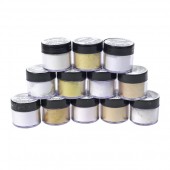
Pearl Lustre Pigments 7g
Starting at: £4.70
Pearl Lustre Pigments 7g. Colour swatch on the left indicates colour on a White Background and Colour on a Black Background on the right. Learn More -
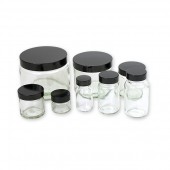
Squat & Powder Jars
Starting at: £0.75
Squat and Powder Jars in glass and plastic. *Please note, our glass jars are fragile, although they are packed very carefully we cannot guarantee they will arrive safely. Cases of jars are stored offsite, please allow extra time for your order to be processed and dispatched. Learn More -
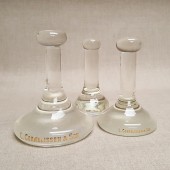
Cornelissen Glass Mullers
Starting at: £24.50
Cornelissen Glass Mullers are handmade using superior boro silicate laboratory glass, which is 40% harder, more heat resistant, and offers better clarity than soda-lime glass. The base of each muller is ground perfectly flat, and sand-blasted to create a fine tooth to facilitate the grinding of pigments. The tall handle features an ergonomic top, to ease fatigue when grinding large amounts of pigment. Mullers act as flat-bottomed pestles, which are used to grind pigment into a binding medium, suspending it evenly to create a uniform covering of binder around each pigment particle. Using a muller and slab, rather than simply mixing pigment and binder together, will create a more homogenised and stable paint. Use in conjunction with a Cornelissen Glass Slab to make paint efficiently. The sand-blasted texture of the muller and plate helps to push and distribute the pigment throughout the binder quickly. This will mean less grinding, and more painting! Learn More -
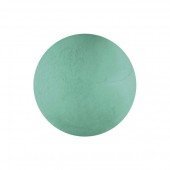
Synthetic Malachite Pigment
Starting at: £4.20
Synthetic Malachite is an artificial mineral pigment, copper carbonate, chemically based on Malachite. It has a medium tinting strength and good opacity. Larger sizes available on request Learn More -
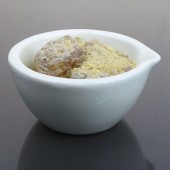
Gum Copal Manila
Starting at: £6.00
Gum Copal Manila is derived from the resin of a coniferous tree native to the Philippines. It is not to be confused with other copals, which are the product of fossilised plant materials. It can be dissolved in alcohol to make a spirit varnish, to be used as a substitute for shellac, or as a fixative for pastel and charcoal drawings. Please note, that when used as a fixative it may darken the colour of the image. Learn More -
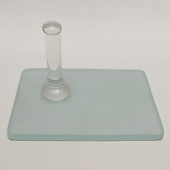
Cornelissen Mini Glass Muller and Slabs
Starting at: £28.00
Use Cornelissen Mini Glass Mullers in conjunction with a Cornelissen Glass Slab to make paint efficiently. The sand-blasted texture of the muller and plate helps to push and distribute the pigment throughout the binder quickly. This means less time grinding, more time painting! Learn More -
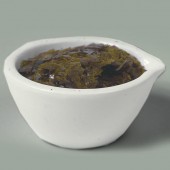
Clear Dewaxed Shellac
Starting at: £9.20
Shellac is a natural resin that is deposited by the female lac insect on the branches of trees in India and Thailand. It is soluble with alcohol, but not with mineral spirits or turpentine. It forms a tough yet flexible film, with many applications. It is suitable as a top coat for gilding when applied thinly, a sealant for porous surfaces, an isolating layer for tempera paintings, a base for pigmented inks, a protective layer for collograph plates, and a warm varnish for wooden floors and furniture. As it is prone to darkening with age, it is not recommended as a varnish for oils, and its solubility can reduce over time. There are various grades of shellac. When mixed with alcohol, it may initially form a cloudy mixture, due to traces of wax in the shellac, but this should become clear once it has dried. The highest grades of shellac are Clear Dewaxed Shellac, which has been de-coloured using the carbon filtering method, Lemon Shellac, and Orange Shellac, which are pale in colour. Button Shellac is less refined and therefore produces a reddish varnish. It was, in fact, widely used as a red dye before synthetic dyes became available. Learn More -
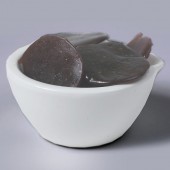
Button Shellac
Starting at: £8.40
Shellac is a natural resin that is deposited by the female lac insect on the branches of trees in India and Thailand. It is soluble with alcohol, but not with mineral spirits or turpentine. It forms a tough yet flexible film, with many applications. It is suitable as a top coat for gilding when applied thinly, a sealant for porous surfaces, an isolating layer for tempera paintings, a base for pigmented inks, a protective layer for collograph plates, and a warm varnish for wooden floors and furniture. As it is prone to darkening with age, it is not recommended as a varnish for oils, and its solubility can reduce over time. There are various grades of shellac. When mixed with alcohol, it may initially form a cloudy mixture, due to traces of wax in the shellac, but this should become clear once it has dried. The highest grades of shellac are Clear Dewaxed Shellac, which has been de-coloured using the carbon filtering method, Lemon Shellac, and Orange Shellac, which are pale in colour. Button Shellac is less refined and therefore produces a reddish varnish. It was, in fact, widely used as a red dye before synthetic dyes became available. Learn More -
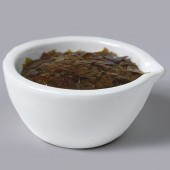
Orange Shellac
Starting at: £8.00
Shellac is a natural resin that is deposited by the female lac insect on the branches of trees in India and Thailand. It is soluble with alcohol, but not with mineral spirits or turpentine. It forms a tough yet flexible film, with many applications. It is suitable as a top coat for gilding when applied thinly, a sealant for porous surfaces, an isolating layer for tempera paintings, a base for pigmented inks, a protective layer for collograph plates, and a warm varnish for wooden floors and furniture. As it is prone to darkening with age, it is not recommended as a varnish for oils, and its solubility can reduce over time. There are various grades of shellac. When mixed with alcohol, it may initially form a cloudy mixture, due to traces of wax in the shellac, but this should become clear once it has dried. The highest grades of shellac are Clear Dewaxed Shellac, which has been de-coloured using the carbon filtering method, Lemon Shellac, and Orange Shellac, which are pale in colour. Button Shellac is less refined and therefore produces a reddish varnish. It was, in fact, widely used as a red dye before synthetic dyes became available. Learn More -
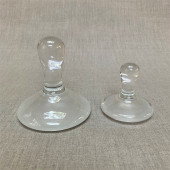
Roberson Glass Mullers
Starting at: £25.00
Roberson Glass Mullers are handmade using high quality-glass.
Mullers act as flat-bottomed pestles, which are used to grind pigment into a binding medium, suspending it evenly to create a uniform covering of binder around each pigment particle. Using a muller and slab, rather than simply mixing pigment and binder together, will create a more homogenised and stable paint.
Roberson Glass Mullers are handmade using superior boro silicate laboratory glass, which is 40% harder, more heat resistant, and offers better clarity than soda-lime glass. The base of each muller is ground perfectly flat, and sand-blasted to create a fine tooth to facilitate the grinding of pigments.Use in conjunction with a Cornelissen Glass Slab to make paint efficiently. The sand-blasted texture of the muller and plate helps to push and distribute the pigment throughout the binder quickly. This will mean less grinding, and more painting!
NOTE: Sizes may vary slightly as these are handmade products.
Learn More -
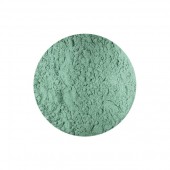
Genuine Malachite Pigment
Starting at: £15.00
Malachite is a naturally occurring copper carbonate, closely related to Azurite. It has a weak tinting strength, is quite opaque, and works best in aqueous media. Larger sizes available on request. Learn More -
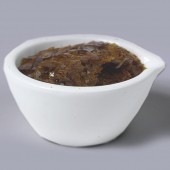
Lemon Shellac
Starting at: £8.20
Shellac is a natural resin that is deposited by the female lac insect on the branches of trees in India and Thailand. It is soluble with alcohol, but not with mineral spirits or turpentine. It forms a tough yet flexible film, with many applications. It is suitable as a top coat for gilding when applied thinly, a sealant for porous surfaces, an isolating layer for tempera paintings, a base for pigmented inks, a protective layer for collograph plates, and a warm varnish for wooden floors and furniture. As it is prone to darkening with age, it is not recommended as a varnish for oils, and its solubility can reduce over time. There are various grades of shellac. When mixed with alcohol, it may initially form a cloudy mixture, due to traces of wax in the shellac, but this should become clear once it has dried. The highest grades of shellac are Clear Dewaxed Shellac, which has been de-coloured using the carbon filtering method, Lemon Shellac, and Orange Shellac, which are pale in colour. Button Shellac is less refined and therefore produces a reddish varnish. It was, in fact, widely used as a red dye before synthetic dyes became available. Learn More
Currently Shopping by:
- Category: Pigments, Gums, Resins Remove This Item
Shopping Options
- Category
-
- Artists Quality Pigment Sets (2)
- Artists Quality Pigments Blacks (7)
- Artists Quality Pigments Blues (9)
- Artists Quality Pigments Earths (11)
- Artists Quality Pigments Greens (7)
- Artists Quality Pigments Reds (8)
- Artists Quality Pigments Violets (1)
- Artists Quality Pigments Whites (3)
- Artists Quality Pigments Yellows (6)
- The Early Colour Pigments (17)
- Equipment (6)
- Fillers, Chalks, and Abrasives (7)
- Gums and Resins (11)
- Limeproof Pigments (20)
- London Pigment (12)
- Pearl Lustre Pigments (3)
- Small Pigment Sizes (2)
- Storage Containers (4)
- Waxes, Adhesives and Sizes (13)
- Price
-
- £0.00 - £9.99 (79)
- £10.00 - £19.99 (23)
- £20.00 - £29.99 (18)
- £30.00 - £39.99 (7)
- £40.00 - £49.99 (3)
- £50.00 - £59.99 (1)
- £90.00 and above (2)
- Manufacturer
-
- Cornelissen (111)
- London Pigment (12)
- Roberson (1)
- Schmincke (6)
You have no items in your shopping basket.

- Search Brands
-