Search results for 'red'
-
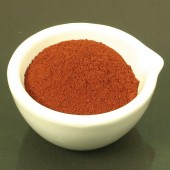
Dragon's Blood Powder
Starting at: £28.10
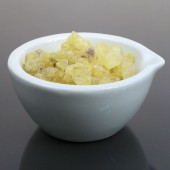
Dragon's Blood is a natural, resin, mentioned by Pliny in his Natural History. It has a weak tinting strength, and its rich red-colour can be fugitive in direct sunlight. It is fully soluble in alcohol, and can be used to add a warm, transparent tone to spirit varnishes. Also available in lump form.
Learn More -
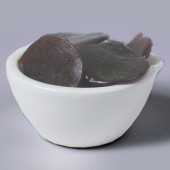
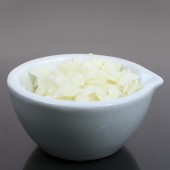
Bleached Beeswax
Starting at: £12.30
Beeswax is derived from melted honeycomb, and is available in two grades. Bleached Beeswax Pellets are white, having been bleached by the sun, and are an appropriate choice for using with pale colours, although they may revert to yellow over time. Natural Beeswax Pellets are yellow in colour, and offer a more flexible structure with a higher resin content. Beeswax has a melting point of 63-66°c, and may turn brown if over-heated. It is the most widely used wax in artists' materials, having a wide range of applications. Please see below for more details.
Learn More -
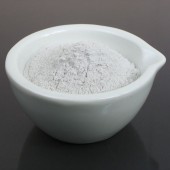
Alumina Hydrate Light
Starting at: £8.30
Alumina Hydrate is an inert pigment with highly absorbent properties, which can be ground into oil paint as an almost colourless extender. It is often used as an additive in commercial oil paints, particularly in conjunction with transparent or lake pigments, as it provides stability and a homogenous consistency without effecting colour or gloss, although it may effect the pigment strength. When combined with linseed oil, it produces an almost transparent painting medium for extending oil colours. Sometimes referred to as Lake Base. Learn More -
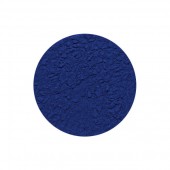
Ultramarine Blue Light Pigment
Starting at: £6.00
PB29
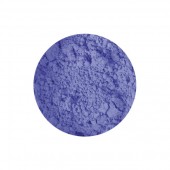
Ultramarine Blue Light is an artificial mineral pigment that is produced by heating clay, soda, sulphur and coal to high temperatures. Its name comes from outremer, or over-the-sea, as a reference to the highly-prized Lapis Lazuli pigment which had been imported into Europe from Afghanistan since the Middle Ages. First manufactured in France and Germany in 1828, synthetic Ultramarine provided a brilliant and affordable blue to artists, and it remains one of the most popular blues on artists' palettes today.
It is a transparent pigment, with a high tinting strength and excellent lightfastness. It reacts to alkali, therefore it is not suitable for use in lime-fresco; we do offer a Limeproof Ultramarine Blue for this purpose. It is stable in all other media, although it can be tricky to grind in oil. Instead of creating a thick, buttery paste, it can remain stringy and deteriorate when stored in a tube. To correct this, many commercial paint manufacturers include additives and waxes in their recipes; if you intend on grinding your own paint, you could try replacing 10-15% of your Linseed Oil with Poppy Oil to improve the consistency. Ultramine Blue provides a slow-drying, fairly hard paint film, which can tend towards brittleness.
Toxicity B
Learn More -
Colophony
Starting at: £7.30
Colophony is a by-product of the distillation of turpentine. It is soluble in most solvents, but considered an adulterant in varnishes and paints, as it forms a weak surface that is prone to darkening and cracking. It is, however, a key ingredient in wax-based etching grounds, imparting hardness, and can be used in powdered form (rosin) to make aquatints. Learn More -
Schmincke Norma Blue Set 8 x 35 ml, Cardboard Box
£59.75Water-mixable (water miscible), highly pigmented, lightfast paints with a buttery consistency. Vegan, low odour, anti-allergenic, environmentally friendly. Learn More -
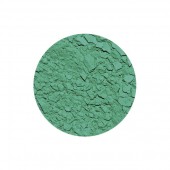
Blue Verditer Pigment
Starting at: £7.50
** While stocks last ** Blue Verditer, sometimes referred to as Bremen Blue, is a synthetic form of Azurite, or copper-calcium carbonate. It has a weak tinting strength and is sligtly transparent. It works best in water-based binders, as the acidity of linseed oil can cause discolouration.
Learn More
Larger sizes available on request -
Orange Shellac
Starting at: £8.00
Shellac is a natural resin that is deposited by the female lac insect on the branches of trees in India and Thailand. It is soluble with alcohol, but not with mineral spirits or turpentine. It forms a tough yet flexible film, with many applications. It is suitable as a top coat for gilding when applied thinly, a sealant for porous surfaces, an isolating layer for tempera paintings, a base for pigmented inks, a protective layer for collograph plates, and a warm varnish for wooden floors and furniture. As it is prone to darkening with age, it is not recommended as a varnish for oils, and its solubility can reduce over time. There are various grades of shellac. When mixed with alcohol, it may initially form a cloudy mixture, due to traces of wax in the shellac, but this should become clear once it has dried. The highest grades of shellac are Clear Dewaxed Shellac, which has been de-coloured using the carbon filtering method, Lemon Shellac, and Orange Shellac, which are pale in colour. Button Shellac is less refined and therefore produces a reddish varnish. It was, in fact, widely used as a red dye before synthetic dyes became available. Learn More -
Cornelissen Virtual Gift Voucher
£25.00The Cornelissen Virtual Gift Voucher will arrive with the recipient in the form of an email containing a virtual gift code. This code will be emailed immediately after the order is placed. Please see the range of values available below. Vouchers can be redeemed fully or partly and do not expire. Alternatively, please call us on 020 7636 1045 or email info@cornelissen.com to request one of the following:Physical Gift Voucher (a paper voucher with a code for use only in the shop, for any value).
Combination Gift Voucher (a paper voucher with separate codes for use online or in the shop, for the values listed on the website).
If you purchase a Physical or Combination Gift Voucher, this will be sent to you in the post. Learn More -
Prussian Blue Pigment
Starting at: £5.20
PB27
Prussian Blue is a synthetic organic pigment that was discovered by the paint maker Diesbach, apparently by accident, in Germany in the early eighteenth century. For many years, it was used not only as a colour in its own right, but also as a component of the original Hooker's Green. The other ingredient, gamboge, is highly fugitive, which is why many watercolours painted with Hooker's green have taken on a bluish tone with with age.
It is a very transparent and heavily staining colour. It dries quite quickly in oil, and can therefore wrinkly if applied too quickly. It is suitable for use in oils, watercolour, and egg tempera. However, it shouldn't be used in conjunction with alkali substances, such as Lead White or Calcium Carbonate as it can turn brown, so it isn't suitable for fresco. For the same reason, it isn't used with acrylic resin binders due to their alkaline nature, so most paint manufacturers will replace Prussian Blue with a mixture of Phthalo Blue and black in their acrylic ranges. It requires a wetting agent to fully disperse into a binder.
Toxicity: B
Learn More -
Transparent Containers
Starting at: £1.20
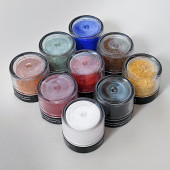
Rigid high quality boxes manufactured in clear Polystyrene. Medium and large sizes are ideal for storing loose nibs. Learn More -
Clear Dewaxed Shellac
Starting at: £9.20
Shellac is a natural resin that is deposited by the female lac insect on the branches of trees in India and Thailand. It is soluble with alcohol, but not with mineral spirits or turpentine. It forms a tough yet flexible film, with many applications. It is suitable as a top coat for gilding when applied thinly, a sealant for porous surfaces, an isolating layer for tempera paintings, a base for pigmented inks, a protective layer for collograph plates, and a warm varnish for wooden floors and furniture. As it is prone to darkening with age, it is not recommended as a varnish for oils, and its solubility can reduce over time. There are various grades of shellac. When mixed with alcohol, it may initially form a cloudy mixture, due to traces of wax in the shellac, but this should become clear once it has dried. The highest grades of shellac are Clear Dewaxed Shellac, which has been de-coloured using the carbon filtering method, Lemon Shellac, and Orange Shellac, which are pale in colour. Button Shellac is less refined and therefore produces a reddish varnish. It was, in fact, widely used as a red dye before synthetic dyes became available. Learn More -
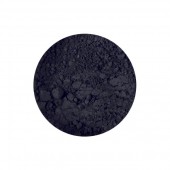
Vine Black Pigment
Starting at: £4.70
PBk8
Vine Black is derived from charred vines, forming an organic pigment of pure carbon. It has been in use since antiquity, providing a cold black with bluish undertones, which creates a blue-grey when mixed with white. It is a very lightfast, slow-drying colour with a medium tinting strength. It requires a wetting agent to disperse properly, and is not suitable for use in fresco, mortar or cement, as the water-soluble impurities within the pigment can create efflorescence.
Toxicity: A
Learn More -
Lead Red Pigment (Minium)
Starting at: £7.30
Call to Order
PR105
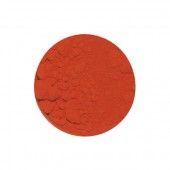
Lead Red is an early articficial pigment that dates back to antiquity. It is created by heating Lead White or Litharge at a constant temperature of 480ºC over a prolonged period of time. It is a fast-drying colour, with good tinting strength and opacity, and has been widely used as an underpaint for gilding and in industry. However, it is highly toxic and generally unstable, so has fallen out of use in favour of Cadmium pigments. The acid in linseed oil causes Lead Red to darken, and it can solidify when stored in a tube. In water-based mediums, it can turn black.
Toxicity D Lead is a highly poisonous metal which, if inhaled, ingested, or introduced to the blood through cuts in the skin, builds up in the body and can affect multiple parts of the body, including the digestive and nervous systems.
PERMITTED USES Over 18s only. Proof of age required. Restoration of art works and protected buildings when alternatives unsuitable.
IMPORTANT Please refer to the MSDS (Material Safety Data Sheet) below. Dispose of product as hazardous waste.
SHIPPING Please note, we are not able to send this product outside the UK.
Learn More -
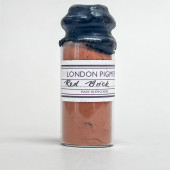
London Pigment, London Red Brick
£18.00Call to Order
Made from pulverised historic London bricks collected from the foreshore of the Thames near Tower Bridge and Wapping this deep red pigment is essentially a variety of red ochre. During the Victorian era, London Clay was dug up and fired on construction sites to produce the building materials for the city. Red brick pigment has a medium grain size and is opaque. ****Please note, these pigments are artisan made in small batches. Please email info@cornelissen.com for availability**** Learn More
-
London Pigment, London Red Brick
£30.00Call to Order
Pigment collected from erosion of modern red brick stock. ****Please note, these pigments are artisan made in small batches. Please email info@cornelissen.com for availability**** Learn More -
Cinnabar Pigment
Starting at: £16.00
Call to Order
PR106
Cinnabar, composed of mercuric sulphide, is a mineral pigment found in crusts or veins in sites of volcanic activity. It has good tinting strength and opacity but, like many red pigments, it dries very slowly in oil media. Due to its high toxicity, it is no longer an ingredient in commercial paints, but is a prominent colour in historical palettes. Generally, Cinnabar refers to the natural mineral, while Vermilion refers to the synthetic pigment. Cinnabar has been mined since at least the tenth millennium BC, and used as a painting material, gemstone, and ritual object by many cultures around the globe.
Toxicity D
PERMITTED USES Over 18s only. Proof of age required. Restoration of art works and protected buildings when alternatives unsuitable.
IMPORTANT Please refer to the MSDS (Material Safety Data Sheet) below. Dispose of product as hazardous waste.
SHIPPING Please note, we are not able to send this product outside the UK.
Learn More -
Naples Yellow Light Pigment
Starting at: £7.40
Call to Order
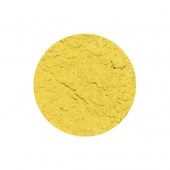
Naples Yellow Light Pigment (PY41). Synthetic Inorganic pigment (Lead Antimoniate). Opaque. Good tinting strength. Excellent Lightfastness. Low oil absorption with fast drying rate. Suitable for all media except watercolours.
Toxicity D Lead is a highly poisonous metal which, if inhaled, ingested, or introduced to the blood through cuts in the skin, builds up in the body and can affect multiple parts of the body, including the digestive and nervous systems.
PERMITTED USES Over 18s only. Proof of age required. Restoration of art works and protected buildings when alternatives unsuitable.
IMPORTANT Please refer to the MSDS (Material Safety Data Sheet) below. Dispose of product as hazardous waste.
SHIPPING Please note, we are not able to send this product outside the UK.
Learn More -
Lemon Yellow Pigment
Starting at: £7.00
Call to Order
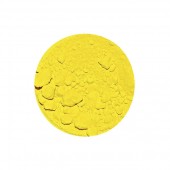
Lemon Yellow Pigment (PY31). Synthetic Inorganic pigment (Barium Chromate). Opaque but transparent in a glaze. Low tinting strength. Excellent Lightfastness. Low oil absorption with medium drying rate. Recommended for oils but can turn slightly greenish when mixed with binder. Used since beginning of the 19th Century.
Toxicity D Contains Barium Chromate. See Material Safety Data Sheet (MSDS) below for full details.
PERMITTED USES Over 18s only. Proof of age required. Restoration of art works and protected buildings when alternatives unsuitable.
IMPORTANT Please refer to the MSDS (Material Safety Data Sheet) below. Dispose of product as hazardous waste.
SHIPPING Please note, we are not able to send this product outside the UK.
Learn More -
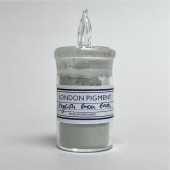
London Pigment, English Green Earth
£30.00Call to Order
Prepared by hand and bottled in a rare, hand-blown laboratory glass Weighing Bottle. 20 ml. Gently twist the hand-formed, flame-like stopper and pull carefully to open. ****Please note, these pigments are artisan made in small batches. Please email info@cornelissen.com for availability**** Learn More
-
Chrome Yellow Middle Pigment
Starting at: £10.00
Call to Order
Synthetic Inorganic pigment (Lead Chromate). Opaque. Good tinting strength. Lightfastness is good, but in some cases unstable as it can darken and turn greenish. Low oil absorption with fast drying rate. Recommended for oils not suitable for water-based mediums. Used since late 18th Century.Toxicity D Lead is a highly poisonous metal which, if inhaled, ingested, or introduced to the blood through cuts in the skin, builds up in the body and can affect multiple parts of the body, including the digestive and nervous systems.
PERMITTED USES Over 18s only. Proof of age required. Restoration of art works and protected buildings when alternatives unsuitable.
IMPORTANT Please refer to the MSDS (Material Safety Data Sheet) below. Dispose of product as hazardous waste.
SHIPPING Please note, we are not able to send this product outside the UK.
Learn More -
Orpiment Pigment
Starting at: £12.75
Call to Order
PY39
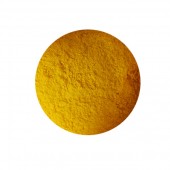
Orpiment, also called King's Yellow, is a mineral pigment containing naturally occurring sulphide of arsenic. Its high toxicity, and the prevalence of cadmium pigments, means that it is largely obsolete outside the field of restoration. It works best bound in oil or egg tempera, but it is not reliably permanent. Larger quantities are available by request.
Toxicity D
PERMITTED USES Over 18s only. Proof of age required. Restoration of art works and protected buildings when alternatives unsuitable.
IMPORTANT Please refer to the MSDS (Material Safety Data Sheet) below. Dispose of product as hazardous waste.
SHIPPING Please note, we are not able to send this product outside the UK.
Learn More -
Realgar Pigment
Starting at: £12.75
Call to Order
Realgar, like Orpiment, is sulphide of arsenic, and these two substances are often found in close proximity to each other in nature. Realgar exists in small deposits throughout the world and has been used for its colour since ancient times, although its extreme toxicity means that it has been superseded by cadmiums in modern painting. It is an opaque pigment with poor tinting strength. Larger quantities are available by request.
Toxicity D
PERMITTED USES Over 18s only. Proof of age required. Restoration of art works and protected buildings when alternatives unsuitable.
IMPORTANT Please refer to the MSDS (Material Safety Data Sheet) below. Dispose of product as hazardous waste.
SHIPPING Please note, we are not able to send this product outside the UK.
Learn More -
Lead Tin Yellow Light Pigment
Starting at: £4.80
Call to Order
Bright yellow first used in the Middle Ages as a replacement for Orpiment. Suitable for oil based media. Larger sizes available. Please ask for quotation.Toxicity D Lead is a highly poisonous metal which, if inhaled, ingested, or introduced to the blood through cuts in the skin, builds up in the body and can affect multiple parts of the body, including the digestive and nervous systems.
PERMITTED USES Over 18s only. Proof of age required. Restoration of art works and protected buildings when alternatives unsuitable.
IMPORTANT Please refer to the MSDS (Material Safety Data Sheet) below. Dispose of product as hazardous waste.
SHIPPING Please note, we are not able to send this product outside the UK.
Learn More -
Vermilion Genuine Pigment
Starting at: £17.00
Call to Order
PR106 Vermilion is an artificial pigment based on mercuric sulphide, which occurs naturally as Cinnabar. The synthetic form contains fewer impurities than Cinnabar, and was in use in China as early as the fourth century. It was present in Europe from the ninth century, and was the most widely used red pigment until the introduction of Cadmium Red in the early twentieth century. It has good tinting strength and opacity but, like many red pigments, it dries very slowly in oil media.Toxicity D
PERMITTED USES Over 18s only. Proof of age required. Restoration of art works and protected buildings when alternatives unsuitable.
IMPORTANT Please refer to the MSDS (Material Safety Data Sheet) below. Dispose of product as hazardous waste.
SHIPPING Please note, we are not able to send this product outside the UK.
Learn More -
Naples Yellow Dark Pigment
Starting at: £7.40
Call to Order
Naples Yellow Dark Pigment (PY41). Synthetic Inorganic pigment (Lead Antimoniate). Opaque. Good tinting strength. Excellent Lightfastness. Low oil absorption with fast drying rate. Suitable for all media except watercolours.
Toxicity D Lead is a highly poisonous metal which, if inhaled, ingested, or introduced to the blood through cuts in the skin, builds up in the body and can affect multiple parts of the body, including the digestive and nervous systems.
PERMITTED USES Over 18s only. Proof of age required. Restoration of art works and protected buildings when alternatives unsuitable.
IMPORTANT Please refer to the MSDS (Material Safety Data Sheet) below. Dispose of product as hazardous waste.
SHIPPING Please note, we are not able to send this product outside the UK.
Learn More -
London Pigment, Madder Pigment Set
£40.00Call to Order
Madder Red-Brown Rose Madder Madder Light Kaolin Learn More -
Chrome Yellow Orange Pigment
Starting at: £14.00
Call to Order
Chrome Yellow Orange Pigment (PY34). Synthetic Inorganic pigment (Lead Chromate). Opaque. Good tinting strength. Lightfastness is good, but in some cases unstable as it can darken and turn greenish. Low oil absorption with fast drying rate. Recommended for oils not suitable for water-based mediums. Used since late 18th Century.
Toxicity D Lead is a highly poisonous metal which, if inhaled, ingested, or introduced to the blood through cuts in the skin, builds up in the body and can affect multiple parts of the body, including the digestive and nervous systems.
PERMITTED USES Over 18s only. Proof of age required. Restoration of art works and protected buildings when alternatives unsuitable.
IMPORTANT Please refer to the MSDS (Material Safety Data Sheet) below. Dispose of product as hazardous waste.
SHIPPING Please note, we are not able to send this product outside the UK.
Learn More -
Chrome Yellow Light Pigment
Starting at: £10.00
Call to Order
Chrome Yellow Light Pigment (PY34). Synthetic Inorganic pigment (Lead Chromate). Opaque. Good tinting strength. Lightfastness is moderately good, but in some cases unstable as it can darken and turn greenish. Low oil absorption with fast drying rate. Recommended for oils not suitable for water-based mediums. Used since late 18th Century.
Toxicity D Lead is a highly poisonous metal which, if inhaled, ingested, or introduced to the blood through cuts in the skin, builds up in the body and can affect multiple parts of the body, including the digestive and nervous systems.
PERMITTED USES Over 18s only. Proof of age required. Restoration of art works and protected buildings when alternatives unsuitable.
IMPORTANT Please refer to the MSDS (Material Safety Data Sheet) below. Dispose of product as hazardous waste.
SHIPPING Please note, we are not able to send this product outside the UK.
Learn More -
Litharge Pigment
Starting at: £8.00
Call to Order
PY46
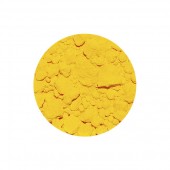
Litharge is lead monoxide, also known as Massicot. It is an opaque pigment, with a weak tinting strength. Its toxicity and fugitive nature means that it is rarely used as a pigment. Instead, its fast drying time means that it has been used as a siccative in oil mediums. The colour tends to darken in all media, and it is also unstable in its dry form, as the powder can lighten when exposed to air.
Toxicity D Lead is a highly poisonous metal which, if inhaled, ingested, or introduced to the blood through cuts in the skin, builds up in the body and can affect multiple parts of the body, including the digestive and nervous systems.
PERMITTED USES Over 18s only. Proof of age required. Restoration of art works and protected buildings when alternatives unsuitable.
IMPORTANT Please refer to the MSDS (Material Safety Data Sheet) below. Dispose of product as hazardous waste.
SHIPPING Please note, we are not able to send this product outside the UK.
Learn More