

Search results for 'st ar'


-
-
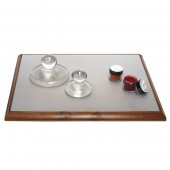
Mixing Slab
Starting at: £24.00
A glass slab with wooden cradle for the grinding of pigments.
The friction created between the sand-blasted surfaces of the glass slab and muller facilitates the thorough mixing of pigment and medium, creating a consistent and strong paint body. This slab can be used to manufacture many types of paint including watercolours, egg tempera and oils.
Mulling is of particular importance when making oil paint; simply mixing pigment and oil together using a palette knife will result in an unstable substance with poor plasticity, which contains a large amount of excess oil and unevenly distributed pigment particles. Thorough mulling in a figure-of-eight motion will enable the pigment to be fully combined into the binder, strengthening the resultant paint film.
PLEASE NOTE: The separate glass slabs are in stock but it is a call to order item due to the fact that we cannot guarantee its safe delivery, however well we package it. Please ring us to discuss your delivery options. In combination with the glass frame, delivery is more secure but we still cannot guarantee a delivery without breakage.
Learn More -
Gum Sandarac
Starting at: £8.60
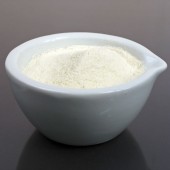
Gum Sandarac, derived from a coniferous tree, is available in powdered or lump form. It can be dissolved in alcohol to create a varnish that is suitable as an isolating layer in oil painting and as a traditional top coat for egg tempera. It forms a brittle layer, so is only suitable for use on a rigid support. Another application is as a surface preparation for calligraphy; the ground gum can be dusted across a piece of prepared vellum or paper to create a resist, which shrinks ink strokes slightly, making them appear finer, with crisp edges. Learn More -
Microcrystalline Wax
Starting at: £8.50
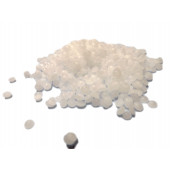
Microcrystalline Wax is related to paraffin wax, and is used as a plasticiser in some recipes. It is characterised by the fineness of its crystals in contrast to the larger crystal of paraffin wax. It is generally more viscous, denser, tackier and more elastic than paraffin waxes, and has a higher melting point. Learn More -
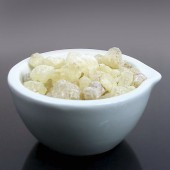
Gum Damar
Starting at: £10.00
Damar is a pale, almost colourless tree resin, which is soluble in turpentine, but not in alcohol or mineral spirits. It can be used as a varnish or as a glossy painting medium in conjunction with vegetable oils, and is generally preferable to other resin-based varnishes, such as mastic varnish, as it retains its colourless appearance for a longer period of time. In encaustic painting, the inclusion of damar resin imparts toughness and gloss to the paint surface. Learn More -
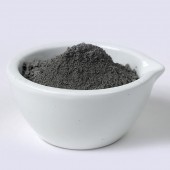
Rottenstone Grey
Starting at: £7.00
Fine abrasive powder used historically for polishing daguerreotype plates. Can be used to age wooden frames and object's d'art. Learn More -
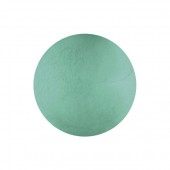
Synthetic Malachite Pigment
Starting at: £4.20
Synthetic Malachite is an artificial mineral pigment, copper carbonate, chemically based on Malachite. It has a medium tinting strength and good opacity. Larger sizes available on request Learn More -
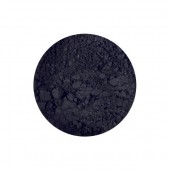
Ivory Black Genuine Pigment
Starting at: £38.00
PBk9
Genuine Ivory Black is produced by burning reclaimed ivory, such as piano keys. These are antique, mainly Victorian pieces, using ivory with started out as hippo or walrus teeth, and offers a higher carbon content and greater tinting strength than modern-day equivalents, which are usually derived from animal bones. It is a particularly slow-drying pigment.
Larger quantities are available by request. While stocks last.
Learn More -
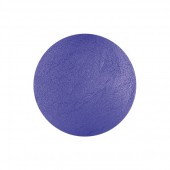
Egyptian Blue Pigment
Starting at: £5.90
Egyptian Blue is stable in all media, highly transparent, with a weak tinting strength. A synthetically produced calcium copper silicate, it is considered to be the earliest artificial pigment, dating from antiquity and widely used in ancient Egypt. Larger sizes available on request Learn More -
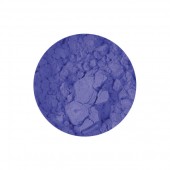
Smalt Light Pigment
Starting at: £5.20
PB32
Smalt is a kind of cobalt blue glass or frit, and its use as a pigment dates from the 1600s in the glass-making regions of Saxony. We offer two shades, light and dark, which are determined by the particle size of the pigment; the more finely ground the powder, the paler the colour. Before the introduction of Ultramarine Blue, Smalt was available in a wide variety of grades. It is a very transparent pigment, which is easily overwhelmed in mixtures due to its weak tinting strength. It works best in water based media. When ground in oil, it can become almost invisible in dried oil-paint films because its refractive index is so close to that of linseed oil.
Larger quantities are available by request.
Learn More -
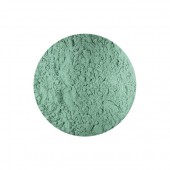
Genuine Malachite Pigment
Starting at: £14.90
Malachite is a naturally occurring copper carbonate, closely related to Azurite. It has a weak tinting strength, is quite opaque, and works best in aqueous media. Larger sizes available on request. Learn More -
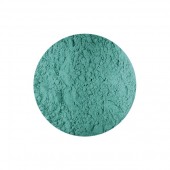
Verdigris Pigment
Starting at: £4.90
Verdigris is an artificial pigment that dates from antiquity. Originally, it was produced by exposing copper to vinegar; nowadays acetic acid is used. It is acidic, so can contribute to the deterioration of paper supports. For this reason, it is more suited to oil or tempera painting than it is to watercolour. In tempera painting, it should be bound in animal glue or isinglass glue rather than egg york. When used in oil painting it should be held in a resin oil or balsam such as Venice Turpentine, as it can turn brown when ground directly into linseed oil. It is a fast-drying, transparent pigment, with a visible crystalline structure.
Larger quantities are available by request.
Learn More -
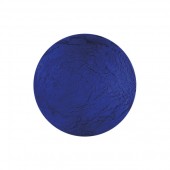
Blue Verditer Pigment
Starting at: £7.50
** While stocks last ** Blue Verditer, sometimes referred to as Bremen Blue, is a synthetic form of Azurite, or copper-calcium carbonate. It has a weak tinting strength and is sligtly transparent. It works best in water-based binders, as the acidity of linseed oil can cause discolouration.
Learn More
Larger sizes available on request -
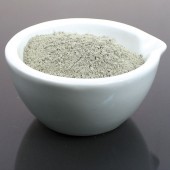
Fullers Earth
Starting at: £6.30
Fullers Earth is used to remove plant debris and other impurities from cold-pressed linseed oil, as its large particle size and unusual shape attracts unwanted matter and pulls it down, away from the surface of the oil. Our Fullers earth consist sly of Bentonite.
Learn More -
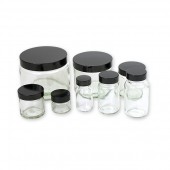
Squat & Powder Jars
Starting at: £0.75
Squat and Powder Jars in glass and plastic. *Please note, our glass jars are fragile, although they are packed very carefully we cannot guarantee they will arrive safely. Cases of jars are stored offsite, please allow extra time for your order to be processed and dispatched. Learn More -
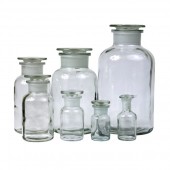
Reagent Jar
Starting at: £6.50
Our clear reagent bottles are manufactured in the EU and are made of high quality soda lime glass. They have a solid base and good wall thickness.
Learn More -
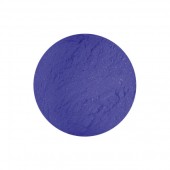
Smalt Dark Pigment
Starting at: £5.30
PB32
Smalt is a kind of cobalt blue glass or frit, and its use as a pigment dates from the 1600s in the glass-making regions of Saxony. We offer two shades, light and dark, which are determined by the particle size of the pigment; the more finely ground the powder, the paler the colour. Before the introduction of Ultramarine Blue, Smalt was available in a wide variety of grades. It is a very transparent pigment, which is easily overwhelmed in mixtures due to its weak tinting strength. It works best in water based media. When ground in oil, it can become almost invisible in dried oil-paint films because its refractive index is so close to that of linseed oil.
Larger quantities are available by request.
Learn More -
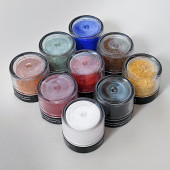
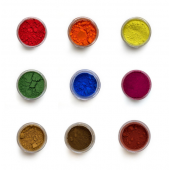
Cornelissen Iconographer's Pigment Set, with Aidan Hart
£41.00Nine pigments, especially selected for L. Cornelissen & Son by Aidan Hart, renowned icon painter, writer and lecturer. Learn More -
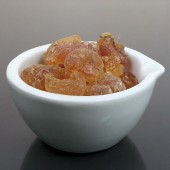
Gum Arabic
Starting at: £6.30
Gum Arabic is a resoluble binding agent, commonly used in the preparation of watercolours, but also useful as an adhesive, a size, and in the production of soft pastels. It is a natural product, harvested from the Acacia tree between October and May. The highest grade of Gum Arabic comes from the Kordofan region of Sudan. It is exceptionally pale and pure and therefore particularly suited to watercolour painting. Please see the Formulas & Recipes section on our homepage for a recipe to make your own watercolour paints using Gum Arabic (currently under construction). Learn More -
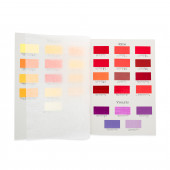
Cornelissen Pigment Colour Chart
£40.00Cornelissen Pigment Colour Chart. 85 pigment samples displayed in a 6 page 300 gsm A4 booklet, including 'permanence' and 'colour index' references. Colour swatches have been made using a casein binder. Learn More -
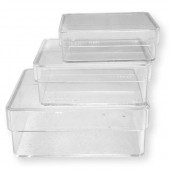
Transparent Containers
Starting at: £1.20
Rigid high quality boxes manufactured in clear Polystyrene. Medium and large sizes are ideal for storing loose nibs. Learn More -
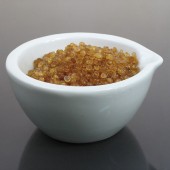
Pearl Glue
Starting at: £6.50
Pearl Glue is a traditional animal-based wood glue made from bone, used for veneering, joinery and antique restoration. 170-200 bloom. Learn More
-
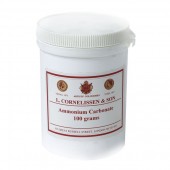
Ammonium Carbonate
Starting at: £9.70
Ammonium Carbonate is a highly Alkaline substance that reacts with the lactic acid present in casein to form a robust binder for tempera paints. It should only be used in a well-ventilated area, please see below for the Material Safety Data Sheet. Learn More -
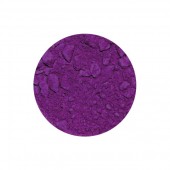
Cobalt Violet Dark Pigment
Starting at: £14.00
Cobalt Violet Dark Pigment (PV14). Synthetic inorganic pigment. Semi-transparent. High tinting strength. Excellent Lightfastness. Low oil absorption with fast drying rate. All media including ceramics. Used since late 19th Century.
Limeproof
Toxicity: C
Please note, unfortunately we are not able to send this product outside the UK.
Learn More -
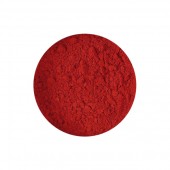
Quinacridone Scarlet Pigment
Starting at: £6.30
Quinacridone Scarlet Pigment (PR209). Organic pigment. Very transparent. High tinting strength. Excellent Lightfastness. High oil absorption with slow drying rate. Requires wetting agent. Suitable for all media. Developed in the 1950's. Toxicity A/B. Learn More -
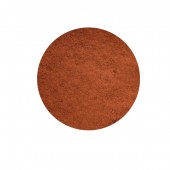
Burnt Green Earth Pigment
Starting at: £8.00
PG23 Burnt Green Earth is a semi-transparent pigment that is stable in all media, although it may be difficult to incorporate into an acrylic binder. A calcined form of Green Earth, it has a low tinting strength, long drying time, and is very lightfast. Toxicity: B Limeproof Learn More -
-
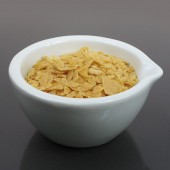
Carnauba Wax Yellow
Starting at: £6.50
Carnauba Wax is the hardest wax commonly used in the production of artists' materials, with a melting point of 83-86°c. It is derived from a tree native to South America, and is available in a natural colour (grey), or a refined colour (pale yellow). Small amounts of carnauba wax are commonly used in both oil painting mediums and encaustic painting, usually in conjunction with beeswax to add toughness, durability and sheen to the paint film. It creates an inflexible surface, so works best on rigid supports such as gesso panels, and it should be noted that it will raise the melting point of encaustic mixtures. It can produce a glossy finish; as such it is used in waxes and polishes for shoes, cars, musical instruments, furniture, and wooden floors, especially when mixed with beeswax and turpentine. Learn More -
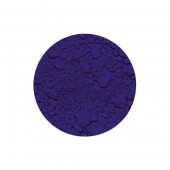
Ultramarine Blue Light Pigment
Starting at: £6.00
PB29
Ultramarine Blue Light is an artificial mineral pigment that is produced by heating clay, soda, sulphur and coal to high temperatures. Its name comes from outremer, or over-the-sea, as a reference to the highly-prized Lapis Lazuli pigment which had been imported into Europe from Afghanistan since the Middle Ages. First manufactured in France and Germany in 1828, synthetic Ultramarine provided a brilliant and affordable blue to artists, and it remains one of the most popular blues on artists' palettes today.
It is a transparent pigment, with a high tinting strength and excellent lightfastness. It reacts to alkali, therefore it is not suitable for use in lime-fresco; we do offer a Limeproof Ultramarine Blue for this purpose. It is stable in all other media, although it can be tricky to grind in oil. Instead of creating a thick, buttery paste, it can remain stringy and deteriorate when stored in a tube. To correct this, many commercial paint manufacturers include additives and waxes in their recipes; if you intend on grinding your own paint, you could try replacing 10-15% of your Linseed Oil with Poppy Oil to improve the consistency. Ultramine Blue provides a slow-drying, fairly hard paint film, which can tend towards brittleness.
Toxicity B
Learn More -
Currently Shopping by:
- Category: Pigments, Gums, Resins Remove This Item
Shopping Options
- Category
-
- Artists Quality Pigment Sets (2)
- Artists Quality Pigments Blacks (7)
- Artists Quality Pigments Blues (12)
- Artists Quality Pigments Earths (24)
- Artists Quality Pigments Greens (9)
- Artists Quality Pigments Reds (12)
- Artists Quality Pigments Violets (4)
- Artists Quality Pigments Whites (4)
- Artists Quality Pigments Yellows (14)
- The Early Colour Pigments (21)
- Equipment (7)
- Fillers, Chalks, and Abrasives (8)
- Gums and Resins (13)
- Limeproof Pigments (28)
- London Pigment (14)
- Pearl Lustre Pigments (3)
- Small Pigment Sizes (2)
- Storage Containers (3)
- Waxes, Adhesives and Sizes (14)
- Price
-
- £0.00 - £9.99 (108)
- £10.00 - £19.99 (35)
- £20.00 - £29.99 (19)
- £30.00 - £39.99 (10)
- £40.00 - £49.99 (3)
- £50.00 - £59.99 (2)
- £90.00 and above (1)
- Manufacturer
-
- Cornelissen (152)
- London Pigment (14)
- Roberson (1)
- Schmincke (7)
You have no items in your shopping basket.

- Search Brands
-