Click to Hide Notification

Search results for 'the and'

Items 91 to 120 of 138 total

per page
Page:
  1. 1
  2. 2
  3. 3
  4. 4
  5. 5

Grid  List 

Set Ascending Direction
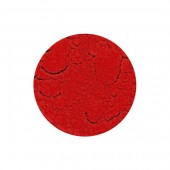
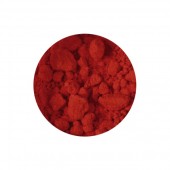
  1. Cadmium Red Pigment

    Cadmium Red Pigment

    Starting at: £8.40

    PR108

    Cadmium Red is a synthetic organic pigment, which has been in use since the 1920s, effectively replacing vermilion. It is formed by heating cadmium sulphide and selenium, the hue is determined by the level of calcination and proportion of selenium. It is very opaque, and lightfast, with a high tinting strength. It absorbs a small amount of oil, and dries very slowly to form a hard, flexible paint film.

    Larger quantities are available by request.  

    Limeproof

    Toxicity: C

    Learn More
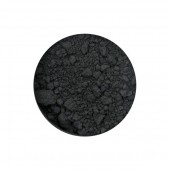
  2. Vine Black Pigment

    Vine Black Pigment

    Starting at: £4.70

    PBk8

    Vine Black is derived from charred vines, forming an organic pigment of pure carbon. It has been in use since antiquity, providing a cold black with bluish undertones, which creates a blue-grey when mixed with white. It is a very lightfast, slow-drying colour with a medium tinting strength. It requires a wetting agent to disperse properly, and is not suitable for use in fresco, mortar or cement, as the water-soluble impurities within the pigment can create efflorescence. 

    Toxicity: A

    Learn More
  3. Lamp Black Pigment

    Lamp Black Pigment

    Starting at: £6.70

    PBk 6

    Lamp Black is an inorganic, synthetic, pure carbon pigment. Originally made from soot collected from oil lamps and fireplaces, its modern equivalent is derived from partly combusted mineral and vegetable oil. It is a cool, transparent, bluish black, with a good tinting strength, and stable in all media. It requires a wetting agent, and in oil it has a very high absorption drying very slowly.

    Larger quantities are available by request. 

    Learn More
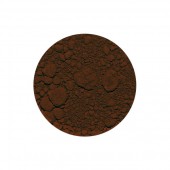
  4. Mars Violet Pigment

    Mars Violet Pigment

    Starting at: £4.50

    PR101

    Mars Violet is an artificial mineral pigment. Its pigment code, PR101, refers to a wide spectrum of synthetic iron oxide pigments including yellows, oranges, reds, violet-browns and green-browns, which replace many natural earth colours, to provide pigments without impurities and with great opacity. It has a good tinting strength, is lightfast and stable in all media, and has a medium drying time in oil. Although it is similar to Caput Mortuum and Indian Red, it is less transparent than the former and warmer than the latter.

    Toxicity: B

    Limeproof

    Learn More
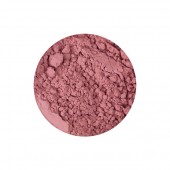
  5. Potters Pink Pigment

    Potters Pink Pigment

    Starting at: £22.00

    PR233

    Potter's Pink is an artificial mineral pigment produced by roasting tin oxide with various other oxides. It was first discovered in the pottery region of Staffordshire in the late-1700s, and in the following century Winsor & Newton introduced Potter's Pink into their watercolour range under the name "pink colour". It went on to become a popular addition to watercolour palettes, offering an opaque, lightfast colour with a weak tinting strength and a medium level of oil absorption.

    Toxicity A

    Learn More
  6. Cadmium Yellow Deep Pigment

    Cadmium Yellow Deep Pigment

    Starting at: £7.40

    Cadmium Yellow Deep Pigment (PY37). Synthetic Inorganic pigment. Opaque. Good tinting strength. Excellent Lightfastness. Low oil absorption with slow drying rate. Suitable for all media. Good acid and alkali resist. Exterior application not advised as discoloration occurs. Used since 19th Century. Toxicity B/C. Learn More
  7. Schmincke Oil Bronze, 50 ml

    Schmincke Oil Bronze, 50 ml

    Starting at: £25.10

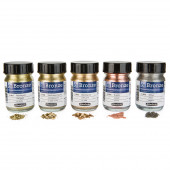
    For brilliant metal effects on oil paintings. Also suitable for wood, metal and gypsum surfaces. Use with Schmincke Bronze Medium (recipe below). Learn More
  8. Phthalo Blue Pigment

    Phthalo Blue Pigment

    Starting at: £8.00

    PB15:3

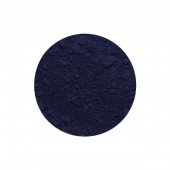
    Phthalo (Mona) Blue is a synthetic organic pigment, Copper Phthalocyanine, that has been in use since the 1930s. It has an extremely high tinting strength and is a staining colour, so cannot successfully be lifted in watercolour. It requires a wetting agent to fully disperse into a medium, and, when used at full strength, a copper sheen is visible in dried paint film. It is transparent, very lightfast, and has a medium-to-slow drying rate in oil.

    Toxicity: C

    While stocks last

    Learn More
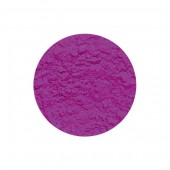
  9. Manganese Violet Pigment

    Manganese Violet Pigment

    Starting at: £8.50

    PV16

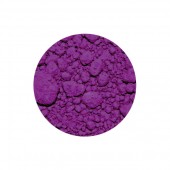
    Manganese Violet is a synthetic organic pigment, discovered in Germany in 1868 and formed by combining manganese chloride, phosphoric acid and ammonium carbonate. It is very lightfast, but sensitive to alkalis and oils. It is semi-opaque and fast-drying, with a low tinting strength and low absorption of oil. 

    Toxicity: C

    Learn More
  10. Indian Red Pigment

    Indian Red Pigment

    Starting at: £4.60

    PR101

    Indian Red was imported into the UK during the nineteenth century, its present-day equivalent is a synthetic iron oxide. Its pigment code, PR101, refers to a wide spectrum of synthetic iron oxide pigments including yellows, oranges, reds, violet-browns and green-browns; Indian Red is a slightly cool, bluish shade of red. It is semi-opaque, stable in all media, lightfast, and possesses a good tinting strength 

    Toxicity: B

    Limeproof

    Learn More
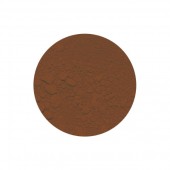
  11. Cadmium Brown Pigment

    Cadmium Brown Pigment

    Starting at: £10.00

    PR108

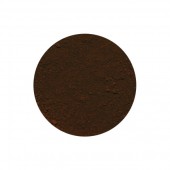
    Cadmium Brown is a shade of Cadmium Red, a synthetic organic pigment that has been in use since the 1920s. It is formed by heating cadmium sulphide and selenium, the hue is determined by the level of calcination and proportion of selenium. It is very opaque, and lightfast, with a high tinting strength. It absorbs a small amount of oil, and dries very slowly to form a hard, flexible paint film.

    Larger quantities are available by request.  

    Limeproof

    Toxicity: C

    Learn More
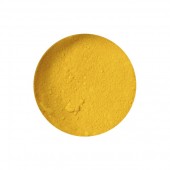
  12. Cadmium Yellow Light Pigment

    Cadmium Yellow Light Pigment

    Starting at: £6.20

    Cadmium Yellow Light Pigment (PY37). Synthetic Inorganic pigment. Opaque. Good tinting strength. Excellent Lightfastness. Low oil absorption with slow drying rate. Suitable for all media. Good acid and alkali resist. Exterior application not advised as discoloration occurs. Used since 19th Century. Toxicity B/C. Learn More
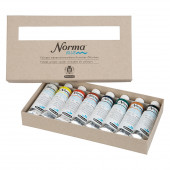
  13. Schmincke Norma Blue Set 8 x 35 ml, Cardboard Box

    Schmincke Norma Blue Set 8 x 35 ml, Cardboard Box

    £59.75

    Water-mixable (water miscible), highly pigmented, lightfast paints with a buttery consistency. Vegan, low odour, anti-allergenic, environmentally friendly. Learn More
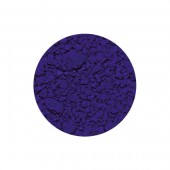
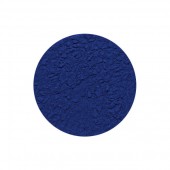
  14. Ultramarine PB29 Pigment

    Ultramarine PB29 Pigment

    Starting at: £9.10

    PB29

    Ultramarine Blue is an artificial mineral pigment that is produced by heating clay, soda, sulphur and coal to high temperatures. Its name comes from outremer, or over-the-sea, as a reference to the highly-prized Lapis Lazuli pigment which had been imported into Europe from Afghanistan since the Middle Ages. First manufactured in France and Germany in 1828, synthetic Ultramarine provided a brilliant and affordable blue to artists, and it remains one of the most popular blues on artists' palettes today.

    It is a transparent pigment, with a high tinting strength and excellent lightfastness. It reacts to alkali, therefore it is not suitable for use in lime-fresco; we do offer a Limeproof Ultramarine Blue for this purpose. It is stable in all other media, although it can be tricky to grind in oil. Instead of creating a thick, buttery paste, it can remain stringy and deteriorate when stored in a tube. To correct this, many commercial paint manufacturers include additives and waxes in their recipes; if you intend on grinding your own paint, you could try replacing 10-15% of your Linseed Oil with Poppy Oil to improve the consistency. Ultramine Blue provides a slow-drying, fairly hard paint film, which can tend towards brittleness.

    Toxicity: B/C

    Learn More
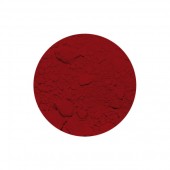
  15. Cadmium Red Deep Pigment

    Cadmium Red Deep Pigment

    Starting at: £15.00

    PR108

    Cadmium Red Deep is a synthetic organic pigment, which has been in use since the 1920s, effectively replacing vermilion. It is formed by heating cadmium sulphide and selenium, the hue is determined by the level of calcination and proportion of selenium. It is very opaque, and lightfast, with a high tinting strength. It absorbs a small amount of oil, and dries very slowly to form a hard, flexible paint film.

    Larger quantities are available by request.  

    Limeproof

    Toxicity: C

    Learn More
  16. Schmincke Aqua Granulation Spray 15 ml

    Schmincke Aqua Granulation Spray 15 ml

    £8.55

    Create effects similar to granulation effects in watercolours, with an even paint flow. Learn More
  17. Carbon Black Pigment

    Carbon Black Pigment

    Starting at: £10.80

    PBk7

    Carbon Black is an inorganic synthetic pigment, created by burning natural gases to form an almost pure carbon. It is semi-transparent, and in oil dries very slowly to a soft, brittle paint film. It requires a wetting agent, and can show in streaks, even when mixed with other colours. 

    Larger quantities are available by request. 

    Learn More
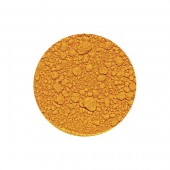
  18. Yellow Ochre Pigment

    Yellow Ochre Pigment

    Starting at: £4.00

    PY43

    Yellow Ochre is a natural earth pigment that has been in use since prehistoric times. It is derived from iron-rich clay deposits that are present all over the world; our Yellow Ochre comes from the hilly regions around Verona, Italy. As a pigment, it is semi-opaque, extremely lightfast, and stable in all media. It has a medium to slow drying rate in oil, creating a tough, flexible paint film. Yellow Ochre is similar in composition to Raw Sienna, but whereas Yellow Ochre contains a higher proportion of clay, Raw Sienna contains a higher proportion of silica. As a natural material, the exact colour and qualities of the resultant pigments can vary, but generally this compositional difference creates a paler, more opaque Yellow Ochre, and a darker, more transparent Raw Sienna. 

    Toxicity B

    Learn More
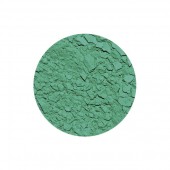
  19. Cobalt Green Deep Pigment

    Cobalt Green Deep Pigment

    Starting at: £9.20

    PG19

    Cobalt Green is a synthetic pigment that consists of compounds of cobalt and zinc oxides. It is sometimes referred to as Rinman's Green, after the Swedish chemist who discovered it in the late-18th century. It is a permanent, opaque colour, with a weak tinting strength. It dries quite quickly in oil, requiring a high oil content and  forming a hard, fairly fleixible paint film. Cobalt Green is available in light and dark shades; the colour is determined by the amount of zinc oxide present.

    Toxicity: B

    Please note, unfortunately we are not able to send this product outside the UK.

    Learn More
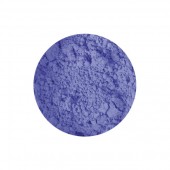
  20. Ultramarine Blue Light Pigment

    Ultramarine Blue Light Pigment

    Starting at: £6.00

    PB29

    Ultramarine Blue Light is an artificial mineral pigment that is produced by heating clay, soda, sulphur and coal to high temperatures. Its name comes from outremer, or over-the-sea, as a reference to the highly-prized Lapis Lazuli pigment which had been imported into Europe from Afghanistan since the Middle Ages. First manufactured in France and Germany in 1828, synthetic Ultramarine provided a brilliant and affordable blue to artists, and it remains one of the most popular blues on artists' palettes today. 

    It is a transparent pigment, with a high tinting strength and excellent lightfastness. It reacts to alkali, therefore it is not suitable for use in lime-fresco; we do offer a Limeproof Ultramarine Blue for this purpose. It is stable in all other media, although it can be tricky to grind in oil. Instead of creating a thick, buttery paste, it can remain stringy and deteriorate when stored in a tube. To correct this, many commercial paint manufacturers include additives and waxes in their recipes; if you intend on grinding your own paint, you could try replacing 10-15% of your Linseed Oil with Poppy Oil to improve the consistency. Ultramine Blue provides a slow-drying, fairly hard paint film, which can tend towards brittleness.

    Toxicity B

    Learn More
  21. Alizarin Crimson Pigment

    Alizarin Crimson Pigment

    Starting at: £4.50

    PR83

    Alizarin Crimson is a synthetic organic pigment that became available in 1868. It requires a wetting agent to disperse, and in oil it also absorbs a lot of liquid and dries very slowly to form a hard, brittle paint film. It is chemically identical to madder-root pigments and should be protected against UV light where possible as it can fade when applied onto a white ground, although it is less fugitive than its natural counterpart. Alizarin Crimson is a very transparent pigment, with a high tinting strength and slightly blue undertone.  

    Toxicity: A/B

    Larger quantities are available by request. 

    Learn More
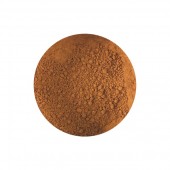
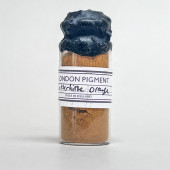
  22. London Pigment, Rotherhithe Orange Pigment

    London Pigment, Rotherhithe Orange Pigment

    £20.00

    Call to Order

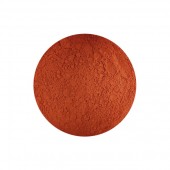
    This unique colour is an intense orange oxide that is made from the decay of Victorian pipes mixing with the chalk bed of the infilled docks at Rotherhithe, in south east London. Rotherhithe has a long history as a port, with many shipyards from Elizabethan times until the early 20th century and with working docks until the 1970s, when they began to be infilled due to a decline in imports to Central London. With a fine particle size and transparent quality this pigment would be great for glazing techniques.

    Follow @londonpigment on Instagram for an insight into the stories behind the colours and how she makes them. 

    ****Please note, these pigments are artisan made in small batches. Please email info@cornelissen.com for availability**** Learn More
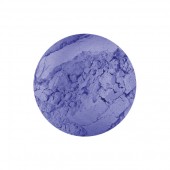
  23. Lapis Lazuli Pigment

    Lapis Lazuli Pigment

    Call to Order

    PB29

    Lapis Lazuli is a natural mineral pigment, mined in Afghanistan and South America. For many centuries it was the most reliable blue pigment available, and became particularly significant during the Medieval and Renaissance periods, when its inclusion in a work of art denoted the wealth and status of the patron, or the holiness of a painting's subject. In commercial paint production it has largely been replaced by the more affordable Ultramarine Blue, although it still has a place on modern palettes due to its unique soft violet tone. It is a transparent pigment, with a low tinting strength.

    [We will have stock of Lapis Lazuli in September. If you would like to be called when it is available, please use our contact form to let us know.]

    Learn More
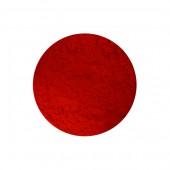
  24. Cinnabar Pigment

    Cinnabar Pigment

    Starting at: £16.00

    Call to Order

    PR106

    Cinnabar, composed of mercuric sulphide, is a mineral pigment found in crusts or veins in sites of volcanic activity. It has good tinting strength and opacity but, like many red pigments, it dries very slowly in oil media. Due to its high toxicity, it is no longer an ingredient in commercial paints, but is a prominent colour in historical palettes. Generally, Cinnabar refers to the natural mineral, while Vermilion refers to the synthetic pigment. Cinnabar has been mined since at least the tenth millennium BC, and used as a painting material, gemstone, and ritual object by many cultures around the globe.

    Toxicity D

    PERMITTED USES Over 18s only. Proof of age required. Restoration of art works and protected buildings when alternatives unsuitable.

    IMPORTANT Please refer to the MSDS (Material Safety Data Sheet) below. Dispose of product as hazardous waste.

    SHIPPING Please note, we are not able to send this product outside the UK.

    Learn More
  25. Isinglass

    Isinglass

    Starting at: £30.10

    Call to Order

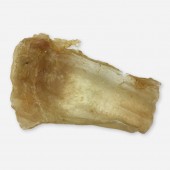
    Isinglass is derived from the dried swim bladders of fish, with Salianski Isinglass being the highest grade available. In the Russian Icon tradition, it commonly provided the glue component in gesso recipes, and was sometimes mixed with pigment to make tempera paints, due to its high binding strength. It can be used to make a pale, clear glue, which is less prone to darkening than other animal glues, and which is particularly flexible, making it a useful material for repairing textiles. Learn More
  26. Gum Mastic

    Gum Mastic

    Starting at: £20.30

    Call to Order

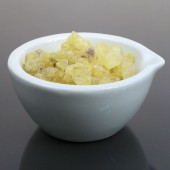
    Gum Mastic is a tree resin, which dissolves into a clear varnish with alcohol or turpentine, but not with mineral spirits. Mastic varnishes are more prone to blooming and darkening with age than damar-based varnishes, and painting mediums that contain gum mastic can deteriorate in unpredictable ways. For this reason, it is primarily used in restoration, rather than in the production of artwork. Learn More
  27. Lead Tin Yellow Dark Pigment

    Lead Tin Yellow Dark Pigment

    Starting at: £4.80

    Call to Order

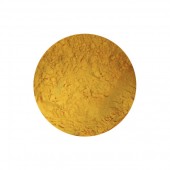
    Lead Tin Yellow Dark Pigment. Larger sizes available. Please ask for quotation.

    Toxicity D Lead is a highly poisonous metal which, if inhaled, ingested, or introduced to the blood through cuts in the skin, builds up in the body and can affect multiple parts of the body, including the digestive and nervous systems.

    PERMITTED USES Over 18s only. Proof of age required. Restoration of art works and protected buildings when alternatives unsuitable.

    IMPORTANT Please refer to the MSDS (Material Safety Data Sheet) below. Dispose of product as hazardous waste.

    SHIPPING Please note, we are not able to send this product outside the UK.

    Learn More
  28. Vermilion Genuine Pigment

    Vermilion Genuine Pigment

    Starting at: £17.00

    Call to Order

    PR106 Vermilion is an artificial pigment based on mercuric sulphide, which occurs naturally as Cinnabar. The synthetic form contains fewer impurities than Cinnabar, and was in use in China as early as the fourth century. It was present in Europe from the ninth century, and was the most widely used red pigment until the introduction of Cadmium Red in the early twentieth century. It has good tinting strength and opacity but, like many red pigments, it dries very slowly in oil media.

    Toxicity D

    PERMITTED USES Over 18s only. Proof of age required. Restoration of art works and protected buildings when alternatives unsuitable.

    IMPORTANT Please refer to the MSDS (Material Safety Data Sheet) below. Dispose of product as hazardous waste.

    SHIPPING Please note, we are not able to send this product outside the UK.

    Learn More
  29. Realgar Pigment

    Realgar Pigment

    Starting at: £12.75

    Call to Order

    Realgar, like Orpiment, is sulphide of arsenic, and these two substances are often found in close proximity to each other in nature. Realgar exists in small deposits throughout the world and has been used for its colour since ancient times, although its extreme toxicity means that it has been superseded by cadmiums in modern painting. It is an opaque pigment with poor tinting strength. Larger quantities are available by request.

    Toxicity D

    PERMITTED USES Over 18s only. Proof of age required. Restoration of art works and protected buildings when alternatives unsuitable.

    IMPORTANT Please refer to the MSDS (Material Safety Data Sheet) below. Dispose of product as hazardous waste.

    SHIPPING Please note, we are not able to send this product outside the UK.

    Learn More
  30. Litharge Pigment

    Litharge Pigment

    Starting at: £8.00

    Call to Order

    PY46

    Litharge is lead monoxide, also known as Massicot. It is an opaque pigment, with a weak tinting strength. Its toxicity and fugitive nature means that it is rarely used as a pigment. Instead, its fast drying time means that it has been used as a siccative in oil mediums. The colour tends to darken in all media, and it is also unstable in its dry form, as the powder can lighten when exposed to air.

    Toxicity D Lead is a highly poisonous metal which, if inhaled, ingested, or introduced to the blood through cuts in the skin, builds up in the body and can affect multiple parts of the body, including the digestive and nervous systems.

    PERMITTED USES Over 18s only. Proof of age required. Restoration of art works and protected buildings when alternatives unsuitable.

    IMPORTANT Please refer to the MSDS (Material Safety Data Sheet) below. Dispose of product as hazardous waste.

    SHIPPING Please note, we are not able to send this product outside the UK.

    Learn More

Items 91 to 120 of 138 total

per page
Page:
  1. 1
  2. 2
  3. 3
  4. 4
  5. 5

Grid  List 

Set Ascending Direction