

Search results for 'wax'


-
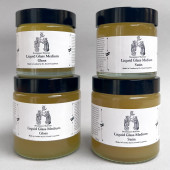
Liquid Glass Mediums
Starting at: £32.00
Renaissance Materials by Dr. David Cranswick.
A thick glazing medium of the 'Old Masters'. Liquid Glass Mediums facilitate building up layers of transparent glaze. Gloss or Satin. Contains: Damar resin, linseed oil and beeswax (for Satin medium only)
Avoid applying a final varnish. The medium can be used as a varnish.
-
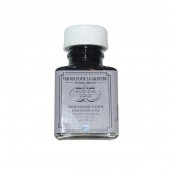
Charbonnel Liquid Siccative Varnish 75 ml
£15.00Charbonnel Etching Ground 75 ml Liquid Siccative Varnish. Beeswax, bitumen, ketone thinner. Liquid retouching ground which should be applied cold. Hard, with satin opaque finish. Learn More -
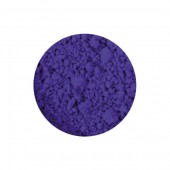
Ultramarine Blue Dark Pigment
Starting at: £4.00
PB29
Ultramarine Blue Dark is an artificial mineral pigment that is produced by heating clay, soda, sulphur and coal to high temperatures. Its name comes from outremer, or over-the-sea, as a reference to the highly-prized Lapis Lazuli pigment which had been imported into Europe from Afghanistan since the Middle Ages. First manufactured in France and Germany in 1828, synthetic Ultramarine provided a brilliant and affordable blue to artists, and it remains one of the most popular blues on artists' palettes today.
It is a transparent pigment, with a high tinting strength and excellent lightfastness. It reacts to alkali, therefore it is not suitable for use in lime-fresco; we do offer a Limeproof Ultramarine Blue for this purpose. It is stable in all other media, although it can be tricky to grind in oil. Instead of creating a thick, buttery paste, it can remain stringy and deteriorate when stored in a tube. To correct this, many commercial paint manufacturers include additives and waxes in their recipes; if you intend on grinding your own paint, you could try replacing 10-15% of your Linseed Oil with Poppy Oil to improve the consistency. Ultramine Blue provides a slow-drying, fairly hard paint film, which can tend towards brittleness.
Toxicity: B
Learn More -
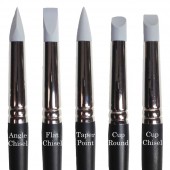
Colour Shapers
Starting at: £6.50
Unique silicone tipped tools for painting heavy mediums such as acrylic and oil paint. Excellent for spreading adhesives and appplying masking fluid. Can be used with Batik and encaustic wax. Available in soft ivory tip and firm grey tip. Learn More -
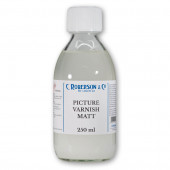
Roberson Matt Picture Varnish
Starting at: £9.10
Ketone resin/white spirit microcrystalline wax. Clear, tough protection without gloss. Useful overpaintings where resinous media have been used. Unable to send overseas. Learn More -
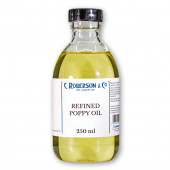
Roberson Poppy Oil
Starting at: £10.60
Poppy Oil is a slightly later addition to the artist's cabinet than Linseed Oil and Walnut Oil. It is generally used as a binder for pale colours, where the warmth of Linseed Oil is not desired. It provides a matte finish and dries very slowly, so we would not advise using it in conjunction with slow-drying pigments or in underpaintings. A paint film produced by Poppy Oil is weaker and softer than that created by Linseed Oil. This is because it contains a smaller percentage of linolenic acid than Linseed Oil; this substance imparts both strength and yellowness to an oil.
Although some of these properties can be perceived as drawbacks, paints made with Poppy Oil generally obtain a "short" or buttery texture without the addition of waxes or other additives, which can be an advantage for certain colours that produce poor consistencies in Linseed oil alone. Sometimes, the addition of a small quantity of Poppy Oil when grinding a tricky or "stringy" pigment in Cold Pressed Linseed Oil can introduce some of benefits of Poppy Oil, without transmitting its negative characteristics.
Paints made with Poppy Oil are particularly suited to "alla prima" working methods, where paint is applied spontaneously. When working in successive layers, Poppy Oil would only be appropriate for the final stages of a painting.
Learn More -
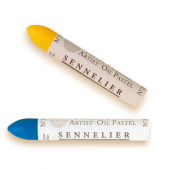
Sennelier Oil Pastels Large
Starting at: £11.80
Beautifully soft and creamy oil pastels in a range of 120 colours. Blend of pure pigment, oil and acid free wax. 20% Discount for purchasing 4+ pastels. Learn More -
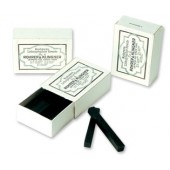
Rohrer & Klingner Litho Chalk
Starting at: £17.10
Composed of wax, tallow and Syrian asphalt, the litho chalks feature high resistance against acids. To maintaine quality of the stone, they do not seal the pores of the stone surface. Available in six degrees of hardness with No. 0 being the softest, No. 5 the hardest, and No. 3 the most commonly applied. Learn More -
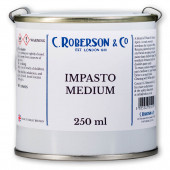
Roberson Impasto Medium
Starting at: £18.40
Roberson Impasto medium is a crack-resistant medium for impasto effects. It retains palette knife and brush strokes, giving the paint sharp, defined edges. It remains thick and doubles paint easily, drying to a matte finish. To retain colour strength, mix one part medium to one part oil colour.
Contains: Stand Oil, Damar Resin, Turpentine, Bleached Beeswax.
Learn More -
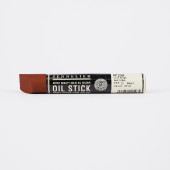
Sennelier Oil Sticks
Starting at: £7.65
Solid artists' quality oil paint sticks. (Ø = 3/4 ; length = 5" ) SENNELIER Extra-Fine Solid Oil Sticks can be used alone or in combination with oil colours in tubes. The oil stick colours can be used for an entire painting. They are applied directly to any traditional oil-painting support, such as canvas, wood panel or fine art paper. They need the same archival priming (acrylic gesso or oil ground) that oil paint requires. Surfaces: Before use, the surface film of the oil stick must be peeled off. It will form again after a few days of non-use, protecting and conserving the colour. The oil sticks must be applied in a thin film application of no more than 1mm thick. Once applied they can be painted over with oil stick or oil paint and if desired be diluted with turpentine. Oil stick Medium, a colourless oil stick, may be used to produce transparent effects and glazes. Once applied, the oil stick surface will dry in 2 to 5 days, depending on the atmospheric conditions Varnishing: If varnishing is desired, you must wait 6 months (as in traditional oil paint) until the colour is completely dry, before giving the painting a final coat of picture varnish. Use a soft brush to varnish so that the oil stick marks are not disturbed. SENNELIER Extra-Fine Solid Oil Stick colours are either opaque (O) or transparent (T) depending on the nature of the pigment in each colour. Oil Sticks do not change during storage and require no special precautions except to be kept away from any source of heat, which could adversely affect the stick. Application Techniques After applying the colour with the point or the edge of the oil stick, colours can be mixed directly on the support using the following methods: • Blending, with brush, finger, or drawing stump. With or without turpentine • Wash-drawing, dilute colours with turpentine or mineral spirit • Retouching, with oil stick, palette knife or brush • Textures, thick application oil stick colour. Retouch with a brush or palette knife •Sgraffito, scratching a layer of fresh paint with a point (brush handle, palette knife, etc.) to reveal the layer below. Sgraffito is related to engraving, and is used not only for revealing the under-layers of paint but also to scratch and clean unsatisfactory parts of the painting •Interior Decoration, on glass, ceramics etc. Use for decorative purposes only Learn More -
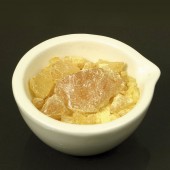
Colophony
Starting at: £7.30
Colophony is a by-product of the distillation of turpentine. It is soluble in most solvents, but considered an adulterant in varnishes and paints, as it forms a weak surface that is prone to darkening and cracking. It is, however, a key ingredient in wax-based etching grounds, imparting hardness, and can be used in powdered form (rosin) to make aquatints. Learn More -
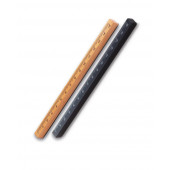
Alder Ruler
Starting at: £6.30
Classic 1960's design. Made from solid alder. 15cm. Available in natural waxed or black stained alder. Learn More -
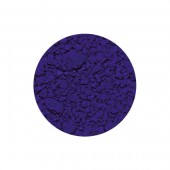
Ultramarine Blue Limewash Pigment
Starting at: £7.50
PB29
Ultramarine Blue Limewash is an artificial mineral pigment that is produced by heating clay, soda, sulphur and coal to high temperatures. Its name comes from outremer, or over-the-sea, as a reference to the highly-prized Lapis Lazuli pigment which had been imported into Europe from Afghanistan since the Middle Ages. First manufactured in France and Germany in 1828, synthetic Ultramarine provided a brilliant and affordable blue to artists, and it remains one of the most popular blues on artists' palettes today.
It is a transparent pigment, with a high tinting strength and excellent lightfastness. Most Ultramarine colours react to alkali and are therefore unsuitable for use in lime-fresco; Limeproof Ultramarine Blue remedies this problem. It is stable in all other media, although it can be tricky to grind in oil. Instead of creating a thick, buttery paste, it can remain stringy and deteriorate when stored in a tube. To correct this, many commercial paint manufacturers include additives and waxes in their recipes; if you intend on grinding your own paint, you could try replacing 10-15% of your Linseed Oil with Poppy Oil to improve the consistency. Ultramine Blue provides a slow-drying, fairly hard paint film, which can tend towards brittleness.
Toxicity: B
Learn More -
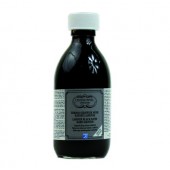
Charbonnel Lamour Black Satin
Starting at: £37.05
Bitumen, turpentine, quick drying petroleum, wax. Hard etching ground. Allows long etching time with no risk of scaling. Learn More -
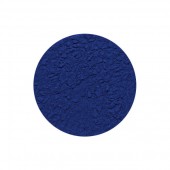
Ultramarine PB29 Pigment
Starting at: £9.10
PB29
Ultramarine Blue is an artificial mineral pigment that is produced by heating clay, soda, sulphur and coal to high temperatures. Its name comes from outremer, or over-the-sea, as a reference to the highly-prized Lapis Lazuli pigment which had been imported into Europe from Afghanistan since the Middle Ages. First manufactured in France and Germany in 1828, synthetic Ultramarine provided a brilliant and affordable blue to artists, and it remains one of the most popular blues on artists' palettes today.
It is a transparent pigment, with a high tinting strength and excellent lightfastness. It reacts to alkali, therefore it is not suitable for use in lime-fresco; we do offer a Limeproof Ultramarine Blue for this purpose. It is stable in all other media, although it can be tricky to grind in oil. Instead of creating a thick, buttery paste, it can remain stringy and deteriorate when stored in a tube. To correct this, many commercial paint manufacturers include additives and waxes in their recipes; if you intend on grinding your own paint, you could try replacing 10-15% of your Linseed Oil with Poppy Oil to improve the consistency. Ultramine Blue provides a slow-drying, fairly hard paint film, which can tend towards brittleness.
Toxicity: B/C
Learn More -
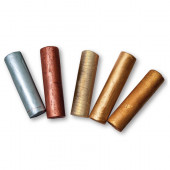
Roberson Metallic Oil Sticks
Starting at: £16.70
Artists' quality metallic oil paint sticks for painting & drawing. Non-tarnishing and highly pigmented, these soft paint sticks are made with an unique mix of mica pigments, oils and waxes which generate a solid metal effect. Easy to use alongside regular oil paint. Blend and shade the colours together to make further shades. Treat as oil paint for surface preparation and clean-up. Learn More -
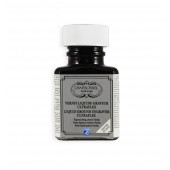
Charbonnel Ultraflex Liquid Ground
Starting at: £17.30
Judea bitumen, essence of turpentine, wax. Quick drying with transparent velvety finish. Apply cold with a supple brush. Learn More -
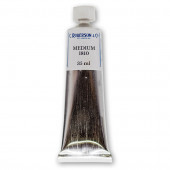
Roberson 1810 Medium
Starting at: £35.60
This is a traditional, high-oil "fat" painting medium, made using the highest quality materials. It will retain colour strength, is resistant to bleeding, has good flow release, is ideal for blending, and can be mixed with oil colours in any ratio. When dry, it creates an enamel-like surface.
Contains: Stand oil, Cold-pressed Linseed oil, Canada Balsam, Rectified Spirit of Turpentine, Beeswax, Driers.
Clean tools in white spirit. Do not use as a varnish, always mix with oil colour.
Learn More -
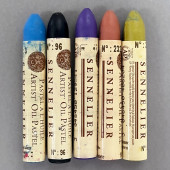
Sennelier Oil Pastels Standard
Starting at: £2.90
Beautifully soft and creamy oil pastels in a range of 120 colours. Blend of pure pigment, oil and acid free wax. 10% discount for 10+ pastels. 20% discount for 20+ pastels. Learn More -
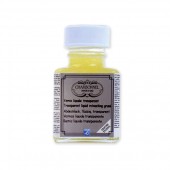
Charbonnel Transparent Ground
£21.10Beeswax, pitch resin, turpentine. Retouching ground. Apply cold. Slow drying, lets previous etching show through. Learn More -
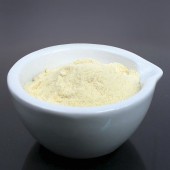
Powdered Rosin
Starting at: £13.90
Rosin is the powdered form of colophony, which is a by-product of the distillation of turpentine. Its primary application is to create tonal areas on metal plates as an aquatint resist. It is also an additive in etching grounds, where it gives a hard surface to the otherwise soft wax. Learn More -
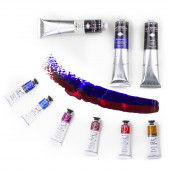
Daler-Rowney Artists' Oil Colour
Starting at: £10.10
The distinctive buttery consistency of Daler-Rowney Artists' Oils derives from the use of linseed oil and wax, which acts as a plasticiser, helping to prevent even heavy impasto from becoming brittle and cracking over time. Learn More -
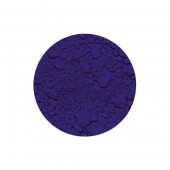
Ultramarine Blue Light Pigment
Starting at: £6.00
PB29
Ultramarine Blue Light is an artificial mineral pigment that is produced by heating clay, soda, sulphur and coal to high temperatures. Its name comes from outremer, or over-the-sea, as a reference to the highly-prized Lapis Lazuli pigment which had been imported into Europe from Afghanistan since the Middle Ages. First manufactured in France and Germany in 1828, synthetic Ultramarine provided a brilliant and affordable blue to artists, and it remains one of the most popular blues on artists' palettes today.
It is a transparent pigment, with a high tinting strength and excellent lightfastness. It reacts to alkali, therefore it is not suitable for use in lime-fresco; we do offer a Limeproof Ultramarine Blue for this purpose. It is stable in all other media, although it can be tricky to grind in oil. Instead of creating a thick, buttery paste, it can remain stringy and deteriorate when stored in a tube. To correct this, many commercial paint manufacturers include additives and waxes in their recipes; if you intend on grinding your own paint, you could try replacing 10-15% of your Linseed Oil with Poppy Oil to improve the consistency. Ultramine Blue provides a slow-drying, fairly hard paint film, which can tend towards brittleness.
Toxicity B
Learn More -
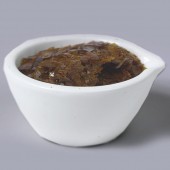
Lemon Shellac
Starting at: £8.20
Shellac is a natural resin that is deposited by the female lac insect on the branches of trees in India and Thailand. It is soluble with alcohol, but not with mineral spirits or turpentine. It forms a tough yet flexible film, with many applications. It is suitable as a top coat for gilding when applied thinly, a sealant for porous surfaces, an isolating layer for tempera paintings, a base for pigmented inks, a protective layer for collograph plates, and a warm varnish for wooden floors and furniture. As it is prone to darkening with age, it is not recommended as a varnish for oils, and its solubility can reduce over time. There are various grades of shellac. When mixed with alcohol, it may initially form a cloudy mixture, due to traces of wax in the shellac, but this should become clear once it has dried. The highest grades of shellac are Clear Dewaxed Shellac, which has been de-coloured using the carbon filtering method, Lemon Shellac, and Orange Shellac, which are pale in colour. Button Shellac is less refined and therefore produces a reddish varnish. It was, in fact, widely used as a red dye before synthetic dyes became available. Learn More -
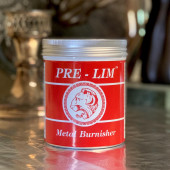
Pre-Lim Metal Burnisher
Starting at: £9.85
A gently abrasive paste for non-scratch cleaning of metals and many sensitive fine-art surfaces. Learn More -
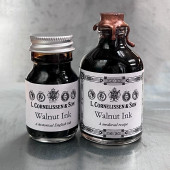
Cornelissen Historical Inks, Walnut
Starting at: £9.00
Made from organic walnut husks collected in Cambridgeshire, this deep brown walnut ink is made to an 18th-century formula. Small batches of the ink are blended to give the required consistency and strength. It has good permanence, but will eventually fade if left in direct sunlight for sustained periods of time, and is not wholly waterproof, but has some staying power, especially on sized watercolour papers. As with all handmade products derived from natural ingredients, there may be slight variations in the colour and consistency as a result of seasonal changes.
Not Suitable for fountain pens. Learn More -
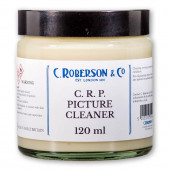
Roberson CRP Picture Cleaner
Starting at: £19.80
Cleansing/Reviving/Preserving wax paste for oil paintings, sculptures, any painted & polished surfaces except drawings, water colours or pastels. Learn More -
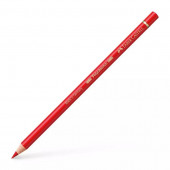
Faber-Castell Polychromos Pencils
Starting at: £2.80
120 lightfast colours with high covering power. The particularly soft waterproof wax leads are smudge resistant but can be dissolved with turpentine. Learn More -
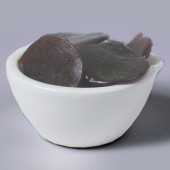
Button Shellac
Starting at: £8.40
Shellac is a natural resin that is deposited by the female lac insect on the branches of trees in India and Thailand. It is soluble with alcohol, but not with mineral spirits or turpentine. It forms a tough yet flexible film, with many applications. It is suitable as a top coat for gilding when applied thinly, a sealant for porous surfaces, an isolating layer for tempera paintings, a base for pigmented inks, a protective layer for collograph plates, and a warm varnish for wooden floors and furniture. As it is prone to darkening with age, it is not recommended as a varnish for oils, and its solubility can reduce over time. There are various grades of shellac. When mixed with alcohol, it may initially form a cloudy mixture, due to traces of wax in the shellac, but this should become clear once it has dried. The highest grades of shellac are Clear Dewaxed Shellac, which has been de-coloured using the carbon filtering method, Lemon Shellac, and Orange Shellac, which are pale in colour. Button Shellac is less refined and therefore produces a reddish varnish. It was, in fact, widely used as a red dye before synthetic dyes became available. Learn More -
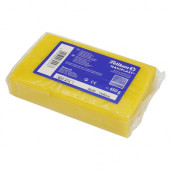
Pelikan Nakiplast
Starting at: £16.80
Pelikan Nakiplast modeling clay is soft, pliable high-quality wax dough made with beeswax. Brightly coloured but does not stain hands. Learn More
Shopping Options
- Category
-
- Pigments, Gums, Resins (35)
- Oils, Acrylics (12)
- Pastels (4)
- Drawing, Calligraphy (7)
- Gilding, Restoration (11)
- Printmaking (10)
- Brushes (1)
- Studio, Books (7)
- Signwriting, Specialist Decorating (10)
- Price
-
- £0.00 - £9.99 (34)
- £10.00 - £19.99 (28)
- £20.00 - £29.99 (4)
- £30.00 - £39.99 (4)
- £40.00 - £49.99 (1)
- £50.00 and above (1)
- Manufacturer
-
- Charbonnel (4)
- Cornelissen (30)
- Cranfield (1)
- Daler-Rowney (1)
- e+m (1)
- Faber-Castell (2)
- Gamblin (1)
- Lascaux (1)
- London Pigment (7)
- Pelikan (1)
- Roberson (11)
- Rohrer and Klingner (4)
- Sennelier (3)
You have no items in your shopping basket.

- Search Brands
-