

Search results for 'city The'


-
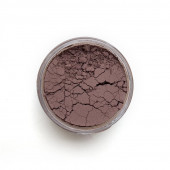
Caput Mortuum Pigment
Starting at: £4.50
Caput Mortuum is a transparent, lightfast pigment that is stable in all media. Colours described as Caput Mortuum can vary greatly; our pigment is a soft purple-brown, made from a mixture of natural iron oxides. It is believed that Caput Mortuum has its roots in ancient Egypt, when colour was derived from remains that had been embalmed in asphaltum.
Toxicity B
Learn More -
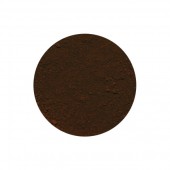
Indian Red Pigment
Starting at: £4.60
PR101
Indian Red was imported into the UK during the nineteenth century, its present-day equivalent is a synthetic iron oxide. Its pigment code, PR101, refers to a wide spectrum of synthetic iron oxide pigments including yellows, oranges, reds, violet-browns and green-browns; Indian Red is a slightly cool, bluish shade of red. It is semi-opaque, stable in all media, lightfast, and possesses a good tinting strength
Toxicity: B
Limeproof
Learn More -
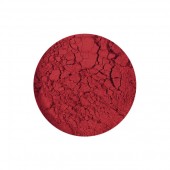
Quinacridone Red Pigment
Starting at: £5.50
Quinacridone Red Pigment (PV19). Organic pigment. Very transparent. High tinting strength. Excellent Lightfastness. High oil absorption with slow drying rate. Requires wetting agent. Suitable for all media. Developed in the 1950's. Toxicity A/B. Learn More -
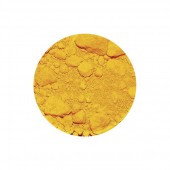
Cadmium Yellow Middle Pigment
Starting at: £6.30
Cadmium Yellow Middle Pigment (PY37). Synthetic Inorganic pigment. Opaque. Good tinting strength. Excellent Lightfastness. Low oil absorption with slow drying rate. Suitable for all media. Good acid and alkali resist. Exterior application not advised as discoloration occurs. Used since 19th Century. Toxicity B/C. Learn More -
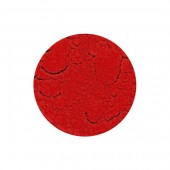
Cadmium Vermilion Pigment
Starting at: £7.50
PR108
Cadmium Red is a synthetic organic pigment that has been in use since the 1920s. It is formed by heating cadmium sulphide and selenium, the hue is determined by the level of calcination and proportion of selenium. It is very opaque, and lightfast, with a high tinting strength. It absorbs a small amount of oil, and dries very slowly to form a hard, flexible paint film. This shade has been formulated to imitate the bright hue of vermilion.
Larger quantities are available by request.
Limeproof
Toxicity: C
Learn More -
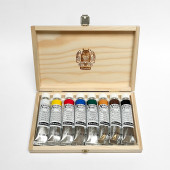
Schmincke Akademie Acryl Color Royal Academy of Arts Set
£20.00Schmincke Akademie Acryl Color in association with the RA (Royal Academy of Arts) Learn More -
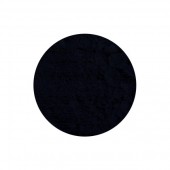
Vine Black Pigment
Starting at: £4.70
PBk8
Vine Black is derived from charred vines, forming an organic pigment of pure carbon. It has been in use since antiquity, providing a cold black with bluish undertones, which creates a blue-grey when mixed with white. It is a very lightfast, slow-drying colour with a medium tinting strength. It requires a wetting agent to disperse properly, and is not suitable for use in fresco, mortar or cement, as the water-soluble impurities within the pigment can create efflorescence.
Toxicity: A
Learn More -
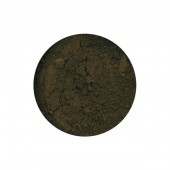
Raw Umber Greenish Pigment
Starting at: £4.80
PBr7
Raw Umber Greenish is a natural earth pigment composed of iron oxide, manganese, and aluminium silicate. It has its roots in the Umbria region of Italy, and was historically a popular colour for underpaintings, as it dries very quickly. It is semi-opaque, very lightfast, and stable in all media but may be difficult to disperse in acrylic. It requires a large amount of liquid when mixed with oil.
Toxicity: B
Learn More -
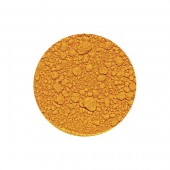
Cadmium Yellow Deep Pigment
Starting at: £7.40
Cadmium Yellow Deep Pigment (PY37). Synthetic Inorganic pigment. Opaque. Good tinting strength. Excellent Lightfastness. Low oil absorption with slow drying rate. Suitable for all media. Good acid and alkali resist. Exterior application not advised as discoloration occurs. Used since 19th Century. Toxicity B/C. Learn More -
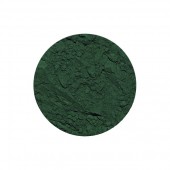
Cobalt Green Deep Pigment
Starting at: £9.20
PG19
Cobalt Green is a synthetic pigment that consists of compounds of cobalt and zinc oxides. It is sometimes referred to as Rinman's Green, after the Swedish chemist who discovered it in the late-18th century. It is a permanent, opaque colour, with a weak tinting strength. It dries quite quickly in oil, requiring a high oil content and forming a hard, fairly fleixible paint film. Cobalt Green is available in light and dark shades; the colour is determined by the amount of zinc oxide present.
Toxicity: B
Please note, unfortunately we are not able to send this product outside the UK.
Learn More -
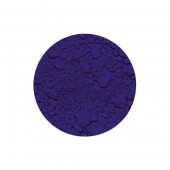
Ultramarine Blue Light Pigment
Starting at: £6.00
PB29
Ultramarine Blue Light is an artificial mineral pigment that is produced by heating clay, soda, sulphur and coal to high temperatures. Its name comes from outremer, or over-the-sea, as a reference to the highly-prized Lapis Lazuli pigment which had been imported into Europe from Afghanistan since the Middle Ages. First manufactured in France and Germany in 1828, synthetic Ultramarine provided a brilliant and affordable blue to artists, and it remains one of the most popular blues on artists' palettes today.
It is a transparent pigment, with a high tinting strength and excellent lightfastness. It reacts to alkali, therefore it is not suitable for use in lime-fresco; we do offer a Limeproof Ultramarine Blue for this purpose. It is stable in all other media, although it can be tricky to grind in oil. Instead of creating a thick, buttery paste, it can remain stringy and deteriorate when stored in a tube. To correct this, many commercial paint manufacturers include additives and waxes in their recipes; if you intend on grinding your own paint, you could try replacing 10-15% of your Linseed Oil with Poppy Oil to improve the consistency. Ultramine Blue provides a slow-drying, fairly hard paint film, which can tend towards brittleness.
Toxicity B
Learn More -
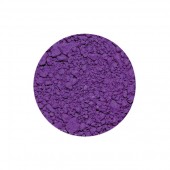
Ultramarine Violet Pigment
Starting at: £6.20
PV15
Ultramarine Violet is a synthetic organic pigment that is produced by heating Ultramarine Blue with Ammonium Chloride, causing the removal of some of the sodium and sulphur and thus a change in colour. It is lightfast and semi-transparent, with a weak tinting strength. In oils, it dries quite slowly, forming a hard, flexible film.
Toxicity: B
Learn More -
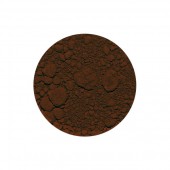
Mars Violet Pigment
Starting at: £4.50
PR101
Mars Violet is an artificial mineral pigment. Its pigment code, PR101, refers to a wide spectrum of synthetic iron oxide pigments including yellows, oranges, reds, violet-browns and green-browns, which replace many natural earth colours, to provide pigments without impurities and with great opacity. It has a good tinting strength, is lightfast and stable in all media, and has a medium drying time in oil. Although it is similar to Caput Mortuum and Indian Red, it is less transparent than the former and warmer than the latter.
Toxicity: B
Limeproof
Learn More -
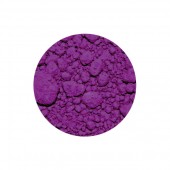
Manganese Violet Pigment
Starting at: £8.50
PV16
Manganese Violet is a synthetic organic pigment, discovered in Germany in 1868 and formed by combining manganese chloride, phosphoric acid and ammonium carbonate. It is very lightfast, but sensitive to alkalis and oils. It is semi-opaque and fast-drying, with a low tinting strength and low absorption of oil.
Toxicity: C
Learn More -
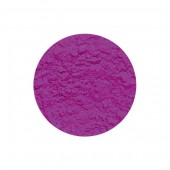
Cobalt Violet Light Pigment
Starting at: £10.00
Cobalt Violet Light Pigment (PV14). Synthetic inorganic pigment. Semi-opaque. Weak tinting strength. Excellent Lightfastness. Fast drying rate. Good for oil and watercolour but not acrylic as pigment 'settles out'. Used since early 1900's. This colour cannot be matched through mixing other colours.
Limeproof
Toxicity: C
Please note, unfortunately we are not able to send this product outside the UK.
Learn More -
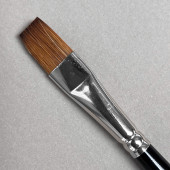
Cornelissen One Stroke Sable
Starting at: £8.75
Pure red sable brushes with a high colour holding capacity enabling free flow of colour. The fine edge of this brush provides defined clean cut lines. Learn More -
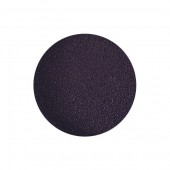
Indigo Blue Genuine Pigment
Starting at: £8.00
NB1
Genuine Indigo is a natural vegetable pigment derived from the Indigofera Tinctoria plant, which was first imported into Europe from India in the seventeenth century. It replaced woad, which had been grown natively in Europe for its blue dye. The leaves are soaked in water to ferment; upon drying, an oxidised residue forms on the dry leaves, which is removed, washed, boiled in water, and then dried to form cakes of pigment or dye.
Indigo is very transparent, with a good tinting strength. It requires a wetting agent to disperse, and in oil it dries very slowly. It is fugitive to light; this drawback means that it is no longer commonly available in commercial paints. It fell out of general use at the beginning of the seventeenth century, largely replaced by Prussian Blue, and synthetic Indigo was patented in the 1890s. However, it provides a subtle shade of blue that is still desirable in works that are going to be protected from light.
Toxicity: B
Learn More -
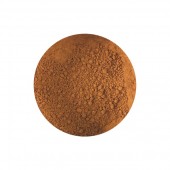
Burnt Sienna Pigment
Starting at: £4.00
PBr7
Burnt Sienna is a natural earth pigment that has been in use since antiquity. Our Burnt Sienna comes from Tuscany, and is produced by calcining Raw Sienna to temperatures of about 450 degrees Celsius. This process creates a rich warm colour and increases transparency. It also offers a good tinting strength, excellent lightfastness, and a fast to medium drying rate in oil. It is stable in all media but, like umber pigments, may be difficult to disperse in acrylic binders.
Toxicity B
Learn More -
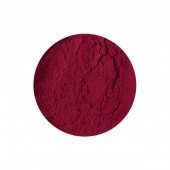
Quinacridone Magenta Pigment
Starting at: £5.50
Quinacridone Magenta Pigment (PR122). Organic pigment. Very transparent. High tinting strength. Excellent Lightfastness. High oil absorption with slow drying rate. Requires wetting agent. Suitable for all media. Developed in the 1950's. Toxicity A/B. Learn More -
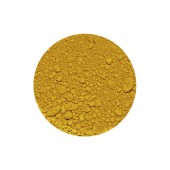
Mars Yellow Pigment
Starting at: £4.50
PY42
Mars Yellow is an artificial mineral pigment, a synthetic iron oxide. Mars colours in general replace many natural earth colours to provide pigments without impurities and with great opacity. It has a good tinting strength, is lightfast and stable in all media, and has a medium drying time in oil, creating a strong, flexible paint film.
Toxicity: B
Limeproof
Learn More -
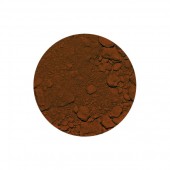
Mars Red Pigment
Starting at: £4.50
PR101
Mars Red is an artificial mineral pigment. Its pigment code, PR101, refers to a wide spectrum of synthetic iron oxide pigments including yellows, oranges, reds, violet-browns and green-browns, which replace many natural earth colours to provide pigments without impurities and with great opacity. It has a good tinting strength, is lightfast and stable in all media, and has a medium drying time in oil.
Toxicity: B
Limeproof
Learn More -
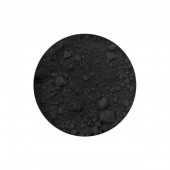
Mars Black Pigment
Starting at: £5.70
PBk11
Mars Black is an artificial mineral pigment composed of hydrated ferric oxides. Like other Mars colours, it provides a very opaque, permanent colour, which is stable in all media. It has an average drying time in oil, forming a hard, fairly flexible film, making it more suitable for impasto application than carbon-based black pigments, which tend to be brittle. It also wets more easily than other black pigments, and possesses a warm, brownish undertone.
Toxicity: B
Limeproof
Larger quantities are available by request.
Learn More -
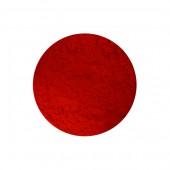
Cinnabar Pigment
Starting at: £16.00
Call to Order
PR106
Cinnabar, composed of mercuric sulphide, is a mineral pigment found in crusts or veins in sites of volcanic activity. It has good tinting strength and opacity but, like many red pigments, it dries very slowly in oil media. Due to its high toxicity, it is no longer an ingredient in commercial paints, but is a prominent colour in historical palettes. Generally, Cinnabar refers to the natural mineral, while Vermilion refers to the synthetic pigment. Cinnabar has been mined since at least the tenth millennium BC, and used as a painting material, gemstone, and ritual object by many cultures around the globe.
Toxicity D
PERMITTED USES Over 18s only. Proof of age required. Restoration of art works and protected buildings when alternatives unsuitable.
IMPORTANT Please refer to the MSDS (Material Safety Data Sheet) below. Dispose of product as hazardous waste.
SHIPPING Please note, we are not able to send this product outside the UK.
Learn More -
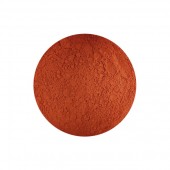
Vermilion Genuine Pigment
Starting at: £17.00
Call to Order
PR106 Vermilion is an artificial pigment based on mercuric sulphide, which occurs naturally as Cinnabar. The synthetic form contains fewer impurities than Cinnabar, and was in use in China as early as the fourth century. It was present in Europe from the ninth century, and was the most widely used red pigment until the introduction of Cadmium Red in the early twentieth century. It has good tinting strength and opacity but, like many red pigments, it dries very slowly in oil media.Toxicity D
PERMITTED USES Over 18s only. Proof of age required. Restoration of art works and protected buildings when alternatives unsuitable.
IMPORTANT Please refer to the MSDS (Material Safety Data Sheet) below. Dispose of product as hazardous waste.
SHIPPING Please note, we are not able to send this product outside the UK.
Learn More -
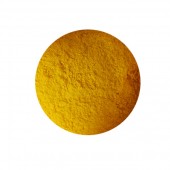
Orpiment Pigment
Starting at: £12.75
Call to Order
PY39
Orpiment, also called King's Yellow, is a mineral pigment containing naturally occurring sulphide of arsenic. Its high toxicity, and the prevalence of cadmium pigments, means that it is largely obsolete outside the field of restoration. It works best bound in oil or egg tempera, but it is not reliably permanent. Larger quantities are available by request.
Toxicity D
PERMITTED USES Over 18s only. Proof of age required. Restoration of art works and protected buildings when alternatives unsuitable.
IMPORTANT Please refer to the MSDS (Material Safety Data Sheet) below. Dispose of product as hazardous waste.
SHIPPING Please note, we are not able to send this product outside the UK.
Learn More -
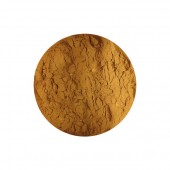
Realgar Pigment
Starting at: £12.75
Call to Order
Realgar, like Orpiment, is sulphide of arsenic, and these two substances are often found in close proximity to each other in nature. Realgar exists in small deposits throughout the world and has been used for its colour since ancient times, although its extreme toxicity means that it has been superseded by cadmiums in modern painting. It is an opaque pigment with poor tinting strength. Larger quantities are available by request.
Toxicity D
PERMITTED USES Over 18s only. Proof of age required. Restoration of art works and protected buildings when alternatives unsuitable.
IMPORTANT Please refer to the MSDS (Material Safety Data Sheet) below. Dispose of product as hazardous waste.
SHIPPING Please note, we are not able to send this product outside the UK.
Learn More -
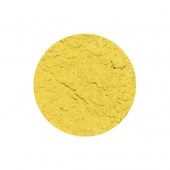
Litharge Pigment
Starting at: £8.00
Call to Order
PY46
Litharge is lead monoxide, also known as Massicot. It is an opaque pigment, with a weak tinting strength. Its toxicity and fugitive nature means that it is rarely used as a pigment. Instead, its fast drying time means that it has been used as a siccative in oil mediums. The colour tends to darken in all media, and it is also unstable in its dry form, as the powder can lighten when exposed to air.
Toxicity D Lead is a highly poisonous metal which, if inhaled, ingested, or introduced to the blood through cuts in the skin, builds up in the body and can affect multiple parts of the body, including the digestive and nervous systems.
PERMITTED USES Over 18s only. Proof of age required. Restoration of art works and protected buildings when alternatives unsuitable.
IMPORTANT Please refer to the MSDS (Material Safety Data Sheet) below. Dispose of product as hazardous waste.
SHIPPING Please note, we are not able to send this product outside the UK.
Learn More -
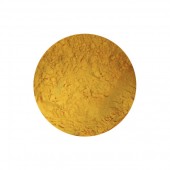
Lead Tin Yellow Dark Pigment
Starting at: £4.80
Call to Order
Lead Tin Yellow Dark Pigment. Larger sizes available. Please ask for quotation.Toxicity D Lead is a highly poisonous metal which, if inhaled, ingested, or introduced to the blood through cuts in the skin, builds up in the body and can affect multiple parts of the body, including the digestive and nervous systems.
PERMITTED USES Over 18s only. Proof of age required. Restoration of art works and protected buildings when alternatives unsuitable.
IMPORTANT Please refer to the MSDS (Material Safety Data Sheet) below. Dispose of product as hazardous waste.
SHIPPING Please note, we are not able to send this product outside the UK.
Learn More -
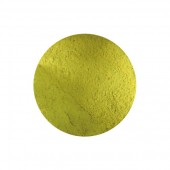
Lead Tin Yellow Light Pigment
Starting at: £4.80
Call to Order
Bright yellow first used in the Middle Ages as a replacement for Orpiment. Suitable for oil based media. Larger sizes available. Please ask for quotation.Toxicity D Lead is a highly poisonous metal which, if inhaled, ingested, or introduced to the blood through cuts in the skin, builds up in the body and can affect multiple parts of the body, including the digestive and nervous systems.
PERMITTED USES Over 18s only. Proof of age required. Restoration of art works and protected buildings when alternatives unsuitable.
IMPORTANT Please refer to the MSDS (Material Safety Data Sheet) below. Dispose of product as hazardous waste.
SHIPPING Please note, we are not able to send this product outside the UK.
Learn More -
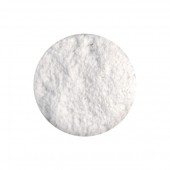
Flake White Pigment
Starting at: £18.75
Call to Order
PW1
Flake White Pigment, sometimes referred to as Lead White or Cremnitz White, is an artificial mineral pigment, lead carbonate. It is no longer available as a paint, due to its extreme toxicity. For this reason, great care must be taken when handling the dry pigment.
Toxicity D Lead is a highly poisonous metal which, if inhaled, ingested, or introduced to the blood through cuts in the skin, builds up in the body and can affect multiple parts of the body, including the digestive and nervous systems.
PERMITTED USES Over 18s only. Proof of age required. Restoration of art works and protected buildings when alternatives unsuitable.
IMPORTANT Please refer to the MSDS (Material Safety Data Sheet) below. Dispose of product as hazardous waste.
SHIPPING Please note, we are not able to send this product outside the UK.
Learn More
Shopping Options
- Category
-
- Pigments Gums & Resins (74)
- Oils & Acrylics (3)
- Watercolour Gouache & Egg Tempera (1)
- Drawing & Calligraphy (4)
- Brushes (15)
- Studio & Books (3)
- Price
-
- £0.00 - £99.99 (96)
- £100.00 and above (1)
- Manufacturer
-
- Cornelissen (76)
- Da Vinci (11)
- Faber-Castell (1)
- London Pigment (1)
- Pro Arte (1)
- Roberson (1)
- Schmincke (3)
- Stabilo (3)
You have no items in your shopping basket.

- Search Brands
-