

Search results for 'pigments'


-
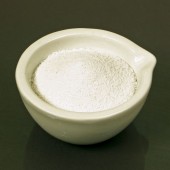
Marble Dust
Starting at: £4.70
Imparts texture when added to acrylic mediums and primers. Can also be used in lime mortar. Available in three different grades: - Coarse (irregular granules); - Medium (mesh size: 16); - Fine (mesh size: 100; most appropriate for use in paint). Learn More -
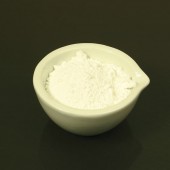
Alumina Hydrate Light
Starting at: £8.30
Alumina Hydrate is an inert pigment with highly absorbent properties, which can be ground into oil paint as an almost colourless extender. It is often used as an additive in commercial oil paints, particularly in conjunction with transparent or lake pigments, as it provides stability and a homogenous consistency without effecting colour or gloss, although it may effect the pigment strength. When combined with linseed oil, it produces an almost transparent painting medium for extending oil colours. Sometimes referred to as Lake Base. Learn More -
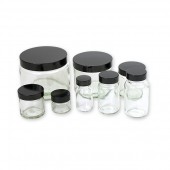
Squat & Powder Jars
Starting at: £0.75
Squat and Powder Jars in glass and plastic. *Please note, our glass jars are fragile, although they are packed very carefully we cannot guarantee they will arrive safely. Cases of jars are stored offsite, please allow extra time for your order to be processed and dispatched. Learn More -
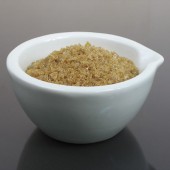
Rabbit Skin Glue
Starting at: £13.00
For sizing canvas prior to priming with an oil based primer. Do not use under acrylic primer. Soak overnight in water. Heat in double boiler (do not boil). Ratio water:size 13:1. Use while still warm. Rabbit Skin Glue does not contain preservatives. 340 - 360 Bloom Learn More
-
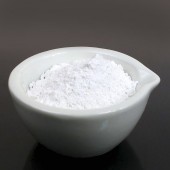
Gesso di Bologna
Starting at: £12.00
Gesso di Bologna is a bright white Calcium Sulphate, or gypsum, from Italy, which can be used as a substitute for whiting in the preparation of gesso. It is ground to a particularly fine powder, which makes it a suitable ground for gilding, as the small size of the particles allows for greater compression when burnishing. Learn More -
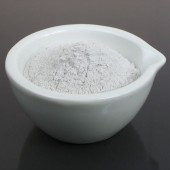
Pumice Powder
Starting at: £5.70
Volcanic rock in powdered form. Used to provide tooth to grounds. Learn More -
-
-
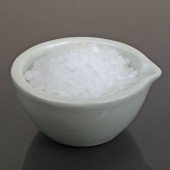
Paraffin Wax
Starting at: £6.60
Paraffin Wax is a by-product of the petro-chemical industry. It has a low melting point of 50-60°c and a brittle texture, making it unsuitable for encaustic painting or as an additive to oil paints, but it can be used to impart softness to lithographic crayons. As a petroleum product, it is more inert than animal or vegetable waxes, and is therefore not saponified (turned into soap) by alkali substances. Learn More -
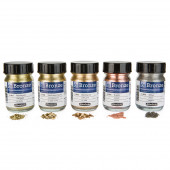
Schmincke Oil Bronze, 50 ml
Starting at: £25.10
For brilliant metal effects on oil paintings. Also suitable for wood, metal and gypsum surfaces. Use with Schmincke Bronze Medium (recipe below). Learn More -
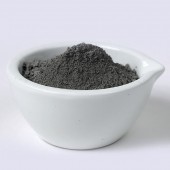
Rottenstone Grey
Starting at: £7.00
Fine abrasive powder used historically for polishing daguerreotype plates. Can be used to age wooden frames and object's d'art. Learn More -
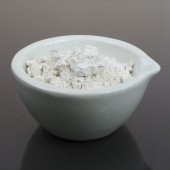
Whiting
Starting at: £4.00
Whiting is powdered Calcium Carbonate, which can be mixed with rabbit skin glue to create a chalk-based ground for oil, tempera, distemper or encaustic painting. Traditionally, whiting was an important ingredient when preparing painting surfaces in the north of Europe, as opposed to gypsum (Calcium Sulphate), which was widely used south of the Alps. Learn More -
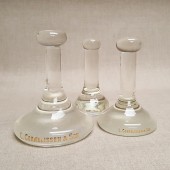
Cornelissen Glass Mullers
Starting at: £24.50
Cornelissen Glass Mullers are handmade using superior boro silicate laboratory glass, which is 40% harder, more heat resistant, and offers better clarity than soda-lime glass. The base of each muller is ground perfectly flat, and sand-blasted to create a fine tooth to facilitate the grinding of pigments. The tall handle features an ergonomic top, to ease fatigue when grinding large amounts of pigment. Mullers act as flat-bottomed pestles, which are used to grind pigment into a binding medium, suspending it evenly to create a uniform covering of binder around each pigment particle. Using a muller and slab, rather than simply mixing pigment and binder together, will create a more homogenised and stable paint. Use in conjunction with a Cornelissen Glass Slab to make paint efficiently. The sand-blasted texture of the muller and plate helps to push and distribute the pigment throughout the binder quickly. This will mean less grinding, and more painting! Learn More -
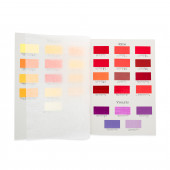
Cornelissen Pigment Colour Chart
£40.00Cornelissen Pigment Colour Chart. 85 pigment samples displayed in a 6 page 300 gsm A4 booklet, including 'permanence' and 'colour index' references. Colour swatches have been made using a casein binder. Learn More -
-
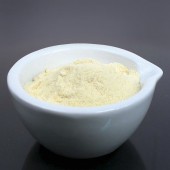
Powdered Rosin
Starting at: £13.90
Rosin is the powdered form of colophony, which is a by-product of the distillation of turpentine. Its primary application is to create tonal areas on metal plates as an aquatint resist. It is also an additive in etching grounds, where it gives a hard surface to the otherwise soft wax. Learn More -
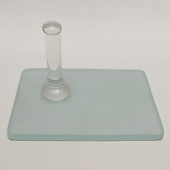
Cornelissen Mini Glass Muller and Slabs
Starting at: £28.00
Use Cornelissen Mini Glass Mullers in conjunction with a Cornelissen Glass Slab to make paint efficiently. The sand-blasted texture of the muller and plate helps to push and distribute the pigment throughout the binder quickly. This means less time grinding, more time painting! Learn More -
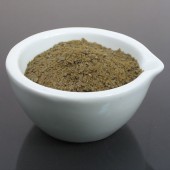
Carnauba Wax Grey
Starting at: £8.40
Carnauba Wax is the hardest wax commonly used in the production of artists' materials, with a melting point of 83-86°c. It is derived from a tree native to South America, and is available in a natural colour (grey), or a refined colour (pale yellow). Small amounts of carnauba wax are commonly used in both oil painting mediums and encaustic painting, usually in conjunction with beeswax to add toughness, durability and sheen to the paint film. It creates an inflexible surface, so works best on rigid supports such as gesso panels, and it should be noted that it will raise the melting point of encaustic mixtures. It can produce a glossy finish; as such it is used in waxes and polishes for shoes, cars, musical instruments, furniture, and wooden floors, especially when mixed with beeswax and turpentine. Learn More -
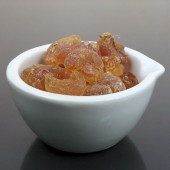
Gum Arabic
Starting at: £6.30
Gum Arabic is a resoluble binding agent, commonly used in the preparation of watercolours, but also useful as an adhesive, a size, and in the production of soft pastels. It is a natural product, harvested from the Acacia tree between October and May. The highest grade of Gum Arabic comes from the Kordofan region of Sudan. It is exceptionally pale and pure and therefore particularly suited to watercolour painting. Please see the Formulas & Recipes section on our homepage for a recipe to make your own watercolour paints using Gum Arabic (currently under construction). Learn More -
-
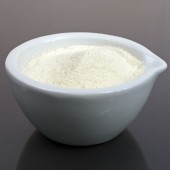
Gum Sandarac
Starting at: £8.60
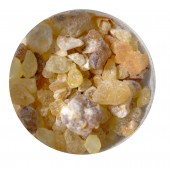
Gum Sandarac, derived from a coniferous tree, is available in powdered or lump form. It can be dissolved in alcohol to create a varnish that is suitable as an isolating layer in oil painting and as a traditional top coat for egg tempera. It forms a brittle layer, so is only suitable for use on a rigid support. Another application is as a surface preparation for calligraphy; the ground gum can be dusted across a piece of prepared vellum or paper to create a resist, which shrinks ink strokes slightly, making them appear finer, with crisp edges. Learn More -
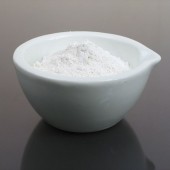
Plaster of Paris
Starting at: £6.00
For moulding when mixed with the same volume of water. Sets quickly and will not shrink. Learn More -
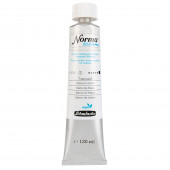
Schmincke Norma Blue, Titanium White S1,120ml
£21.60NORMA Blue can simply be painted and cleaned with water as they are water-mixable (water miscible). Highly pigmented and lightfast, with a buttery consistency. Vegan, low odour, anti-allergenic, environmentally friendly. Learn More -
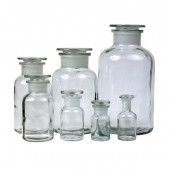
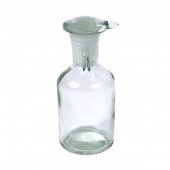
Reagent Jar
Starting at: £6.50
Our clear reagent bottles are manufactured in the EU and are made of high quality soda lime glass. They have a solid base and good wall thickness.
Learn More -
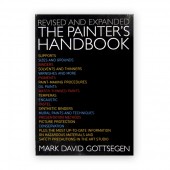
Painter's Handbook
£25.00By Mark David Gottsegen. A guide to artists’ materials as well as a thorough resource presenting techniques for using them and recipes for making them. (355 pages) Learn More -
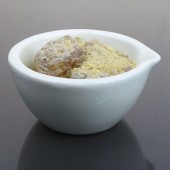
Gum Copal Manila
Starting at: £6.00
Gum Copal Manila is derived from the resin of a coniferous tree native to the Philippines. It is not to be confused with other copals, which are the product of fossilised plant materials. It can be dissolved in alcohol to make a spirit varnish, to be used as a substitute for shellac, or as a fixative for pastel and charcoal drawings. Please note, that when used as a fixative it may darken the colour of the image. Learn More -
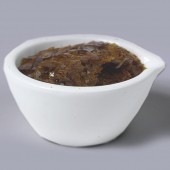
Lemon Shellac
Starting at: £8.20
Shellac is a natural resin that is deposited by the female lac insect on the branches of trees in India and Thailand. It is soluble with alcohol, but not with mineral spirits or turpentine. It forms a tough yet flexible film, with many applications. It is suitable as a top coat for gilding when applied thinly, a sealant for porous surfaces, an isolating layer for tempera paintings, a base for pigmented inks, a protective layer for collograph plates, and a warm varnish for wooden floors and furniture. As it is prone to darkening with age, it is not recommended as a varnish for oils, and its solubility can reduce over time. There are various grades of shellac. When mixed with alcohol, it may initially form a cloudy mixture, due to traces of wax in the shellac, but this should become clear once it has dried. The highest grades of shellac are Clear Dewaxed Shellac, which has been de-coloured using the carbon filtering method, Lemon Shellac, and Orange Shellac, which are pale in colour. Button Shellac is less refined and therefore produces a reddish varnish. It was, in fact, widely used as a red dye before synthetic dyes became available. Learn More -
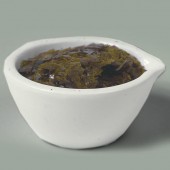
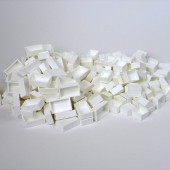
Clear Dewaxed Shellac
Starting at: £9.20
Shellac is a natural resin that is deposited by the female lac insect on the branches of trees in India and Thailand. It is soluble with alcohol, but not with mineral spirits or turpentine. It forms a tough yet flexible film, with many applications. It is suitable as a top coat for gilding when applied thinly, a sealant for porous surfaces, an isolating layer for tempera paintings, a base for pigmented inks, a protective layer for collograph plates, and a warm varnish for wooden floors and furniture. As it is prone to darkening with age, it is not recommended as a varnish for oils, and its solubility can reduce over time. There are various grades of shellac. When mixed with alcohol, it may initially form a cloudy mixture, due to traces of wax in the shellac, but this should become clear once it has dried. The highest grades of shellac are Clear Dewaxed Shellac, which has been de-coloured using the carbon filtering method, Lemon Shellac, and Orange Shellac, which are pale in colour. Button Shellac is less refined and therefore produces a reddish varnish. It was, in fact, widely used as a red dye before synthetic dyes became available. Learn More -
-
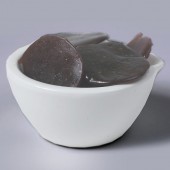
Button Shellac
Starting at: £8.40
Shellac is a natural resin that is deposited by the female lac insect on the branches of trees in India and Thailand. It is soluble with alcohol, but not with mineral spirits or turpentine. It forms a tough yet flexible film, with many applications. It is suitable as a top coat for gilding when applied thinly, a sealant for porous surfaces, an isolating layer for tempera paintings, a base for pigmented inks, a protective layer for collograph plates, and a warm varnish for wooden floors and furniture. As it is prone to darkening with age, it is not recommended as a varnish for oils, and its solubility can reduce over time. There are various grades of shellac. When mixed with alcohol, it may initially form a cloudy mixture, due to traces of wax in the shellac, but this should become clear once it has dried. The highest grades of shellac are Clear Dewaxed Shellac, which has been de-coloured using the carbon filtering method, Lemon Shellac, and Orange Shellac, which are pale in colour. Button Shellac is less refined and therefore produces a reddish varnish. It was, in fact, widely used as a red dye before synthetic dyes became available. Learn More
Shopping Options
- Category
-
- Pigments, Gums, Resins (189)
- Oils, Acrylics (45)
- Canvas, Supports (3)
- Watercolour, Gouache, Egg Tempera (33)
- Pastels (19)
- Drawing, Calligraphy (39)
- Gilding, Restoration (14)
- Printmaking (10)
- Studio, Books (29)
- Signwriting, Specialist Decorating (11)
- Gift Vouchers (1)
- Price
-
- £0.00 - £99.99 (316)
- £100.00 - £199.99 (4)
- £200.00 and above (2)
- Manufacturer
-
- Charbonnel (1)
- Cornelissen (171)
- Daler-Rowney (2)
- Daniel Smith (6)
- Faber-Castell (4)
- Gamblin (5)
- Golden (5)
- London Pigment (13)
- Maimeri (1)
- Michael Harding (7)
- Pentel (1)
- Renaissance Workshop Materials (5)
- Roberson (15)
- Rohrer and Klingner (13)
- Schmincke (39)
- Spectrum (1)
- Stabilo (3)
- Winsor&Newton (8)
- Sennelier (5)
You have no items in your shopping basket.

- Search Brands
-