

Your search 'Roman pigme' did not match any products.
Showing results using some of your search terms 'Roman pigme'
Search results for 'pigme'


-
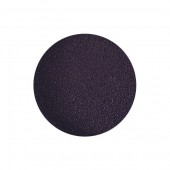
Indigo Blue Genuine Pigment
Starting at: £8.00
NB1
Genuine Indigo is a natural vegetable pigment derived from the Indigofera Tinctoria plant, which was first imported into Europe from India in the seventeenth century. It replaced woad, which had been grown natively in Europe for its blue dye. The leaves are soaked in water to ferment; upon drying, an oxidised residue forms on the dry leaves, which is removed, washed, boiled in water, and then dried to form cakes of pigment or dye.
Indigo is very transparent, with a good tinting strength. It requires a wetting agent to disperse, and in oil it dries very slowly. It is fugitive to light; this drawback means that it is no longer commonly available in commercial paints. It fell out of general use at the beginning of the seventeenth century, largely replaced by Prussian Blue, and synthetic Indigo was patented in the 1890s. However, it provides a subtle shade of blue that is still desirable in works that are going to be protected from light.
Toxicity: B
Learn More -
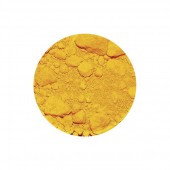
Cadmium Yellow Middle Pigment
Starting at: £6.30
Cadmium Yellow Middle Pigment (PY37). Synthetic Inorganic pigment. Opaque. Good tinting strength. Excellent Lightfastness. Low oil absorption with slow drying rate. Suitable for all media. Good acid and alkali resist. Exterior application not advised as discoloration occurs. Used since 19th Century. Toxicity B/C. Learn More -
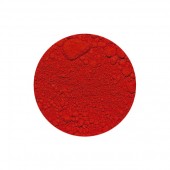
Vermilion Imitation Pigment
Starting at: £8.20
Vermilion Imitation Pigment (PR4, PY1, PW21). Organic pigment. Mixture of Studio Red, Hansa Yellow (Azo) and Blanc Fixe. Semi-transparent. Good tinting strength. Good Lightfastness, but prone to fading when mixed strongly with white . Slow drying rate. Requires wetting agent. Suitable for all media. Used since early 20th Century. Toxicity A. Learn More -
-
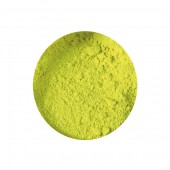
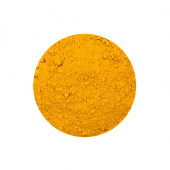
Cadmium Yellow Lemon Pigment
Starting at: £4.50
Synthetic Inorganic pigment. Opaque. Good tinting strength. Excellent Lightfastness. Low oil absorption with slow drying rate. Suitable for all media. Good acid and alkali resist. Exterior application not advised as discoloration occurs. Used since 19th Century. Toxicity B/C
Learn More -
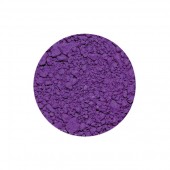
Ultramarine Violet Pigment
Starting at: £6.20
PV15
Ultramarine Violet is a synthetic organic pigment that is produced by heating Ultramarine Blue with Ammonium Chloride, causing the removal of some of the sodium and sulphur and thus a change in colour. It is lightfast and semi-transparent, with a weak tinting strength. In oils, it dries quite slowly, forming a hard, flexible film.
Toxicity: B
Learn More -
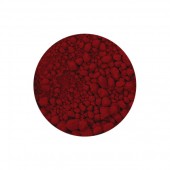
Carmine Red Genuine Pigment
Starting at: £10.00
NR4
Carmine has been used as a dye and pigment since antiquity. Originally derived from the kermes insect, it was replaced by cochineal following the discovery of the Americas. It has a good tinting strength and is very transparent, although it is fugitive to light.
Larger quantities are available by request.
Learn More -
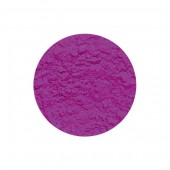
Cobalt Violet Light Pigment
Starting at: £10.00
Cobalt Violet Light Pigment (PV14). Synthetic inorganic pigment. Semi-opaque. Weak tinting strength. Excellent Lightfastness. Fast drying rate. Good for oil and watercolour but not acrylic as pigment 'settles out'. Used since early 1900's. This colour cannot be matched through mixing other colours.
Limeproof
Toxicity: C
Please note, unfortunately we are not able to send this product outside the UK.
Learn More -
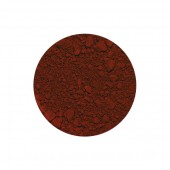
Translucent Red Oxide Pigment
Starting at: £9.80
Translucent Red Oxide (PR101). Artificial mineral pigment, hydrated ferric oxides. Transparent and very lightfast. Stable in all media, medium drying rate in oil. Toxicity B. Learn More -
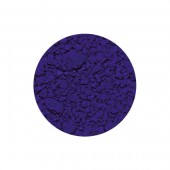
Ultramarine Blue Limewash Pigment
Starting at: £6.30
PB29
Ultramarine Blue Limewash is an artificial mineral pigment that is produced by heating clay, soda, sulphur and coal to high temperatures. Its name comes from outremer, or over-the-sea, as a reference to the highly-prized Lapis Lazuli pigment which had been imported into Europe from Afghanistan since the Middle Ages. First manufactured in France and Germany in 1828, synthetic Ultramarine provided a brilliant and affordable blue to artists, and it remains one of the most popular blues on artists' palettes today.
It is a transparent pigment, with a high tinting strength and excellent lightfastness. Most Ultramarine colours react to alkali and are therefore unsuitable for use in lime-fresco; Limeproof Ultramarine Blue remedies this problem. It is stable in all other media, although it can be tricky to grind in oil. Instead of creating a thick, buttery paste, it can remain stringy and deteriorate when stored in a tube. To correct this, many commercial paint manufacturers include additives and waxes in their recipes; if you intend on grinding your own paint, you could try replacing 10-15% of your Linseed Oil with Poppy Oil to improve the consistency. Ultramine Blue provides a slow-drying, fairly hard paint film, which can tend towards brittleness.
Toxicity: B
Learn More -
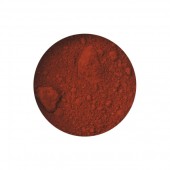
Translucent Orange Oxide Pigment
Starting at: £9.40
Translucent Orange Oxide (PR101). Artificial mineral pigment, hydrated ferric oxides. Transparent and very lightfast. Stable in all media, medium drying rate in oil. Toxicity B. Learn More -
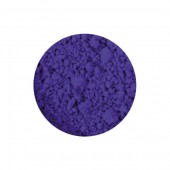
Ultramarine Blue Dark Pigment
Starting at: £4.00
PB29
Ultramarine Blue Dark is an artificial mineral pigment that is produced by heating clay, soda, sulphur and coal to high temperatures. Its name comes from outremer, or over-the-sea, as a reference to the highly-prized Lapis Lazuli pigment which had been imported into Europe from Afghanistan since the Middle Ages. First manufactured in France and Germany in 1828, synthetic Ultramarine provided a brilliant and affordable blue to artists, and it remains one of the most popular blues on artists' palettes today.
It is a transparent pigment, with a high tinting strength and excellent lightfastness. It reacts to alkali, therefore it is not suitable for use in lime-fresco; we do offer a Limeproof Ultramarine Blue for this purpose. It is stable in all other media, although it can be tricky to grind in oil. Instead of creating a thick, buttery paste, it can remain stringy and deteriorate when stored in a tube. To correct this, many commercial paint manufacturers include additives and waxes in their recipes; if you intend on grinding your own paint, you could try replacing 10-15% of your Linseed Oil with Poppy Oil to improve the consistency. Ultramine Blue provides a slow-drying, fairly hard paint film, which can tend towards brittleness.
Toxicity: B
Learn More -
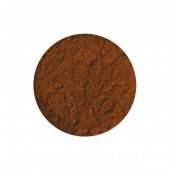
Translucent Yellow Oxide Pigment
Starting at: £7.00
Translucent Yellow Oxide (PY42). Artificial mineral pigment, hydrated ferric oxides. Transparent and very lightfast. Stable in all media, medium drying rate in oil. Toxicity B. Learn More -
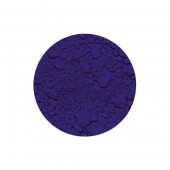
Ultramarine Blue Light Pigment
Starting at: £6.00
PB29
Ultramarine Blue Light is an artificial mineral pigment that is produced by heating clay, soda, sulphur and coal to high temperatures. Its name comes from outremer, or over-the-sea, as a reference to the highly-prized Lapis Lazuli pigment which had been imported into Europe from Afghanistan since the Middle Ages. First manufactured in France and Germany in 1828, synthetic Ultramarine provided a brilliant and affordable blue to artists, and it remains one of the most popular blues on artists' palettes today.
It is a transparent pigment, with a high tinting strength and excellent lightfastness. It reacts to alkali, therefore it is not suitable for use in lime-fresco; we do offer a Limeproof Ultramarine Blue for this purpose. It is stable in all other media, although it can be tricky to grind in oil. Instead of creating a thick, buttery paste, it can remain stringy and deteriorate when stored in a tube. To correct this, many commercial paint manufacturers include additives and waxes in their recipes; if you intend on grinding your own paint, you could try replacing 10-15% of your Linseed Oil with Poppy Oil to improve the consistency. Ultramine Blue provides a slow-drying, fairly hard paint film, which can tend towards brittleness.
Toxicity B
Learn More -
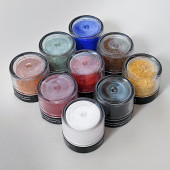
Cornelissen Iconographer's Pigment Set, with Aidan Hart
£41.00Nine pigments, especially selected for L. Cornelissen & Son by Aidan Hart, renowned icon painter, writer and lecturer. Learn More -
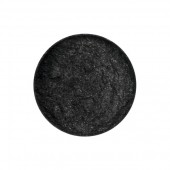
Graphite Powder (Sri Lanka)
Starting at: £5.50
PBk10
Graphite powder is an allotropic form of pure carbon, ground to 200 mesh. It is transparent and lightfast, with a slight sheen. It can be applied directly onto a paper support.
Larger quantities are available by request. This variety of graphite is a naturally occurring material sourced from Sri Lanka.
Toxicity: A/B
Learn More -
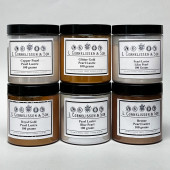
Cornelissen Pearl Lustre Pigments 100g
Starting at: £12.90
Pearl Lustre Pigments 100g. Colour swatch on the left indicates colour on a White Background and Colour on a Black Background on the right. Learn More -
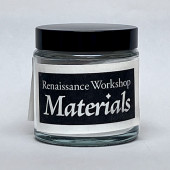
Bone White Pigment 100 grams, Renaissance Workshop Materials
£38.00To make grounds for silverpoint drawing. Learn More -
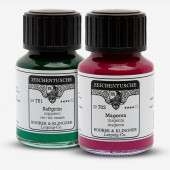
Rohrer & Klingner Drawing & Calligraphy Ink 50ml
Starting at: £7.30
Drawing & Calligraphy Ink (series 29 700). Lightfast pigmented acrylic inks in 24 colours. Intermixable with Rohrer’s Antique Drawing Inks. Suitable for brush, dip pen, technical drawing pens greater than 0.35mm and airbrush. Learn More -
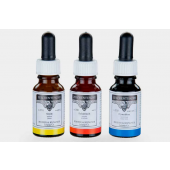
Rohrer & Klingner Drawing & Calligraphy Ink 12ml
Starting at: £4.80
Drawing & Calligraphy Ink (series 29 700). Lightfast pigmented acrylic inks in 24 colours. Intermixable with Rohrer’s Antique Drawing Inks. Suitable for brush, dip pen, technical drawing pens greater than 0.35mm and airbrush. Learn More -
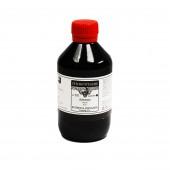
Rohrer & Klingner Drawing & Calligraphy Ink 250ml
Starting at: £23.20
Drawing & Calligraphy Ink (series 29 700). Lightfast pigmented acrylic inks in 22 colours. Intermixable with Rohrer’s Antique Drawing Inks. Suitable for brush, dip pen, technical drawing pens greater than 0.35mm and airbrush. Learn More -
![Roberson Glass muller, medium (7 cm) and small (5 cm) [without logo]](https://www.cornelissen.com/media/catalog/product/cache/1/small_image/170x/9df78eab33525d08d6e5fb8d27136e95/i/m/img-6584.jpg)
Roberson Glass Mullers
Starting at: £25.00
Roberson Glass Mullers are handmade using high quality-glass.
Mullers act as flat-bottomed pestles, which are used to grind pigment into a binding medium, suspending it evenly to create a uniform covering of binder around each pigment particle. Using a muller and slab, rather than simply mixing pigment and binder together, will create a more homogenised and stable paint.
Roberson Glass Mullers are handmade using superior boro silicate laboratory glass, which is 40% harder, more heat resistant, and offers better clarity than soda-lime glass. The base of each muller is ground perfectly flat, and sand-blasted to create a fine tooth to facilitate the grinding of pigments.Use in conjunction with a Cornelissen Glass Slab to make paint efficiently. The sand-blasted texture of the muller and plate helps to push and distribute the pigment throughout the binder quickly. This will mean less grinding, and more painting!
NOTE: Sizes may vary slightly as these are handmade products.
Learn More -
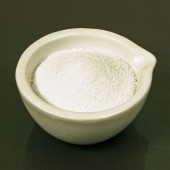
Marble Dust
Starting at: £4.70
Imparts textue when added to acrylic mediums and primers. Used in lime mortar. Meets paint pigment specificitions in its fine form. Mesh size: Course (Irregular granules), Medium (16) and Fine (100). Learn More -
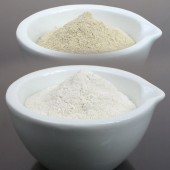
Gum Tragacanth
Starting at: £20.00
Call to Order
Gum Tragacanth is a natural tree gum with pigment-binding properties. It can be used to make a very matte watercolour, but is most commonly used in the production of soft pastels.
Please see the Formulas & Recipes section on our homepage for a recipe to make your own pastels using Gum Tragacanth (currently under construction).
Learn More -
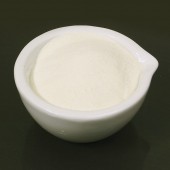
Casein Lactic
Starting at: £15.95
Casein is a protein derived from dried milk, which has been used in painting since ancient times. It can be combined with Ammonium Carbonate to form an emulsion, which acts as a durable, non-resoluble binder for pigments, producing a matte, fast-drying paint, similar in appearance to egg tempera. We use casein as a binder for our L. Cornelissen & Son Pigment Colour Charts, as it is a medium that clearly showcases the characteristics and behaviour of each pigment in its pure form. Casein paints can be applied in thin layers to watercolour paper, but would require a more rigid support, such as a gesso panel, to be applied thickly, as the comparative inflexibility of the paint layer means that it can be prone to cracking. Subsequent layers of paint should be more diluted to aid adhesion, and impasto effects are not recommended. It is possible to varnish casein paintings using an acrylic or damar varnish to obtain a glossy surface if desired, although this is not a necessary step. Casein can also be used as an ingredient in gesso, and is a suitable binder for fresco secco techniques.
Some pigments may require a wetting agent in order to fully disperse within the binder, in which case alcohol may be used.
Learn More -
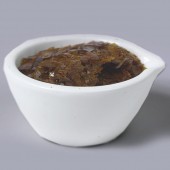
Lemon Shellac
Starting at: £8.20
Shellac is a natural resin that is deposited by the female lac insect on the branches of trees in India and Thailand. It is soluble with alcohol, but not with mineral spirits or turpentine. It forms a tough yet flexible film, with many applications. It is suitable as a top coat for gilding when applied thinly, a sealant for porous surfaces, an isolating layer for tempera paintings, a base for pigmented inks, a protective layer for collograph plates, and a warm varnish for wooden floors and furniture. As it is prone to darkening with age, it is not recommended as a varnish for oils, and its solubility can reduce over time. There are various grades of shellac. When mixed with alcohol, it may initially form a cloudy mixture, due to traces of wax in the shellac, but this should become clear once it has dried. The highest grades of shellac are Clear Dewaxed Shellac, which has been de-coloured using the carbon filtering method, Lemon Shellac, and Orange Shellac, which are pale in colour. Button Shellac is less refined and therefore produces a reddish varnish. It was, in fact, widely used as a red dye before synthetic dyes became available. Learn More -
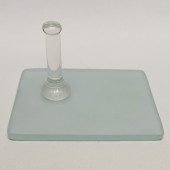
Cornelissen Mini Glass Muller and Slabs
Starting at: £24.00
Use Cornelissen Mini Glass Mullers in conjunction with a Cornelissen Glass Slab to make paint efficiently. The sand-blasted texture of the muller and plate helps to push and distribute the pigment throughout the binder quickly. This will mean less grinding, more painting! Learn More -
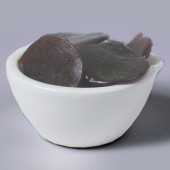
Button Shellac
Starting at: £8.40
Shellac is a natural resin that is deposited by the female lac insect on the branches of trees in India and Thailand. It is soluble with alcohol, but not with mineral spirits or turpentine. It forms a tough yet flexible film, with many applications. It is suitable as a top coat for gilding when applied thinly, a sealant for porous surfaces, an isolating layer for tempera paintings, a base for pigmented inks, a protective layer for collograph plates, and a warm varnish for wooden floors and furniture. As it is prone to darkening with age, it is not recommended as a varnish for oils, and its solubility can reduce over time. There are various grades of shellac. When mixed with alcohol, it may initially form a cloudy mixture, due to traces of wax in the shellac, but this should become clear once it has dried. The highest grades of shellac are Clear Dewaxed Shellac, which has been de-coloured using the carbon filtering method, Lemon Shellac, and Orange Shellac, which are pale in colour. Button Shellac is less refined and therefore produces a reddish varnish. It was, in fact, widely used as a red dye before synthetic dyes became available. Learn More -
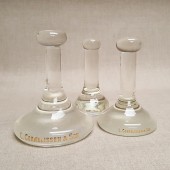
Cornelissen Glass Mullers
Starting at: £24.50
Cornelissen Glass Mullers are handmade using superior boro silicate laboratory glass, which is 40% harder, more heat resistant, and offers better clarity than soda-lime glass. The base of each muller is ground perfectly flat, and sand-blasted to create a fine tooth to facilitate the grinding of pigments. The tall handle features an ergonomic top, to ease fatigue when grinding large amounts of pigment. Mullers act as flat-bottomed pestles, which are used to grind pigment into a binding medium, suspending it evenly to create a uniform covering of binder around each pigment particle. Using a muller and slab, rather than simply mixing pigment and binder together, will create a more homogenised and stable paint. Use in conjunction with a Cornelissen Glass Slab to make paint efficiently. The sand-blasted texture of the muller and plate helps to push and distribute the pigment throughout the binder quickly. This will mean less grinding, and more painting! Learn More -
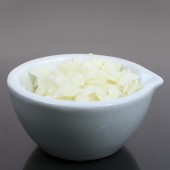
Bleached Beeswax
Starting at: £12.30
Beeswax is derived from melted honeycomb, and is available in two grades. Bleached Beeswax Pellets are white, having been bleached by the sun, and are an appropriate choice for using with pale colours, although they may revert to yellow over time. Natural Beeswax Pellets are yellow in colour, and offer a more flexible structure with a higher resin content. Beeswax has a melting point of 63-66°c, and may turn brown if over-heated. It is the most widely used wax in artists' materials, having a wide range of applications. Please see below for more details.
Learn More
Shopping Options
- Category
-
- Pigments Gums & Resins (198)
- Oils & Acrylics (42)
- Canvas & Supports (3)
- Watercolour Gouache & Egg Tempera (35)
- Pastels (14)
- Drawing & Calligraphy (38)
- Gilding & Restoration Materials (14)
- Printmaking (10)
- Studio & Books (28)
- Gift Vouchers (1)
- Price
-
- £0.00 - £99.99 (317)
- £100.00 - £199.99 (5)
- £200.00 and above (2)
- Manufacturer
-
- Charbonnel (1)
- Cornelissen (180)
- Daler-Rowney (2)
- Daniel Smith (6)
- Faber-Castell (4)
- Gamblin (5)
- Golden (7)
- London Pigment (14)
- Maimeri (1)
- Michael Harding (7)
- Pentel (1)
- Renaissance Workshop Materials (5)
- Roberson (14)
- Rohrer and Klingner (13)
- Schmincke (31)
- Spectrum (1)
- Stabilo (3)
- Winsor&Newton (8)
- Sennelier (4)
You have no items in your shopping basket.

- Search Brands
-