Search results for 'varnish'
-
Gum Benzoin
Starting at: £14.70
Gum Benzoin is used as a fixative, slowing the dispersion of essential oils and other materials into the air. Is occasionally called for in some old varnish recipes where it was employed primarily for its odour. Learn More -
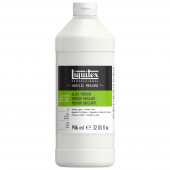
Liquid Glass Mediums
Starting at: £32.00
Renaissance Materials by Dr. David Cranswick.
A thick glazing medium of the 'Old Masters'. Liquid Glass Mediums facilitate building up layers of transparent glaze. Gloss or Satin. Contains: Damar resin, linseed oil and beeswax (for Satin medium only)
Avoid applying a final varnish. The medium can be used as a varnish.
-
Schmincke Medium W
Starting at: £10.80
Schmincke Medium W is an odourless, jelly-like ("lean") medium for mixing oil colours with water instead of organic solvents such as turpentine or turpentine substitute. It increases gloss and transparency, reduces viscosity and harmonizes the drying process.
Dosage: 50%
Thinner: Water
Learn More -
Gum Damar
Starting at: £10.00
Damar is a pale, almost colourless tree resin, which is soluble in turpentine, but not in alcohol or mineral spirits. It can be used as a varnish or as a glossy painting medium in conjunction with vegetable oils, and is generally preferable to other resin-based varnishes, such as mastic varnish, as it retains its colourless appearance for a longer period of time. In encaustic painting, the inclusion of damar resin imparts toughness and gloss to the paint surface. Learn More -
Sennelier Oil Sticks
Starting at: £7.65
Solid artists' quality oil paint sticks. (Ø = 3/4 ; length = 5" ) SENNELIER Extra-Fine Solid Oil Sticks can be used alone or in combination with oil colours in tubes. The oil stick colours can be used for an entire painting. They are applied directly to any traditional oil-painting support, such as canvas, wood panel or fine art paper. They need the same archival priming (acrylic gesso or oil ground) that oil paint requires. Surfaces: Before use, the surface film of the oil stick must be peeled off. It will form again after a few days of non-use, protecting and conserving the colour. The oil sticks must be applied in a thin film application of no more than 1mm thick. Once applied they can be painted over with oil stick or oil paint and if desired be diluted with turpentine. Oil stick Medium, a colourless oil stick, may be used to produce transparent effects and glazes. Once applied, the oil stick surface will dry in 2 to 5 days, depending on the atmospheric conditions Varnishing: If varnishing is desired, you must wait 6 months (as in traditional oil paint) until the colour is completely dry, before giving the painting a final coat of picture varnish. Use a soft brush to varnish so that the oil stick marks are not disturbed. SENNELIER Extra-Fine Solid Oil Stick colours are either opaque (O) or transparent (T) depending on the nature of the pigment in each colour. Oil Sticks do not change during storage and require no special precautions except to be kept away from any source of heat, which could adversely affect the stick. Application Techniques After applying the colour with the point or the edge of the oil stick, colours can be mixed directly on the support using the following methods: • Blending, with brush, finger, or drawing stump. With or without turpentine • Wash-drawing, dilute colours with turpentine or mineral spirit • Retouching, with oil stick, palette knife or brush • Textures, thick application oil stick colour. Retouch with a brush or palette knife •Sgraffito, scratching a layer of fresh paint with a point (brush handle, palette knife, etc.) to reveal the layer below. Sgraffito is related to engraving, and is used not only for revealing the under-layers of paint but also to scratch and clean unsatisfactory parts of the painting •Interior Decoration, on glass, ceramics etc. Use for decorative purposes only Learn More -
Gum Copal Manila
Starting at: £6.00
Gum Copal Manila is derived from the resin of a coniferous tree native to the Philippines. It is not to be confused with other copals, which are the product of fossilised plant materials. It can be dissolved in alcohol to make a spirit varnish, to be used as a substitute for shellac, or as a fixative for pastel and charcoal drawings. Please note, that when used as a fixative it may darken the colour of the image. Learn More -
Renaissance Wax
Starting at: £14.00
Used by restoration specialists to revive and protect furniture, leather, paintings, metals etc. Freshens colours, imparts soft sheen. Very long shelf life. (approx 20 years) as long as it is not exposed to heat. Learn More -
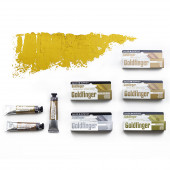
Cornelissen Universal Lacquer
Starting at: £14.40
Use to protect metal & silver leaf, white gold, Ormoline paint & Robersons Liquid Metal range. Provides extra protection on exterior projects & high-wear areas. It dries crystal clear with a satin finish, and is non-yellowing. Learn More
-
-
Clear Dewaxed Shellac
Starting at: £9.20
Shellac is a natural resin that is deposited by the female lac insect on the branches of trees in India and Thailand. It is soluble with alcohol, but not with mineral spirits or turpentine. It forms a tough yet flexible film, with many applications. It is suitable as a top coat for gilding when applied thinly, a sealant for porous surfaces, an isolating layer for tempera paintings, a base for pigmented inks, a protective layer for collograph plates, and a warm varnish for wooden floors and furniture. As it is prone to darkening with age, it is not recommended as a varnish for oils, and its solubility can reduce over time. There are various grades of shellac. When mixed with alcohol, it may initially form a cloudy mixture, due to traces of wax in the shellac, but this should become clear once it has dried. The highest grades of shellac are Clear Dewaxed Shellac, which has been de-coloured using the carbon filtering method, Lemon Shellac, and Orange Shellac, which are pale in colour. Button Shellac is less refined and therefore produces a reddish varnish. It was, in fact, widely used as a red dye before synthetic dyes became available. Learn More -
Lemon Shellac
Starting at: £8.20
Shellac is a natural resin that is deposited by the female lac insect on the branches of trees in India and Thailand. It is soluble with alcohol, but not with mineral spirits or turpentine. It forms a tough yet flexible film, with many applications. It is suitable as a top coat for gilding when applied thinly, a sealant for porous surfaces, an isolating layer for tempera paintings, a base for pigmented inks, a protective layer for collograph plates, and a warm varnish for wooden floors and furniture. As it is prone to darkening with age, it is not recommended as a varnish for oils, and its solubility can reduce over time. There are various grades of shellac. When mixed with alcohol, it may initially form a cloudy mixture, due to traces of wax in the shellac, but this should become clear once it has dried. The highest grades of shellac are Clear Dewaxed Shellac, which has been de-coloured using the carbon filtering method, Lemon Shellac, and Orange Shellac, which are pale in colour. Button Shellac is less refined and therefore produces a reddish varnish. It was, in fact, widely used as a red dye before synthetic dyes became available. Learn More -
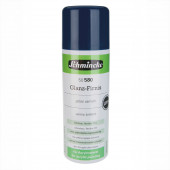
Schmincke Aerosol B72 300ml
£17.80Performs in a similar protective way as Lascaux Fixative. Non yellowing, crystal clear and age-resistant. Suitable as a fixative and protection for pencil, charcoal, pastels, watercolours, gouache, inks, metal leaf, photos and prints. Can also be used as a final varnish for oil and acrylic colours. Invisible on absorbent surfaces and semi matt very slightly glossy on non absorbent surfaces. Learn More -
Orange Shellac
Starting at: £8.00
Shellac is a natural resin that is deposited by the female lac insect on the branches of trees in India and Thailand. It is soluble with alcohol, but not with mineral spirits or turpentine. It forms a tough yet flexible film, with many applications. It is suitable as a top coat for gilding when applied thinly, a sealant for porous surfaces, an isolating layer for tempera paintings, a base for pigmented inks, a protective layer for collograph plates, and a warm varnish for wooden floors and furniture. As it is prone to darkening with age, it is not recommended as a varnish for oils, and its solubility can reduce over time. There are various grades of shellac. When mixed with alcohol, it may initially form a cloudy mixture, due to traces of wax in the shellac, but this should become clear once it has dried. The highest grades of shellac are Clear Dewaxed Shellac, which has been de-coloured using the carbon filtering method, Lemon Shellac, and Orange Shellac, which are pale in colour. Button Shellac is less refined and therefore produces a reddish varnish. It was, in fact, widely used as a red dye before synthetic dyes became available. Learn More -
Button Shellac
Starting at: £8.40
Shellac is a natural resin that is deposited by the female lac insect on the branches of trees in India and Thailand. It is soluble with alcohol, but not with mineral spirits or turpentine. It forms a tough yet flexible film, with many applications. It is suitable as a top coat for gilding when applied thinly, a sealant for porous surfaces, an isolating layer for tempera paintings, a base for pigmented inks, a protective layer for collograph plates, and a warm varnish for wooden floors and furniture. As it is prone to darkening with age, it is not recommended as a varnish for oils, and its solubility can reduce over time. There are various grades of shellac. When mixed with alcohol, it may initially form a cloudy mixture, due to traces of wax in the shellac, but this should become clear once it has dried. The highest grades of shellac are Clear Dewaxed Shellac, which has been de-coloured using the carbon filtering method, Lemon Shellac, and Orange Shellac, which are pale in colour. Button Shellac is less refined and therefore produces a reddish varnish. It was, in fact, widely used as a red dye before synthetic dyes became available. Learn More -
Cornelissen Ox Flat Lacquer
Starting at: £14.90
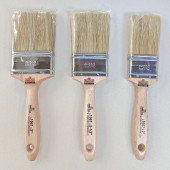
Soft but springy hair. For varnishing or lacquering. Also useful for watercolour washes. Learn More -
da Vinci Series 560 Ox Lacquer
Starting at: £34.90
Finest quality ox hair suitable for lacquers and fine varnishes. May also be used for watercolour washes. Learn More -
Cornelissen Squirrel Flat Lacquer
Starting at: £34.20
Extra soft brush for varnishing or lacquering. Also useful for watercolour washes. Learn More -
da Vinci Series 5073 Synthetic Mottler
Starting at: £6.70
Very soft synthetic bristles, excellent for all-round use. Bright green handle, dark fading to pale grey bristles. Learn More -
Schmincke Universal Varnish, Matt
Starting at: £10.80
Synthetic resin varnishes with UV- protection Learn More -
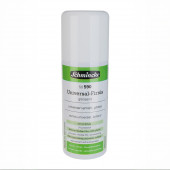
Schmincke Universal Varnish, Gloss, 300 ml
£17.80Synthetic resin varnish with UV- protection Learn More -
Schmincke Universal Varnish, Satin-Matt, 400 ml
£20.30Synthetic resin varnish with UV- protection Learn More -
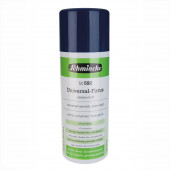
Schmincke Universal Varnish, Neutral, 300 ml
£17.80Synthetic resin varnish with UV- protection Learn More -
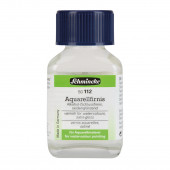
Schmincke Watercolour Varnish, 60 ml
£10.80Fast drying, glossy, colourless varnish for watercolour and gouache. Learn More -
Schmincke Universal Varnish, Gloss, 150 ml
£10.80Synthetic resin varnish with UV- protection Learn More -
Schmincke Universal Varnish, Matt, 300 ml
£17.80Synthetic resin varnish with UV- protection Learn More -
-
-
-
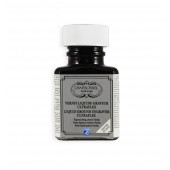
Charbonnel Ultraflex Liquid Ground
Starting at: £15.80
Judea bitumen, essence of turpentine, wax. Quick drying with transparent velvety finish. Apply cold with a supple brush. Learn More -
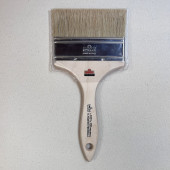
Omega Series 1031 Spalter Varnish
Starting at: £19.40
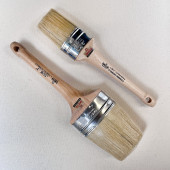
Lily bristle brush for dragging or varnishing walls and large surfaces. 100% pure hog bristles. Learn More