

Search results for 'varnishes'


-
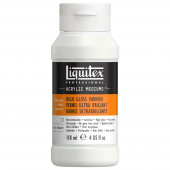
Liquitex Acrylic Varnish High Gloss
Starting at: £48.80
Use as varnish over finished paintings. Learn More -
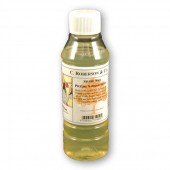
Studio Safe Gloss Picture Varnish
Starting at: £17.90
Studio Safe Gloss Picture Varnish. Dries to a gloss finish Learn More -
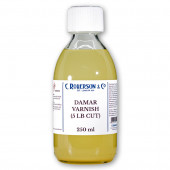
Roberson Damar Varnish 5 lb Cut
Starting at: £9.40
Roberson Damar Varnish 5 lb Cut. Unable to send overseas. Learn More -
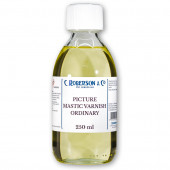
Roberson Mastic Varnish Ordinary
Starting at: £25.40
Roberson Mastic Varnish Ordinary. Unable to send overseas. Learn More -
-
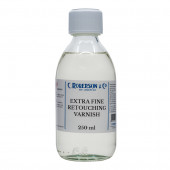
Roberson Extra Fine Retouching Varnish
Starting at: £8.60
Synthetic, Polaroid B67 retouching varnish made as an alternative to natural resin, Damar retouching varnish. superior non-yellowing characteristics. Less readily absorbed into painted surface and less susceptible sinking. Dries quickly to a breathable, uniform, gloss finish. Learn More -
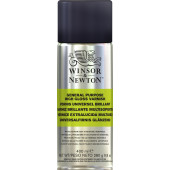
Winsor & Newton All Purpose Varnish Aerosol
Starting at: £19.50
Provides clear, non-removable protection of craftwork. Suitable for a variety of surfaces (wood, metal, paper, modelling materials). Contains: Acrylic resin. High Gloss or Matt. Unable to send overseas. Learn More -
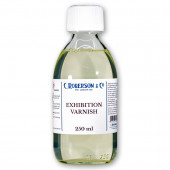
Roberson Exhibition Varnish
Starting at: £8.50
Apply to touch dry paintings as a temporary exhibition varnish. After 6 months a final picture varnish can be applied with no need to remove Ketone resin/white spirit. Unable to send overseas. Learn More -
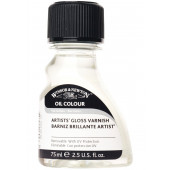
Winsor & Newton Artists' Gloss Varnish
Starting at: £9.70
Ketone resin/white spirit. Water white liquid dries to non-yellowing glossy film. Learn More -
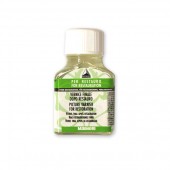
Maimeri Final Varnish for Restoration 75 ml
£8.80Reversible - for conservation use only. Learn More -
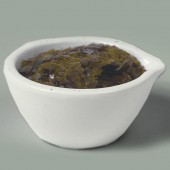
Clear Dewaxed Shellac
Starting at: £9.20
Shellac is a natural resin that is deposited by the female lac insect on the branches of trees in India and Thailand. It is soluble with alcohol, but not with mineral spirits or turpentine. It forms a tough yet flexible film, with many applications. It is suitable as a top coat for gilding when applied thinly, a sealant for porous surfaces, an isolating layer for tempera paintings, a base for pigmented inks, a protective layer for collograph plates, and a warm varnish for wooden floors and furniture. As it is prone to darkening with age, it is not recommended as a varnish for oils, and its solubility can reduce over time. There are various grades of shellac. When mixed with alcohol, it may initially form a cloudy mixture, due to traces of wax in the shellac, but this should become clear once it has dried. The highest grades of shellac are Clear Dewaxed Shellac, which has been de-coloured using the carbon filtering method, Lemon Shellac, and Orange Shellac, which are pale in colour. Button Shellac is less refined and therefore produces a reddish varnish. It was, in fact, widely used as a red dye before synthetic dyes became available. Learn More -
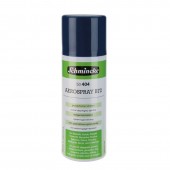
Schmincke Aerosol B72 300ml
£17.80Performs in a similar protective way as Lascaux Fixative. Non yellowing, crystal clear and age-resistant. Suitable as a fixative and protection for pencil, charcoal, pastels, watercolours, gouache, inks, metal leaf, photos and prints. Can also be used as a final varnish for oil and acrylic colours. Invisible on absorbent surfaces and semi matt very slightly glossy on non absorbent surfaces. Learn More -
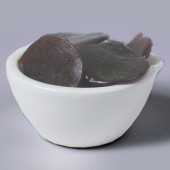
Button Shellac
Starting at: £8.40
Shellac is a natural resin that is deposited by the female lac insect on the branches of trees in India and Thailand. It is soluble with alcohol, but not with mineral spirits or turpentine. It forms a tough yet flexible film, with many applications. It is suitable as a top coat for gilding when applied thinly, a sealant for porous surfaces, an isolating layer for tempera paintings, a base for pigmented inks, a protective layer for collograph plates, and a warm varnish for wooden floors and furniture. As it is prone to darkening with age, it is not recommended as a varnish for oils, and its solubility can reduce over time. There are various grades of shellac. When mixed with alcohol, it may initially form a cloudy mixture, due to traces of wax in the shellac, but this should become clear once it has dried. The highest grades of shellac are Clear Dewaxed Shellac, which has been de-coloured using the carbon filtering method, Lemon Shellac, and Orange Shellac, which are pale in colour. Button Shellac is less refined and therefore produces a reddish varnish. It was, in fact, widely used as a red dye before synthetic dyes became available. Learn More -
-
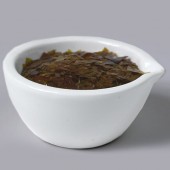
Orange Shellac
Starting at: £8.00
Shellac is a natural resin that is deposited by the female lac insect on the branches of trees in India and Thailand. It is soluble with alcohol, but not with mineral spirits or turpentine. It forms a tough yet flexible film, with many applications. It is suitable as a top coat for gilding when applied thinly, a sealant for porous surfaces, an isolating layer for tempera paintings, a base for pigmented inks, a protective layer for collograph plates, and a warm varnish for wooden floors and furniture. As it is prone to darkening with age, it is not recommended as a varnish for oils, and its solubility can reduce over time. There are various grades of shellac. When mixed with alcohol, it may initially form a cloudy mixture, due to traces of wax in the shellac, but this should become clear once it has dried. The highest grades of shellac are Clear Dewaxed Shellac, which has been de-coloured using the carbon filtering method, Lemon Shellac, and Orange Shellac, which are pale in colour. Button Shellac is less refined and therefore produces a reddish varnish. It was, in fact, widely used as a red dye before synthetic dyes became available. Learn More -
-
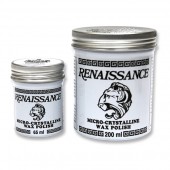
Renaissance Wax
Starting at: £14.00
Used by restoration specialists to revive and protect furniture, leather, paintings, metals etc. Freshens colours, imparts soft sheen. Very long shelf life. (approx 20 years) as long as it is not exposed to heat. Learn More -
Maimeri Concentrated Mastic Varnish for Restoration 75 ml
£40.75Natural varnish of traditional use. Very flexible. Can be used in conjunction with restoration colours. (Natural mastic resin 40% and essence of Turpentine). Learn More -
Roberson Crystal Shellac Varnish
Starting at: £10.60
Clear synthetic varnish with superior clarity. Does not discolour gold and silver leaf. Use as a protective coating over gilded surfaces to prevent tarnishing and for sealing gesso prior to gilding. Learn More -
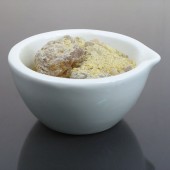
Gum Copal Manila
Starting at: £6.00
Gum Copal Manila is derived from the resin of a coniferous tree native to the Philippines. It is not to be confused with other copals, which are the product of fossilised plant materials. It can be dissolved in alcohol to make a spirit varnish, to be used as a substitute for shellac, or as a fixative for pastel and charcoal drawings. Please note, that when used as a fixative it may darken the colour of the image. Learn More -
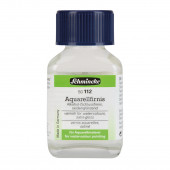
Schmincke Watercolour Varnish, 60 ml
£10.80Fast drying, glossy, colourless varnish for watercolour and gouache. Learn More -
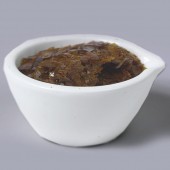
Lemon Shellac
Starting at: £8.20
Shellac is a natural resin that is deposited by the female lac insect on the branches of trees in India and Thailand. It is soluble with alcohol, but not with mineral spirits or turpentine. It forms a tough yet flexible film, with many applications. It is suitable as a top coat for gilding when applied thinly, a sealant for porous surfaces, an isolating layer for tempera paintings, a base for pigmented inks, a protective layer for collograph plates, and a warm varnish for wooden floors and furniture. As it is prone to darkening with age, it is not recommended as a varnish for oils, and its solubility can reduce over time. There are various grades of shellac. When mixed with alcohol, it may initially form a cloudy mixture, due to traces of wax in the shellac, but this should become clear once it has dried. The highest grades of shellac are Clear Dewaxed Shellac, which has been de-coloured using the carbon filtering method, Lemon Shellac, and Orange Shellac, which are pale in colour. Button Shellac is less refined and therefore produces a reddish varnish. It was, in fact, widely used as a red dye before synthetic dyes became available. Learn More -
-
-
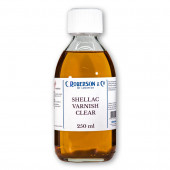
Roberson Clear Shellac Varnish
Starting at: £12.20
Fast drying varnish for metal leaf. May also be used to seal absorbent surfaces prior to sizing. Cellulose based. Clean brushes with methylated spirits. Learn More -
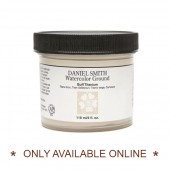
Daniel Smith Watercolour Ground Buff Titanium 4oz
£10.30Buff Titanium is great for value studies and provides a gorgeous, classic-looking surface for work in neutral grays, earthy reds, black and white. *Please note, this product is stored offsite. Please allow extra time for your order to be processed and dispatched. Learn More -
Charbonnel Lamour Black
Starting at: £15.70
Bitumen, turpentine. Covering varnish with hard finish. Recommended for aquatint techniques. Learn More -
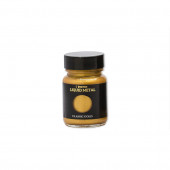
Roberson Liquid Metal 30ml
Starting at: £7.70
Roberson Liquid Metals have a rich deep colour, ideal for a wide range of applications including plaster, wood, paper & canvas. The Liquid Metal range does not tarnish and does not need to be varnished. All colours are intermixable and wash up with water. The Liquid Metal range does not tarnish and does not need to be varnished. All colours are intermixable and wash up with water. Coverage is approximately 7 square metres per litre. Two coats are required for most applications but if applied to walls or ceilings with a roller or a brush then three or four coats are recommended. Because of the highly reflective nature of the metallic paint when applying with a roller to a large area apply the paint evenly in long vertical strokes, finishing off the surface by rolling or brushing in one direction, i.e ceiling to floor. This will help to minimise overlapping and create a smooth and even finish. We recommend the use of a professional quality foam roller in order to achieve the best possible finish. When applying with a roller to a large area, apply the paint evenly in long vertical strokes. Finish off the surface by rolling one direction, i.e. ceiling to floor. This will help minimise overlapping and create a smooth, even finish. These paints can also be sprayed and this will produce the best and most consistent finish. To spray Liquid Metal Acrylics, you will need to use HVLP spray equipment with a 1.6mm or 1.8mm nozzle. To ensure proper flow, paint can be thinned with 25-30% water. Learn More -
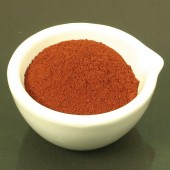
Dragon's Blood Powder
Starting at: £28.10
Dragon's Blood is a natural, resin, mentioned by Pliny in his Natural History. It has a weak tinting strength, and its rich red-colour can be fugitive in direct sunlight. It is fully soluble in alcohol, and can be used to add a warm, transparent tone to spirit varnishes. Also available in lump form.
Learn More -
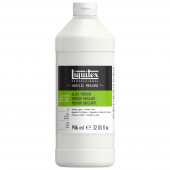
Liquitex Acrylic Gloss Medium and Varnish
Starting at: £21.80
Liquitex Acrylic Gloss Medium and Varnish Learn More
Shopping Options
- Category
-
- Pigments, Gums, Resins (16)
- Oils, Acrylics (68)
- Watercolour, Gouache, Egg Tempera (10)
- Pastels (5)
- Drawing, Calligraphy (2)
- Gilding, Restoration (19)
- Printmaking (8)
- Brushes (10)
- Studio, Books (1)
- Signwriting, Specialist Decorating (13)
- Price
-
- £0.00 - £99.99 (112)
- £200.00 and above (1)
- Manufacturer
-
- Charbonnel (3)
- Cornelissen (22)
- Da Vinci (4)
- Daler-Rowney (1)
- Daniel Smith (2)
- Gamblin (2)
- Lascaux (2)
- Liquitex (5)
- Maimeri (5)
- Michael Harding (1)
- Omega (4)
- Roberson (31)
- Schmincke (16)
- Winsor&Newton (13)
- Talens (3)
- Sennelier (1)
You have no items in your shopping basket.

- Search Brands
-