

Search results for 'wax and resin'


-
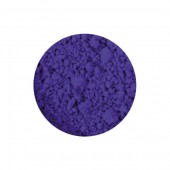
Ultramarine Blue Dark Pigment
Starting at: £4.00
PB29
Ultramarine Blue Dark is an artificial mineral pigment that is produced by heating clay, soda, sulphur and coal to high temperatures. Its name comes from outremer, or over-the-sea, as a reference to the highly-prized Lapis Lazuli pigment which had been imported into Europe from Afghanistan since the Middle Ages. First manufactured in France and Germany in 1828, synthetic Ultramarine provided a brilliant and affordable blue to artists, and it remains one of the most popular blues on artists' palettes today.
It is a transparent pigment, with a high tinting strength and excellent lightfastness. It reacts to alkali, therefore it is not suitable for use in lime-fresco; we do offer a Limeproof Ultramarine Blue for this purpose. It is stable in all other media, although it can be tricky to grind in oil. Instead of creating a thick, buttery paste, it can remain stringy and deteriorate when stored in a tube. To correct this, many commercial paint manufacturers include additives and waxes in their recipes; if you intend on grinding your own paint, you could try replacing 10-15% of your Linseed Oil with Poppy Oil to improve the consistency. Ultramine Blue provides a slow-drying, fairly hard paint film, which can tend towards brittleness.
Toxicity: B
Learn More -
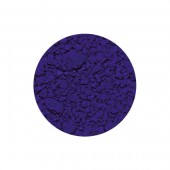
Ultramarine Blue Limewash Pigment
Starting at: £7.50
PB29
Ultramarine Blue Limewash is an artificial mineral pigment that is produced by heating clay, soda, sulphur and coal to high temperatures. Its name comes from outremer, or over-the-sea, as a reference to the highly-prized Lapis Lazuli pigment which had been imported into Europe from Afghanistan since the Middle Ages. First manufactured in France and Germany in 1828, synthetic Ultramarine provided a brilliant and affordable blue to artists, and it remains one of the most popular blues on artists' palettes today.
It is a transparent pigment, with a high tinting strength and excellent lightfastness. Most Ultramarine colours react to alkali and are therefore unsuitable for use in lime-fresco; Limeproof Ultramarine Blue remedies this problem. It is stable in all other media, although it can be tricky to grind in oil. Instead of creating a thick, buttery paste, it can remain stringy and deteriorate when stored in a tube. To correct this, many commercial paint manufacturers include additives and waxes in their recipes; if you intend on grinding your own paint, you could try replacing 10-15% of your Linseed Oil with Poppy Oil to improve the consistency. Ultramine Blue provides a slow-drying, fairly hard paint film, which can tend towards brittleness.
Toxicity: B
Learn More -
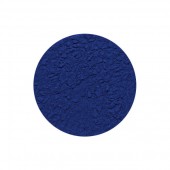
Ultramarine PB29 Pigment
Starting at: £9.10
PB29
Ultramarine Blue is an artificial mineral pigment that is produced by heating clay, soda, sulphur and coal to high temperatures. Its name comes from outremer, or over-the-sea, as a reference to the highly-prized Lapis Lazuli pigment which had been imported into Europe from Afghanistan since the Middle Ages. First manufactured in France and Germany in 1828, synthetic Ultramarine provided a brilliant and affordable blue to artists, and it remains one of the most popular blues on artists' palettes today.
It is a transparent pigment, with a high tinting strength and excellent lightfastness. It reacts to alkali, therefore it is not suitable for use in lime-fresco; we do offer a Limeproof Ultramarine Blue for this purpose. It is stable in all other media, although it can be tricky to grind in oil. Instead of creating a thick, buttery paste, it can remain stringy and deteriorate when stored in a tube. To correct this, many commercial paint manufacturers include additives and waxes in their recipes; if you intend on grinding your own paint, you could try replacing 10-15% of your Linseed Oil with Poppy Oil to improve the consistency. Ultramine Blue provides a slow-drying, fairly hard paint film, which can tend towards brittleness.
Toxicity: B/C
Learn More -
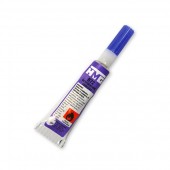
HMG B72 Restoration Adhesive
£7.70Call to Order
B72 Acrylic Adhesive is touch dry in 3-5 minutes, surface dry in 1 hour and hard dry in around 6 hours. Not having instant grab, fragments can be easily re-adjusted and surplus adhesive removed with acetone, making any joint virtually invisible. It’s ideal for repairs to pottery, wood, metal, glass, ivory and many porous substances. 14ml. Learn More -
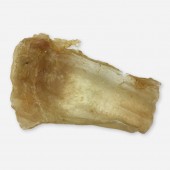
Isinglass
Starting at: £30.10
Call to Order
Isinglass is derived from the dried swim bladders of fish, with Salianski Isinglass being the highest grade available. In the Russian Icon tradition, it commonly provided the glue component in gesso recipes, and was sometimes mixed with pigment to make tempera paints, due to its high binding strength. It can be used to make a pale, clear glue, which is less prone to darkening than other animal glues, and which is particularly flexible, making it a useful material for repairing textiles. Learn More -
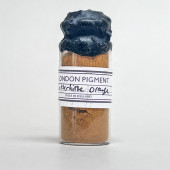
London Pigment, Rotherhithe Orange Pigment
£20.00Call to Order
This unique colour is an intense orange oxide that is made from the decay of Victorian pipes mixing with the chalk bed of the infilled docks at Rotherhithe, in south east London. Rotherhithe has a long history as a port, with many shipyards from Elizabethan times until the early 20th century and with working docks until the 1970s, when they began to be infilled due to a decline in imports to Central London. With a fine particle size and transparent quality this pigment would be great for glazing techniques.
Follow @londonpigment on Instagram for an insight into the stories behind the colours and how she makes them.
****Please note, these pigments are artisan made in small batches. Please email info@cornelissen.com for availability**** Learn More -
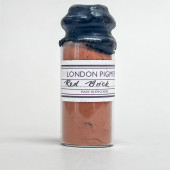
London Pigment, London Red Brick
£18.00Call to Order
Made from pulverised historic London bricks collected from the foreshore of the Thames near Tower Bridge and Wapping this deep red pigment is essentially a variety of red ochre. During the Victorian era, London Clay was dug up and fired on construction sites to produce the building materials for the city. Red brick pigment has a medium grain size and is opaque. ****Please note, these pigments are artisan made in small batches. Please email info@cornelissen.com for availability**** Learn More
-
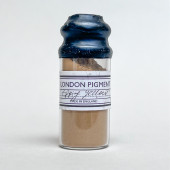
London Pigment, Epping Forest Yellow Ochre Pigment
£18.00Call to Order
This soft yellow ochre is sourced from near the ancient woodland of Epping Forest in North London. Given legal status by Henry ll as a Royal hunting ground for the Monarchy this forest has a rich cultural and geological history. This pigment is a fine particle size and is semi-opaque.
Follow @londonpigment on Instagram for an insight into the stories behind the colours and how she makes them.
****Please note, these pigments are artisan made in small batches. Please email info@cornelissen.com for availability**** Learn More
Shopping Options
- Category
- Price
-
- £0.00 - £9.99 (21)
- £10.00 - £19.99 (11)
- £20.00 - £29.99 (3)
- £30.00 - £39.99 (2)
- £50.00 and above (1)
- Manufacturer
-
- Cornelissen (27)
- London Pigment (7)
- Roberson (2)
You have no items in your shopping basket.

- Search Brands
-