

Search results for 'pigments'


-
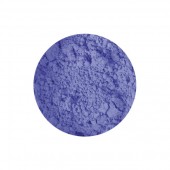
Cerulean Blue Pigment
Starting at: £14.50
PB35
Cerulean Blue is an artificial mineral pigment that is prepared by heating a mixture of Cobalt Chloride and Potassium Stannate. It was first synthesised in the early nineteenth century, becoming more widely used from 1870, when Rowney introduced Coeruleum Blue into their range. It produces a very bright, clear, and unusually opaque blue, hence its name, which is derived from the Latin for "sky-blue", or perhaps "heaven-blue". It has a very low tinting strength meaning that, although it is stable in all media, some artists may choose to bind it in poppy rather than linseed oil, so that the colour isn't affected by the colour of the binder. It creates a fairly flexible paint film, and is a fast-to-medium drying pigment.
Limeproof
Toxicity: B
Learn More -
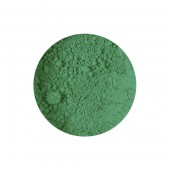
Viridian Green Pigment
Starting at: £6.50
Viridian Green is a synthetic inorganic pigment, similar in composition to Chromium Oxide. However, unlike Chromium Oxide, Viridian contains water molecules within its crystal structure, imparting a greater degree of transparency. Sometimes referred to as Verte Eméraude, Viridian was discovered in France in 1838, patented in 1859, and made available in the UK in 1862. It is stable in all media, and offers excellent lightfastness and good tinting strength. It requires a high oil content, and dries slowly to form a hard, fairly flexible paint film.
Toxicity B
Learn More -
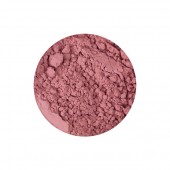
Potters Pink Pigment
Starting at: £22.00
PR233
Potter's Pink is an artificial mineral pigment produced by roasting tin oxide with various other oxides. It was first discovered in the pottery region of Staffordshire in the late-1700s, and in the following century Winsor & Newton introduced Potter's Pink into their watercolour range under the name "pink colour". It went on to become a popular addition to watercolour palettes, offering an opaque, lightfast colour with a weak tinting strength and a medium level of oil absorption.
Toxicity A
Learn More -
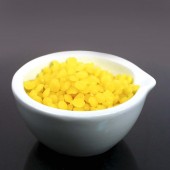
Natural Beeswax
Starting at: £11.20
Beeswax is derived from melted honeycomb, and is available in two grades. Bleached Beeswax Pellets are white, having been bleached by the sun, and are an appropriate choice for using with pale colours, although they may revert to yellow over time. Natural Beeswax Pellets are yellow in colour, and offer a more flexible structure with a higher resin content. Beeswax has a melting point of 63-66°c, and may turn brown if over-heated. It is the most widely used wax in artists' materials, having a wide range of applications. Please see below for more details.
Learn More -
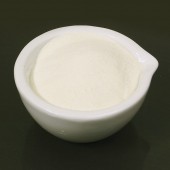
Casein Lactic
Starting at: £17.80
Casein is a protein derived from dried milk, which has been used in painting since ancient times. It can be combined with Ammonium Carbonate to form an emulsion, which acts as a durable, non-resoluble binder for pigments, producing a matte, fast-drying paint, similar in appearance to egg tempera. We use casein as a binder for our L. Cornelissen & Son Pigment Colour Charts, as it is a medium that clearly showcases the characteristics and behaviour of each pigment in its pure form. Casein paints can be applied in thin layers to watercolour paper, but would require a more rigid support, such as a gesso panel, to be applied thickly, as the comparative inflexibility of the paint layer means that it can be prone to cracking. Subsequent layers of paint should be more diluted to aid adhesion, and impasto effects are not recommended. It is possible to varnish casein paintings using an acrylic or damar varnish to obtain a glossy surface if desired, although this is not a necessary step. Casein can also be used as an ingredient in gesso, and is a suitable binder for fresco secco techniques.
Some pigments may require a wetting agent in order to fully disperse within the binder, in which case alcohol may be used.
Learn More -
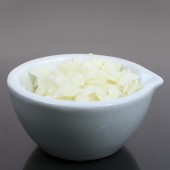
Bleached Beeswax
Starting at: £12.30
Beeswax is derived from melted honeycomb, and is available in two grades. Bleached Beeswax Pellets are white, having been bleached by the sun, and are an appropriate choice for using with pale colours, although they may revert to yellow over time. Natural Beeswax Pellets are yellow in colour, and offer a more flexible structure with a higher resin content. Beeswax has a melting point of 63-66°c, and may turn brown if over-heated. It is the most widely used wax in artists' materials, having a wide range of applications. Please see below for more details.
Learn More -
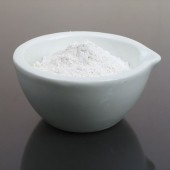
Plaster of Paris
Starting at: £6.00
For moulding when mixed with the same volume of water. Sets quickly and will not shrink. Learn More -
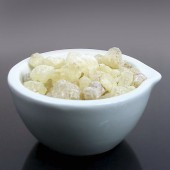
Gum Damar
Starting at: £10.00
Damar is a pale, almost colourless tree resin, which is soluble in turpentine, but not in alcohol or mineral spirits. It can be used as a varnish or as a glossy painting medium in conjunction with vegetable oils, and is generally preferable to other resin-based varnishes, such as mastic varnish, as it retains its colourless appearance for a longer period of time. In encaustic painting, the inclusion of damar resin imparts toughness and gloss to the paint surface. Learn More -
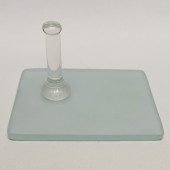
Cornelissen Mini Glass Muller and Slabs
Starting at: £24.00
Use Cornelissen Mini Glass Mullers in conjunction with a Cornelissen Glass Slab to make paint efficiently. The sand-blasted texture of the muller and plate helps to push and distribute the pigment throughout the binder quickly. This means less time grinding, more time painting! Learn More -
-
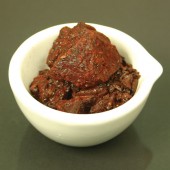
Dragon's Blood Pieces
Starting at: £25.40
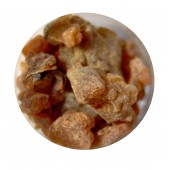
Dragon's Blood is a natural, resin, mentioned by Pliny in his Natural History. It has a weak tinting strength, and its rich red colour can be fugitive in direct sunlight. It is fully soluble in alcohol, and can be used to add a warm, transparent tone to spirit varnishes. Also available in powdered form.
Learn More -
-
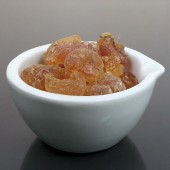
Gum Arabic
Starting at: £6.30
Gum Arabic is a resoluble binding agent, commonly used in the preparation of watercolours, but also useful as an adhesive, a size, and in the production of soft pastels. It is a natural product, harvested from the Acacia tree between October and May. The highest grade of Gum Arabic comes from the Kordofan region of Sudan. It is exceptionally pale and pure and therefore particularly suited to watercolour painting. Please see the Formulas & Recipes section on our homepage for a recipe to make your own watercolour paints using Gum Arabic (currently under construction). Learn More -
-
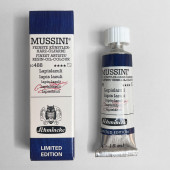
Schmincke Mussini Lapis Lazuli Limited Edition 15 ml
£38.00Schmincke Mussini Limited Edition Lapis Lazuli 15 ml Learn More -
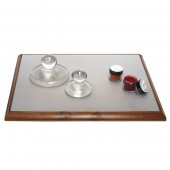
Mixing Slab
Starting at: £24.00
A glass slab with wooden cradle for the grinding of pigments.
The friction created between the sand-blasted surfaces of the glass slab and muller facilitates the thorough mixing of pigment and medium, creating a consistent and strong paint body. This slab can be used to manufacture many types of paint including watercolours, egg tempera and oils.
Mulling is of particular importance when making oil paint; simply mixing pigment and oil together using a palette knife will result in an unstable substance with poor plasticity, which contains a large amount of excess oil and unevenly distributed pigment particles. Thorough mulling in a figure-of-eight motion will enable the pigment to be fully combined into the binder, strengthening the resultant paint film.
PLEASE NOTE: The separate glass slabs are in stock but it is a call to order item due to the fact that we cannot guarantee its safe delivery, however well we package it. Please ring us to discuss your delivery options. In combination with the glass frame, delivery is more secure but we still cannot guarantee a delivery without breakage.
Learn More -
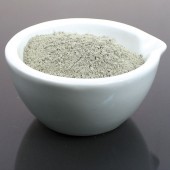
Fullers Earth
Starting at: £6.30
Fullers Earth is used to remove plant debris and other impurities from cold-pressed linseed oil, as its large particle size and unusual shape attracts unwanted matter and pulls it down, away from the surface of the oil. Our Fullers earth consist sly of Bentonite.
Learn More -
-
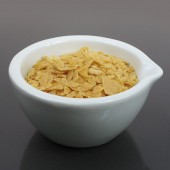
Carnauba Wax Yellow
Starting at: £6.50
Carnauba Wax is the hardest wax commonly used in the production of artists' materials, with a melting point of 83-86°c. It is derived from a tree native to South America, and is available in a natural colour (grey), or a refined colour (pale yellow). Small amounts of carnauba wax are commonly used in both oil painting mediums and encaustic painting, usually in conjunction with beeswax to add toughness, durability and sheen to the paint film. It creates an inflexible surface, so works best on rigid supports such as gesso panels, and it should be noted that it will raise the melting point of encaustic mixtures. It can produce a glossy finish; as such it is used in waxes and polishes for shoes, cars, musical instruments, furniture, and wooden floors, especially when mixed with beeswax and turpentine. Learn More -
-
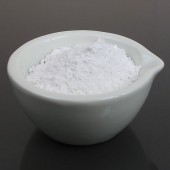
Precipitate Chalk
Starting at: £6.30
Precipitate Chalk is fine and white. For use in aqueous mediums as a ground for oil and tempera paintings. Learn More -
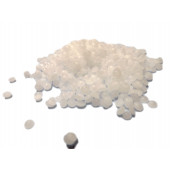
Microcrystalline Wax
Starting at: £8.50
Microcrystalline Wax is related to paraffin wax, and is used as a plasticiser in some recipes. It is characterised by the fineness of its crystals in contrast to the larger crystal of paraffin wax. It is generally more viscous, denser, tackier and more elastic than paraffin waxes, and has a higher melting point. Learn More -
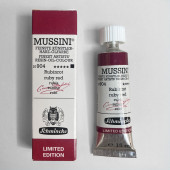
Schmincke Mussini Ruby Red Limited Edition 15 ml
£26.00Schmincke Mussini Limited Edition Ruby Red 15 ml Learn More -
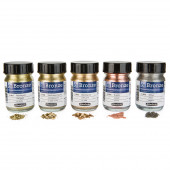
Schmincke Oil Bronze, 50 ml
Starting at: £25.10
For brilliant metal effects on oil paintings. Also suitable for wood, metal and gypsum surfaces. Use with Schmincke Bronze Medium (recipe below). Learn More -
![Roberson Glass muller, medium (7 cm) and small (5 cm) [without logo]](https://www.cornelissen.com/media/catalog/product/cache/1/small_image/170x/9df78eab33525d08d6e5fb8d27136e95/i/m/img-6584.jpg)
Roberson Glass Mullers
Starting at: £25.00
Roberson Glass Mullers are handmade using high quality-glass.
Mullers act as flat-bottomed pestles, which are used to grind pigment into a binding medium, suspending it evenly to create a uniform covering of binder around each pigment particle. Using a muller and slab, rather than simply mixing pigment and binder together, will create a more homogenised and stable paint.
Roberson Glass Mullers are handmade using superior boro silicate laboratory glass, which is 40% harder, more heat resistant, and offers better clarity than soda-lime glass. The base of each muller is ground perfectly flat, and sand-blasted to create a fine tooth to facilitate the grinding of pigments.Use in conjunction with a Cornelissen Glass Slab to make paint efficiently. The sand-blasted texture of the muller and plate helps to push and distribute the pigment throughout the binder quickly. This will mean less grinding, and more painting!
NOTE: Sizes may vary slightly as these are handmade products.
Learn More -
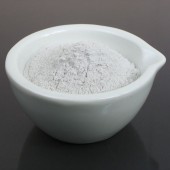
Pumice Powder
Starting at: £5.70
Volcanic rock in powdered form. Used to provide tooth to grounds. Learn More -
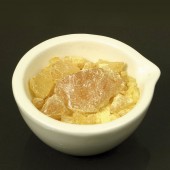
Colophony
Starting at: £7.30
Colophony is a by-product of the distillation of turpentine. It is soluble in most solvents, but considered an adulterant in varnishes and paints, as it forms a weak surface that is prone to darkening and cracking. It is, however, a key ingredient in wax-based etching grounds, imparting hardness, and can be used in powdered form (rosin) to make aquatints. Learn More -
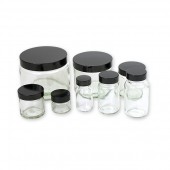
Squat & Powder Jars
Starting at: £0.75
Squat and Powder Jars in glass and plastic. *Please note, our glass jars are fragile, although they are packed very carefully we cannot guarantee they will arrive safely. Cases of jars are stored offsite, please allow extra time for your order to be processed and dispatched. Learn More -

Cornelissen Virtual Gift Voucher
£25.00The Cornelissen Virtual Gift Voucher will arrive with the recipient in the form of an email containing a virtual gift code. This code will be emailed immediately after the order is placed. Please see the range of values available below. Vouchers can be redeemed fully or partly and do not expire. Alternatively, please call us on 020 7636 1045 or email info@cornelissen.com to request one of the following:Physical Gift Voucher (a paper voucher with a code for use only in the shop, for any value).
Combination Gift Voucher (a paper voucher with separate codes for use online or in the shop, for the values listed on the website).
If you purchase a Physical or Combination Gift Voucher, this will be sent to you in the post. Learn More -
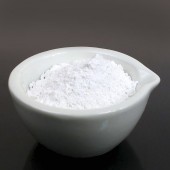
Gesso di Bologna
Starting at: £12.00
Gesso di Bologna is a bright white Calcium Sulphate, or gypsum, from Italy, which can be used as a substitute for whiting in the preparation of gesso. It is ground to a particularly fine powder, which makes it a suitable ground for gilding, as the small size of the particles allows for greater compression when burnishing. Learn More
Shopping Options
- Category
-
- Pigments, Gums, Resins (196)
- Oils, Acrylics (49)
- Canvas, Supports (3)
- Watercolour, Gouache, Egg Tempera (34)
- Pastels (19)
- Drawing, Calligraphy (39)
- Gilding, Restoration (14)
- Printmaking (10)
- Studio, Books (30)
- Signwriting, Specialist Decorating (11)
- Gift Vouchers (1)
- Price
-
- £0.00 - £99.99 (325)
- £100.00 - £199.99 (5)
- £200.00 and above (2)
- Manufacturer
-
- Charbonnel (1)
- Cornelissen (175)
- Daler-Rowney (2)
- Daniel Smith (6)
- Faber-Castell (4)
- Gamblin (5)
- Golden (7)
- London Pigment (14)
- Maimeri (1)
- Michael Harding (7)
- Pentel (1)
- Renaissance Workshop Materials (5)
- Roberson (15)
- Rohrer and Klingner (13)
- Schmincke (43)
- Spectrum (1)
- Stabilo (3)
- Winsor&Newton (8)
- Sennelier (4)
You have no items in your shopping basket.

- Search Brands
-