
Cornelissen


-
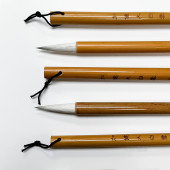
Chinese Brush, White Cloud, Bristle and Goat Hair, Large
£9.90Extra strength, 'White Cloud' brush. A versatile brush for painting and calligraphy. 4 cm brush head. Learn More -
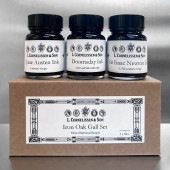
Cornelissen Iron Oak Gall Ink Set
£30.00Call to Order
Three historical oak gall inks handmade to traditional recipes. Jane Austen Ink. Sir Isaac Newton Ink. Doomsday Ink. Learn More -
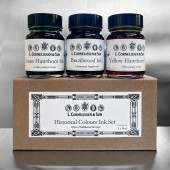
Cornelissen Historical Colours Ink Set
£18.50Call to Order
Three historical coloured inks, handmade to traditional recipes. 3 x 30 ml high quality glass bottle with black plastic lid. Green Hawthorn Ink. Brazilwood Ink. Yellow Hawthorn Ink. Learn More -
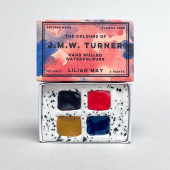
Lilian May, J.M.W. Turner Watercolours, Matchbox Set, 4 Wells
£20.00Call to Order
Matchbox Set Dimensions 5.5 cm x 3.5 cm Prussian Blue PB27 Yellow Ochre PY43 Vermilion PR4, PY1, W21 Genuine Madder NR9 ***Please note, this item is handmade in small batches, please contact us at info@cornelissen.com to order online*** Learn More -
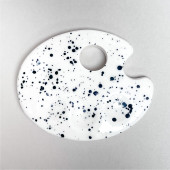
Lilian May, Mini Ceramic Palette
£12.00Call to Order
Ceramic palette, 4 wells, 8 cm x 8 cm Handmade in Somerset, UK. ***Please note, this item is handmade in small batches, please contact us at info@cornelissen.com to order online*** Learn More -
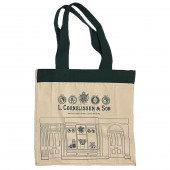
Cornelissen Canvas Tote Bag
£15.00Cornelissen canvas bag 3 internal pockets Dimensions H36 x W39 x G12 cm Learn More -
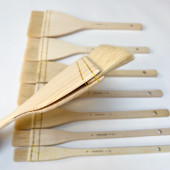
Japanese Hake Brushes
Starting at: £6.00
Made according to traditional Japanese methods. The excellent water-holding capacity of soft goat hair bristles combined with the absence of metal parts make Hake brushes ideal for applying glazes on ceramics and for creating broad washes in watercolour painting. Learn More -
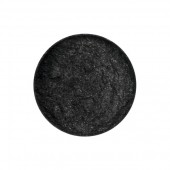
Graphite Powder (Sri Lanka)
Starting at: £5.50
PBk10
Graphite powder is an allotropic form of pure carbon, ground to 200 mesh. It is transparent and lightfast, with a slight sheen. It can be applied directly onto a paper support.
Larger quantities are available by request. This variety of graphite is a naturally occurring material sourced from Sri Lanka.
Toxicity: A/B
Learn More -
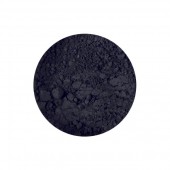
Ivory Black Pigment
Starting at: £4.50
Ivory Black is a natural pigment of impure carbon, derived from charred animal bones. It is semi-transparent, very lightfast, and offers good tinting strength. It is a particularly slow-drying pigment, which forms a soft, rather brittle paint film in oil.
Compared to other blacks, such as Vine Black, Ivory Black possesses warmer, brownish undertones. It should not be used at full-strength in an underpainting, as subsequent layers are likely to crack. Otherwise, it is a very useful all-purpose black for many types of paint, excluding mortar, fresco or cement.
Toxicity: B
Learn More -
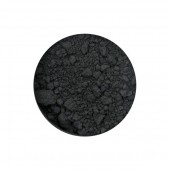
Lamp Black Pigment
Starting at: £6.70
PBk 6
Lamp Black is an inorganic, synthetic, pure carbon pigment. Originally made from soot collected from oil lamps and fireplaces, its modern equivalent is derived from partly combusted mineral and vegetable oil. It is a cool, transparent, bluish black, with a good tinting strength, and stable in all media. It requires a wetting agent, and in oil it has a very high absorption drying very slowly.
Larger quantities are available by request.
Learn More -
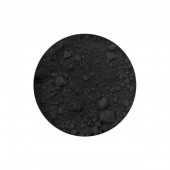
Mars Black Pigment
Starting at: £5.70
PBk11
Mars Black is an artificial mineral pigment composed of hydrated ferric oxides. Like other Mars colours, it provides a very opaque, permanent colour, which is stable in all media. It has an average drying time in oil, forming a hard, fairly flexible film, making it more suitable for impasto application than carbon-based black pigments, which tend to be brittle. It also wets more easily than other black pigments, and possesses a warm, brownish undertone.
Toxicity: B
Limeproof
Larger quantities are available by request.
Learn More -
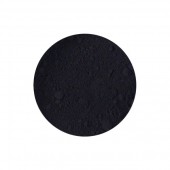
Spinel Black Pigment
Starting at: £8.00
Spinel Black is a synthetic mixed-metal oxide pigment. It provides a deep, cool, transparent black, which dries quickly in oil.
Toxicity: C
Learn More -
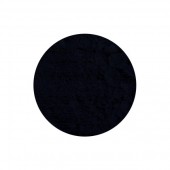
Vine Black Pigment
Starting at: £4.70
PBk8
Vine Black is derived from charred vines, forming an organic pigment of pure carbon. It has been in use since antiquity, providing a cold black with bluish undertones, which creates a blue-grey when mixed with white. It is a very lightfast, slow-drying colour with a medium tinting strength. It requires a wetting agent to disperse properly, and is not suitable for use in fresco, mortar or cement, as the water-soluble impurities within the pigment can create efflorescence.
Toxicity: A
Learn More -
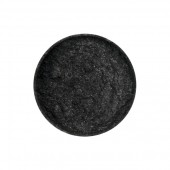
Carbon Black Pigment
Starting at: £10.80
PBk7
Carbon Black is an inorganic synthetic pigment, created by burning natural gases to form an almost pure carbon. It is semi-transparent, and in oil dries very slowly to a soft, brittle paint film. It requires a wetting agent, and can show in streaks, even when mixed with other colours.
Larger quantities are available by request.
Learn More -
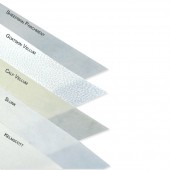
Sheepskin Parchment
Starting at: £11.75
Pale, thin and translucent. Only the flesh side can be used. A light dusting of sandarac powder is usually sufficient to prepare the surface for writing.
Please note: This is a natural product that has been finished and cut by hand. As such, there may be slight variations in the surface and size of each piece.
Learn More -
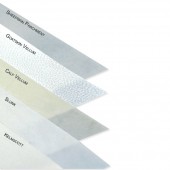
Goatskin Vellum
Starting at: £11.15
Medium to thick with a shiny surface. Distinctive 'pebbled' appearance makes it slightly more difficult to write on.
Please note: This is a natural product that has been finished and cut by hand. As such, there may be slight variations in the surface and size of each piece.
Learn More -
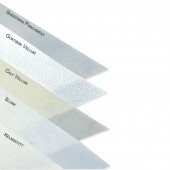
Calf Vellum
Starting at: £16.75
Medium to thick. Both sides useable for writing. Whiter and less translucent than parchment.
Please note: This is a natural product that has been finished and cut by hand. As such, there may be slight variations in the surface and size of each piece.
-
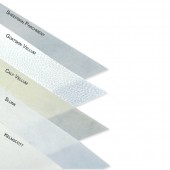
Slunk
Starting at: £16.75
Skin of young calves. Very fine and translucent. Requires little or no preparation before writing.
Please note: This is a natural product that has been finished and cut by hand. As such, there may be slight variations in the surface and size of each piece.
Learn More -
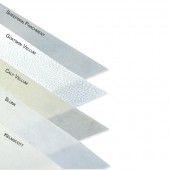
Kelmscott
Starting at: £19.55
Specially prepared to give a very smooth surface for painting or calligraphy.
Please note: This is a natural product that has been finished and cut by hand. As such, there may be slight variations in the surface and size of each piece.
Learn More -
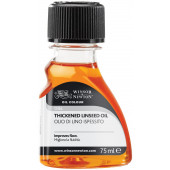
Winsor & Newton Thickened Linseed Oil
Starting at: £9.85
From the Winsor & Newton website: A pale refined oil of syrupy consistency which behaves like Linseed Stand Oil but dries quicker and darker. Improves flow and gloss. Increases the durability of paint film. Reduces brushstroke retention. Learn More -
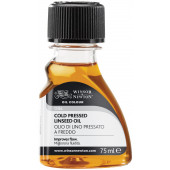
Winsor & Newton Cold Pressed Linseed Oil
Starting at: £9.85
From the Winsor & Newton website: A slightly yellow oil, which is extracted without the use of heat dries slightly quicker than refined linseed oil. Improves flow. Increases gloss & transparency. Reduces consistency and brushstrokes. Ideal for grinding pigments. Learn More -
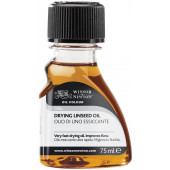
Winsor & Newton Drying Linseed Oil
Starting at: £9.85
From the Winsor & Newton website: Darker than refined Linseed Oil, this oil promotes the fastest drying rate of all the oils, whilst increasing gloss. Improves flow. Increases gloss transparency. Add to other oils to speed drying.
Learn More -
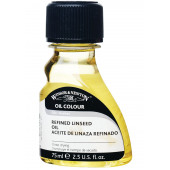
Winsor & Newton Refined Linseed Oil
Starting at: £7.30
From the Winsor & Newton website: Our most popular oil. A low viscosity alkali refined oil of pale colour that dries slowly. Reduces oil colour consistency. Increases gloss and transparency. Add to other oils to slow drying. Learn More -
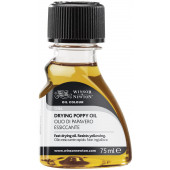
Winsor & Newton Drying Poppy Oil
Starting at: £9.85
From the Winsor & Newton website: A fast-drying, pale oil made from poppy seeds which is well suited for whites and pale colours. Reduces consistency. Increases gloss & transparency. Resists yellowing.
Learn More -
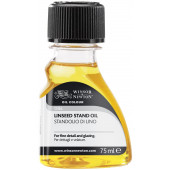
Winsor & Newton Stand Linseed Oil
Starting at: £9.85
From the Winsor & Newton website: A pale viscous oil that slows drying while imparting a tough, smooth enamel finish with no brush marks. Increases film durability. Ideal for glazing and fine detail if mixed with solvent.
Learn More -
-
-
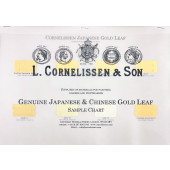
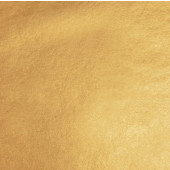
Cornelissen Japanese & Chinese Gold Leaf Colour Chart
£25.00Cornelissen Sample Chart for genuine Japanese & Chinese Gold Leaf Learn More -
-
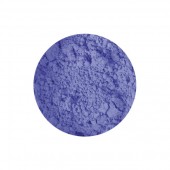
Cerulean Blue Pigment
Starting at: £14.50
PB35
Cerulean Blue is an artificial mineral pigment that is prepared by heating a mixture of Cobalt Chloride and Potassium Stannate. It was first synthesised in the early nineteenth century, becoming more widely used from 1870, when Rowney introduced Coeruleum Blue into their range. It produces a very bright, clear, and unusually opaque blue, hence its name, which is derived from the Latin for "sky-blue", or perhaps "heaven-blue". It has a very low tinting strength meaning that, although it is stable in all media, some artists may choose to bind it in poppy rather than linseed oil, so that the colour isn't affected by the colour of the binder. It creates a fairly flexible paint film, and is a fast-to-medium drying pigment.
Limeproof
Toxicity: B
Learn More
Shopping Options
- Category
-
- Pigments, Gums, Resins (165)
- Oils, Acrylics (16)
- Canvas, Supports (15)
- Watercolour, Gouache, Egg Tempera (11)
- Pastels (1)
- Drawing, Calligraphy (42)
- Gilding, Restoration (106)
- Printmaking (54)
- Brushes (31)
- Paper (9)
- Studio, Books (39)
- Signwriting, Specialist Decorating (9)
- Price
-
- £0.00 - £999.99 (437)
- £1,000.00 - £1,999.99 (1)
- £2,000.00 - £2,999.99 (1)
- £3,000.00 - £3,999.99 (1)
- £4,000.00 and above (1)
- Color
-
- Green (1)
- Search Brands
-
You have no items in your shopping basket.