Click to Hide Notification

Search results for 'DE'

Items 31 to 60 of 158 total

per page
Page:
  1. 1
  2. 2
  3. 3
  4. 4
  5. 5

Grid  List 

Set Ascending Direction
  1. Transparent Containers

    Transparent Containers

    Starting at: £1.20

    Rigid high quality boxes manufactured in clear Polystyrene. Medium and large sizes are ideal for storing loose nibs. Learn More
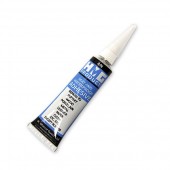
  2. HMG Acrylic Restoration Adhesive

    HMG Acrylic Restoration Adhesive

    £6.00

    HMG Acrylic Restoration Adhesive. Heat and waterproof adhesive for repairs to pottery, wood, porcelain, leather etc. Not suitable for use on rubber. 14ml. Learn More
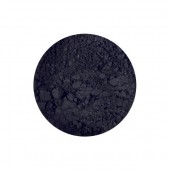
  3. Ivory Black Pigment

    Ivory Black Pigment

    Starting at: £4.50

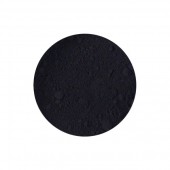
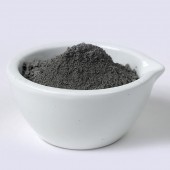
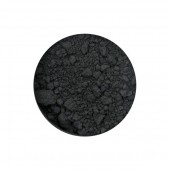
    Ivory Black is a natural pigment of impure carbon, derived from charred animal bones. It is semi-transparent, very lightfast, and offers good tinting strength. It is a particularly slow-drying pigment, which forms a soft, rather brittle paint film in oil.

    Compared to other blacks, such as Vine Black, Ivory Black possesses warmer, brownish undertones. It should not be used at full-strength in an underpainting, as subsequent layers are likely to crack. Otherwise, it is a very useful all-purpose black for many types of paint, excluding mortar, fresco or cement.

    Toxicity: B

    Learn More
  4. Burnt Green Earth Pigment

    Burnt Green Earth Pigment

    Starting at: £8.00

    PG23 Burnt Green Earth is a semi-transparent pigment that is stable in all media, although it may be difficult to incorporate into an acrylic binder. A calcined form of Green Earth, it has a low tinting strength, long drying time, and is very lightfast. Toxicity: B Limeproof Learn More
  5. Van Dyke Brown Pigment

    Van Dyke Brown Pigment

    Starting at: £4.50

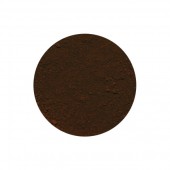
    Van Dyke Brown pigment is know for its poor lightfastness and instability in all mediums. Our Van Dyke Brown, also known as Cassel Earth, offers the same dark brown colour and transparency as the traditional pigment, but without the drawbacks usually associated with its longevity and use. It is made from lignite, or brown coal, from the Alsace region in France.

    Toxicity: B

    Learn More
  6. Cobalt Turquoise Pigment

    Cobalt Turquoise Pigment

    Starting at: £15.00

    Toxicity: B

    Please note, unfortunately we are not able to send this product outside the UK.

    Learn More
  7. Cobalt Yellow Pigment

    Cobalt Yellow Pigment

    Starting at: £8.80

    Cobalt Yellow Pigment, Aureolin (PY40). Synthetic Inorganic pigment (Potassium Cobaltinitrate). Transparent. Good tinting strength. Very good Lightfastness. Medium to high oil absorption. Suitable for all media except Lime-fresco. Used since mid 19th Century. Toxicity C.

    Please note, unfortunately we are not able to send this product outside the UK.

    Learn More
  8. French Chalk

    French Chalk

    Starting at: £5.50

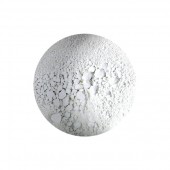
    French Chalk is a term commonly used to describe talcum powder and is also known as talc. This grade is very fine magnesium silicate  It is sometimes used as a filler in pastels, to make soft sticks that produce velvety marks as it has a soapy like consistency.

    Learn More
  9. Indigo Blue Genuine Pigment

    Indigo Blue Genuine Pigment

    Starting at: £8.00

    NB1

    Genuine Indigo is a natural vegetable pigment derived from the Indigofera Tinctoria plant, which was first imported into Europe from India in the seventeenth century. It replaced woad, which had been grown natively in Europe for its blue dye. The leaves are soaked in water to ferment; upon drying, an oxidised residue forms on the dry leaves, which is removed, washed, boiled in water, and then dried to form cakes of pigment or dye.

    Indigo is very transparent, with a good tinting strength. It requires a wetting agent to disperse, and in oil it dries very slowly. It is fugitive to light; this drawback means that it is no longer commonly available in commercial paints. It fell out of general use at the beginning of the seventeenth century, largely replaced by Prussian Blue, and synthetic Indigo was patented in the 1890s. However, it provides a subtle shade of blue that is still desirable in works that are going to be protected from light.

    Toxicity: B

    Learn More
  10. Yellow Ochre Pigment

    Yellow Ochre Pigment

    Starting at: £4.00

    PY43

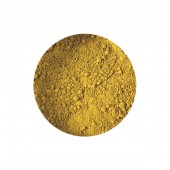
    Yellow Ochre is a natural earth pigment that has been in use since prehistoric times. It is derived from iron-rich clay deposits that are present all over the world; our Yellow Ochre comes from the hilly regions around Verona, Italy. As a pigment, it is semi-opaque, extremely lightfast, and stable in all media. It has a medium to slow drying rate in oil, creating a tough, flexible paint film. Yellow Ochre is similar in composition to Raw Sienna, but whereas Yellow Ochre contains a higher proportion of clay, Raw Sienna contains a higher proportion of silica. As a natural material, the exact colour and qualities of the resultant pigments can vary, but generally this compositional difference creates a paler, more opaque Yellow Ochre, and a darker, more transparent Raw Sienna. 

    Toxicity B

    Learn More
  11. Cadmium Brown Pigment

    Cadmium Brown Pigment

    Starting at: £10.00

    PR108

    Cadmium Brown is a shade of Cadmium Red, a synthetic organic pigment that has been in use since the 1920s. It is formed by heating cadmium sulphide and selenium, the hue is determined by the level of calcination and proportion of selenium. It is very opaque, and lightfast, with a high tinting strength. It absorbs a small amount of oil, and dries very slowly to form a hard, flexible paint film.

    Larger quantities are available by request.  

    Limeproof

    Toxicity: C

    Learn More
  12. Cornelissen Glass Mullers.

    Cornelissen Glass Mullers

    Starting at: £24.50

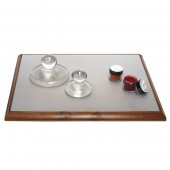
    Cornelissen Glass Mullers are handmade using superior boro silicate laboratory glass, which is 40% harder, more heat resistant, and offers better clarity than soda-lime glass. The base of each muller is ground perfectly flat, and sand-blasted to create a fine tooth to facilitate the grinding of pigments. The tall handle features an ergonomic top, to ease fatigue when grinding large amounts of pigment. Mullers act as flat-bottomed pestles, which are used to grind pigment into a binding medium, suspending it evenly to create a uniform covering of binder around each pigment particle. Using a muller and slab, rather than simply mixing pigment and binder together, will create a more homogenised and stable paint. Use in conjunction with a Cornelissen Glass Slab to make paint efficiently. The sand-blasted texture of the muller and plate helps to push and distribute the pigment throughout the binder quickly. This will mean less grinding, and more painting! Learn More
  13. Smalt Dark Pigment

    Smalt Dark Pigment

    Starting at: £5.30

    PB32

    Smalt is a kind of cobalt blue glass or frit, and its use as a pigment dates from the 1600s in the glass-making regions of Saxony. We offer two shades, light and dark, which are determined by the particle size of the pigment; the more finely ground the powder, the paler the colour. Before the introduction of Ultramarine Blue, Smalt was available in a wide variety of grades. It is a very transparent pigment, which is easily overwhelmed in mixtures due to its weak tinting strength. It works best in water based media. When ground in oil, it can become almost invisible in dried oil-paint films because its refractive index is so close to that of linseed oil.

    Larger quantities are available by request.

    Learn More
  14. Carnauba Wax Yellow

    Carnauba Wax Yellow

    Starting at: £6.50

    Carnauba Wax is the hardest wax commonly used in the production of artists' materials, with a melting point of 83-86°c. It is derived from a tree native to South America, and is available in a natural colour (grey), or a refined colour (pale yellow). Small amounts of carnauba wax are commonly used in both oil painting mediums and encaustic painting, usually in conjunction with beeswax to add toughness, durability and sheen to the paint film. It creates an inflexible surface, so works best on rigid supports such as gesso panels, and it should be noted that it will raise the melting point of encaustic mixtures. It can produce a glossy finish; as such it is used in waxes and polishes for shoes, cars, musical instruments, furniture, and wooden floors, especially when mixed with beeswax and turpentine. Learn More
  15. Cornelissen Mini Glass Muller and Slabs

    Cornelissen Mini Glass Muller and Slabs

    Starting at: £24.00

    Use Cornelissen Mini Glass Mullers in conjunction with a Cornelissen Glass Slab to make paint efficiently. The sand-blasted texture of the muller and plate helps to push and distribute the pigment throughout the binder quickly. This means less time grinding, more time painting! Learn More
  16. Azure Blue Pigment

    Azure Blue Pigment

    Starting at: £12.00

    Azure Blue Pigment (PB28). Inorganic pigment made from various aluminium, zinc and cobalt compounds. Semi-opaque. Weak tinting strength. Excellent Lightfastness.

    Toxicity: C

    Limeproof

    Learn More
  17. Viridian Green Pigment

    Viridian Green Pigment

    Starting at: £6.50

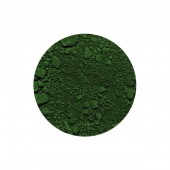
    Viridian Green is a synthetic inorganic pigment, similar in composition to Chromium Oxide. However, unlike Chromium Oxide, Viridian contains water molecules within its crystal structure, imparting a greater degree of transparency. Sometimes referred to as Verte Eméraude, Viridian was discovered in France in 1838, patented in 1859, and made available in the UK in 1862. It is stable in all media, and offers excellent lightfastness and good tinting strength. It requires a high oil content, and dries slowly to form a hard, fairly flexible paint film.

    Toxicity B

    Learn More
  18. Raw Umber Pigment

    Raw Umber Pigment

    Starting at: £4.00

    PBr7

    Raw Umber is a natural earth pigment composed of iron oxide, manganese, and aluminium silicate. It has its roots in the Umbria region of Italy, and was historically a popular colour for underpaintings, as it dries very quickly. It is semi-opaque, very lightfast, and stable in all media but may be difficult to disperse in acrylic. It requires a large amount of liquid when mixed with oil.

    Toxicity: B

    Learn More
  19. Fullers Earth

    Fullers Earth

    Starting at: £6.30

    Fullers Earth is used to remove plant debris and other impurities from cold-pressed linseed oil, as its large particle size and unusual shape attracts unwanted matter and pulls it down, away from the surface of the oil. Our Fullers earth consist sly of Bentonite.

    Learn More
  20. Microcrystalline Wax

    Microcrystalline Wax

    Starting at: £8.50

    Microcrystalline Wax is related to paraffin wax, and is used as a plasticiser in some recipes. It is characterised by the fineness of its crystals in contrast to the larger crystal of paraffin wax. It is generally more viscous, denser, tackier and more elastic than paraffin waxes, and has a higher melting point. Learn More
  21. Small, 15ml Pigment sizes

    Small, 15ml Pigment sizes

    Starting at: £4.00

    15 ml pots of pure pigment Learn More
  22. Cerulean Blue Pigment

    Cerulean Blue Pigment

    Starting at: £14.50

    PB35

    Cerulean Blue is an artificial mineral pigment that is prepared by heating a mixture of Cobalt Chloride and Potassium Stannate. It was first synthesised in the early nineteenth century, becoming more widely used from 1870, when Rowney introduced Coeruleum Blue into their range. It produces a very bright, clear, and unusually opaque blue, hence its name, which is derived from the Latin for "sky-blue", or perhaps "heaven-blue". It has a very low tinting strength meaning that, although it is stable in all media, some artists may choose to bind it in poppy rather than linseed oil, so that the colour isn't affected by the colour of the binder. It creates a fairly flexible paint film, and is a fast-to-medium drying pigment.

    Limeproof

    Toxicity: B

    Learn More
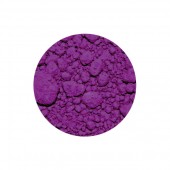
  23. Manganese Violet Pigment

    Manganese Violet Pigment

    Starting at: £8.50

    PV16

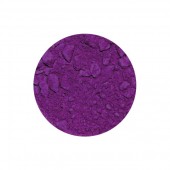
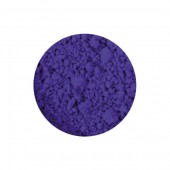
    Manganese Violet is a synthetic organic pigment, discovered in Germany in 1868 and formed by combining manganese chloride, phosphoric acid and ammonium carbonate. It is very lightfast, but sensitive to alkalis and oils. It is semi-opaque and fast-drying, with a low tinting strength and low absorption of oil. 

    Toxicity: C

    Learn More
  24. Painter's Handbook

    Painter's Handbook

    £25.00

    By Mark David Gottsegen. A guide to artists’ materials as well as a thorough resource presenting techniques for using them and recipes for making them. (355 pages) Learn More
  25. Ivory Black Genuine Pigment

    Ivory Black Genuine Pigment

    Starting at: £38.00

    PBk9

    Genuine Ivory Black is produced by burning reclaimed ivory, such as piano keys. These are antique, mainly Victorian pieces, using ivory with started out as hippo or walrus teeth, and offers a higher carbon content and greater tinting strength than modern-day equivalents, which are usually derived from animal bones. It is a particularly slow-drying pigment.

    Larger quantities are available by request. While stocks last.

    Learn More
  26. Natural Beeswax

    Natural Beeswax

    Starting at: £11.20

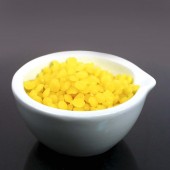
    Beeswax is derived from melted honeycomb, and is available in two grades. Bleached Beeswax Pellets are white, having been bleached by the sun, and are an appropriate choice for using with pale colours, although they may revert to yellow over time. Natural Beeswax Pellets are yellow in colour, and offer a more flexible structure with a higher resin content. Beeswax has a melting point of 63-66°c, and may turn brown if over-heated. It is the most widely used wax in artists' materials, having a wide range of applications. Please see below for more details.


    Learn More
  27. Schmincke Mussini Shungite Black Limited Edition 15 ml

    Schmincke Mussini Shungite Black Limited Edition 15 ml

    £26.00

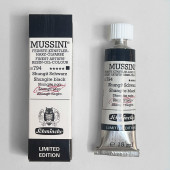
    Schmincke Mussini Shungite Black Limited Edition 15 ml Learn More
  28. Ultramarine Blue Limewash Pigment

    Ultramarine Blue Limewash Pigment

    Starting at: £7.50

    PB29

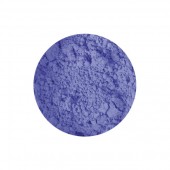
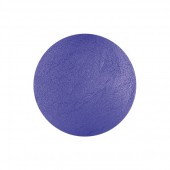
    Ultramarine Blue Limewash is an artificial mineral pigment that is produced by heating clay, soda, sulphur and coal to high temperatures. Its name comes from outremer, or over-the-sea, as a reference to the highly-prized Lapis Lazuli pigment which had been imported into Europe from Afghanistan since the Middle Ages. First manufactured in France and Germany in 1828, synthetic Ultramarine provided a brilliant and affordable blue to artists, and it remains one of the most popular blues on artists' palettes today.

    It is a transparent pigment, with a high tinting strength and excellent lightfastness. Most Ultramarine colours react to alkali and are therefore unsuitable for use in lime-fresco; Limeproof Ultramarine Blue remedies this problem. It is stable in all other media, although it can be tricky to grind in oil. Instead of creating a thick, buttery paste, it can remain stringy and deteriorate when stored in a tube. To correct this, many commercial paint manufacturers include additives and waxes in their recipes; if you intend on grinding your own paint, you could try replacing 10-15% of your Linseed Oil with Poppy Oil to improve the consistency. Ultramine Blue provides a slow-drying, fairly hard paint film, which can tend towards brittleness.

    Toxicity: B

    Learn More
  29. Raw Sienna Pigment

    Raw Sienna Pigment

    Starting at: £4.00

    PBr7

    Raw Sienna is a natural earth pigment that dates back to antiquity. Our Raw Sienna comes from areas of Tuscany where the earth has been coloured by iron-rich minerals. It provides a good tinting strength, excellent lightfastness, and a fast to medium drying rate in oil. It is stable in all media but, like umber pigments, can be difficult to disperse in an acrylic binder. It is similar in composition to Yellow Ochre, but whereas Yellow Ochre contains a higher proportion of clay, Raw Sienna contains a higher proportion of silica. As a natural material, the exact colour and qualities of the resultant pigments can vary, but generally this difference creates a paler, more opaque Yellow Ochre, and a darker, more transparent Raw Sienna.

    Toxicity: B

    Learn More
  30. Quinacridone Scarlet Pigment

    Quinacridone Scarlet Pigment

    Starting at: £6.30

    Quinacridone Scarlet Pigment (PR209). Organic pigment. Very transparent. High tinting strength. Excellent Lightfastness. High oil absorption with slow drying rate. Requires wetting agent. Suitable for all media. Developed in the 1950's. Toxicity A/B. Learn More

Items 31 to 60 of 158 total

per page
Page:
  1. 1
  2. 2
  3. 3
  4. 4
  5. 5

Grid  List 

Set Ascending Direction