

Search results for 'Mediums'


-
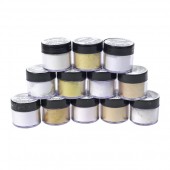
Pearl Lustre Pigments 7g
Starting at: £4.70
Pearl Lustre Pigments 7g. Colour swatch on the left indicates colour on a White Background and Colour on a Black Background on the right. Learn More -
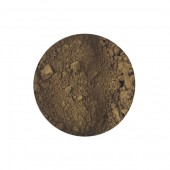
Burnt Umber Pigment
Starting at: £4.00
PBr7
Burnt Umber is a natural earth pigment from Italy, composed of iron oxide, manganese, and aluminium silicate. It is a form of Raw Umber that a has undergone a process of calcination, becoming warmer, more transparent and easier to disperse. It has a good tinting strength, and is very lightfast, quick-drying, and stable in all media. In oils it forms a hard, fairly flexible paint film, though it may be difficult to use in acrylic mediums.
Toxicity: B
Learn More -
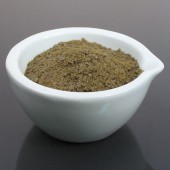
Carnauba Wax Grey
Starting at: £8.40
Carnauba Wax is the hardest wax commonly used in the production of artists' materials, with a melting point of 83-86°c. It is derived from a tree native to South America, and is available in a natural colour (grey), or a refined colour (pale yellow). Small amounts of carnauba wax are commonly used in both oil painting mediums and encaustic painting, usually in conjunction with beeswax to add toughness, durability and sheen to the paint film. It creates an inflexible surface, so works best on rigid supports such as gesso panels, and it should be noted that it will raise the melting point of encaustic mixtures. It can produce a glossy finish; as such it is used in waxes and polishes for shoes, cars, musical instruments, furniture, and wooden floors, especially when mixed with beeswax and turpentine. Learn More -
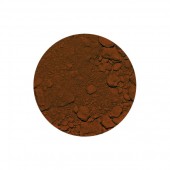
Mars Red Pigment
Starting at: £4.50
PR101
Mars Red is an artificial mineral pigment. Its pigment code, PR101, refers to a wide spectrum of synthetic iron oxide pigments including yellows, oranges, reds, violet-browns and green-browns, which replace many natural earth colours to provide pigments without impurities and with great opacity. It has a good tinting strength, is lightfast and stable in all media, and has a medium drying time in oil.
Toxicity: B
Limeproof
Learn More -
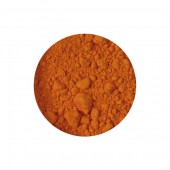
Cadmium Yellow Orange Pigment
Starting at: £4.50
Cadmium Yellow Orange Pigment (PY108) also known as Pyramid Yellow. Organic pigment. Opaque to Semi-opaque. Good tinting strength. Excellent Lightfastness. Medium drying rate. Suitable for all media except Lime-fresco. Toxicity B/C Learn More -
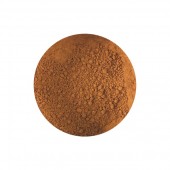
Burnt Sienna Pigment
Starting at: £4.00
PBr7
Burnt Sienna is a natural earth pigment that has been in use since antiquity. Our Burnt Sienna comes from Tuscany, and is produced by calcining Raw Sienna to temperatures of about 450 degrees Celsius. This process creates a rich warm colour and increases transparency. It also offers a good tinting strength, excellent lightfastness, and a fast to medium drying rate in oil. It is stable in all media but, like umber pigments, may be difficult to disperse in acrylic binders.
Toxicity B
Learn More -
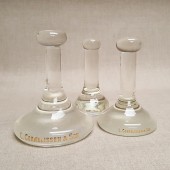
Cornelissen Glass Mullers
Starting at: £24.50
Cornelissen Glass Mullers are handmade using superior boro silicate laboratory glass, which is 40% harder, more heat resistant, and offers better clarity than soda-lime glass. The base of each muller is ground perfectly flat, and sand-blasted to create a fine tooth to facilitate the grinding of pigments. The tall handle features an ergonomic top, to ease fatigue when grinding large amounts of pigment. Mullers act as flat-bottomed pestles, which are used to grind pigment into a binding medium, suspending it evenly to create a uniform covering of binder around each pigment particle. Using a muller and slab, rather than simply mixing pigment and binder together, will create a more homogenised and stable paint. Use in conjunction with a Cornelissen Glass Slab to make paint efficiently. The sand-blasted texture of the muller and plate helps to push and distribute the pigment throughout the binder quickly. This will mean less grinding, and more painting! Learn More -
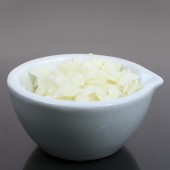
Bleached Beeswax
Starting at: £12.30
Beeswax is derived from melted honeycomb, and is available in two grades. Bleached Beeswax Pellets are white, having been bleached by the sun, and are an appropriate choice for using with pale colours, although they may revert to yellow over time. Natural Beeswax Pellets are yellow in colour, and offer a more flexible structure with a higher resin content. Beeswax has a melting point of 63-66°c, and may turn brown if over-heated. It is the most widely used wax in artists' materials, having a wide range of applications. Please see below for more details.
Learn More -
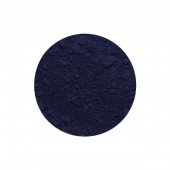
Phthalo Blue Pigment
Starting at: £8.00
PB15:3
Phthalo (Mona) Blue is a synthetic organic pigment, Copper Phthalocyanine, that has been in use since the 1930s. It has an extremely high tinting strength and is a staining colour, so cannot successfully be lifted in watercolour. It requires a wetting agent to fully disperse into a medium, and, when used at full strength, a copper sheen is visible in dried paint film. It is transparent, very lightfast, and has a medium-to-slow drying rate in oil.
Toxicity: C
While stocks last
Learn More -
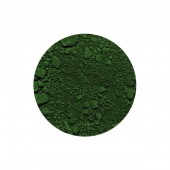
Phthalo Green Pigment
Starting at: £8.10
Phthalo (Mona) Green Pigment (PG7). Organic pigment (Chlorinated Copper Phthalocyanine). Transparent. Very high tinting strength. Excellent Lightfastness. Medium to slow drying rate. Requires wetting agent. Suitable for all media. Developed in 1927. Toxicity B Learn More -
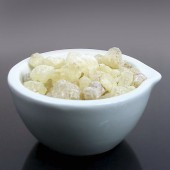
Gum Damar
Starting at: £10.00
Damar is a pale, almost colourless tree resin, which is soluble in turpentine, but not in alcohol or mineral spirits. It can be used as a varnish or as a glossy painting medium in conjunction with vegetable oils, and is generally preferable to other resin-based varnishes, such as mastic varnish, as it retains its colourless appearance for a longer period of time. In encaustic painting, the inclusion of damar resin imparts toughness and gloss to the paint surface. Learn More -
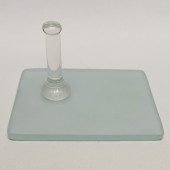
Cornelissen Mini Glass Muller and Slabs
Starting at: £24.00
Use Cornelissen Mini Glass Mullers in conjunction with a Cornelissen Glass Slab to make paint efficiently. The sand-blasted texture of the muller and plate helps to push and distribute the pigment throughout the binder quickly. This means less time grinding, more time painting! Learn More -
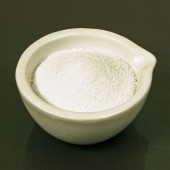
Marble Dust
Starting at: £4.70
Imparts texture when added to acrylic mediums and primers. Can also be used in lime mortar. Available in three different grades: - Coarse (irregular granules); - Medium (mesh size: 16); - Fine (mesh size: 100; most appropriate for use in paint). Learn More -
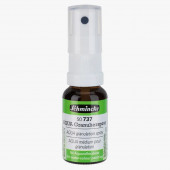
Schmincke Aqua Granulation Spray 15 ml
£8.55Create effects similar to granulation effects in watercolours, with an even paint flow. Learn More -
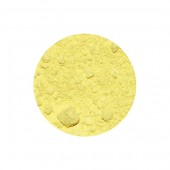
Lemon Yellow Pigment
Starting at: £7.00
Call to Order
Lemon Yellow Pigment (PY31). Synthetic Inorganic pigment (Barium Chromate). Opaque but transparent in a glaze. Low tinting strength. Excellent Lightfastness. Low oil absorption with medium drying rate. Recommended for oils but can turn slightly greenish when mixed with binder. Used since beginning of the 19th Century.
Toxicity D Lead is a highly poisonous metal which, if inhaled, ingested, or introduced to the blood through cuts in the skin, builds up in the body and can affect multiple parts of the body, including the digestive and nervous systems.
PERMITTED USES Over 18s only. Proof of age required. Restoration of art works and protected buildings when alternatives unsuitable.
IMPORTANT Please refer to the MSDS (Material Safety Data Sheet) below. Dispose of product as hazardous waste.
SHIPPING Please note, we are not able to send this product outside the UK.
Learn More -
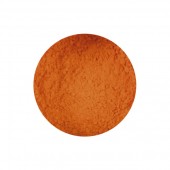
Lead Red Pigment (Minium)
Starting at: £7.30
Call to Order
PR105
Lead Red is an early articficial pigment that dates back to antiquity. It is created by heating Lead White or Litharge at a constant temperature of 480ºC over a prolonged period of time. It is a fast-drying colour, with good tinting strength and opacity, and has been widely used as an underpaint for gilding and in industry. However, it is highly toxic and generally unstable, so has fallen out of use in favour of Cadmium pigments. The acid in linseed oil causes Lead Red to darken, and it can solidify when stored in a tube. In water-based mediums, it can turn black.
Toxicity D Lead is a highly poisonous metal which, if inhaled, ingested, or introduced to the blood through cuts in the skin, builds up in the body and can affect multiple parts of the body, including the digestive and nervous systems.
PERMITTED USES Over 18s only. Proof of age required. Restoration of art works and protected buildings when alternatives unsuitable.
IMPORTANT Please refer to the MSDS (Material Safety Data Sheet) below. Dispose of product as hazardous waste.
SHIPPING Please note, we are not able to send this product outside the UK.
Learn More -
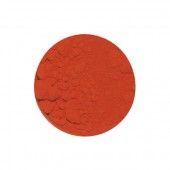
Chrome Yellow Orange Pigment
Starting at: £14.00
Call to Order
Chrome Yellow Orange Pigment (PY34). Synthetic Inorganic pigment (Lead Chromate). Opaque. Good tinting strength. Lightfastness is good, but in some cases unstable as it can darken and turn greenish. Low oil absorption with fast drying rate. Recommended for oils not suitable for water-based mediums. Used since late 18th Century.
Toxicity D Lead is a highly poisonous metal which, if inhaled, ingested, or introduced to the blood through cuts in the skin, builds up in the body and can affect multiple parts of the body, including the digestive and nervous systems.
PERMITTED USES Over 18s only. Proof of age required. Restoration of art works and protected buildings when alternatives unsuitable.
IMPORTANT Please refer to the MSDS (Material Safety Data Sheet) below. Dispose of product as hazardous waste.
SHIPPING Please note, we are not able to send this product outside the UK.
Learn More -
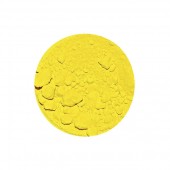
Chrome Yellow Light Pigment
Starting at: £10.00
Call to Order
Chrome Yellow Light Pigment (PY34). Synthetic Inorganic pigment (Lead Chromate). Opaque. Good tinting strength. Lightfastness is moderately good, but in some cases unstable as it can darken and turn greenish. Low oil absorption with fast drying rate. Recommended for oils not suitable for water-based mediums. Used since late 18th Century.
Toxicity D Lead is a highly poisonous metal which, if inhaled, ingested, or introduced to the blood through cuts in the skin, builds up in the body and can affect multiple parts of the body, including the digestive and nervous systems.
PERMITTED USES Over 18s only. Proof of age required. Restoration of art works and protected buildings when alternatives unsuitable.
IMPORTANT Please refer to the MSDS (Material Safety Data Sheet) below. Dispose of product as hazardous waste.
SHIPPING Please note, we are not able to send this product outside the UK.
Learn More -
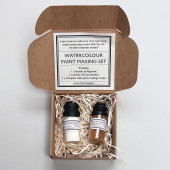
London Pigment, Watercolour Paint Making Set
£35.00Call to Order
This watercolour paint making set includes a 30ml glass vial of gum Arabic crystals and another of Hampstead Orange, a pigment rich in iron oxide. A pamphlet detailing a a watercolour recipe and an introduction to London pigment is also included. The perfect gift for artists getting into making their own art materials or those interested in handmade British earth colours. The pigment itself has a fine to medium grain size and has been washed, levigated and ground to create a stable high quality artist’s pigment.
Learn More -
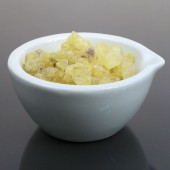
Gum Mastic
Starting at: £20.30
Call to Order
Gum Mastic is a tree resin, which dissolves into a clear varnish with alcohol or turpentine, but not with mineral spirits. Mastic varnishes are more prone to blooming and darkening with age than damar-based varnishes, and painting mediums that contain gum mastic can deteriorate in unpredictable ways. For this reason, it is primarily used in restoration, rather than in the production of artwork. Learn More -
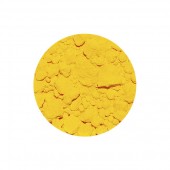
Chrome Yellow Middle Pigment
Starting at: £10.00
Call to Order
Synthetic Inorganic pigment (Lead Chromate). Opaque. Good tinting strength. Lightfastness is good, but in some cases unstable as it can darken and turn greenish. Low oil absorption with fast drying rate. Recommended for oils not suitable for water-based mediums. Used since late 18th Century.Toxicity D Lead is a highly poisonous metal which, if inhaled, ingested, or introduced to the blood through cuts in the skin, builds up in the body and can affect multiple parts of the body, including the digestive and nervous systems.
PERMITTED USES Over 18s only. Proof of age required. Restoration of art works and protected buildings when alternatives unsuitable.
IMPORTANT Please refer to the MSDS (Material Safety Data Sheet) below. Dispose of product as hazardous waste.
SHIPPING Please note, we are not able to send this product outside the UK.
Learn More -
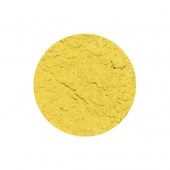
Litharge Pigment
Starting at: £8.00
Call to Order
PY46
Litharge is lead monoxide, also known as Massicot. It is an opaque pigment, with a weak tinting strength. Its toxicity and fugitive nature means that it is rarely used as a pigment. Instead, its fast drying time means that it has been used as a siccative in oil mediums. The colour tends to darken in all media, and it is also unstable in its dry form, as the powder can lighten when exposed to air.
Toxicity D Lead is a highly poisonous metal which, if inhaled, ingested, or introduced to the blood through cuts in the skin, builds up in the body and can affect multiple parts of the body, including the digestive and nervous systems.
PERMITTED USES Over 18s only. Proof of age required. Restoration of art works and protected buildings when alternatives unsuitable.
IMPORTANT Please refer to the MSDS (Material Safety Data Sheet) below. Dispose of product as hazardous waste.
SHIPPING Please note, we are not able to send this product outside the UK.
Learn More -
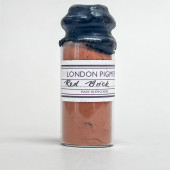
London Pigment, London Red Brick
£18.00Call to Order
Made from pulverised historic London bricks collected from the foreshore of the Thames near Tower Bridge and Wapping this deep red pigment is essentially a variety of red ochre. During the Victorian era, London Clay was dug up and fired on construction sites to produce the building materials for the city. Red brick pigment has a medium grain size and is opaque. ****Please note, these pigments are artisan made in small batches. Please email info@cornelissen.com for availability**** Learn More
Currently Shopping by:
- Category: Pigments, Gums, Resins Remove This Item
Shopping Options
- Category
-
- Artists Quality Pigments Blacks (1)
- Artists Quality Pigments Blues (4)
- Artists Quality Pigments Earths (12)
- Artists Quality Pigments Greens (2)
- Artists Quality Pigments Reds (2)
- Artists Quality Pigments Yellows (6)
- The Early Colour Pigments (2)
- Equipment (4)
- Fillers, Chalks, and Abrasives (3)
- Gums and Resins (2)
- Limeproof Pigments (8)
- London Pigment (3)
- Pearl Lustre Pigments (3)
- Small Pigment Sizes (1)
- Storage Containers (1)
- Waxes, Adhesives and Sizes (5)
- Price
-
- £0.00 - £9.99 (33)
- £10.00 - £19.99 (11)
- £20.00 - £29.99 (7)
- £30.00 - £39.99 (1)
- £90.00 and above (1)
- Manufacturer
-
- Cornelissen (47)
- London Pigment (3)
- Roberson (1)
- Schmincke (2)
You have no items in your shopping basket.

- Search Brands
-