

Search results for 'de la'


-
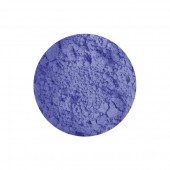
Cerulean Blue Pigment
Starting at: £14.50
PB35
Cerulean Blue is an artificial mineral pigment that is prepared by heating a mixture of Cobalt Chloride and Potassium Stannate. It was first synthesised in the early nineteenth century, becoming more widely used from 1870, when Rowney introduced Coeruleum Blue into their range. It produces a very bright, clear, and unusually opaque blue, hence its name, which is derived from the Latin for "sky-blue", or perhaps "heaven-blue". It has a very low tinting strength meaning that, although it is stable in all media, some artists may choose to bind it in poppy rather than linseed oil, so that the colour isn't affected by the colour of the binder. It creates a fairly flexible paint film, and is a fast-to-medium drying pigment.
Limeproof
Toxicity: B
Learn More -
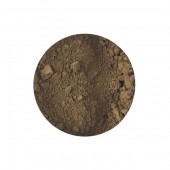
Burnt Umber Pigment
Starting at: £4.00
PBr7
Burnt Umber is a natural earth pigment from Italy, composed of iron oxide, manganese, and aluminium silicate. It is a form of Raw Umber that a has undergone a process of calcination, becoming warmer, more transparent and easier to disperse. It has a good tinting strength, and is very lightfast, quick-drying, and stable in all media. In oils it forms a hard, fairly flexible paint film, though it may be difficult to use in acrylic mediums.
Toxicity: B
Learn More -
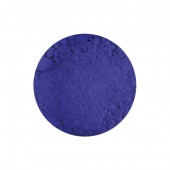
Cobalt Blue Pigment
Starting at: £6.50
PB28
Cobalt Blue is an artificial mineral pigment, produced by the calcination of cobalt oxide and aluminium oxide. It has been widely used since the early 1800s, following its discovery by the French chemist Thenard at the beginning of the century. The name Cobalt has its roots in the German word Kobold, meaning imp or evil spirit. German miners specifically used this name in the late-Middle Ages, as the presence of Cobalt ore in the mines made the extraction of silver very difficult. They were possibly aware of the toxic properties of the mineral frustrating their efforts.
Cobalt remains a very popular colour today, and is present in most ranges of paints, being a semi-transparent pigment that is stable in all media. As a watercolour, all cobalt pigments tend to granulate. As an oil paint, it requires less oil content than most other pigments, and dries quite quickly. Like Cerulean Blue, some artists may choose to bind it with poppy oil, to avoid any possible colour changes brought about by the yellowish cast of linseed oil and the pigment's weak tinting strength.
Limeproof
Toxicity: C
Learn More -
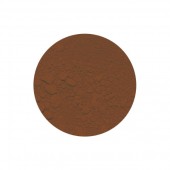
Cadmium Brown Pigment
Starting at: £10.00
PR108
Cadmium Brown is a shade of Cadmium Red, a synthetic organic pigment that has been in use since the 1920s. It is formed by heating cadmium sulphide and selenium, the hue is determined by the level of calcination and proportion of selenium. It is very opaque, and lightfast, with a high tinting strength. It absorbs a small amount of oil, and dries very slowly to form a hard, flexible paint film.
Larger quantities are available by request.
Limeproof
Toxicity: C
Learn More -
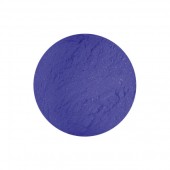
Smalt Dark Pigment
Starting at: £5.30
PB32
Smalt is a kind of cobalt blue glass or frit, and its use as a pigment dates from the 1600s in the glass-making regions of Saxony. We offer two shades, light and dark, which are determined by the particle size of the pigment; the more finely ground the powder, the paler the colour. Before the introduction of Ultramarine Blue, Smalt was available in a wide variety of grades. It is a very transparent pigment, which is easily overwhelmed in mixtures due to its weak tinting strength. It works best in water based media. When ground in oil, it can become almost invisible in dried oil-paint films because its refractive index is so close to that of linseed oil.
Larger quantities are available by request.
Learn More -
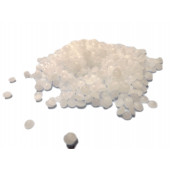
Microcrystalline Wax
Starting at: £8.50
Microcrystalline Wax is related to paraffin wax, and is used as a plasticiser in some recipes. It is characterised by the fineness of its crystals in contrast to the larger crystal of paraffin wax. It is generally more viscous, denser, tackier and more elastic than paraffin waxes, and has a higher melting point. Learn More -
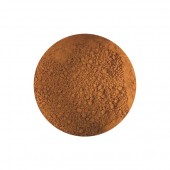
Burnt Sienna Pigment
Starting at: £4.00
PBr7
Burnt Sienna is a natural earth pigment that has been in use since antiquity. Our Burnt Sienna comes from Tuscany, and is produced by calcining Raw Sienna to temperatures of about 450 degrees Celsius. This process creates a rich warm colour and increases transparency. It also offers a good tinting strength, excellent lightfastness, and a fast to medium drying rate in oil. It is stable in all media but, like umber pigments, may be difficult to disperse in acrylic binders.
Toxicity B
Learn More -
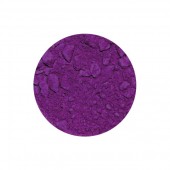
Cobalt Violet Dark Pigment
Starting at: £14.00
Cobalt Violet Dark Pigment (PV14). Synthetic inorganic pigment. Semi-transparent. High tinting strength. Excellent Lightfastness. Low oil absorption with fast drying rate. All media including ceramics. Used since late 19th Century.
Limeproof
Toxicity: C
Please note, unfortunately we are not able to send this product outside the UK.
Learn More -
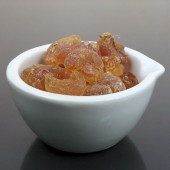
Gum Arabic
Starting at: £6.30
Gum Arabic is a resoluble binding agent, commonly used in the preparation of watercolours, but also useful as an adhesive, a size, and in the production of soft pastels. It is a natural product, harvested from the Acacia tree between October and May. The highest grade of Gum Arabic comes from the Kordofan region of Sudan. It is exceptionally pale and pure and therefore particularly suited to watercolour painting. Please see the Formulas & Recipes section on our homepage for a recipe to make your own watercolour paints using Gum Arabic (currently under construction). Learn More -
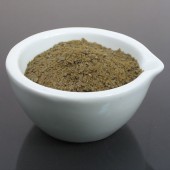
Carnauba Wax Grey
Starting at: £8.40
Carnauba Wax is the hardest wax commonly used in the production of artists' materials, with a melting point of 83-86°c. It is derived from a tree native to South America, and is available in a natural colour (grey), or a refined colour (pale yellow). Small amounts of carnauba wax are commonly used in both oil painting mediums and encaustic painting, usually in conjunction with beeswax to add toughness, durability and sheen to the paint film. It creates an inflexible surface, so works best on rigid supports such as gesso panels, and it should be noted that it will raise the melting point of encaustic mixtures. It can produce a glossy finish; as such it is used in waxes and polishes for shoes, cars, musical instruments, furniture, and wooden floors, especially when mixed with beeswax and turpentine. Learn More -
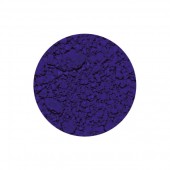
Ultramarine Blue Limewash Pigment
Starting at: £7.50
PB29
Ultramarine Blue Limewash is an artificial mineral pigment that is produced by heating clay, soda, sulphur and coal to high temperatures. Its name comes from outremer, or over-the-sea, as a reference to the highly-prized Lapis Lazuli pigment which had been imported into Europe from Afghanistan since the Middle Ages. First manufactured in France and Germany in 1828, synthetic Ultramarine provided a brilliant and affordable blue to artists, and it remains one of the most popular blues on artists' palettes today.
It is a transparent pigment, with a high tinting strength and excellent lightfastness. Most Ultramarine colours react to alkali and are therefore unsuitable for use in lime-fresco; Limeproof Ultramarine Blue remedies this problem. It is stable in all other media, although it can be tricky to grind in oil. Instead of creating a thick, buttery paste, it can remain stringy and deteriorate when stored in a tube. To correct this, many commercial paint manufacturers include additives and waxes in their recipes; if you intend on grinding your own paint, you could try replacing 10-15% of your Linseed Oil with Poppy Oil to improve the consistency. Ultramine Blue provides a slow-drying, fairly hard paint film, which can tend towards brittleness.
Toxicity: B
Learn More -
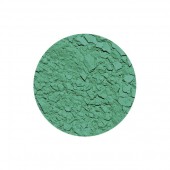
Cobalt Green Light Pigment
Starting at: £8.70
PG19
Cobalt Green is a synthetic pigment that consists of compounds of cobalt and zinc oxides. It is sometimes referred to as Rinman's Green, after the Swedish chemist who discovered it in the late-18th century. It is a permanent, opaque colour, with a weak tinting strength. It dries quite quickly in oil, requiring a high oil content and forming a hard, fairly fleixible paint film. Cobalt Green is available in light and dark shades; the colour is determined by the amount of zinc oxide present.
Toxicity: B
Please note, unfortunately we are not able to send this product outside the UK.
Learn More -
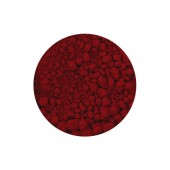
Carmine Red Genuine Pigment
Starting at: £10.00
NR4
Carmine has been used as a dye and pigment since antiquity. Originally derived from the kermes insect, it was replaced by cochineal following the discovery of the Americas. It has a good tinting strength and is very transparent, although it is fugitive to light.
Larger quantities are available by request.
Learn More -
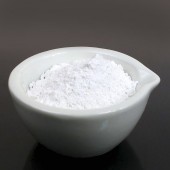
Gesso di Bologna
Starting at: £12.00
Gesso di Bologna is a bright white Calcium Sulphate, or gypsum, from Italy, which can be used as a substitute for whiting in the preparation of gesso. It is ground to a particularly fine powder, which makes it a suitable ground for gilding, as the small size of the particles allows for greater compression when burnishing. Learn More -
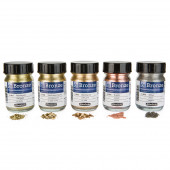
Schmincke Oil Bronze, 50 ml
Starting at: £25.10
For brilliant metal effects on oil paintings. Also suitable for wood, metal and gypsum surfaces. Use with Schmincke Bronze Medium (recipe below). Learn More -
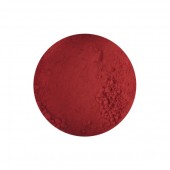
Alizarin Crimson Pigment
Starting at: £4.50
PR83
Alizarin Crimson is a synthetic organic pigment that became available in 1868. It requires a wetting agent to disperse, and in oil it also absorbs a lot of liquid and dries very slowly to form a hard, brittle paint film. It is chemically identical to madder-root pigments and should be protected against UV light where possible as it can fade when applied onto a white ground, although it is less fugitive than its natural counterpart. Alizarin Crimson is a very transparent pigment, with a high tinting strength and slightly blue undertone.
Toxicity: A/B
Larger quantities are available by request.
Learn More -
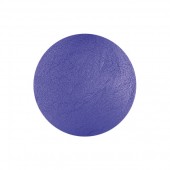
Egyptian Blue Pigment
Starting at: £5.90
Egyptian Blue is stable in all media, highly transparent, with a weak tinting strength. A synthetically produced calcium copper silicate, it is considered to be the earliest artificial pigment, dating from antiquity and widely used in ancient Egypt. Larger sizes available on request Learn More -
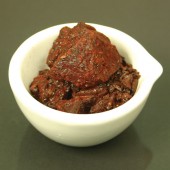
Dragon's Blood Pieces
Starting at: £25.40
Dragon's Blood is a natural, resin, mentioned by Pliny in his Natural History. It has a weak tinting strength, and its rich red colour can be fugitive in direct sunlight. It is fully soluble in alcohol, and can be used to add a warm, transparent tone to spirit varnishes. Also available in powdered form.
Learn More -
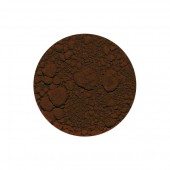
Mars Violet Pigment
Starting at: £4.50
PR101
Mars Violet is an artificial mineral pigment. Its pigment code, PR101, refers to a wide spectrum of synthetic iron oxide pigments including yellows, oranges, reds, violet-browns and green-browns, which replace many natural earth colours, to provide pigments without impurities and with great opacity. It has a good tinting strength, is lightfast and stable in all media, and has a medium drying time in oil. Although it is similar to Caput Mortuum and Indian Red, it is less transparent than the former and warmer than the latter.
Toxicity: B
Limeproof
Learn More -
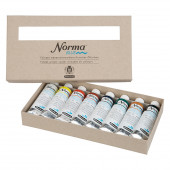
Schmincke Norma Blue Set 8 x 35 ml, Cardboard Box
£59.75Water-mixable (water miscible), highly pigmented, lightfast paints with a buttery consistency. Vegan, low odour, anti-allergenic, environmentally friendly. Learn More -
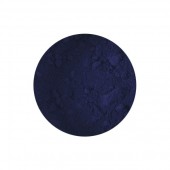
Indigo Blue Synthetic Pigment
Starting at: £5.50
Indigo Blue Synthetic Pigment (VB1). Organic pigment. Transparent. Good tinting strength. Moderate Lightfastness, slower fading rate than Genuine Indigo. Requires wetting agent. Suitable for oil and water-based media. Developed in late 19th Century. Toxicity A/B Learn More -
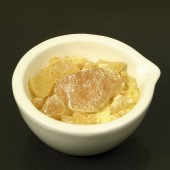
Colophony
Starting at: £7.30
Colophony is a by-product of the distillation of turpentine. It is soluble in most solvents, but considered an adulterant in varnishes and paints, as it forms a weak surface that is prone to darkening and cracking. It is, however, a key ingredient in wax-based etching grounds, imparting hardness, and can be used in powdered form (rosin) to make aquatints. Learn More -
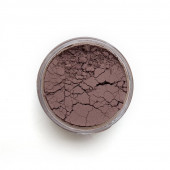
Caput Mortuum Pigment
Starting at: £4.50
Caput Mortuum is a transparent, lightfast pigment that is stable in all media. Colours described as Caput Mortuum can vary greatly; our pigment is a soft purple-brown, made from a mixture of natural iron oxides. It is believed that Caput Mortuum has its roots in ancient Egypt, when colour was derived from remains that had been embalmed in asphaltum.
Toxicity B
Learn More -
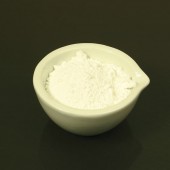
Alumina Hydrate Light
Starting at: £8.30
Alumina Hydrate is an inert pigment with highly absorbent properties, which can be ground into oil paint as an almost colourless extender. It is often used as an additive in commercial oil paints, particularly in conjunction with transparent or lake pigments, as it provides stability and a homogenous consistency without effecting colour or gloss, although it may effect the pigment strength. When combined with linseed oil, it produces an almost transparent painting medium for extending oil colours. Sometimes referred to as Lake Base. Learn More -
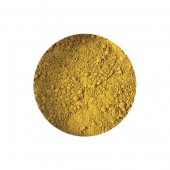
Raw Sienna Pigment
Starting at: £4.00
PBr7
Raw Sienna is a natural earth pigment that dates back to antiquity. Our Raw Sienna comes from areas of Tuscany where the earth has been coloured by iron-rich minerals. It provides a good tinting strength, excellent lightfastness, and a fast to medium drying rate in oil. It is stable in all media but, like umber pigments, can be difficult to disperse in an acrylic binder. It is similar in composition to Yellow Ochre, but whereas Yellow Ochre contains a higher proportion of clay, Raw Sienna contains a higher proportion of silica. As a natural material, the exact colour and qualities of the resultant pigments can vary, but generally this difference creates a paler, more opaque Yellow Ochre, and a darker, more transparent Raw Sienna.
Toxicity: B
Learn More -
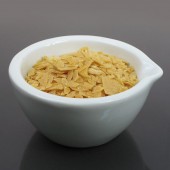
Carnauba Wax Yellow
Starting at: £6.50
Carnauba Wax is the hardest wax commonly used in the production of artists' materials, with a melting point of 83-86°c. It is derived from a tree native to South America, and is available in a natural colour (grey), or a refined colour (pale yellow). Small amounts of carnauba wax are commonly used in both oil painting mediums and encaustic painting, usually in conjunction with beeswax to add toughness, durability and sheen to the paint film. It creates an inflexible surface, so works best on rigid supports such as gesso panels, and it should be noted that it will raise the melting point of encaustic mixtures. It can produce a glossy finish; as such it is used in waxes and polishes for shoes, cars, musical instruments, furniture, and wooden floors, especially when mixed with beeswax and turpentine. Learn More -
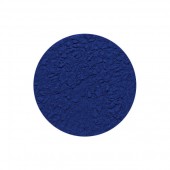
Ultramarine PB29 Pigment
Starting at: £9.10
PB29
Ultramarine Blue is an artificial mineral pigment that is produced by heating clay, soda, sulphur and coal to high temperatures. Its name comes from outremer, or over-the-sea, as a reference to the highly-prized Lapis Lazuli pigment which had been imported into Europe from Afghanistan since the Middle Ages. First manufactured in France and Germany in 1828, synthetic Ultramarine provided a brilliant and affordable blue to artists, and it remains one of the most popular blues on artists' palettes today.
It is a transparent pigment, with a high tinting strength and excellent lightfastness. It reacts to alkali, therefore it is not suitable for use in lime-fresco; we do offer a Limeproof Ultramarine Blue for this purpose. It is stable in all other media, although it can be tricky to grind in oil. Instead of creating a thick, buttery paste, it can remain stringy and deteriorate when stored in a tube. To correct this, many commercial paint manufacturers include additives and waxes in their recipes; if you intend on grinding your own paint, you could try replacing 10-15% of your Linseed Oil with Poppy Oil to improve the consistency. Ultramine Blue provides a slow-drying, fairly hard paint film, which can tend towards brittleness.
Toxicity: B/C
Learn More -
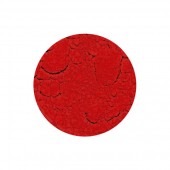
Cadmium Vermilion Pigment
Starting at: £7.50
PR108
Cadmium Red is a synthetic organic pigment that has been in use since the 1920s. It is formed by heating cadmium sulphide and selenium, the hue is determined by the level of calcination and proportion of selenium. It is very opaque, and lightfast, with a high tinting strength. It absorbs a small amount of oil, and dries very slowly to form a hard, flexible paint film. This shade has been formulated to imitate the bright hue of vermilion.
Larger quantities are available by request.
Limeproof
Toxicity: C
Learn More -
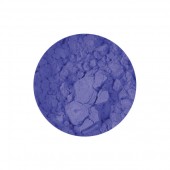
Smalt Light Pigment
Starting at: £5.20
PB32
Smalt is a kind of cobalt blue glass or frit, and its use as a pigment dates from the 1600s in the glass-making regions of Saxony. We offer two shades, light and dark, which are determined by the particle size of the pigment; the more finely ground the powder, the paler the colour. Before the introduction of Ultramarine Blue, Smalt was available in a wide variety of grades. It is a very transparent pigment, which is easily overwhelmed in mixtures due to its weak tinting strength. It works best in water based media. When ground in oil, it can become almost invisible in dried oil-paint films because its refractive index is so close to that of linseed oil.
Larger quantities are available by request.
Learn More -
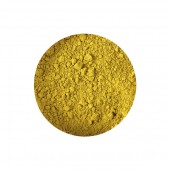
Yellow Ochre Pigment
Starting at: £4.00
PY43
Yellow Ochre is a natural earth pigment that has been in use since prehistoric times. It is derived from iron-rich clay deposits that are present all over the world; our Yellow Ochre comes from the hilly regions around Verona, Italy. As a pigment, it is semi-opaque, extremely lightfast, and stable in all media. It has a medium to slow drying rate in oil, creating a tough, flexible paint film. Yellow Ochre is similar in composition to Raw Sienna, but whereas Yellow Ochre contains a higher proportion of clay, Raw Sienna contains a higher proportion of silica. As a natural material, the exact colour and qualities of the resultant pigments can vary, but generally this compositional difference creates a paler, more opaque Yellow Ochre, and a darker, more transparent Raw Sienna.
Toxicity B
Learn More
Currently Shopping by:
- Category: Pigments, Gums, Resins Remove This Item
Shopping Options
- Category
-
- Artists Quality Pigment Sets (1)
- Artists Quality Pigments Blacks (6)
- Artists Quality Pigments Blues (8)
- Artists Quality Pigments Earths (11)
- Artists Quality Pigments Greens (5)
- Artists Quality Pigments Reds (7)
- Artists Quality Pigments Violets (1)
- Artists Quality Pigments Whites (3)
- Artists Quality Pigments Yellows (5)
- The Early Colour Pigments (15)
- Equipment (5)
- Fillers, Chalks, and Abrasives (6)
- Gums and Resins (10)
- Limeproof Pigments (20)
- London Pigment (12)
- Pearl Lustre Pigments (3)
- Small Pigment Sizes (1)
- Storage Containers (3)
- Waxes, Adhesives and Sizes (11)
- Price
-
- £0.00 - £9.99 (68)
- £10.00 - £19.99 (19)
- £20.00 - £29.99 (18)
- £30.00 - £39.99 (7)
- £40.00 - £49.99 (2)
- £50.00 - £59.99 (1)
- £90.00 and above (2)
- Manufacturer
-
- Cornelissen (96)
- London Pigment (12)
- Roberson (1)
- Schmincke (5)
You have no items in your shopping basket.

- Search Brands
-