

Search results for 'painting'


-
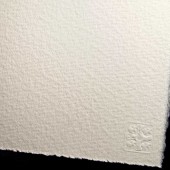
Saunders Waterford Paper
Starting at: £40.06
Saunders Waterford paper is a mould-made,100% cotton paper for watercolour painting with two deckle edges. Acid-free, gelatine tub-sized and calcium carbonate buffered.
Mail-order customers are able to buy this paper in packs of 10 sheets. Single sheets are also available in our shop.
Learn More -
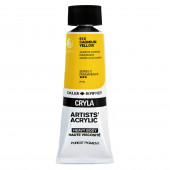
Daler-Rowney Cryla 75ml
Starting at: £9.05
Cryla Artists' Heavy Body colours are designed to retain the intended stroke when applied with a knife or brush, so they are ideal for highly textured impasto painting techniques. Learn More -
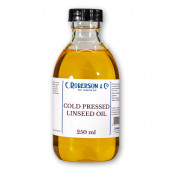
Roberson Cold Pressed Linseed Oil
Starting at: £7.50
Linseed Oil is derived from flax seeds, and appears on our shelves in many guises: Cold Pressed, Refined, Stand Oil, and as a key ingredient in many mediums. It has been appreciated for its drying properties since the Medieval period, and has become the most popular oil used in painting today due to the strong, flexible and glossy film that it creates. Cold Pressed Linseed Oil is ideal for the grinding of pigment to make oil paints. The process of producing Cold Pressed Linseed Oil results in a lower yield, but the resultant oil is of a superior quality to oil that has been extracted by other methods, creating a paint film that is more resistant to embrittlement on aging. Its yellow colour is caused by the high concentration of linolenic acid, the presence of which provides durability to the paint film. The amount of oil that each pigment requires can vary enormously. Alizarin Crimson, for example, requires a high percentage of oil compared to most other colours. We would always recommend mulling the pigment and oil together thoroughly to create a "short" or buttery paste, with evenly dispersed, well-coated pigment particles. This process contributes to the strength and flexibility of the paint film, and prevents the inclusion of excess oil. Origin: USA Learn More -
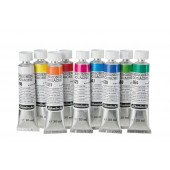
Schmincke Horadam Gouache
Starting at: £8.75
Finest quality gouache paints, available in 48 shades, all of which are fully inter-mixable with the HORADAM® WATERCOLOUR range. Made following a traditional gum arabic recipe, they are naturally opaque, without the addition of white. They provide a luminous, velvet-matte finish, drying to a slightly lighter shade than when wet.
Schmincke recommends the following:
"The application possibilities of HORADAM® GOUACHE are extremely versatile. Although it can be heavily diluted, gouache is mainly intended to provide opaque application of colour. Opaque, in this case, means that it is not impasto, because impasto application tends to produce cracking, unless the percentage of binder is increased by adding gum arabic (50302). While watercolour painting work goes from light to dark (the white paper is the light), in gouache painting, any process can be used. While “back painting” of lights is limited in watercolour painting, when working in gouache (and other opaque colours), light values and lights can be added later using colours."
Learn More -
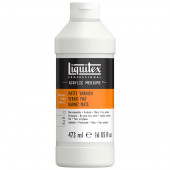
Liquitex Acrylic Varnish Matt
Starting at: £20.40
Use as varnish over finished paintings. Learn More -
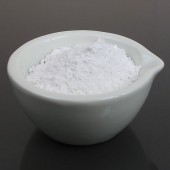
Precipitate Chalk
Starting at: £6.30
Precipitate Chalk is fine and white. For use in aqueous mediums as a ground for oil and tempera paintings. Learn More -
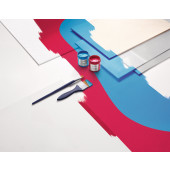
Lefranc Flashe 125 ml
Starting at: £13.95
Flash vinyl colours, like resin-based acrylic paints, can be diluted with water, dry very quickly and become insoluble once dry providing lasting flexibility and excellent preservation. They have an even matt finish which recalls primitive Italian fresco painting. This makes Flashe the ideal medium for all artworks to be photographed. Also popular for illustration, graphics, comics, model making, fresco and interior mural decoration. Learn More -
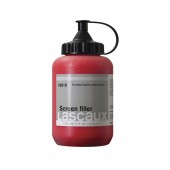
Lascaux Screen Filler 500ml
£47.70The Lascaux Screen filler and Lascaux Screen painting fluid may be used for painting directly on the mesh as part of a waterbased screenprinting system. These products work harmoniously with Lascaux Screenprinting paste and the Lascaux Colours. Learn More -
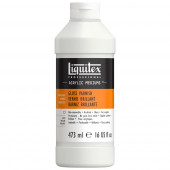
Liquitex Acrylic Varnish Gloss
Starting at: £20.40
Increases colour brilliance and transparency. Promotes flow and levelling. Use as varnish over varnished painting to add gloss and depth of colour. Non removable. Learn More -
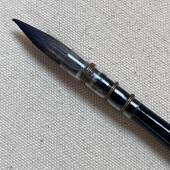
da Vinci Series 498 Casaneo Synthetic Watercolour brush, round
Starting at: £15.00
CASANEO Wash brush - Made from extra soft synthetic fibres with an extraordinary elasticity and an extremely high colour absorbing capacity - Manufactured in plastic quills - Bound on black lacquered handles - Ideal for watercolour painting and liquid acrylic colours - Extremely high colour absorbing capacity - Extraordinary elasticity Learn More -
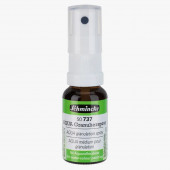
Schmincke Aqua Granulation Spray 15 ml
£8.20Create effects similar to granulation effects in watercolours, with an even paint flow. Learn More -
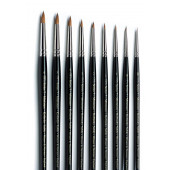
Winsor & Newton Series 7 Miniature
Starting at: £24.80
Extra short haired brushes for miniature painting. Kolinsky sable. Learn More
-
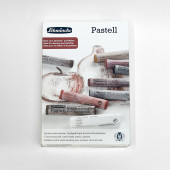
Schmincke Drawing Set, 9 Pastels and Pad
£39.00Schmincke Cardboard Set of 9 Hand-Made Artists' Pastels with Ingres Pastel Paper. Learn More -
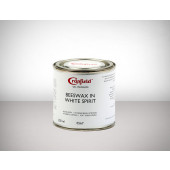
Cranfield (Spectrum) Beeswax in White Spirit
Starting at: £18.55
From the Cranfield website:
A pereparation of pure beeswax in white spirit, this is used to achieve a soft sheen on your finished painting. It will retard drying, allowing you to achieve a range of effects.
Learn More -
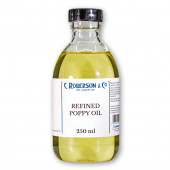
Roberson Poppy Oil
Starting at: £10.20
Poppy Oil is a slightly later addition to the artist's cabinet than Linseed Oil and Walnut Oil. It is generally used as a binder for pale colours, where the warmth of Linseed Oil is not desired. It provides a matte finish and dries very slowly, so we would not advise using it in conjunction with slow-drying pigments or in underpaintings. A paint film produced by Poppy Oil is weaker and softer than that created by Linseed Oil. This is because it contains a smaller percentage of linolenic acid than Linseed Oil; this substance imparts both strength and yellowness to an oil.
Although some of these properties can be perceived as drawbacks, paints made with Poppy Oil generally obtain a "short" or buttery texture without the addition of waxes or other additives, which can be an advantage for certain colours that produce poor consistencies in Linseed oil alone. Sometimes, the addition of a small quantity of Poppy Oil when grinding a tricky or "stringy" pigment in Cold Pressed Linseed Oil can introduce some of benefits of Poppy Oil, without transmitting its negative characteristics.
Paints made with Poppy Oil are particularly suited to "alla prima" working methods, where paint is applied spontaneously. When working in successive layers, Poppy Oil would only be appropriate for the final stages of a painting.
Learn More -
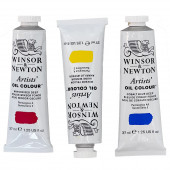
Winsor & Newton Artists' Oil Colour 37 ml
Starting at: £10.15
This long established artists' quality oil colour range of 113 colours is well known for its firm consistency and excellent handling properties. Learn More -
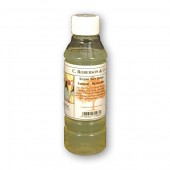
Studio Safe Retouching Damar Varnish
Starting at: £15.20
Studio Safe Retouching Damar Varnish. Use where dull or sunken areas of a painting need lifting. Learn More -
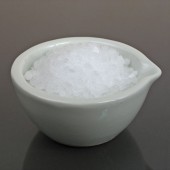
Paraffin Wax
Starting at: £6.60
Paraffin Wax is a by-product of the petro-chemical industry. It has a low melting point of 50-60°c and a brittle texture, making it unsuitable for encaustic painting or as an additive to oil paints, but it can be used to impart softness to lithographic crayons. As a petroleum product, it is more inert than animal or vegetable waxes, and is therefore not saponified (turned into soap) by alkali substances. Learn More -
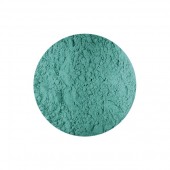
Verdigris Pigment
Starting at: £4.90
Verdigris is an artificial pigment that dates from antiquity. Originally, it was produced by exposing copper to vinegar; nowadays acetic acid is used. It is acidic, so can contribute to the deterioration of paper supports. For this reason, it is more suited to oil or tempera painting than it is to watercolour. In tempera painting, it should be bound in animal glue or isinglass glue rather than egg york. When used in oil painting it should be held in a resin oil or balsam such as Venice Turpentine, as it can turn brown when ground directly into linseed oil. It is a fast-drying, transparent pigment, with a visible crystalline structure.
Larger quantities are available by request.
Learn More -
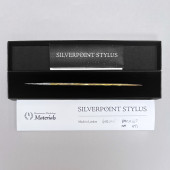
Silverpoint Stylus, Garzone. Renaissance Workshop Materials
£130.00Length 160 mm. For use on prepared paper. Hand-forged in London from silver bullion. Renaissance Workshop Materials are historically authentic drawing materials and tools, which would be recognisable to the artists of Renaissance Europe. Each product is made in the workshop by hand, using historical methods. Each product is borne from the same historical, European craft tradition, as the drawings and artworks from the Renaissance. In the words of the artisan maker, 'We make these materials in order to experience the historical craft and method of drawing in the most authentic way possible.' Learn More -
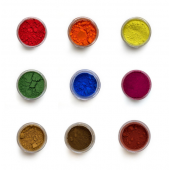
-
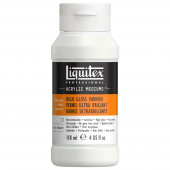
Liquitex Acrylic Varnish High Gloss
Starting at: £46.45
Use as varnish over finished paintings. Learn More -
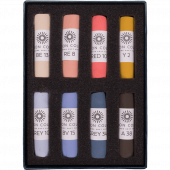
Unison 8 Portrait Assorted Pastels
£45.60The Unison classic Portrait 8 set, specially selected by John Hersey for portrait painting. Unison Colour Soft pastels allow for ease of use with a highly blendable texture.
Learn More -
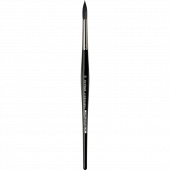
da Vinci Series 5598 CASANEO Watercolour brush, round
Starting at: £6.60
CASANEO water colour brush round - Made from extra soft synthetic fibres with an extraordinary elasticity and an extremely high colour absorbing capacity - Short black polished handles - For watercolour, reverse glass and silk painting, design, graphic and retouching - Extraordinary elasticity and extremely high colour absorption capacity - Particularly suitable for watercolour and fluid acrylic colour Learn More -
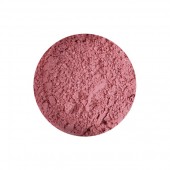
Rose Madder Genuine Pigment
Starting at: £15.80
NR9 Rose Madder is an alizarin lake pigment made by precipitating dye extracted from madder root onto an inert base. It has largely been replaced by synthetic alizarin pigments, but it is still used as an ingredient in some commercially-available paints. It provides a very transparent pigment, with a weak tinting strength, which can be used in all lime-free media, although it is very slow-drying in oil. It is fugitive to sunlight, so paintings containing Madder should be stored appropriately, but it remains one of the most lightfast plant-based pigments. It requires a wetting agent to aid dispersion. Larger quantities are available by request Learn More -
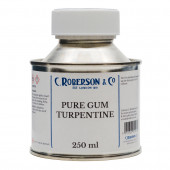
Roberson Pure Gum Turpentine
Starting at: £14.00
Slightly less refined than rectified spirit of turpentine. Often preferred as constituent of painting mediums. Learn More -
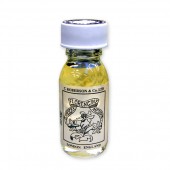
Roberson Florentine Medium
Starting at: £10.80
When Roberson Florentine Medium is mixed with oil colour, it is possible to paint freely on textile fabrics, which will stand up to subsequent hand-washing with soap and water. It may also be used when painting with oils on unprepared paper. Learn More -
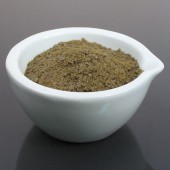
Carnauba Wax Grey
Starting at: £8.40
Carnauba Wax is the hardest wax commonly used in the production of artists' materials, with a melting point of 83-86°c. It is derived from a tree native to South America, and is available in a natural colour (grey), or a refined colour (pale yellow). Small amounts of carnauba wax are commonly used in both oil painting mediums and encaustic painting, usually in conjunction with beeswax to add toughness, durability and sheen to the paint film. It creates an inflexible surface, so works best on rigid supports such as gesso panels, and it should be noted that it will raise the melting point of encaustic mixtures. It can produce a glossy finish; as such it is used in waxes and polishes for shoes, cars, musical instruments, furniture, and wooden floors, especially when mixed with beeswax and turpentine. Learn More -
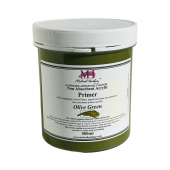
Michael Harding Non Absorbent Acrylic Primer - Colours
Starting at: £21.20
Michael Harding Non-Absorbent Acrylic Primer (NAAP) is a versatile product suitable for application on various surfaces, including linen, wood, MDF, and more. It is designed to create a robust, flexible, permanent, and intensely pigmented ground, making it an excellent choice for both acrylic and oil paints. Important Application Guidelines: Support Selection: NAAP should not be applied over surfaces treated with rabbit skin/hide glue or on unsound, flimsy supports such as cardboard. Opt for stable substrates to ensure the primer’s effectiveness. Not a Gesso: Please note that NAAP is a primer, not a gesso. As such, there is no need for additional gessoes, sizes, or other ancillary products when using NAAP. DIRECTIONS: Coat Application: Apply a minimum of two coats of NAAP to your chosen support, ensuring liberal coverage for optimal results. Dilution for Flow: If you desire increased flow, dilute NAAP with a mixture of 1 part water to 4 parts NAAP. This adjustment allows for customization based on your artistic preferences. Second Coat Application: Apply the second coat once the first coat is touch dry, typically after approximately 1 hour. This step contributes to the creation of a well-prepared painting surface. Additional Considerations: Suitable Supports: Do not use Michael Harding Non-Absorbent Acrylic Primer on flimsy or unsound supports. It is crucial to choose a stable and well-prepared surface for priming to ensure the longevity and integrity of your artwork. Canvas Weave Consideration: Avoid using this primer on canvases with a wide weave. The non-absorbent nature of the primer may not be suitable for canvases with a loose or open structure, compromising its effectiveness. Transparency Check: Before application, inspect your canvas material by holding it up to the light. If you can see light passing through the wefts (threads) of the canvas, it is not recommended to use Michael Harding Non-Absorbent Acrylic Primer. Opt for a more appropriate primer based on the transparency of your canvas. Learn More -
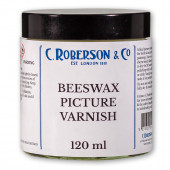
Roberson Beeswax Picture Varnish
Starting at: £10.20
A final picture varnish suitable for both oil and acrylic paintings. unable to send overseas. Learn More
Shopping Options
- Category
-
- Pigments Gums & Resins (39)
- Oils & Acrylics (63)
- Canvas & Supports (7)
- Watercolour Gouache & Egg Tempera (15)
- Pastels (6)
- Drawing & Calligraphy (12)
- Gilding & Restoration Materials (7)
- Printmaking (3)
- Brushes (49)
- Paper (7)
- Studio & Books (13)
- Specialist Decorating (3)
- Price
-
- £0.00 - £999.99 (196)
- £1,000.00 and above (1)
- Manufacturer
-
- Arches Aquarelle (1)
- ArtGraf (3)
- Bockingford (1)
- Cornelissen (55)
- Cranfield (2)
- Da Vinci (22)
- Daler-Rowney (3)
- Daniel Smith (4)
- Gamblin (6)
- Hahnemuhle (2)
- Khadi (2)
- Lascaux (3)
- Lefranc et Bourgeois (3)
- Liquitex (5)
- London Pigment (1)
- Maimeri (1)
- Michael Harding (3)
- Omega (8)
- Renaissance Workshop Materials (1)
- Roberson (29)
- Saunders Waterford (1)
- Schmincke (23)
- Winsor&Newton (8)
- Talens (3)
- Sennelier (1)
You have no items in your shopping basket.

- Search Brands
-