

Search results for 'en til for'


-
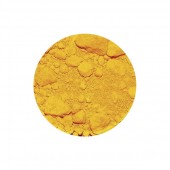
Cadmium Yellow Middle Pigment
Starting at: £6.30
Cadmium Yellow Middle Pigment (PY37). Synthetic Inorganic pigment. Opaque. Good tinting strength. Excellent Lightfastness. Low oil absorption with slow drying rate. Suitable for all media. Good acid and alkali resist. Exterior application not advised as discoloration occurs. Used since 19th Century. Toxicity B/C. Learn More -
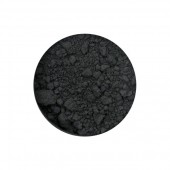
Lamp Black Pigment
Starting at: £6.70
PBk 6
Lamp Black is an inorganic, synthetic, pure carbon pigment. Originally made from soot collected from oil lamps and fireplaces, its modern equivalent is derived from partly combusted mineral and vegetable oil. It is a cool, transparent, bluish black, with a good tinting strength, and stable in all media. It requires a wetting agent, and in oil it has a very high absorption drying very slowly.
Larger quantities are available by request.
Learn More -
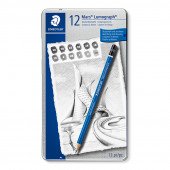
STAEDTLER Mars Lumograph Pencil Set of 12 in Tin Box
£24.65This tin of STAEDTLER Mars Lumograph pencils holds a collection of premium-quality pencils that are perfect for writing, drawing and sketching on paper and on matt drafting film. The pencils have a special lead formulation that produces great results with a metallic lustre in a wide variety of grey tones.
Learn More -
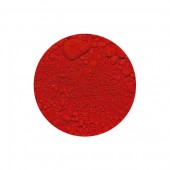
Vermilion Imitation Pigment
Starting at: £8.20
Vermilion Imitation Pigment (PR4, PY1, PW21). Organic pigment. Mixture of Studio Red, Hansa Yellow (Azo) and Blanc Fixe. Semi-transparent. Good tinting strength. Good Lightfastness, but prone to fading when mixed strongly with white . Slow drying rate. Requires wetting agent. Suitable for all media. Used since early 20th Century. Toxicity A. Learn More -
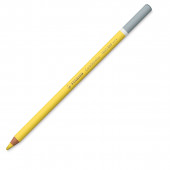
STABILO CarbOthello Pastel Pencils
Starting at: £2.05
STABILO CarbOthello is a chalk pastel coloured pencil range available in up to 60 colours. With its wonderfully dry and dusty stroke it is just like a chalk pastel in pencil format. It's very popular with artists, art students and people with creative hobbies. Its high pigmentation guarantees great luminosity and opacity as well as colour fastness and colour brilliance especially on dark backgrounds and delicate papers. What's more it can be sharpened to a very fine tip which make it ideal for detail. Colours can be dry mixed and blended which makes colouring more fun and special.
Learn More -
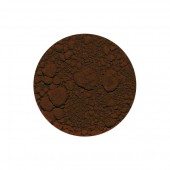
Mars Violet Pigment
Starting at: £4.50
PR101
Mars Violet is an artificial mineral pigment. Its pigment code, PR101, refers to a wide spectrum of synthetic iron oxide pigments including yellows, oranges, reds, violet-browns and green-browns, which replace many natural earth colours, to provide pigments without impurities and with great opacity. It has a good tinting strength, is lightfast and stable in all media, and has a medium drying time in oil. Although it is similar to Caput Mortuum and Indian Red, it is less transparent than the former and warmer than the latter.
Toxicity: B
Limeproof
Learn More -
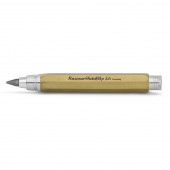
Kaweco Clutch Pencils, 5.6mm Lead
Starting at: £5.00
Kaweco Sketch Ups are solid, chunky clutch pencils made of octagonal, solid, untreated CNC-machined brass, also available with satin or chrome plating. It will age and develop its own unique patina over time unless polished. A push button on the top is used to advance or retract the 5.6mm lead. The push button also unscrews to reveal a lead sharpener inside. The Kaweco Sketch Up comes in a nostalgic Kaweco gift tin. Learn More -
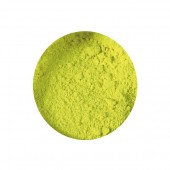
Cadmium Yellow Lemon Pigment
Starting at: £4.50
Synthetic Inorganic pigment. Opaque. Good tinting strength. Excellent Lightfastness. Low oil absorption with slow drying rate. Suitable for all media. Good acid and alkali resist. Exterior application not advised as discoloration occurs. Used since 19th Century. Toxicity B/C
Learn More -
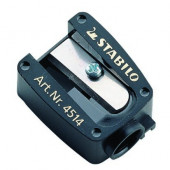
STABILO CarbOthello Pencil Sharpener
£2.95The Stabilo CarbOthello Sharpener is a short cone sharpener with special blade especially designed for high quality coloured pencils like the Stabilo CarbOthello. The special blade will make sure that your pencil is correctly sharpened and won't split the chalk lead.
Learn More -
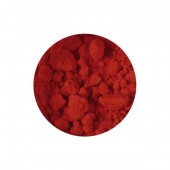
Cadmium Red Pigment
Starting at: £8.40
PR108
Cadmium Red is a synthetic organic pigment, which has been in use since the 1920s, effectively replacing vermilion. It is formed by heating cadmium sulphide and selenium, the hue is determined by the level of calcination and proportion of selenium. It is very opaque, and lightfast, with a high tinting strength. It absorbs a small amount of oil, and dries very slowly to form a hard, flexible paint film.
Larger quantities are available by request.
Limeproof
Toxicity: C
Learn More -
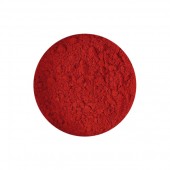
Quinacridone Scarlet Pigment
Starting at: £6.30
Quinacridone Scarlet Pigment (PR209). Organic pigment. Very transparent. High tinting strength. Excellent Lightfastness. High oil absorption with slow drying rate. Requires wetting agent. Suitable for all media. Developed in the 1950's. Toxicity A/B. Learn More -
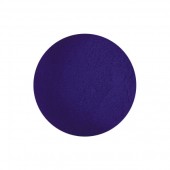
Prussian Blue Pigment
Starting at: £5.20
PB27
Prussian Blue is a synthetic organic pigment that was discovered by the paint maker Diesbach, apparently by accident, in Germany in the early eighteenth century. For many years, it was used not only as a colour in its own right, but also as a component of the original Hooker's Green. The other ingredient, gamboge, is highly fugitive, which is why many watercolours painted with Hooker's green have taken on a bluish tone with with age.
It is a very transparent and heavily staining colour. It dries quite quickly in oil, and can therefore wrinkly if applied too quickly. It is suitable for use in oils, watercolour, and egg tempera. However, it shouldn't be used in conjunction with alkali substances, such as Lead White or Calcium Carbonate as it can turn brown, so it isn't suitable for fresco. For the same reason, it isn't used with acrylic resin binders due to their alkaline nature, so most paint manufacturers will replace Prussian Blue with a mixture of Phthalo Blue and black in their acrylic ranges. It requires a wetting agent to fully disperse into a binder.
Toxicity: B
Learn More -
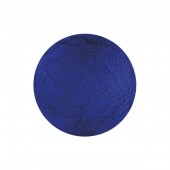
Blue Verditer Pigment
Starting at: £7.50
** While stocks last ** Blue Verditer, sometimes referred to as Bremen Blue, is a synthetic form of Azurite, or copper-calcium carbonate. It has a weak tinting strength and is sligtly transparent. It works best in water-based binders, as the acidity of linseed oil can cause discolouration.
Learn More
Larger sizes available on request -
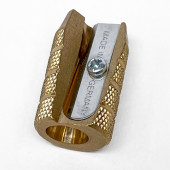
Möbius & Ruppert Brass Grenade Sharpener
£4.30Unusual cylinder-shaped single brass sharpener 7.8mm diameter. Precision milled sides for good grip. Learn More -
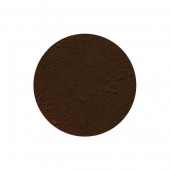
Indian Red Pigment
Starting at: £4.60
PR101
Indian Red was imported into the UK during the nineteenth century, its present-day equivalent is a synthetic iron oxide. Its pigment code, PR101, refers to a wide spectrum of synthetic iron oxide pigments including yellows, oranges, reds, violet-browns and green-browns; Indian Red is a slightly cool, bluish shade of red. It is semi-opaque, stable in all media, lightfast, and possesses a good tinting strength
Toxicity: B
Limeproof
Learn More -
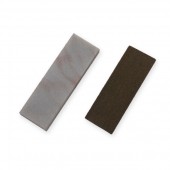
Sharpening Stones
Starting at: £14.05
Professional sharpening stones used to hone each blade's cutting power on a variety of different printmaking tools. The Slip Stone is coarse whilst the Arkansas Stone has a very finely abrasive surface, perfect for carefully restoring a dull cutting instrument to its former brightness. These stones can be used to best advantage with a little honing oil. Learn More -
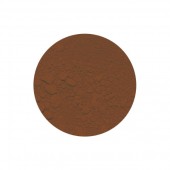
Cadmium Brown Pigment
Starting at: £10.00
PR108
Cadmium Brown is a shade of Cadmium Red, a synthetic organic pigment that has been in use since the 1920s. It is formed by heating cadmium sulphide and selenium, the hue is determined by the level of calcination and proportion of selenium. It is very opaque, and lightfast, with a high tinting strength. It absorbs a small amount of oil, and dries very slowly to form a hard, flexible paint film.
Larger quantities are available by request.
Limeproof
Toxicity: C
Learn More -
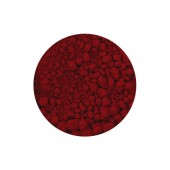
Carmine Red Genuine Pigment
Starting at: £10.00
NR4
Carmine has been used as a dye and pigment since antiquity. Originally derived from the kermes insect, it was replaced by cochineal following the discovery of the Americas. It has a good tinting strength and is very transparent, although it is fugitive to light.
Larger quantities are available by request.
Learn More -
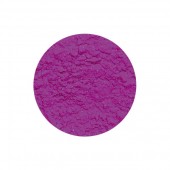
Cobalt Violet Light Pigment
Starting at: £10.00
Cobalt Violet Light Pigment (PV14). Synthetic inorganic pigment. Semi-opaque. Weak tinting strength. Excellent Lightfastness. Fast drying rate. Good for oil and watercolour but not acrylic as pigment 'settles out'. Used since early 1900's. This colour cannot be matched through mixing other colours.
Limeproof
Toxicity: C
Please note, unfortunately we are not able to send this product outside the UK.
Learn More -
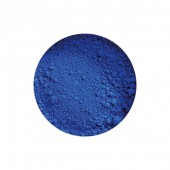
Azure Blue Pigment
Starting at: £12.00
Azure Blue Pigment (PB28). Inorganic pigment made from various aluminium, zinc and cobalt compounds. Semi-opaque. Weak tinting strength. Excellent Lightfastness.
Toxicity: C
Limeproof
Learn More -
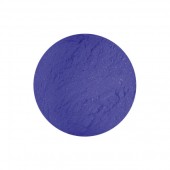
Smalt Dark Pigment
Starting at: £5.30
PB32
Smalt is a kind of cobalt blue glass or frit, and its use as a pigment dates from the 1600s in the glass-making regions of Saxony. We offer two shades, light and dark, which are determined by the particle size of the pigment; the more finely ground the powder, the paler the colour. Before the introduction of Ultramarine Blue, Smalt was available in a wide variety of grades. It is a very transparent pigment, which is easily overwhelmed in mixtures due to its weak tinting strength. It works best in water based media. When ground in oil, it can become almost invisible in dried oil-paint films because its refractive index is so close to that of linseed oil.
Larger quantities are available by request.
Learn More -
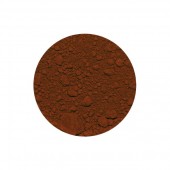
Red Ochre Pigment
Starting at: £4.00
PR101
Red Ochre is a synthetic iron oxide pigment which provides the same level of semi-opacity that is associated with natural ochres. It has a good tinting strength and is stable in all media, including lime mortar.
Toxicity B
Learn More -
-
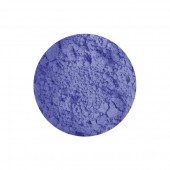
Cerulean Blue Pigment
Starting at: £14.50
PB35
Cerulean Blue is an artificial mineral pigment that is prepared by heating a mixture of Cobalt Chloride and Potassium Stannate. It was first synthesised in the early nineteenth century, becoming more widely used from 1870, when Rowney introduced Coeruleum Blue into their range. It produces a very bright, clear, and unusually opaque blue, hence its name, which is derived from the Latin for "sky-blue", or perhaps "heaven-blue". It has a very low tinting strength meaning that, although it is stable in all media, some artists may choose to bind it in poppy rather than linseed oil, so that the colour isn't affected by the colour of the binder. It creates a fairly flexible paint film, and is a fast-to-medium drying pigment.
Limeproof
Toxicity: B
Learn More -
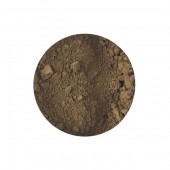
Burnt Umber Pigment
Starting at: £4.00
PBr7
Burnt Umber is a natural earth pigment from Italy, composed of iron oxide, manganese, and aluminium silicate. It is a form of Raw Umber that a has undergone a process of calcination, becoming warmer, more transparent and easier to disperse. It has a good tinting strength, and is very lightfast, quick-drying, and stable in all media. In oils it forms a hard, fairly flexible paint film, though it may be difficult to use in acrylic mediums.
Toxicity: B
Learn More -
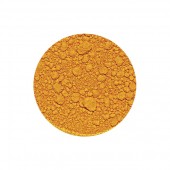
Cadmium Yellow Deep Pigment
Starting at: £7.40
Cadmium Yellow Deep Pigment (PY37). Synthetic Inorganic pigment. Opaque. Good tinting strength. Excellent Lightfastness. Low oil absorption with slow drying rate. Suitable for all media. Good acid and alkali resist. Exterior application not advised as discoloration occurs. Used since 19th Century. Toxicity B/C. Learn More -
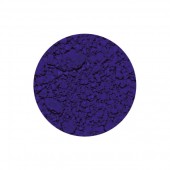
Ultramarine Blue Limewash Pigment
Starting at: £7.50
PB29
Ultramarine Blue Limewash is an artificial mineral pigment that is produced by heating clay, soda, sulphur and coal to high temperatures. Its name comes from outremer, or over-the-sea, as a reference to the highly-prized Lapis Lazuli pigment which had been imported into Europe from Afghanistan since the Middle Ages. First manufactured in France and Germany in 1828, synthetic Ultramarine provided a brilliant and affordable blue to artists, and it remains one of the most popular blues on artists' palettes today.
It is a transparent pigment, with a high tinting strength and excellent lightfastness. Most Ultramarine colours react to alkali and are therefore unsuitable for use in lime-fresco; Limeproof Ultramarine Blue remedies this problem. It is stable in all other media, although it can be tricky to grind in oil. Instead of creating a thick, buttery paste, it can remain stringy and deteriorate when stored in a tube. To correct this, many commercial paint manufacturers include additives and waxes in their recipes; if you intend on grinding your own paint, you could try replacing 10-15% of your Linseed Oil with Poppy Oil to improve the consistency. Ultramine Blue provides a slow-drying, fairly hard paint film, which can tend towards brittleness.
Toxicity: B
Learn More -
-
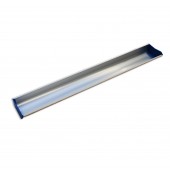
Aluminium Coating Trough 18" with ends
£31.00Coating Trough, used to coat screens with Photographic Emulsion. Shaped to allow the weight of the coating trough to be supported by the thumb, the palm and all four fingers for a steady and even coat. Features a dual sided coating edge for either a sharp edge thin coat for higher mesh counts, or a rounded dull edge for coating lower mesh count screens. Learn More -
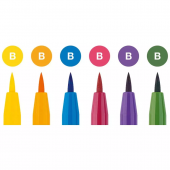
Faber-Castell Brush Pen Basic Set
£21.95Flexible brush tip. Extremely fade resistant colours made with pigmented drawing ink. Waterproof and PH neutral. Cadmium yellow, Chrome Yellow Deep, Phthalo Blue, Carmine, Violet, Olive Green. Learn More
Shopping Options
- Category
-
- Pigments, Gums, Resins (189)
- Oils, Acrylics (192)
- Canvas, Supports (22)
- Watercolour, Gouache, Egg Tempera (91)
- Pastels (62)
- Drawing, Calligraphy (256)
- Gilding, Restoration (128)
- Printmaking (145)
- Brushes (75)
- Paper (40)
- Studio, Books (104)
- Signwriting, Specialist Decorating (32)
- Gift Vouchers (1)
- Price
-
- £0.00 - £999.99 (1150)
- £1,000.00 - £1,999.99 (2)
- £2,000.00 - £2,999.99 (3)
- £3,000.00 - £3,999.99 (1)
- £4,000.00 and above (1)
- Manufacturer
-
- Arches Aquarelle (1)
- ArtGraf (23)
- Automatic Pens (3)
- Brause (7)
- Canson (1)
- Charbonnel (18)
- Cornelissen (389)
- Cranfield (5)
- Creta (6)
- Da Vinci (21)
- Daler-Rowney (14)
- Daniel Smith (9)
- Daylight (1)
- e+m (11)
- Ecobra (1)
- Faber-Castell (19)
- Fabriano (10)
- Gamblin (16)
- Gillot (7)
- Golden (6)
- Hahnemuhle (2)
- Kölner (4)
- Korns (2)
- Lascaux (21)
- Lefranc et Bourgeois (5)
- Leonardt (3)
- Liquitex (12)
- London Pigment (13)
- Maimeri (6)
- Michael Harding (19)
- Milliput (1)
- Mitchell (17)
- Omega (4)
- Pelikan (4)
- Pentel (3)
- Pfeil (5)
- Pilot (8)
- Pro Arte (4)
- Rembrandt (1)
- Renaissance Workshop Materials (7)
- Roberson (98)
- Rohrer and Klingner (20)
- Schmincke (109)
- Sinopia (1)
- Somerset (2)
- Spectrum (3)
- Stabilo (7)
- Staedtler (9)
- Unison (8)
- Winsor&Newton (41)
- Factis (1)
- Swann Morton (6)
- Talens (5)
- Sennelier (38)
- Rotring (1)
- Color
You have no items in your shopping basket.

- Search Brands
-