Your search 'china red pigment' did not match any products.
Showing results using some of your search terms 'china red pigment'
Search results for 'red pigment'
-
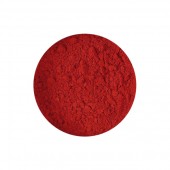
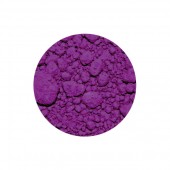
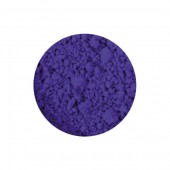
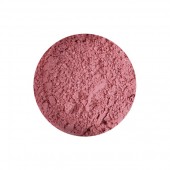
Mars Violet Pigment
Starting at: £4.50
PR101
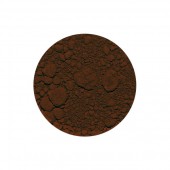
Mars Violet is an artificial mineral pigment. Its pigment code, PR101, refers to a wide spectrum of synthetic iron oxide pigments including yellows, oranges, reds, violet-browns and green-browns, which replace many natural earth colours, to provide pigments without impurities and with great opacity. It has a good tinting strength, is lightfast and stable in all media, and has a medium drying time in oil. Although it is similar to Caput Mortuum and Indian Red, it is less transparent than the former and warmer than the latter.
Toxicity: B
Limeproof
Learn More -
Quinacridone Scarlet Pigment
Starting at: £6.30
Quinacridone Scarlet Pigment (PR209). Organic pigment. Very transparent. High tinting strength. Excellent Lightfastness. High oil absorption with slow drying rate. Requires wetting agent. Suitable for all media. Developed in the 1950's. Toxicity A/B. Learn More -
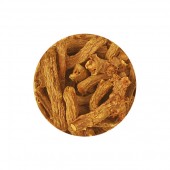
Madder Root Pieces
Starting at: £27.80
NR9
The madder plant was once widely cultivated for the red dye extracted from its roots. Its earliest known use is in ancient Egypt, and there is evidence of its widespread adoption in Europe from the medieval period. Madder Lake, the pigment that is derived from the root, has now largely been replaced by synthetic alizarin pigments, but it is still used as an ingredient in some commercial paints. It provides a very transparent pigment, with a weak tinting strength, which can be used in all lime-free media, although it is very slow-drying in oil. It is fugitive to sunlight, so paintings containing Madder should be stored appropriately, but it remains one of the most lightfast plant-based pigments.
Larger quantities are available by request.
Learn More -
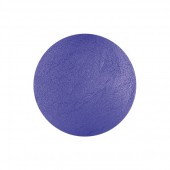
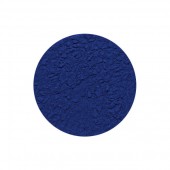
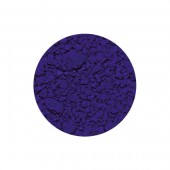
Ultramarine PB29 Pigment
Starting at: £9.10
PB29
Ultramarine Blue is an artificial mineral pigment that is produced by heating clay, soda, sulphur and coal to high temperatures. Its name comes from outremer, or over-the-sea, as a reference to the highly-prized Lapis Lazuli pigment which had been imported into Europe from Afghanistan since the Middle Ages. First manufactured in France and Germany in 1828, synthetic Ultramarine provided a brilliant and affordable blue to artists, and it remains one of the most popular blues on artists' palettes today.
It is a transparent pigment, with a high tinting strength and excellent lightfastness. It reacts to alkali, therefore it is not suitable for use in lime-fresco; we do offer a Limeproof Ultramarine Blue for this purpose. It is stable in all other media, although it can be tricky to grind in oil. Instead of creating a thick, buttery paste, it can remain stringy and deteriorate when stored in a tube. To correct this, many commercial paint manufacturers include additives and waxes in their recipes; if you intend on grinding your own paint, you could try replacing 10-15% of your Linseed Oil with Poppy Oil to improve the consistency. Ultramine Blue provides a slow-drying, fairly hard paint film, which can tend towards brittleness.
Toxicity: B/C
Learn More -
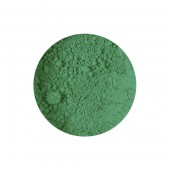
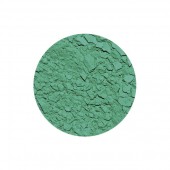
Cobalt Green Deep Pigment
Starting at: £9.20
PG19
Cobalt Green is a synthetic pigment that consists of compounds of cobalt and zinc oxides. It is sometimes referred to as Rinman's Green, after the Swedish chemist who discovered it in the late-18th century. It is a permanent, opaque colour, with a weak tinting strength. It dries quite quickly in oil, requiring a high oil content and forming a hard, fairly fleixible paint film. Cobalt Green is available in light and dark shades; the colour is determined by the amount of zinc oxide present.
Toxicity: B
Please note, unfortunately we are not able to send this product outside the UK.
Learn More -
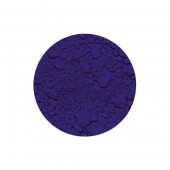
Manganese Violet Pigment
Starting at: £8.50
PV16
Manganese Violet is a synthetic organic pigment, discovered in Germany in 1868 and formed by combining manganese chloride, phosphoric acid and ammonium carbonate. It is very lightfast, but sensitive to alkalis and oils. It is semi-opaque and fast-drying, with a low tinting strength and low absorption of oil.
Toxicity: C
Learn More -
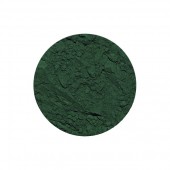
Viridian Green Pigment
Starting at: £6.50
Viridian Green is a synthetic inorganic pigment, similar in composition to Chromium Oxide. However, unlike Chromium Oxide, Viridian contains water molecules within its crystal structure, imparting a greater degree of transparency. Sometimes referred to as Verte Eméraude, Viridian was discovered in France in 1838, patented in 1859, and made available in the UK in 1862. It is stable in all media, and offers excellent lightfastness and good tinting strength. It requires a high oil content, and dries slowly to form a hard, fairly flexible paint film.
Toxicity B
Learn More -
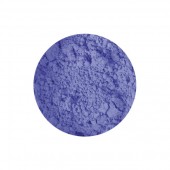
Ultramarine Blue Light Pigment
Starting at: £6.00
PB29
Ultramarine Blue Light is an artificial mineral pigment that is produced by heating clay, soda, sulphur and coal to high temperatures. Its name comes from outremer, or over-the-sea, as a reference to the highly-prized Lapis Lazuli pigment which had been imported into Europe from Afghanistan since the Middle Ages. First manufactured in France and Germany in 1828, synthetic Ultramarine provided a brilliant and affordable blue to artists, and it remains one of the most popular blues on artists' palettes today.
It is a transparent pigment, with a high tinting strength and excellent lightfastness. It reacts to alkali, therefore it is not suitable for use in lime-fresco; we do offer a Limeproof Ultramarine Blue for this purpose. It is stable in all other media, although it can be tricky to grind in oil. Instead of creating a thick, buttery paste, it can remain stringy and deteriorate when stored in a tube. To correct this, many commercial paint manufacturers include additives and waxes in their recipes; if you intend on grinding your own paint, you could try replacing 10-15% of your Linseed Oil with Poppy Oil to improve the consistency. Ultramine Blue provides a slow-drying, fairly hard paint film, which can tend towards brittleness.
Toxicity B
Learn More -
Madder Lake Genuine Pigment
Starting at: £10.20
NR9
Madder Lake pigment is derived from dye that has been extracted from the root of the madder plant, and attached to alum as a base. It has largely been replaced by synthetic alizarin pigments, but it is still used as an ingredient in some commercially-available paints. It provides a very transparent pigment, with a weak tinting strength, which can be used in all lime-free media, although it is very slow-drying in oil. It is fugitive to sunlight, so paintings containing Madder should be stored appropriately, but it remains one of the most lightfast plant-based pigments. It requires a wetting agent to aid dispersion.
Larger quantities are available by request
Learn More -
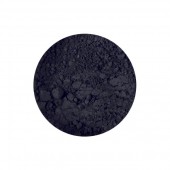
Ultramarine Blue Dark Pigment
Starting at: £4.00
PB29
Ultramarine Blue Dark is an artificial mineral pigment that is produced by heating clay, soda, sulphur and coal to high temperatures. Its name comes from outremer, or over-the-sea, as a reference to the highly-prized Lapis Lazuli pigment which had been imported into Europe from Afghanistan since the Middle Ages. First manufactured in France and Germany in 1828, synthetic Ultramarine provided a brilliant and affordable blue to artists, and it remains one of the most popular blues on artists' palettes today.
It is a transparent pigment, with a high tinting strength and excellent lightfastness. It reacts to alkali, therefore it is not suitable for use in lime-fresco; we do offer a Limeproof Ultramarine Blue for this purpose. It is stable in all other media, although it can be tricky to grind in oil. Instead of creating a thick, buttery paste, it can remain stringy and deteriorate when stored in a tube. To correct this, many commercial paint manufacturers include additives and waxes in their recipes; if you intend on grinding your own paint, you could try replacing 10-15% of your Linseed Oil with Poppy Oil to improve the consistency. Ultramine Blue provides a slow-drying, fairly hard paint film, which can tend towards brittleness.
Toxicity: B
Learn More -
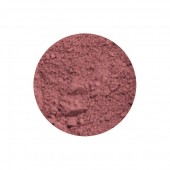
Rose Madder Genuine Pigment
Starting at: £15.80
NR9 Rose Madder is an alizarin lake pigment made by precipitating dye extracted from madder root onto an inert base. It has largely been replaced by synthetic alizarin pigments, but it is still used as an ingredient in some commercially-available paints. It provides a very transparent pigment, with a weak tinting strength, which can be used in all lime-free media, although it is very slow-drying in oil. It is fugitive to sunlight, so paintings containing Madder should be stored appropriately, but it remains one of the most lightfast plant-based pigments. It requires a wetting agent to aid dispersion. Larger quantities are available by request Learn More -
Cobalt Green Light Pigment
Starting at: £8.70
PG19
Cobalt Green is a synthetic pigment that consists of compounds of cobalt and zinc oxides. It is sometimes referred to as Rinman's Green, after the Swedish chemist who discovered it in the late-18th century. It is a permanent, opaque colour, with a weak tinting strength. It dries quite quickly in oil, requiring a high oil content and forming a hard, fairly fleixible paint film. Cobalt Green is available in light and dark shades; the colour is determined by the amount of zinc oxide present.
Toxicity: B
Please note, unfortunately we are not able to send this product outside the UK.
Learn More -
Ultramarine Blue Limewash Pigment
Starting at: £7.50
PB29
Ultramarine Blue Limewash is an artificial mineral pigment that is produced by heating clay, soda, sulphur and coal to high temperatures. Its name comes from outremer, or over-the-sea, as a reference to the highly-prized Lapis Lazuli pigment which had been imported into Europe from Afghanistan since the Middle Ages. First manufactured in France and Germany in 1828, synthetic Ultramarine provided a brilliant and affordable blue to artists, and it remains one of the most popular blues on artists' palettes today.
It is a transparent pigment, with a high tinting strength and excellent lightfastness. Most Ultramarine colours react to alkali and are therefore unsuitable for use in lime-fresco; Limeproof Ultramarine Blue remedies this problem. It is stable in all other media, although it can be tricky to grind in oil. Instead of creating a thick, buttery paste, it can remain stringy and deteriorate when stored in a tube. To correct this, many commercial paint manufacturers include additives and waxes in their recipes; if you intend on grinding your own paint, you could try replacing 10-15% of your Linseed Oil with Poppy Oil to improve the consistency. Ultramine Blue provides a slow-drying, fairly hard paint film, which can tend towards brittleness.
Toxicity: B
Learn More -
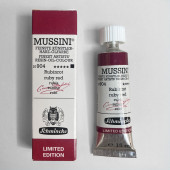
Schmincke Mussini Ruby Red Limited Edition 15 ml
£26.00Schmincke Mussini Limited Edition Ruby Red 15 ml Learn More -
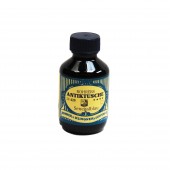
Rohrer & Klingner Antique Ink
Starting at: £10.20
The Rohrer & Klingner Traditional Ink range provides 18 colours of high luminance and brilliance, suitable for use with dip pens, brushes, fountain pens, and even airbrush devices. They can be used to produce crisp edges or more painterly washes. They have an acrylic resin base, with a high pigment content, and are completely intermixable. They can also be used in conjunction with Rohrer & Klingner's Drawing and Calligraphy range, to create an even more extensive range of tones. Learn More -
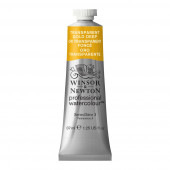
W&N Professional Watercolour 37ml Tube
Starting at: £19.20
Water colour, more than any other medium, reflects the unique characteristics of the pigments used and our Professional Water Colours use only the finest pigments, and are known for their brilliance, permanence and strength of colour. Learn More
-
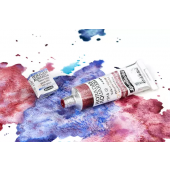
Schmincke Supergranulating Watercolours Half Pan
Starting at: £7.95
Schmincke’s new supergranulating watercolour range is produced by combining two or more granulating pigments in each paint. Grouped into eight colour palettes, these beautiful shades have a textural surface effect, which is exaggerated when used on rougher and more structured paper. Learn More -
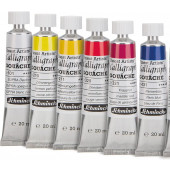
Schmincke Calligraphy Gouache
Starting at: £11.80
Brilliant and mainly opaque colours specially developed for use in calligraphy. Superfine pigments. Ideal for making inks. Non waterproof. Learn More -
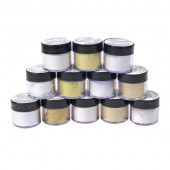
Pearl Lustre Pigments 1 kg
Starting at: £94.00
Call to Order
Pearl Lustre Pigments 1 kg. Colour swatch on the left indicates colour on a White Background and Colour on a Black Background on the right. Learn More -
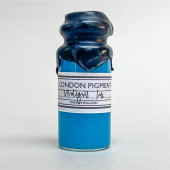
London Pigment, Verdigris Ink, 20 ml
£20.00Ink made from pure copper metal leaf that has reacted with distilled vinegar. ****Please note, these inks are artisan made in small batches. Please email info@cornelissen.com for availability**** Learn More -
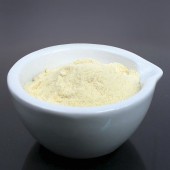
Powdered Rosin
Starting at: £13.90
Rosin is the powdered form of colophony, which is a by-product of the distillation of turpentine. Its primary application is to create tonal areas on metal plates as an aquatint resist. It is also an additive in etching grounds, where it gives a hard surface to the otherwise soft wax. Learn More -
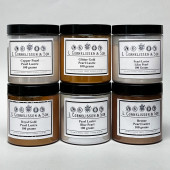
Cornelissen Pearl Lustre Pigments 100g
Starting at: £12.90
Pearl Lustre Pigments 100g. Colour swatch on the left indicates colour on a White Background and Colour on a Black Background on the right. Learn More -
Carrageen Moss
Starting at: £51.00
Carrageen Moss is a seaweed that is gathered from the Irish coast, whose natural thickening properties are often exploited by the food industry. It is also used as a size in traditional paper marbling, as it allows colours to float and be manipulated on the surface of the water. Learn More -
Roberson Copperplate Reducing Oil
Starting at: £24.00
Printing inks can be made by mixing powdered pigments with copperplate oil. Pour small quantity of oil into well of dry pigment and grind with glass muller untill smooth. Thin oil is then added until mixture has consistency of double cream. Thin, Medium or Thick. Learn More -
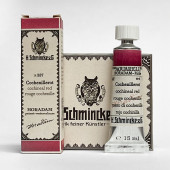
Schmincke Horadam Retro Watercolour, Cochineal Red, 15 ml Tube
£15.00Schmincke Horadam Retro Watercolour, Cochineal Red, 15 ml Tube Learn More -
Schmincke Aero Metallic
Starting at: £10.95
For highlights and special effects. High pigmentation, lightfast, can be diluted with water. For use with brushes, fountain pens and dip pens on acrylic and watercolour paper, primed canvas, textured substrates, wood and cardboard. Learn More -
Whiting
Starting at: £4.00
Whiting is powdered Calcium Carbonate, which can be mixed with rabbit skin glue to create a chalk-based ground for oil, tempera, distemper or encaustic painting. Traditionally, whiting was an important ingredient when preparing painting surfaces in the north of Europe, as opposed to gypsum (Calcium Sulphate), which was widely used south of the Alps. Learn More -
Schmincke Norma Blue Set 8 x 35 ml, Cardboard Box
£59.75Water-mixable (water miscible), highly pigmented, lightfast paints with a buttery consistency. Vegan, low odour, anti-allergenic, environmentally friendly. Learn More -
STABILO CarbOthello Pastel Pencils
Starting at: £2.05
STABILO CarbOthello is a chalk pastel coloured pencil range available in up to 60 colours. With its wonderfully dry and dusty stroke it is just like a chalk pastel in pencil format. It's very popular with artists, art students and people with creative hobbies. Its high pigmentation guarantees great luminosity and opacity as well as colour fastness and colour brilliance especially on dark backgrounds and delicate papers. What's more it can be sharpened to a very fine tip which make it ideal for detail. Colours can be dry mixed and blended which makes colouring more fun and special.
Learn More -
Casein Lactic
Starting at: £17.80
Casein is a protein derived from dried milk, which has been used in painting since ancient times. It can be combined with Ammonium Carbonate to form an emulsion, which acts as a durable, non-resoluble binder for pigments, producing a matte, fast-drying paint, similar in appearance to egg tempera. We use casein as a binder for our L. Cornelissen & Son Pigment Colour Charts, as it is a medium that clearly showcases the characteristics and behaviour of each pigment in its pure form. Casein paints can be applied in thin layers to watercolour paper, but would require a more rigid support, such as a gesso panel, to be applied thickly, as the comparative inflexibility of the paint layer means that it can be prone to cracking. Subsequent layers of paint should be more diluted to aid adhesion, and impasto effects are not recommended. It is possible to varnish casein paintings using an acrylic or damar varnish to obtain a glossy surface if desired, although this is not a necessary step. Casein can also be used as an ingredient in gesso, and is a suitable binder for fresco secco techniques.
Some pigments may require a wetting agent in order to fully disperse within the binder, in which case alcohol may be used.
Learn More