

Search results for 'method been'
10 Item(s)
Grid List

-
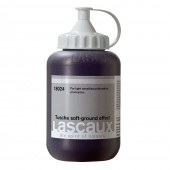
Lascaux Tusche Soft Ground Effect 500ml
£42.90This slow drying viscous tusche has been designed to produce effects similar to soft ground in traditional etching. Using this method soft non-printing drawings may be made and impressions of fabric, leaves, feathers and other collage materials may be taken. The tusche can also be used for a broad range of painted marks and can be drawn into with paint shapers and other tools. The diluted tusche dries to creategranular washes. Dry marks can be re-wet and altered. Learn More -
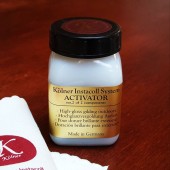
Instacoll Gilding System
Starting at: £6.85
Kölner Instacoll is a two-part system, consisting of a base coat and activator, that can be used on nearly all suitably prepared substrates to create weather-resistant, high gloss interior and exterior gilded surfaces. The Instacoll Tool is a double-ended tool with shaped tips made of elastic rubber, designed for pressing gold and silver transfer leaf into indentations when gilding uneven surfaces. The Instacoll Chiffonnette is an extra soft, lint-free cloth, used for polishing and burnishing surfaces gilded with Instacoll. *PLEASE NOTE - COLOURS OF THESE PRODUCTS MAY VARY SLIGHTLY FROM PRODUCTS PICTURED* Learn More -
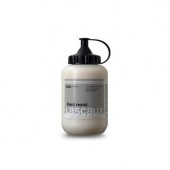
Lascaux Hard Resist 500ml
£45.60This resist is painted onto the plate in a thin even layer with a soft flat square-ended brush. When this clear layer is dry it may be coloured or drawn into with etching needles, roulettes and steel wool. The waxy character allows the needle to glide through its surface. After drawing the coloured coating (if used) is removed, the image is stopped out if necessary, then the plate is etched. As the resist is clear the artist can monitor the etching process accurately. Learn More -
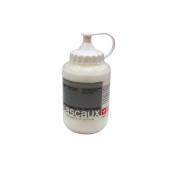
Lascaux Coloured coating for Hard Resist
Starting at: £38.70
These black or white coatings may be painted onto a dry layer of Hard resist so that the drawing made with etching tools is highly visible. The coloured coatings are not acid-resistant and are designed to be washed away with water before the plate is stopped-out or etched. Learn More -
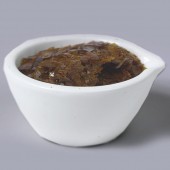
Lemon Shellac
Starting at: £8.20
Shellac is a natural resin that is deposited by the female lac insect on the branches of trees in India and Thailand. It is soluble with alcohol, but not with mineral spirits or turpentine. It forms a tough yet flexible film, with many applications. It is suitable as a top coat for gilding when applied thinly, a sealant for porous surfaces, an isolating layer for tempera paintings, a base for pigmented inks, a protective layer for collograph plates, and a warm varnish for wooden floors and furniture. As it is prone to darkening with age, it is not recommended as a varnish for oils, and its solubility can reduce over time. There are various grades of shellac. When mixed with alcohol, it may initially form a cloudy mixture, due to traces of wax in the shellac, but this should become clear once it has dried. The highest grades of shellac are Clear Dewaxed Shellac, which has been de-coloured using the carbon filtering method, Lemon Shellac, and Orange Shellac, which are pale in colour. Button Shellac is less refined and therefore produces a reddish varnish. It was, in fact, widely used as a red dye before synthetic dyes became available. Learn More -
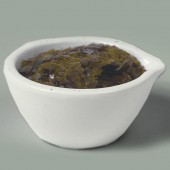
Clear Dewaxed Shellac
Starting at: £9.20
Shellac is a natural resin that is deposited by the female lac insect on the branches of trees in India and Thailand. It is soluble with alcohol, but not with mineral spirits or turpentine. It forms a tough yet flexible film, with many applications. It is suitable as a top coat for gilding when applied thinly, a sealant for porous surfaces, an isolating layer for tempera paintings, a base for pigmented inks, a protective layer for collograph plates, and a warm varnish for wooden floors and furniture. As it is prone to darkening with age, it is not recommended as a varnish for oils, and its solubility can reduce over time. There are various grades of shellac. When mixed with alcohol, it may initially form a cloudy mixture, due to traces of wax in the shellac, but this should become clear once it has dried. The highest grades of shellac are Clear Dewaxed Shellac, which has been de-coloured using the carbon filtering method, Lemon Shellac, and Orange Shellac, which are pale in colour. Button Shellac is less refined and therefore produces a reddish varnish. It was, in fact, widely used as a red dye before synthetic dyes became available. Learn More -
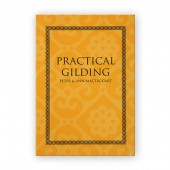
Practical Gilding
£11.95By Peter & Ann Mactaggart. This book is an attempt to set down detailed descriptions and explanations of the traditional, professional methods of both oil and water gilding in a way that can be followed by another craftsman. It does not discuss some of the methods that have been suggested recently for amateur use. (74 pages) Learn More -
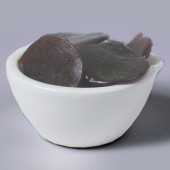
Button Shellac
Starting at: £8.40
Shellac is a natural resin that is deposited by the female lac insect on the branches of trees in India and Thailand. It is soluble with alcohol, but not with mineral spirits or turpentine. It forms a tough yet flexible film, with many applications. It is suitable as a top coat for gilding when applied thinly, a sealant for porous surfaces, an isolating layer for tempera paintings, a base for pigmented inks, a protective layer for collograph plates, and a warm varnish for wooden floors and furniture. As it is prone to darkening with age, it is not recommended as a varnish for oils, and its solubility can reduce over time. There are various grades of shellac. When mixed with alcohol, it may initially form a cloudy mixture, due to traces of wax in the shellac, but this should become clear once it has dried. The highest grades of shellac are Clear Dewaxed Shellac, which has been de-coloured using the carbon filtering method, Lemon Shellac, and Orange Shellac, which are pale in colour. Button Shellac is less refined and therefore produces a reddish varnish. It was, in fact, widely used as a red dye before synthetic dyes became available. Learn More -
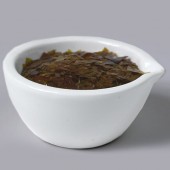
Orange Shellac
Starting at: £8.00
Shellac is a natural resin that is deposited by the female lac insect on the branches of trees in India and Thailand. It is soluble with alcohol, but not with mineral spirits or turpentine. It forms a tough yet flexible film, with many applications. It is suitable as a top coat for gilding when applied thinly, a sealant for porous surfaces, an isolating layer for tempera paintings, a base for pigmented inks, a protective layer for collograph plates, and a warm varnish for wooden floors and furniture. As it is prone to darkening with age, it is not recommended as a varnish for oils, and its solubility can reduce over time. There are various grades of shellac. When mixed with alcohol, it may initially form a cloudy mixture, due to traces of wax in the shellac, but this should become clear once it has dried. The highest grades of shellac are Clear Dewaxed Shellac, which has been de-coloured using the carbon filtering method, Lemon Shellac, and Orange Shellac, which are pale in colour. Button Shellac is less refined and therefore produces a reddish varnish. It was, in fact, widely used as a red dye before synthetic dyes became available. Learn More -
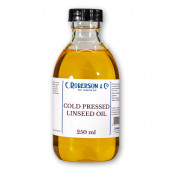
Roberson Cold Pressed Linseed Oil
Starting at: £7.50
Linseed Oil is derived from flax seeds, and appears on our shelves in many guises: Cold Pressed, Refined, Stand Oil, and as a key ingredient in many mediums. It has been appreciated for its drying properties since the Medieval period, and has become the most popular oil used in painting today due to the strong, flexible and glossy film that it creates. Cold Pressed Linseed Oil is ideal for the grinding of pigment to make oil paints. The process of producing Cold Pressed Linseed Oil results in a lower yield, but the resultant oil is of a superior quality to oil that has been extracted by other methods, creating a paint film that is more resistant to embrittlement on aging. Its yellow colour is caused by the high concentration of linolenic acid, the presence of which provides durability to the paint film. The amount of oil that each pigment requires can vary enormously. Alizarin Crimson, for example, requires a high percentage of oil compared to most other colours. We would always recommend mulling the pigment and oil together thoroughly to create a "short" or buttery paste, with evenly dispersed, well-coated pigment particles. This process contributes to the strength and flexibility of the paint film, and prevents the inclusion of excess oil. Origin: USA Learn More
10 Item(s)
Grid List
Shopping Options
- Category
-
- Pigments Gums & Resins (4)
- Oils & Acrylics (1)
- Gilding & Restoration Materials (3)
- Printmaking (3)
- Studio & Books (1)
- Price
-
- £0.00 - £9.99 (6)
- £10.00 - £19.99 (1)
- £30.00 - £39.99 (1)
- £40.00 and above (2)
- Manufacturer
-
- Cornelissen (4)
- Kölner (1)
- Lascaux (3)
- Roberson (1)
You have no items in your shopping basket.

- Search Brands
-