

Search results for '10'


-
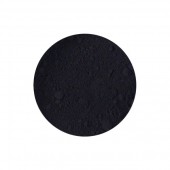
Spinel Black Pigment
Starting at: £8.00
Spinel Black is a synthetic mixed-metal oxide pigment. It provides a deep, cool, transparent black, which dries quickly in oil.
Toxicity: C
Learn More -
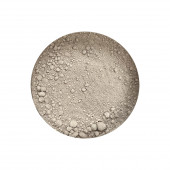
Buff Titanium Pigment
Starting at: £4.75
-
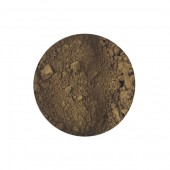
Burnt Umber Pigment
Starting at: £4.00
PBr7
Burnt Umber is a natural earth pigment from Italy, composed of iron oxide, manganese, and aluminium silicate. It is a form of Raw Umber that a has undergone a process of calcination, becoming warmer, more transparent and easier to disperse. It has a good tinting strength, and is very lightfast, quick-drying, and stable in all media. In oils it forms a hard, fairly flexible paint film, though it may be difficult to use in acrylic mediums.
Toxicity: B
Learn More -
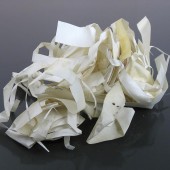
Parchment Clippings
Starting at: £9.90
Parchment Clippings, usually waste goatskin vellum, were utilised throughout the Middle Ages to make an animal hide glue. This continued to be commonly used as a sizing for canvas before rabbit skin glue came to prominence in the nineteenth century. Parchment glue is comparable to isinglass glue, as it also produces a very pale, almost transparent glue with a degree of flexibility. Our parchment clippings are a mixture of vellum scraps, and may include goatskin, calfskin and sheepskin. Cennino Cennini gives a recipe for gesso using parchment in his treatise about painting; please see below for our recipe. Learn More -
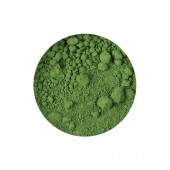
Chromium Oxide Pigment
Starting at: £4.50
Chromium Oxide is a synthetic mixed-metal oxide pigment. It is stable in all media and has an average drying speed in oil, forming a hard, fairly flexible paint film. It is opaque, with a low tinting strength. It has been widely available since the mid-nineteenth century, following its introduction in 1809.
Please note, unfortunately we are not able to send this product outside the UK.
Learn More -
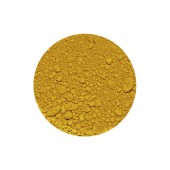
Mars Yellow Pigment
Starting at: £4.50
PY42
Mars Yellow is an artificial mineral pigment, a synthetic iron oxide. Mars colours in general replace many natural earth colours to provide pigments without impurities and with great opacity. It has a good tinting strength, is lightfast and stable in all media, and has a medium drying time in oil, creating a strong, flexible paint film.
Toxicity: B
Limeproof
Learn More -
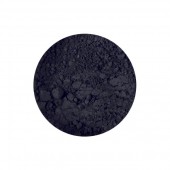
Ivory Black Pigment
Starting at: £4.50
Ivory Black is a natural pigment of impure carbon, derived from charred animal bones. It is semi-transparent, very lightfast, and offers good tinting strength. It is a particularly slow-drying pigment, which forms a soft, rather brittle paint film in oil.
Compared to other blacks, such as Vine Black, Ivory Black possesses warmer, brownish undertones. It should not be used at full-strength in an underpainting, as subsequent layers are likely to crack. Otherwise, it is a very useful all-purpose black for many types of paint, excluding mortar, fresco or cement.
Toxicity: B
Learn More -
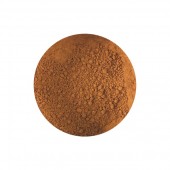
Burnt Sienna Pigment
Starting at: £4.00
PBr7
Burnt Sienna is a natural earth pigment that has been in use since antiquity. Our Burnt Sienna comes from Tuscany, and is produced by calcining Raw Sienna to temperatures of about 450 degrees Celsius. This process creates a rich warm colour and increases transparency. It also offers a good tinting strength, excellent lightfastness, and a fast to medium drying rate in oil. It is stable in all media but, like umber pigments, may be difficult to disperse in acrylic binders.
Toxicity B
Learn More -
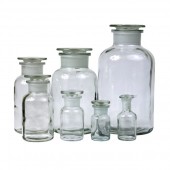
Reagent Jar
Starting at: £6.50
Our clear reagent bottles are manufactured in the EU and are made of high quality soda lime glass. They have a solid base and good wall thickness.
Learn More -
-
-
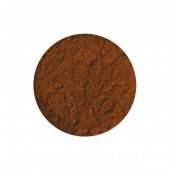
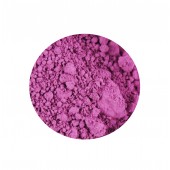
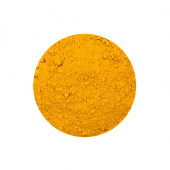
Translucent Yellow Oxide Pigment
Starting at: £7.00
Translucent Yellow Oxide (PY42). Artificial mineral pigment, hydrated ferric oxides. Transparent and very lightfast. Stable in all media, medium drying rate in oil. Toxicity B. Learn More -
-
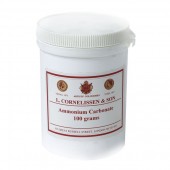
Ammonium Carbonate
Starting at: £9.70
Ammonium Carbonate is a highly Alkaline substance that reacts with the lactic acid present in casein to form a robust binder for tempera paints. It should only be used in a well-ventilated area, please see below for the Material Safety Data Sheet. Learn More -
-
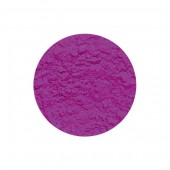
Cobalt Violet Light Pigment
Starting at: £10.00
Cobalt Violet Light Pigment (PV14). Synthetic inorganic pigment. Semi-opaque. Weak tinting strength. Excellent Lightfastness. Fast drying rate. Good for oil and watercolour but not acrylic as pigment 'settles out'. Used since early 1900's. This colour cannot be matched through mixing other colours.
Limeproof
Toxicity: C
Please note, unfortunately we are not able to send this product outside the UK.
Learn More -
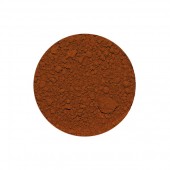
Pozzuoli Red Pigment
Starting at: £5.20
Pozzuoli Red is a natural earth pigment that was originally found in the volcanic areas in Pozzuoli, Italy. It was unique for its cement-like setting qualities due to naturally occurring silica. Modern Pozzuoli Red refers to the warm red colour rather than this physical characteristic.
Toxicity: B
Learn More -
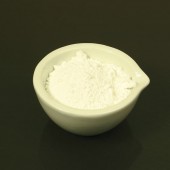
Alumina Hydrate Light
Starting at: £8.30
Alumina Hydrate is an inert pigment with highly absorbent properties, which can be ground into oil paint as an almost colourless extender. It is often used as an additive in commercial oil paints, particularly in conjunction with transparent or lake pigments, as it provides stability and a homogenous consistency without effecting colour or gloss, although it may effect the pigment strength. When combined with linseed oil, it produces an almost transparent painting medium for extending oil colours. Sometimes referred to as Lake Base. Learn More -
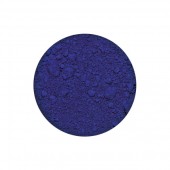
Oriental Blue Pigment
Starting at: £5.40
Oriental Blue Pigment (PB29). Inorganic pigment consisting kaolin, soda ash, sulfides and coal. Semi-transparent. High tinting strength. Excellent Lightfastness. Medium to slow drying rate. Suitable in all media except Lime-fresco. Used since early 19th Century. Toxicity B Learn More -
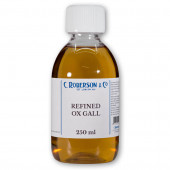
Roberson Refined Ox Gall
Starting at: £8.50
Wetting agent. Improves flow of watercolours. Add a few drops to the water used to dilute paint. Learn More -
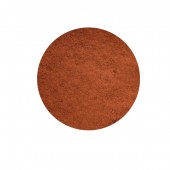
Burnt Green Earth Pigment
Starting at: £8.00
PG23 Burnt Green Earth is a semi-transparent pigment that is stable in all media, although it may be difficult to incorporate into an acrylic binder. A calcined form of Green Earth, it has a low tinting strength, long drying time, and is very lightfast. Toxicity: B Limeproof Learn More -
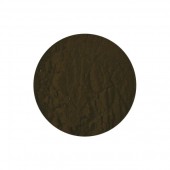
Van Dyke Brown Pigment
Starting at: £4.50
Van Dyke Brown pigment is know for its poor lightfastness and instability in all mediums. Our Van Dyke Brown, also known as Cassel Earth, offers the same dark brown colour and transparency as the traditional pigment, but without the drawbacks usually associated with its longevity and use. It is made from lignite, or brown coal, from the Alsace region in France.
Toxicity: B
Learn More -
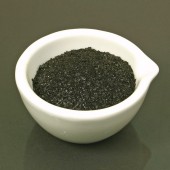
Van Dyke Crystals
Starting at: £8.40
Van Dyke Crystals are a natural, water-based wood dye, made from walnut husks. They produce a colour ranging from a very light brown to dark brown depending upon concentration. Traditionally used for colouring oak, mahogany and walnut. Learn More -
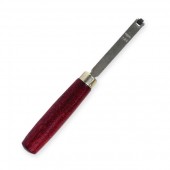
Lyons Drum-Wheel Roulettes
Starting at: £54.00
Made of high-carbon tool-steel, Lyons drum-wheel roulettes produce regular line or dot patterns on metal plates, enabling the printmaker to add texture and shading to their image. The number indicates the density of the lines or dots: 65 (medium) and 100 (fine). Total length: 17 cm. Learn More -
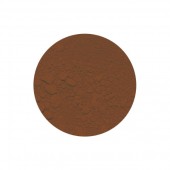
Cadmium Brown Pigment
Starting at: £10.00
PR108
Cadmium Brown is a shade of Cadmium Red, a synthetic organic pigment that has been in use since the 1920s. It is formed by heating cadmium sulphide and selenium, the hue is determined by the level of calcination and proportion of selenium. It is very opaque, and lightfast, with a high tinting strength. It absorbs a small amount of oil, and dries very slowly to form a hard, flexible paint film.
Larger quantities are available by request.
Limeproof
Toxicity: C
Learn More -
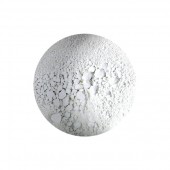
Titanium White Pigment
Starting at: £4.00
Titanium White, or Titanium Doixide, is an artificial mineral pigment introduced in the 1920s. It is valued for its opacity, good lightfastness, and stability in all media. Its high tinting strength can render it a dominant colour in mixtures. It is very slow drying in oil, and creates a somewhat brittle paint film, though more flexible than Zinc White. Its brightness makes it a popular addition to gesso.
Toxicity: B
Learn More -
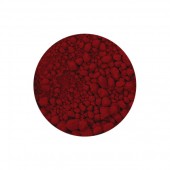
Carmine Red Genuine Pigment
Starting at: £10.00
NR4
Carmine has been used as a dye and pigment since antiquity. Originally derived from the kermes insect, it was replaced by cochineal following the discovery of the Americas. It has a good tinting strength and is very transparent, although it is fugitive to light.
Larger quantities are available by request.
Learn More -
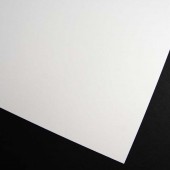
Fabriano Accademia Paper
Starting at: £29.40
Cartridge paper with a slight texture. 200gsm, woodfree, surface sized and acid free. Pack quantity 100 sheets. Learn More -
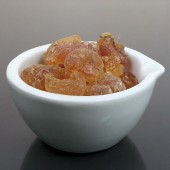
Gum Arabic
Starting at: £6.30
Gum Arabic is a resoluble binding agent, commonly used in the preparation of watercolours, but also useful as an adhesive, a size, and in the production of soft pastels. It is a natural product, harvested from the Acacia tree between October and May. The highest grade of Gum Arabic comes from the Kordofan region of Sudan. It is exceptionally pale and pure and therefore particularly suited to watercolour painting. Please see the Formulas & Recipes section on our homepage for a recipe to make your own watercolour paints using Gum Arabic (currently under construction). Learn More -
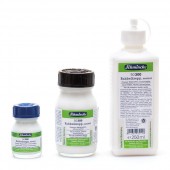
Schmincke Liquid Frisket
Starting at: £5.60
Drawing gum for masking specific areas which should remain white on water-colour paper, smooth drawing carton, photographs or films. Apply with writing pen, cotton bud or wooden stick. Contains: synthetic resin dispersion without ammonia. Learn More
Shopping Options
- Category
-
- Pigments, Gums, Resins (127)
- Oils, Acrylics (86)
- Canvas, Supports (16)
- Watercolour, Gouache, Egg Tempera (63)
- Pastels (18)
- Drawing, Calligraphy (99)
- Gilding, Restoration (59)
- Printmaking (60)
- Brushes (75)
- Paper (68)
- Studio, Books (34)
- Signwriting, Specialist Decorating (26)
- Gift Vouchers (1)
- Price
-
- £0.00 - £999.99 (660)
- £1,000.00 - £1,999.99 (1)
- £2,000.00 - £2,999.99 (1)
- £3,000.00 and above (2)
- Manufacturer
-
- Arches Aquarelle (5)
- ArtGraf (4)
- Automatic Pens (3)
- Bockingford (3)
- Brause (4)
- Canson (5)
- Charbonnel (5)
- Cornelissen (229)
- Da Vinci (22)
- Daler-Rowney (11)
- Daniel Smith (4)
- Daylight (1)
- e+m (1)
- Faber-Castell (10)
- Fabriano (21)
- Gamblin (6)
- Gillot (2)
- Golden (8)
- Hahnemuhle (2)
- Khadi (5)
- Kölner (2)
- Korns (3)
- Lascaux (1)
- Lefranc et Bourgeois (2)
- Liquitex (14)
- London Pigment (1)
- Maimeri (1)
- Michael Harding (12)
- Mitchell (7)
- Old Holland (2)
- Omega (12)
- Pelikan (3)
- Pentel (1)
- Pfeil (3)
- Pilot (4)
- Pro Arte (6)
- Raphael (1)
- Rembrandt (1)
- Renaissance Workshop Materials (2)
- Roberson (51)
- Rohrer and Klingner (17)
- Saunders Waterford (3)
- Schmincke (65)
- Snowdon (1)
- Somerset (2)
- Spectrum (1)
- Stabilo (3)
- Staedtler (6)
- Unison (3)
- Winsor&Newton (24)
- Factis (1)
- Swann Morton (2)
- Sennelier (15)
- Color
-
- Black (1)
You have no items in your shopping basket.

- Search Brands
-