Cornelissen

-
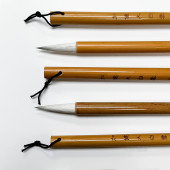
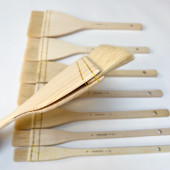
Chinese Brush, White Cloud, Bristle and Goat Hair, Large
£9.90Extra strength, 'White Cloud' brush. A versatile brush for painting and calligraphy. 4 cm brush head. Learn More -
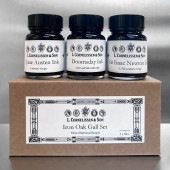
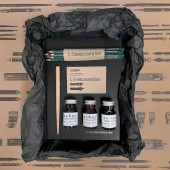
Cornelissen Iron Oak Gall Ink Set
£30.00Call to Order
Three historical oak gall inks handmade to traditional recipes. Jane Austen Ink. Sir Isaac Newton Ink. Doomsday Ink. Learn More -
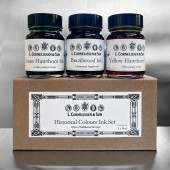
Cornelissen Historical Colours Ink Set
£18.50Call to Order
Three historical coloured inks, handmade to traditional recipes. 3 x 30 ml high quality glass bottle with black plastic lid. Green Hawthorn Ink. Brazilwood Ink. Yellow Hawthorn Ink. Learn More -
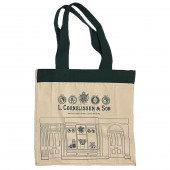
Cornelissen Canvas Bag
£15.00Cornelissen canvas bag 3 internal pockets Dimensions H36 x W39 x G12 cm Learn More -
Cerulean Blue Pigment
Starting at: £14.50
PB35
Cerulean Blue is an artificial mineral pigment that is prepared by heating a mixture of Cobalt Chloride and Potassium Stannate. It was first synthesised in the early nineteenth century, becoming more widely used from 1870, when Rowney introduced Coeruleum Blue into their range. It produces a very bright, clear, and unusually opaque blue, hence its name, which is derived from the Latin for "sky-blue", or perhaps "heaven-blue". It has a very low tinting strength meaning that, although it is stable in all media, some artists may choose to bind it in poppy rather than linseed oil, so that the colour isn't affected by the colour of the binder. It creates a fairly flexible paint film, and is a fast-to-medium drying pigment.
Limeproof
Toxicity: B
Learn More -
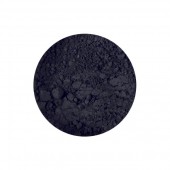
Indigo Blue Synthetic Pigment
Starting at: £5.50
Indigo Blue Synthetic Pigment (VB1). Organic pigment. Transparent. Good tinting strength. Moderate Lightfastness, slower fading rate than Genuine Indigo. Requires wetting agent. Suitable for oil and water-based media. Developed in late 19th Century. Toxicity A/B Learn More -
Indigo Blue Genuine Pigment
Starting at: £8.00
NB1
Genuine Indigo is a natural vegetable pigment derived from the Indigofera Tinctoria plant, which was first imported into Europe from India in the seventeenth century. It replaced woad, which had been grown natively in Europe for its blue dye. The leaves are soaked in water to ferment; upon drying, an oxidised residue forms on the dry leaves, which is removed, washed, boiled in water, and then dried to form cakes of pigment or dye.
Indigo is very transparent, with a good tinting strength. It requires a wetting agent to disperse, and in oil it dries very slowly. It is fugitive to light; this drawback means that it is no longer commonly available in commercial paints. It fell out of general use at the beginning of the seventeenth century, largely replaced by Prussian Blue, and synthetic Indigo was patented in the 1890s. However, it provides a subtle shade of blue that is still desirable in works that are going to be protected from light.
Toxicity: B
Learn More -
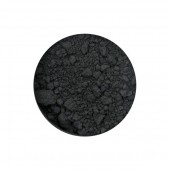
Oriental Blue Pigment
Starting at: £5.40
Oriental Blue Pigment (PB29). Inorganic pigment consisting kaolin, soda ash, sulfides and coal. Semi-transparent. High tinting strength. Excellent Lightfastness. Medium to slow drying rate. Suitable in all media except Lime-fresco. Used since early 19th Century. Toxicity B Learn More -
Phthalo Blue Pigment
Starting at: £8.00
PB15:3
Phthalo (Mona) Blue is a synthetic organic pigment, Copper Phthalocyanine, that has been in use since the 1930s. It has an extremely high tinting strength and is a staining colour, so cannot successfully be lifted in watercolour. It requires a wetting agent to fully disperse into a medium, and, when used at full strength, a copper sheen is visible in dried paint film. It is transparent, very lightfast, and has a medium-to-slow drying rate in oil.
Toxicity: C
While stocks last
Learn More -
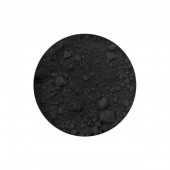
Prussian Blue Pigment
Starting at: £5.20
PB27
Prussian Blue is a synthetic organic pigment that was discovered by the paint maker Diesbach, apparently by accident, in Germany in the early eighteenth century. For many years, it was used not only as a colour in its own right, but also as a component of the original Hooker's Green. The other ingredient, gamboge, is highly fugitive, which is why many watercolours painted with Hooker's green have taken on a bluish tone with with age.
It is a very transparent and heavily staining colour. It dries quite quickly in oil, and can therefore wrinkly if applied too quickly. It is suitable for use in oils, watercolour, and egg tempera. However, it shouldn't be used in conjunction with alkali substances, such as Lead White or Calcium Carbonate as it can turn brown, so it isn't suitable for fresco. For the same reason, it isn't used with acrylic resin binders due to their alkaline nature, so most paint manufacturers will replace Prussian Blue with a mixture of Phthalo Blue and black in their acrylic ranges. It requires a wetting agent to fully disperse into a binder.
Toxicity: B
Learn More -
Ultramarine Blue Dark Pigment
Starting at: £4.00
PB29
Ultramarine Blue Dark is an artificial mineral pigment that is produced by heating clay, soda, sulphur and coal to high temperatures. Its name comes from outremer, or over-the-sea, as a reference to the highly-prized Lapis Lazuli pigment which had been imported into Europe from Afghanistan since the Middle Ages. First manufactured in France and Germany in 1828, synthetic Ultramarine provided a brilliant and affordable blue to artists, and it remains one of the most popular blues on artists' palettes today.
It is a transparent pigment, with a high tinting strength and excellent lightfastness. It reacts to alkali, therefore it is not suitable for use in lime-fresco; we do offer a Limeproof Ultramarine Blue for this purpose. It is stable in all other media, although it can be tricky to grind in oil. Instead of creating a thick, buttery paste, it can remain stringy and deteriorate when stored in a tube. To correct this, many commercial paint manufacturers include additives and waxes in their recipes; if you intend on grinding your own paint, you could try replacing 10-15% of your Linseed Oil with Poppy Oil to improve the consistency. Ultramine Blue provides a slow-drying, fairly hard paint film, which can tend towards brittleness.
Toxicity: B
Learn More -
Ultramarine Blue Light Pigment
Starting at: £6.00
PB29
Ultramarine Blue Light is an artificial mineral pigment that is produced by heating clay, soda, sulphur and coal to high temperatures. Its name comes from outremer, or over-the-sea, as a reference to the highly-prized Lapis Lazuli pigment which had been imported into Europe from Afghanistan since the Middle Ages. First manufactured in France and Germany in 1828, synthetic Ultramarine provided a brilliant and affordable blue to artists, and it remains one of the most popular blues on artists' palettes today.
It is a transparent pigment, with a high tinting strength and excellent lightfastness. It reacts to alkali, therefore it is not suitable for use in lime-fresco; we do offer a Limeproof Ultramarine Blue for this purpose. It is stable in all other media, although it can be tricky to grind in oil. Instead of creating a thick, buttery paste, it can remain stringy and deteriorate when stored in a tube. To correct this, many commercial paint manufacturers include additives and waxes in their recipes; if you intend on grinding your own paint, you could try replacing 10-15% of your Linseed Oil with Poppy Oil to improve the consistency. Ultramine Blue provides a slow-drying, fairly hard paint film, which can tend towards brittleness.
Toxicity B
Learn More -
Ultramarine Blue Limewash Pigment
Starting at: £7.50
PB29
Ultramarine Blue Limewash is an artificial mineral pigment that is produced by heating clay, soda, sulphur and coal to high temperatures. Its name comes from outremer, or over-the-sea, as a reference to the highly-prized Lapis Lazuli pigment which had been imported into Europe from Afghanistan since the Middle Ages. First manufactured in France and Germany in 1828, synthetic Ultramarine provided a brilliant and affordable blue to artists, and it remains one of the most popular blues on artists' palettes today.
It is a transparent pigment, with a high tinting strength and excellent lightfastness. Most Ultramarine colours react to alkali and are therefore unsuitable for use in lime-fresco; Limeproof Ultramarine Blue remedies this problem. It is stable in all other media, although it can be tricky to grind in oil. Instead of creating a thick, buttery paste, it can remain stringy and deteriorate when stored in a tube. To correct this, many commercial paint manufacturers include additives and waxes in their recipes; if you intend on grinding your own paint, you could try replacing 10-15% of your Linseed Oil with Poppy Oil to improve the consistency. Ultramine Blue provides a slow-drying, fairly hard paint film, which can tend towards brittleness.
Toxicity: B
Learn More -
Ultramarine PB29 Pigment
Starting at: £9.10
PB29
Ultramarine Blue is an artificial mineral pigment that is produced by heating clay, soda, sulphur and coal to high temperatures. Its name comes from outremer, or over-the-sea, as a reference to the highly-prized Lapis Lazuli pigment which had been imported into Europe from Afghanistan since the Middle Ages. First manufactured in France and Germany in 1828, synthetic Ultramarine provided a brilliant and affordable blue to artists, and it remains one of the most popular blues on artists' palettes today.
It is a transparent pigment, with a high tinting strength and excellent lightfastness. It reacts to alkali, therefore it is not suitable for use in lime-fresco; we do offer a Limeproof Ultramarine Blue for this purpose. It is stable in all other media, although it can be tricky to grind in oil. Instead of creating a thick, buttery paste, it can remain stringy and deteriorate when stored in a tube. To correct this, many commercial paint manufacturers include additives and waxes in their recipes; if you intend on grinding your own paint, you could try replacing 10-15% of your Linseed Oil with Poppy Oil to improve the consistency. Ultramine Blue provides a slow-drying, fairly hard paint film, which can tend towards brittleness.
Toxicity: B/C
Learn More -
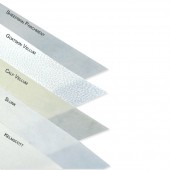
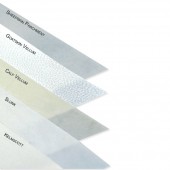
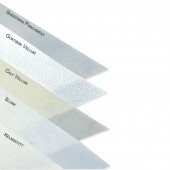
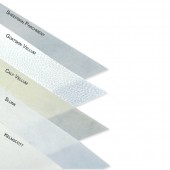
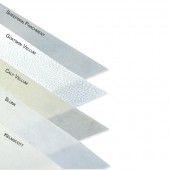
Sheepskin Parchment
Starting at: £11.75
Pale, thin and translucent. Only the flesh side can be used. A light dusting of sandarac powder is usually sufficient to prepare the surface for writing.
Please note: This is a natural product that has been finished and cut by hand. As such, there may be slight variations in the surface and size of each piece.
Learn More -
Goatskin Vellum
Starting at: £11.15
Medium to thick with a shiny surface. Distinctive 'pebbled' appearance makes it slightly more difficult to write on.
Please note: This is a natural product that has been finished and cut by hand. As such, there may be slight variations in the surface and size of each piece.
Learn More -
Calf Vellum
Starting at: £16.75
Medium to thick. Both sides useable for writing. Whiter and less translucent than parchment.
Please note: This is a natural product that has been finished and cut by hand. As such, there may be slight variations in the surface and size of each piece.
-
Slunk
Starting at: £16.75
Skin of young calves. Very fine and translucent. Requires little or no preparation before writing.
Please note: This is a natural product that has been finished and cut by hand. As such, there may be slight variations in the surface and size of each piece.
Learn More -
Kelmscott
Starting at: £19.55
Specially prepared to give a very smooth surface for painting or calligraphy.
Please note: This is a natural product that has been finished and cut by hand. As such, there may be slight variations in the surface and size of each piece.
Learn More -
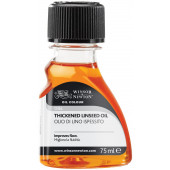
Winsor & Newton Thickened Linseed Oil
Starting at: £9.20
From the Winsor & Newton website: A pale refined oil of syrupy consistency which behaves like Linseed Stand Oil but dries quicker and darker. Improves flow and gloss. Increases the durability of paint film. Reduces brushstroke retention. Learn More -
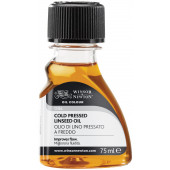
Winsor & Newton Cold Pressed Linseed Oil
Starting at: £9.20
From the Winsor & Newton website: A slightly yellow oil, which is extracted without the use of heat dries slightly quicker than refined linseed oil. Improves flow. Increases gloss & transparency. Reduces consistency and brushstrokes. Ideal for grinding pigments. Learn More -
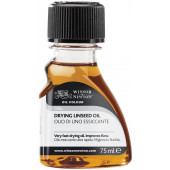
Winsor & Newton Drying Linseed Oil
Starting at: £9.20
From the Winsor & Newton website: Darker than refined Linseed Oil, this oil promotes the fastest drying rate of all the oils, whilst increasing gloss. Improves flow. Increases gloss transparency. Add to other oils to speed drying.
Learn More -
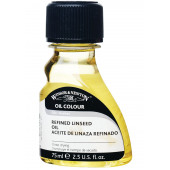
Winsor & Newton Refined Linseed Oil
Starting at: £6.85
From the Winsor & Newton website: Our most popular oil. A low viscosity alkali refined oil of pale colour that dries slowly. Reduces oil colour consistency. Increases gloss and transparency. Add to other oils to slow drying. Learn More -
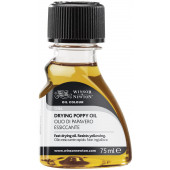
Winsor & Newton Drying Poppy Oil
Starting at: £9.20
From the Winsor & Newton website: A fast-drying, pale oil made from poppy seeds which is well suited for whites and pale colours. Reduces consistency. Increases gloss & transparency. Resists yellowing.
Learn More -
Winsor & Newton Stand Linseed Oil
Starting at: £9.20
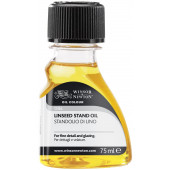
From the Winsor & Newton website: A pale viscous oil that slows drying while imparting a tough, smooth enamel finish with no brush marks. Increases film durability. Ideal for glazing and fine detail if mixed with solvent.
Learn More -
-
-
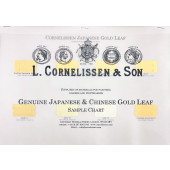
Cornelissen Japanese & Chinese Gold Leaf Colour Chart
£15.00Cornelissen Sample Chart for genuine Japanese & Chinese Gold Leaf Learn More -
-
Cornelissen Walnut Oil
Starting at: £8.20
The introduction of Walnut Oil as a pigment binder is contemporaneous with the emergence of Linseed Oil. Their drying properties have been appreciated since the Middle Ages, and throughout history there is evidence of both oils being used alongside each other within the same painting. In fact, until the sixteenth century, it is believed that Walnut Oil was the preferred binding medium among Italian artists. It is made from mature walnut kernals, offering a pale colour and brilliant gloss. For this reason, it is sometimes chosen as a binder for light colours, as it provides a stronger paint film than Poppy Oil, and faster drying times. However, a paint film made from Walnut Oil will tend to be brittle, so it is more suited to a rigid support rather than canvas.
Learn More