

Search results for 'en til for'


-
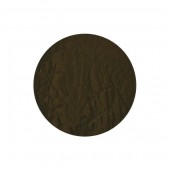
Van Dyke Brown Pigment
Starting at: £4.50
Van Dyke Brown pigment is know for its poor lightfastness and instability in all mediums. Our Van Dyke Brown, also known as Cassel Earth, offers the same dark brown colour and transparency as the traditional pigment, but without the drawbacks usually associated with its longevity and use. It is made from lignite, or brown coal, from the Alsace region in France.
Toxicity: B
Learn More -
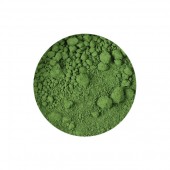
Chromium Oxide Pigment
Starting at: £4.50
Chromium Oxide is a synthetic mixed-metal oxide pigment. It is stable in all media and has an average drying speed in oil, forming a hard, fairly flexible paint film. It is opaque, with a low tinting strength. It has been widely available since the mid-nineteenth century, following its introduction in 1809.
Please note, unfortunately we are not able to send this product outside the UK.
Learn More -
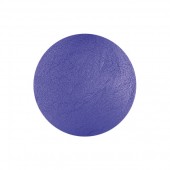
Egyptian Blue Pigment
Starting at: £5.90
Egyptian Blue is stable in all media, highly transparent, with a weak tinting strength. A synthetically produced calcium copper silicate, it is considered to be the earliest artificial pigment, dating from antiquity and widely used in ancient Egypt. Larger sizes available on request Learn More -
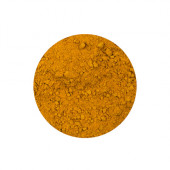
-
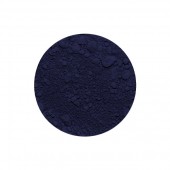
Phthalo Blue Pigment
Starting at: £8.00
PB15:3
Phthalo (Mona) Blue is a synthetic organic pigment, Copper Phthalocyanine, that has been in use since the 1930s. It has an extremely high tinting strength and is a staining colour, so cannot successfully be lifted in watercolour. It requires a wetting agent to fully disperse into a medium, and, when used at full strength, a copper sheen is visible in dried paint film. It is transparent, very lightfast, and has a medium-to-slow drying rate in oil.
Toxicity: C
While stocks last
Learn More -
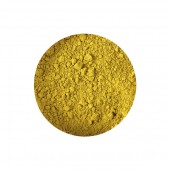
Yellow Ochre Pigment
Starting at: £4.00
PY43
Yellow Ochre is a natural earth pigment that has been in use since prehistoric times. It is derived from iron-rich clay deposits that are present all over the world; our Yellow Ochre comes from the hilly regions around Verona, Italy. As a pigment, it is semi-opaque, extremely lightfast, and stable in all media. It has a medium to slow drying rate in oil, creating a tough, flexible paint film. Yellow Ochre is similar in composition to Raw Sienna, but whereas Yellow Ochre contains a higher proportion of clay, Raw Sienna contains a higher proportion of silica. As a natural material, the exact colour and qualities of the resultant pigments can vary, but generally this compositional difference creates a paler, more opaque Yellow Ochre, and a darker, more transparent Raw Sienna.
Toxicity B
Learn More -
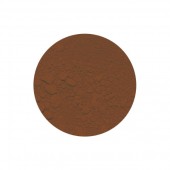
Cadmium Brown Pigment
Starting at: £10.00
PR108
Cadmium Brown is a shade of Cadmium Red, a synthetic organic pigment that has been in use since the 1920s. It is formed by heating cadmium sulphide and selenium, the hue is determined by the level of calcination and proportion of selenium. It is very opaque, and lightfast, with a high tinting strength. It absorbs a small amount of oil, and dries very slowly to form a hard, flexible paint film.
Larger quantities are available by request.
Limeproof
Toxicity: C
Learn More -
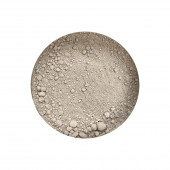
Buff Titanium Pigment
Starting at: £4.75
-
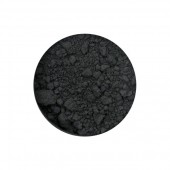
Lamp Black Pigment
Starting at: £6.70
PBk 6
Lamp Black is an inorganic, synthetic, pure carbon pigment. Originally made from soot collected from oil lamps and fireplaces, its modern equivalent is derived from partly combusted mineral and vegetable oil. It is a cool, transparent, bluish black, with a good tinting strength, and stable in all media. It requires a wetting agent, and in oil it has a very high absorption drying very slowly.
Larger quantities are available by request.
Learn More -
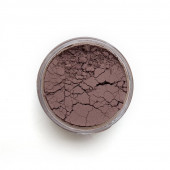
Caput Mortuum Pigment
Starting at: £4.50
Caput Mortuum is a transparent, lightfast pigment that is stable in all media. Colours described as Caput Mortuum can vary greatly; our pigment is a soft purple-brown, made from a mixture of natural iron oxides. It is believed that Caput Mortuum has its roots in ancient Egypt, when colour was derived from remains that had been embalmed in asphaltum.
Toxicity B
Learn More -
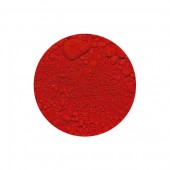
Vermilion Imitation Pigment
Starting at: £8.20
Vermilion Imitation Pigment (PR4, PY1, PW21). Organic pigment. Mixture of Studio Red, Hansa Yellow (Azo) and Blanc Fixe. Semi-transparent. Good tinting strength. Good Lightfastness, but prone to fading when mixed strongly with white . Slow drying rate. Requires wetting agent. Suitable for all media. Used since early 20th Century. Toxicity A. Learn More -
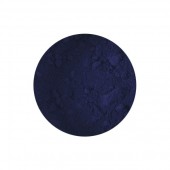
Indigo Blue Synthetic Pigment
Starting at: £5.50
Indigo Blue Synthetic Pigment (VB1). Organic pigment. Transparent. Good tinting strength. Moderate Lightfastness, slower fading rate than Genuine Indigo. Requires wetting agent. Suitable for oil and water-based media. Developed in late 19th Century. Toxicity A/B Learn More -
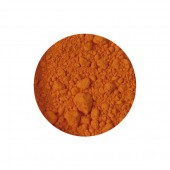
Cadmium Yellow Orange Pigment
Starting at: £4.50
Cadmium Yellow Orange Pigment (PY108) also known as Pyramid Yellow. Organic pigment. Opaque to Semi-opaque. Good tinting strength. Excellent Lightfastness. Medium drying rate. Suitable for all media except Lime-fresco. Toxicity B/C Learn More -
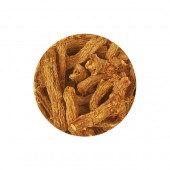
Madder Root Pieces
Starting at: £27.80
NR9
The madder plant was once widely cultivated for the red dye extracted from its roots. Its earliest known use is in ancient Egypt, and there is evidence of its widespread adoption in Europe from the medieval period. Madder Lake, the pigment that is derived from the root, has now largely been replaced by synthetic alizarin pigments, but it is still used as an ingredient in some commercial paints. It provides a very transparent pigment, with a weak tinting strength, which can be used in all lime-free media, although it is very slow-drying in oil. It is fugitive to sunlight, so paintings containing Madder should be stored appropriately, but it remains one of the most lightfast plant-based pigments.
Larger quantities are available by request.
Learn More -
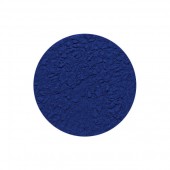
Ultramarine PB29 Pigment
Starting at: £9.10
PB29
Ultramarine Blue is an artificial mineral pigment that is produced by heating clay, soda, sulphur and coal to high temperatures. Its name comes from outremer, or over-the-sea, as a reference to the highly-prized Lapis Lazuli pigment which had been imported into Europe from Afghanistan since the Middle Ages. First manufactured in France and Germany in 1828, synthetic Ultramarine provided a brilliant and affordable blue to artists, and it remains one of the most popular blues on artists' palettes today.
It is a transparent pigment, with a high tinting strength and excellent lightfastness. It reacts to alkali, therefore it is not suitable for use in lime-fresco; we do offer a Limeproof Ultramarine Blue for this purpose. It is stable in all other media, although it can be tricky to grind in oil. Instead of creating a thick, buttery paste, it can remain stringy and deteriorate when stored in a tube. To correct this, many commercial paint manufacturers include additives and waxes in their recipes; if you intend on grinding your own paint, you could try replacing 10-15% of your Linseed Oil with Poppy Oil to improve the consistency. Ultramine Blue provides a slow-drying, fairly hard paint film, which can tend towards brittleness.
Toxicity: B/C
Learn More -
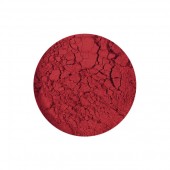
Quinacridone Red Pigment
Starting at: £5.50
Quinacridone Red Pigment (PV19). Organic pigment. Very transparent. High tinting strength. Excellent Lightfastness. High oil absorption with slow drying rate. Requires wetting agent. Suitable for all media. Developed in the 1950's. Toxicity A/B. Learn More -
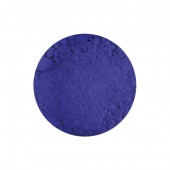
Cobalt Blue Pigment
Starting at: £6.50
PB28
Cobalt Blue is an artificial mineral pigment, produced by the calcination of cobalt oxide and aluminium oxide. It has been widely used since the early 1800s, following its discovery by the French chemist Thenard at the beginning of the century. The name Cobalt has its roots in the German word Kobold, meaning imp or evil spirit. German miners specifically used this name in the late-Middle Ages, as the presence of Cobalt ore in the mines made the extraction of silver very difficult. They were possibly aware of the toxic properties of the mineral frustrating their efforts.
Cobalt remains a very popular colour today, and is present in most ranges of paints, being a semi-transparent pigment that is stable in all media. As a watercolour, all cobalt pigments tend to granulate. As an oil paint, it requires less oil content than most other pigments, and dries quite quickly. Like Cerulean Blue, some artists may choose to bind it with poppy oil, to avoid any possible colour changes brought about by the yellowish cast of linseed oil and the pigment's weak tinting strength.
Limeproof
Toxicity: C
Learn More -
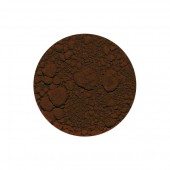
Mars Violet Pigment
Starting at: £4.50
PR101
Mars Violet is an artificial mineral pigment. Its pigment code, PR101, refers to a wide spectrum of synthetic iron oxide pigments including yellows, oranges, reds, violet-browns and green-browns, which replace many natural earth colours, to provide pigments without impurities and with great opacity. It has a good tinting strength, is lightfast and stable in all media, and has a medium drying time in oil. Although it is similar to Caput Mortuum and Indian Red, it is less transparent than the former and warmer than the latter.
Toxicity: B
Limeproof
Learn More -
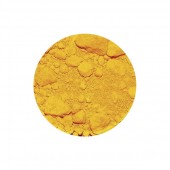
Cadmium Yellow Middle Pigment
Starting at: £6.30
Cadmium Yellow Middle Pigment (PY37). Synthetic Inorganic pigment. Opaque. Good tinting strength. Excellent Lightfastness. Low oil absorption with slow drying rate. Suitable for all media. Good acid and alkali resist. Exterior application not advised as discoloration occurs. Used since 19th Century. Toxicity B/C. Learn More -
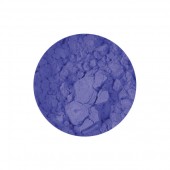
Smalt Light Pigment
Starting at: £5.20
PB32
Smalt is a kind of cobalt blue glass or frit, and its use as a pigment dates from the 1600s in the glass-making regions of Saxony. We offer two shades, light and dark, which are determined by the particle size of the pigment; the more finely ground the powder, the paler the colour. Before the introduction of Ultramarine Blue, Smalt was available in a wide variety of grades. It is a very transparent pigment, which is easily overwhelmed in mixtures due to its weak tinting strength. It works best in water based media. When ground in oil, it can become almost invisible in dried oil-paint films because its refractive index is so close to that of linseed oil.
Larger quantities are available by request.
Learn More -
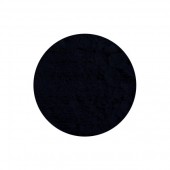
Vine Black Pigment
Starting at: £4.70
PBk8
Vine Black is derived from charred vines, forming an organic pigment of pure carbon. It has been in use since antiquity, providing a cold black with bluish undertones, which creates a blue-grey when mixed with white. It is a very lightfast, slow-drying colour with a medium tinting strength. It requires a wetting agent to disperse properly, and is not suitable for use in fresco, mortar or cement, as the water-soluble impurities within the pigment can create efflorescence.
Toxicity: A
Learn More -
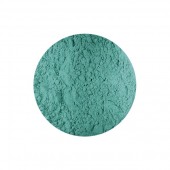
Verdigris Pigment
Starting at: £4.90
Verdigris is an artificial pigment that dates from antiquity. Originally, it was produced by exposing copper to vinegar; nowadays acetic acid is used. It is acidic, so can contribute to the deterioration of paper supports. For this reason, it is more suited to oil or tempera painting than it is to watercolour. In tempera painting, it should be bound in animal glue or isinglass glue rather than egg york. When used in oil painting it should be held in a resin oil or balsam such as Venice Turpentine, as it can turn brown when ground directly into linseed oil. It is a fast-drying, transparent pigment, with a visible crystalline structure.
Larger quantities are available by request.
Learn More -
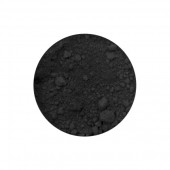
Mars Black Pigment
Starting at: £5.70
PBk11
Mars Black is an artificial mineral pigment composed of hydrated ferric oxides. Like other Mars colours, it provides a very opaque, permanent colour, which is stable in all media. It has an average drying time in oil, forming a hard, fairly flexible film, making it more suitable for impasto application than carbon-based black pigments, which tend to be brittle. It also wets more easily than other black pigments, and possesses a warm, brownish undertone.
Toxicity: B
Limeproof
Larger quantities are available by request.
Learn More -
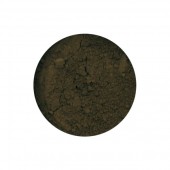
Raw Umber Greenish Pigment
Starting at: £4.80
PBr7
Raw Umber Greenish is a natural earth pigment composed of iron oxide, manganese, and aluminium silicate. It has its roots in the Umbria region of Italy, and was historically a popular colour for underpaintings, as it dries very quickly. It is semi-opaque, very lightfast, and stable in all media but may be difficult to disperse in acrylic. It requires a large amount of liquid when mixed with oil.
Toxicity: B
Learn More -
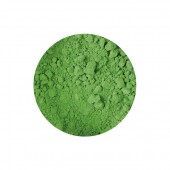
Cadmium Green Pigment
Starting at: £4.50
Cadmium Green is an artificial mineral pigment, a mixture of Cobalt and Cadmium Yellow. It is an opaque, lightfast, slow-drying pigment with a high tinting strength.
Toxicity C
Learn More -
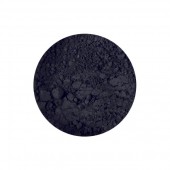
Ivory Black Pigment
Starting at: £4.50
Ivory Black is a natural pigment of impure carbon, derived from charred animal bones. It is semi-transparent, very lightfast, and offers good tinting strength. It is a particularly slow-drying pigment, which forms a soft, rather brittle paint film in oil.
Compared to other blacks, such as Vine Black, Ivory Black possesses warmer, brownish undertones. It should not be used at full-strength in an underpainting, as subsequent layers are likely to crack. Otherwise, it is a very useful all-purpose black for many types of paint, excluding mortar, fresco or cement.
Toxicity: B
Learn More -
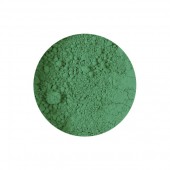
Viridian Green Pigment
Starting at: £6.50
Viridian Green is a synthetic inorganic pigment, similar in composition to Chromium Oxide. However, unlike Chromium Oxide, Viridian contains water molecules within its crystal structure, imparting a greater degree of transparency. Sometimes referred to as Verte Eméraude, Viridian was discovered in France in 1838, patented in 1859, and made available in the UK in 1862. It is stable in all media, and offers excellent lightfastness and good tinting strength. It requires a high oil content, and dries slowly to form a hard, fairly flexible paint film.
Toxicity B
Learn More -
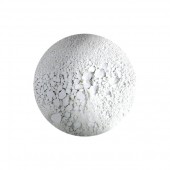
Titanium White Pigment
Starting at: £4.00
Titanium White, or Titanium Doixide, is an artificial mineral pigment introduced in the 1920s. It is valued for its opacity, good lightfastness, and stability in all media. Its high tinting strength can render it a dominant colour in mixtures. It is very slow drying in oil, and creates a somewhat brittle paint film, though more flexible than Zinc White. Its brightness makes it a popular addition to gesso.
Toxicity: B
Learn More -
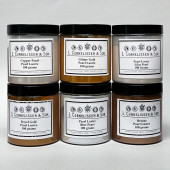
Cornelissen Pearl Lustre Pigments 100g
Starting at: £12.90
Pearl Lustre Pigments 100g. Colour swatch on the left indicates colour on a White Background and Colour on a Black Background on the right. Learn More -
Currently Shopping by:
- Category: Pigments, Gums, Resins Remove This Item
Shopping Options
- Category
-
- Artists Quality Pigment Sets (2)
- Artists Quality Pigments Blacks (7)
- Artists Quality Pigments Blues (11)
- Artists Quality Pigments Earths (24)
- Artists Quality Pigments Greens (9)
- Artists Quality Pigments Reds (12)
- Artists Quality Pigments Violets (4)
- Artists Quality Pigments Whites (4)
- Artists Quality Pigments Yellows (14)
- The Early Colour Pigments (21)
- Equipment (11)
- Fillers, Chalks, and Abrasives (11)
- Gums and Resins (15)
- Limeproof Pigments (28)
- London Pigment (13)
- Pearl Lustre Pigments (3)
- Small Pigment Sizes (2)
- Storage Containers (5)
- Waxes, Adhesives and Sizes (17)
- Price
-
- £0.00 - £9.99 (122)
- £10.00 - £19.99 (32)
- £20.00 - £29.99 (20)
- £30.00 - £39.99 (9)
- £40.00 - £49.99 (3)
- £50.00 - £59.99 (1)
- £90.00 and above (2)
- Manufacturer
-
- Cornelissen (164)
- London Pigment (13)
- Roberson (1)
- Schmincke (6)
You have no items in your shopping basket.

- Search Brands
-