

Search results for '10'


-
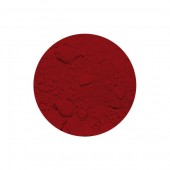
Cadmium Red Deep Pigment
Starting at: £15.00
PR108
Cadmium Red Deep is a synthetic organic pigment, which has been in use since the 1920s, effectively replacing vermilion. It is formed by heating cadmium sulphide and selenium, the hue is determined by the level of calcination and proportion of selenium. It is very opaque, and lightfast, with a high tinting strength. It absorbs a small amount of oil, and dries very slowly to form a hard, flexible paint film.
Larger quantities are available by request.
Limeproof
Toxicity: C
Learn More -
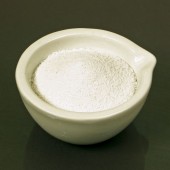
Marble Dust
Starting at: £4.70
Imparts texture when added to acrylic mediums and primers. Can also be used in lime mortar. Available in three different grades: - Coarse (irregular granules); - Medium (mesh size: 16); - Fine (mesh size: 100; most appropriate for use in paint). Learn More -
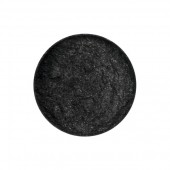
Graphite Powder (Sri Lanka)
Starting at: £5.50
PBk10
Graphite powder is an allotropic form of pure carbon, ground to 200 mesh. It is transparent and lightfast, with a slight sheen. It can be applied directly onto a paper support.
Larger quantities are available by request. This variety of graphite is a naturally occurring material sourced from Sri Lanka.
Toxicity: A/B
Learn More -
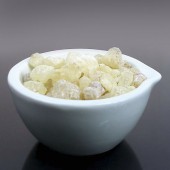
Gum Damar
Starting at: £10.00
Damar is a pale, almost colourless tree resin, which is soluble in turpentine, but not in alcohol or mineral spirits. It can be used as a varnish or as a glossy painting medium in conjunction with vegetable oils, and is generally preferable to other resin-based varnishes, such as mastic varnish, as it retains its colourless appearance for a longer period of time. In encaustic painting, the inclusion of damar resin imparts toughness and gloss to the paint surface. Learn More -
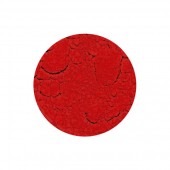
Cadmium Vermilion Pigment
Starting at: £7.50
PR108
Cadmium Red is a synthetic organic pigment that has been in use since the 1920s. It is formed by heating cadmium sulphide and selenium, the hue is determined by the level of calcination and proportion of selenium. It is very opaque, and lightfast, with a high tinting strength. It absorbs a small amount of oil, and dries very slowly to form a hard, flexible paint film. This shade has been formulated to imitate the bright hue of vermilion.
Larger quantities are available by request.
Limeproof
Toxicity: C
Learn More -
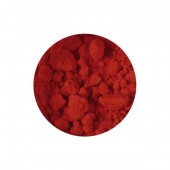
Cadmium Red Pigment
Starting at: £8.40
PR108
Cadmium Red is a synthetic organic pigment, which has been in use since the 1920s, effectively replacing vermilion. It is formed by heating cadmium sulphide and selenium, the hue is determined by the level of calcination and proportion of selenium. It is very opaque, and lightfast, with a high tinting strength. It absorbs a small amount of oil, and dries very slowly to form a hard, flexible paint film.
Larger quantities are available by request.
Limeproof
Toxicity: C
Learn More -

Cornelissen Virtual Gift Voucher
£25.00The Cornelissen Virtual Gift Voucher will arrive with the recipient in the form of an email containing a virtual gift code. This code will be emailed immediately after the order is placed. Please see the range of values available below. Vouchers can be redeemed fully or partly and do not expire. Alternatively, please call us on 020 7636 1045 or email info@cornelissen.com to request one of the following:Physical Gift Voucher (a paper voucher with a code for use only in the shop, for any value).
Combination Gift Voucher (a paper voucher with separate codes for use online or in the shop, for the values listed on the website).
If you purchase a Physical or Combination Gift Voucher, this will be sent to you in the post. Learn More -
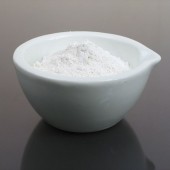
Plaster of Paris
Starting at: £6.00
For moulding when mixed with the same volume of water. Sets quickly and will not shrink. Learn More -
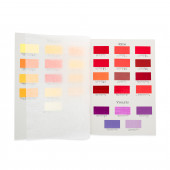
Cornelissen Pigment Colour Chart
£40.00Cornelissen Pigment Colour Chart. 85 pigment samples displayed in a 6 page 300 gsm A4 booklet, including 'permanence' and 'colour index' references. Colour swatches have been made using a casein binder. Learn More -
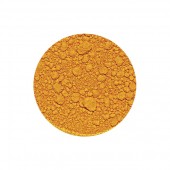
Cadmium Yellow Deep Pigment
Starting at: £7.40
Cadmium Yellow Deep Pigment (PY37). Synthetic Inorganic pigment. Opaque. Good tinting strength. Excellent Lightfastness. Low oil absorption with slow drying rate. Suitable for all media. Good acid and alkali resist. Exterior application not advised as discoloration occurs. Used since 19th Century. Toxicity B/C. Learn More -
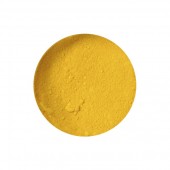
Cadmium Yellow Light Pigment
Starting at: £6.20
Cadmium Yellow Light Pigment (PY37). Synthetic Inorganic pigment. Opaque. Good tinting strength. Excellent Lightfastness. Low oil absorption with slow drying rate. Suitable for all media. Good acid and alkali resist. Exterior application not advised as discoloration occurs. Used since 19th Century. Toxicity B/C. Learn More -
-
-
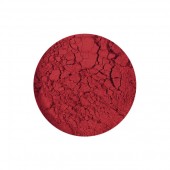
Quinacridone Red Pigment
Starting at: £5.50
Quinacridone Red Pigment (PV19). Organic pigment. Very transparent. High tinting strength. Excellent Lightfastness. High oil absorption with slow drying rate. Requires wetting agent. Suitable for all media. Developed in the 1950's. Toxicity A/B. Learn More -
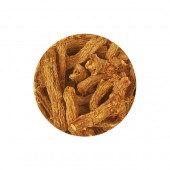
Madder Root Pieces
Starting at: £27.80
NR9
The madder plant was once widely cultivated for the red dye extracted from its roots. Its earliest known use is in ancient Egypt, and there is evidence of its widespread adoption in Europe from the medieval period. Madder Lake, the pigment that is derived from the root, has now largely been replaced by synthetic alizarin pigments, but it is still used as an ingredient in some commercial paints. It provides a very transparent pigment, with a weak tinting strength, which can be used in all lime-free media, although it is very slow-drying in oil. It is fugitive to sunlight, so paintings containing Madder should be stored appropriately, but it remains one of the most lightfast plant-based pigments.
Larger quantities are available by request.
Learn More -
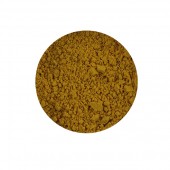
Stil de Grain
Starting at: £12.20
NY13:75640 Stil de Grain is a natural yellow pigment derived from unripe buckthorn berries, which were also once used to produce sap green pigment before the introduction of synthetic alternatives. Stil de Grain may also be known as brown lake, yellow lake, Persian lake, buckthorn lake, Dutch pink, yellow carmine and Italian pink. It has a weak tinting strength, and is very transparent, especially in oil. When mixed with oil, the pigment becomes saturated, darkening considerably in colour and drying very slowly, whereas in a water-based paint it is appears as a warm yellow. It is very fugitive to light, and compatible with all media, except lime. Larger quantities are available by request. Learn More -
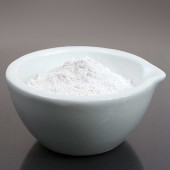
French Chalk
Starting at: £5.50
French Chalk is a term commonly used to describe talcum powder and is also known as talc. This grade is very fine magnesium silicate It is sometimes used as a filler in pastels, to make soft sticks that produce velvety marks as it has a soapy like consistency.
Learn More -
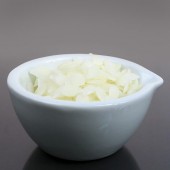
Bleached Beeswax
Starting at: £12.30
Beeswax is derived from melted honeycomb, and is available in two grades. Bleached Beeswax Pellets are white, having been bleached by the sun, and are an appropriate choice for using with pale colours, although they may revert to yellow over time. Natural Beeswax Pellets are yellow in colour, and offer a more flexible structure with a higher resin content. Beeswax has a melting point of 63-66°c, and may turn brown if over-heated. It is the most widely used wax in artists' materials, having a wide range of applications. Please see below for more details.
Learn More -
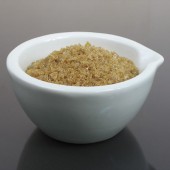
Rabbit Skin Glue
Starting at: £13.00
For sizing canvas prior to priming with an oil based primer. Do not use under acrylic primer. Soak overnight in water. Heat in double boiler (do not boil). Ratio water:size 13:1. Use while still warm. Rabbit Skin Glue does not contain preservatives. 340 - 360 Bloom Learn More
-
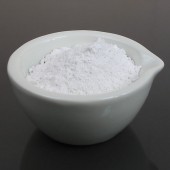
Precipitate Chalk
Starting at: £6.30
Precipitate Chalk is fine and white. For use in aqueous mediums as a ground for oil and tempera paintings. Learn More -
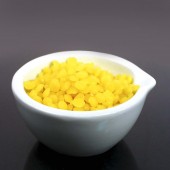
Natural Beeswax
Starting at: £11.20
Beeswax is derived from melted honeycomb, and is available in two grades. Bleached Beeswax Pellets are white, having been bleached by the sun, and are an appropriate choice for using with pale colours, although they may revert to yellow over time. Natural Beeswax Pellets are yellow in colour, and offer a more flexible structure with a higher resin content. Beeswax has a melting point of 63-66°c, and may turn brown if over-heated. It is the most widely used wax in artists' materials, having a wide range of applications. Please see below for more details.
Learn More -
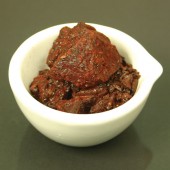
Dragon's Blood Pieces
Starting at: £25.40
Dragon's Blood is a natural, resin, mentioned by Pliny in his Natural History. It has a weak tinting strength, and its rich red colour can be fugitive in direct sunlight. It is fully soluble in alcohol, and can be used to add a warm, transparent tone to spirit varnishes. Also available in powdered form.
Learn More -
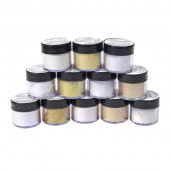
Pearl Lustre Pigments 1 kg
Starting at: £94.00
Call to Order
Pearl Lustre Pigments 1 kg. Colour swatch on the left indicates colour on a White Background and Colour on a Black Background on the right. Learn More -
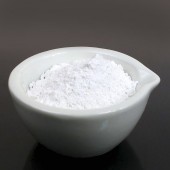
Gesso di Bologna
Starting at: £12.00
Gesso di Bologna is a bright white Calcium Sulphate, or gypsum, from Italy, which can be used as a substitute for whiting in the preparation of gesso. It is ground to a particularly fine powder, which makes it a suitable ground for gilding, as the small size of the particles allows for greater compression when burnishing. Learn More -
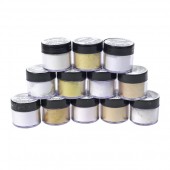
Pearl Lustre Pigments 7g
Starting at: £4.70
Pearl Lustre Pigments 7g. Colour swatch on the left indicates colour on a White Background and Colour on a Black Background on the right. Learn More -
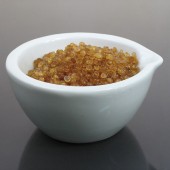
Pearl Glue
Starting at: £6.50
Pearl Glue is a traditional animal-based wood glue made from bone, used for veneering, joinery and antique restoration. 170-200 bloom. Learn More
-
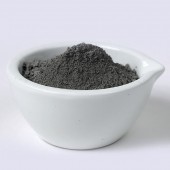
Rottenstone Grey
Starting at: £7.00
Fine abrasive powder used historically for polishing daguerreotype plates. Can be used to age wooden frames and object's d'art. Learn More -
-
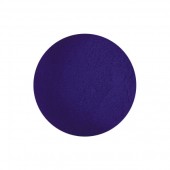
Prussian Blue Pigment
Starting at: £5.20
PB27
Prussian Blue is a synthetic organic pigment that was discovered by the paint maker Diesbach, apparently by accident, in Germany in the early eighteenth century. For many years, it was used not only as a colour in its own right, but also as a component of the original Hooker's Green. The other ingredient, gamboge, is highly fugitive, which is why many watercolours painted with Hooker's green have taken on a bluish tone with with age.
It is a very transparent and heavily staining colour. It dries quite quickly in oil, and can therefore wrinkly if applied too quickly. It is suitable for use in oils, watercolour, and egg tempera. However, it shouldn't be used in conjunction with alkali substances, such as Lead White or Calcium Carbonate as it can turn brown, so it isn't suitable for fresco. For the same reason, it isn't used with acrylic resin binders due to their alkaline nature, so most paint manufacturers will replace Prussian Blue with a mixture of Phthalo Blue and black in their acrylic ranges. It requires a wetting agent to fully disperse into a binder.
Toxicity: B
Learn More -
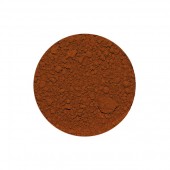
Pozzuoli Red Pigment
Starting at: £5.20
Pozzuoli Red is a natural earth pigment that was originally found in the volcanic areas in Pozzuoli, Italy. It was unique for its cement-like setting qualities due to naturally occurring silica. Modern Pozzuoli Red refers to the warm red colour rather than this physical characteristic.
Toxicity: B
Learn More
Currently Shopping by:
- Category: Pigments, Gums, Resins Remove This Item
Shopping Options
- Category
-
- Artists Quality Pigment Sets (1)
- Artists Quality Pigments Blacks (6)
- Artists Quality Pigments Blues (6)
- Artists Quality Pigments Earths (24)
- Artists Quality Pigments Greens (3)
- Artists Quality Pigments Reds (8)
- Artists Quality Pigments Violets (1)
- Artists Quality Pigments Whites (3)
- Artists Quality Pigments Yellows (12)
- The Early Colour Pigments (19)
- Equipment (5)
- Fillers, Chalks, and Abrasives (7)
- Gums and Resins (12)
- Limeproof Pigments (22)
- London Pigment (1)
- Pearl Lustre Pigments (3)
- Small Pigment Sizes (1)
- Storage Containers (4)
- Waxes, Adhesives and Sizes (11)
- Price
-
- £0.00 - £9.99 (91)
- £10.00 - £19.99 (23)
- £20.00 - £29.99 (7)
- £30.00 - £39.99 (2)
- £40.00 - £49.99 (2)
- £90.00 and above (2)
- Manufacturer
-
- Cornelissen (123)
- London Pigment (1)
- Roberson (1)
- Schmincke (1)
You have no items in your shopping basket.

- Search Brands
-