

Search results for 'de 1'


-
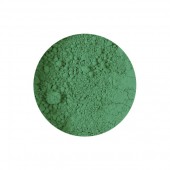
Viridian Green Pigment
Starting at: £6.50
Viridian Green is a synthetic inorganic pigment, similar in composition to Chromium Oxide. However, unlike Chromium Oxide, Viridian contains water molecules within its crystal structure, imparting a greater degree of transparency. Sometimes referred to as Verte Eméraude, Viridian was discovered in France in 1838, patented in 1859, and made available in the UK in 1862. It is stable in all media, and offers excellent lightfastness and good tinting strength. It requires a high oil content, and dries slowly to form a hard, fairly flexible paint film.
Toxicity B
Learn More -
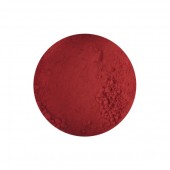
Alizarin Crimson Pigment
Starting at: £4.50
PR83
Alizarin Crimson is a synthetic organic pigment that became available in 1868. It requires a wetting agent to disperse, and in oil it also absorbs a lot of liquid and dries very slowly to form a hard, brittle paint film. It is chemically identical to madder-root pigments and should be protected against UV light where possible as it can fade when applied onto a white ground, although it is less fugitive than its natural counterpart. Alizarin Crimson is a very transparent pigment, with a high tinting strength and slightly blue undertone.
Toxicity: A/B
Larger quantities are available by request.
Learn More -
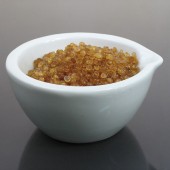
Pearl Glue
Starting at: £6.50
Pearl Glue is a traditional animal-based wood glue made from bone, used for veneering, joinery and antique restoration. 170-200 bloom. Learn More
-
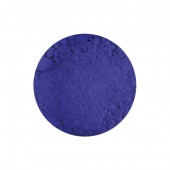
Cobalt Blue Pigment
Starting at: £6.50
PB28
Cobalt Blue is an artificial mineral pigment, produced by the calcination of cobalt oxide and aluminium oxide. It has been widely used since the early 1800s, following its discovery by the French chemist Thenard at the beginning of the century. The name Cobalt has its roots in the German word Kobold, meaning imp or evil spirit. German miners specifically used this name in the late-Middle Ages, as the presence of Cobalt ore in the mines made the extraction of silver very difficult. They were possibly aware of the toxic properties of the mineral frustrating their efforts.
Cobalt remains a very popular colour today, and is present in most ranges of paints, being a semi-transparent pigment that is stable in all media. As a watercolour, all cobalt pigments tend to granulate. As an oil paint, it requires less oil content than most other pigments, and dries quite quickly. Like Cerulean Blue, some artists may choose to bind it with poppy oil, to avoid any possible colour changes brought about by the yellowish cast of linseed oil and the pigment's weak tinting strength.
Limeproof
Toxicity: C
Learn More -
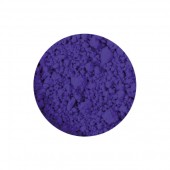
Ultramarine Blue Dark Pigment
Starting at: £4.00
PB29
Ultramarine Blue Dark is an artificial mineral pigment that is produced by heating clay, soda, sulphur and coal to high temperatures. Its name comes from outremer, or over-the-sea, as a reference to the highly-prized Lapis Lazuli pigment which had been imported into Europe from Afghanistan since the Middle Ages. First manufactured in France and Germany in 1828, synthetic Ultramarine provided a brilliant and affordable blue to artists, and it remains one of the most popular blues on artists' palettes today.
It is a transparent pigment, with a high tinting strength and excellent lightfastness. It reacts to alkali, therefore it is not suitable for use in lime-fresco; we do offer a Limeproof Ultramarine Blue for this purpose. It is stable in all other media, although it can be tricky to grind in oil. Instead of creating a thick, buttery paste, it can remain stringy and deteriorate when stored in a tube. To correct this, many commercial paint manufacturers include additives and waxes in their recipes; if you intend on grinding your own paint, you could try replacing 10-15% of your Linseed Oil with Poppy Oil to improve the consistency. Ultramine Blue provides a slow-drying, fairly hard paint film, which can tend towards brittleness.
Toxicity: B
Learn More -
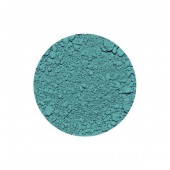
Cobalt Turquoise Pigment
Starting at: £15.00
Toxicity: B
Please note, unfortunately we are not able to send this product outside the UK. Learn More -
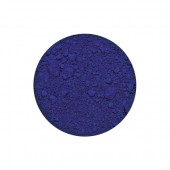
Oriental Blue Pigment
Starting at: £5.40
Oriental Blue Pigment (PB29). Inorganic pigment consisting kaolin, soda ash, sulfides and coal. Semi-transparent. High tinting strength. Excellent Lightfastness. Medium to slow drying rate. Suitable in all media except Lime-fresco. Used since early 19th Century. Toxicity B Learn More -
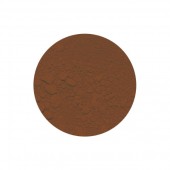
Cadmium Brown Pigment
Starting at: £10.00
PR108
Cadmium Brown is a shade of Cadmium Red, a synthetic organic pigment that has been in use since the 1920s. It is formed by heating cadmium sulphide and selenium, the hue is determined by the level of calcination and proportion of selenium. It is very opaque, and lightfast, with a high tinting strength. It absorbs a small amount of oil, and dries very slowly to form a hard, flexible paint film.
Larger quantities are available by request.
Limeproof
Toxicity: C
Learn More -
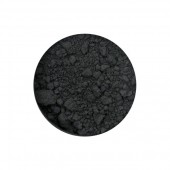
Lamp Black Pigment
Starting at: £6.70
PBk 6
Lamp Black is an inorganic, synthetic, pure carbon pigment. Originally made from soot collected from oil lamps and fireplaces, its modern equivalent is derived from partly combusted mineral and vegetable oil. It is a cool, transparent, bluish black, with a good tinting strength, and stable in all media. It requires a wetting agent, and in oil it has a very high absorption drying very slowly.
Larger quantities are available by request.
Learn More -
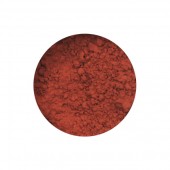
Venetian Red Pigment
Starting at: £4.60
Venetian Red Pigment (PR101). Iron oxide and chalk. Semi-transparent and very lightfast. Stable in all media.
Limeproof
Toxicity: B
Learn More -
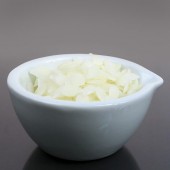
Bleached Beeswax
Starting at: £12.30
Beeswax is derived from melted honeycomb, and is available in two grades. Bleached Beeswax Pellets are white, having been bleached by the sun, and are an appropriate choice for using with pale colours, although they may revert to yellow over time. Natural Beeswax Pellets are yellow in colour, and offer a more flexible structure with a higher resin content. Beeswax has a melting point of 63-66°c, and may turn brown if over-heated. It is the most widely used wax in artists' materials, having a wide range of applications. Please see below for more details.
Learn More -
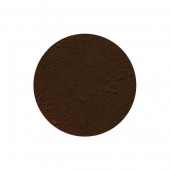
Indian Red Pigment
Starting at: £4.60
PR101
Indian Red was imported into the UK during the nineteenth century, its present-day equivalent is a synthetic iron oxide. Its pigment code, PR101, refers to a wide spectrum of synthetic iron oxide pigments including yellows, oranges, reds, violet-browns and green-browns; Indian Red is a slightly cool, bluish shade of red. It is semi-opaque, stable in all media, lightfast, and possesses a good tinting strength
Toxicity: B
Limeproof
Learn More -
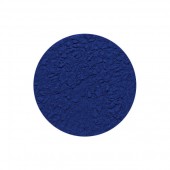
Ultramarine PB29 Pigment
Starting at: £9.10
PB29
Ultramarine Blue is an artificial mineral pigment that is produced by heating clay, soda, sulphur and coal to high temperatures. Its name comes from outremer, or over-the-sea, as a reference to the highly-prized Lapis Lazuli pigment which had been imported into Europe from Afghanistan since the Middle Ages. First manufactured in France and Germany in 1828, synthetic Ultramarine provided a brilliant and affordable blue to artists, and it remains one of the most popular blues on artists' palettes today.
It is a transparent pigment, with a high tinting strength and excellent lightfastness. It reacts to alkali, therefore it is not suitable for use in lime-fresco; we do offer a Limeproof Ultramarine Blue for this purpose. It is stable in all other media, although it can be tricky to grind in oil. Instead of creating a thick, buttery paste, it can remain stringy and deteriorate when stored in a tube. To correct this, many commercial paint manufacturers include additives and waxes in their recipes; if you intend on grinding your own paint, you could try replacing 10-15% of your Linseed Oil with Poppy Oil to improve the consistency. Ultramine Blue provides a slow-drying, fairly hard paint film, which can tend towards brittleness.
Toxicity: B/C
Learn More -
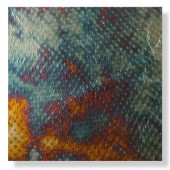
Cornelissen Variegated Metal Leaf 217
Starting at: £20.90
Cornelissen Variegated Metal Leaf 217 Learn More -
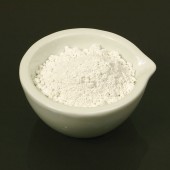
Gypsum
Starting at: £5.70
Gypsum is powdered Calcium Sulphate, a traditional ingredient in gesso grounds used in southern Europe. One of the advantages of preparing your painting surface with gypsum is that it allows for a particularly even absorption of the paint film. It can also be added to acrylic primers to increase absorbency or add tooth to a surface. Learn More -
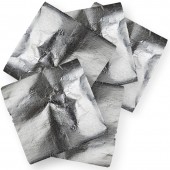
Cornelissen Aluminium Leaf Bulk Packs
Starting at: £18.60
Cornelissen Aluminium Leaf Bulk Packs Learn More -
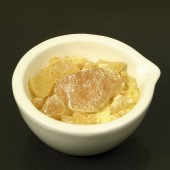
Colophony
Starting at: £7.30
Colophony is a by-product of the distillation of turpentine. It is soluble in most solvents, but considered an adulterant in varnishes and paints, as it forms a weak surface that is prone to darkening and cracking. It is, however, a key ingredient in wax-based etching grounds, imparting hardness, and can be used in powdered form (rosin) to make aquatints. Learn More -
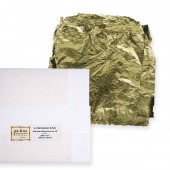
Cornelissen Imitation Gold No 2.5 Bulk Packs
Starting at: £18.30
Cornelissen Imitation Gold No 2.5 Bulk Packs Learn More -
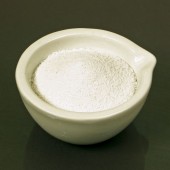
Marble Dust
Starting at: £4.70
Imparts texture when added to acrylic mediums and primers. Can also be used in lime mortar. Available in three different grades: - Coarse (irregular granules); - Medium (mesh size: 16); - Fine (mesh size: 100; most appropriate for use in paint). Learn More -
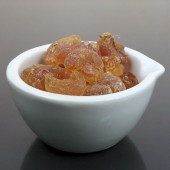
Gum Arabic
Starting at: £6.30
Gum Arabic is a resoluble binding agent, commonly used in the preparation of watercolours, but also useful as an adhesive, a size, and in the production of soft pastels. It is a natural product, harvested from the Acacia tree between October and May. The highest grade of Gum Arabic comes from the Kordofan region of Sudan. It is exceptionally pale and pure and therefore particularly suited to watercolour painting. Please see the Formulas & Recipes section on our homepage for a recipe to make your own watercolour paints using Gum Arabic (currently under construction). Learn More -
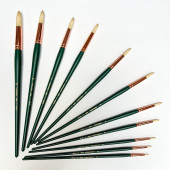
Cornelissen Series 43 Hog Bristle Round
Starting at: £5.00
Finest quality selected interlocking Chinese white hog hair. Seamless copper ferrule. Green handle. Length approximately 300mm / 370mm depending on size. Learn More -
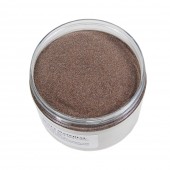
Carborundum Powder
Starting at: £16.40
Carborundum Powder. Grid of coarseness: Fine 120/220, Medium 80/120, Coarse 60/80 Learn More -
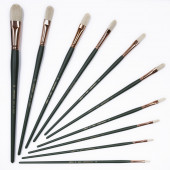
Cornelissen Series 44 Hog Bristle Filbert
Starting at: £5.00
Finest quality selected interlocking Chinese white hog hair. Seamless copper ferrule. Green handle. Length approximately 300mm depending on size. Size / A [width at ferrule]mm / B [visible hair / fibre length]mm / C [total length]mm 0 4 11 291 1 5 15 297 2 6 17 303 3 7 20 305 4 10 22 309 5 10 24 315 6 11 26 320 7 14 28 330 8 14 32 337 10 19 35 342 12 22 38 349 Learn More -
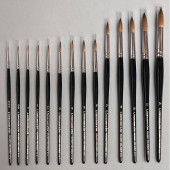
Cornelissen Series 80A Kolinsky Sable
Starting at: £6.60
High quality Kolinsky sable with good spring and pointing characteristics. Very useful for detailed work. Learn More -
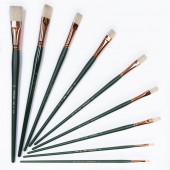
Cornelissen Series 42 Hog Bristle Flat
Starting at: £5.00
Finest quality selected interlocking Chinese white hog hair. Seamless copper ferrule. Green handle. Length approximately 300mm / 370mm depending on size. Learn More -
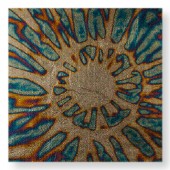
Cornelissen Variegated Metal Leaf 216
Starting at: £20.90
Cornelissen Variegated Metal Leaf 216 Learn More -
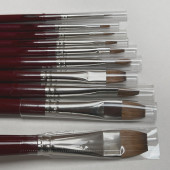
Cornelissen Sable Bright
Starting at: £6.70
Made from the same quality red sable as the rounds and used for short, thicker strokes of paint. Learn More -
-
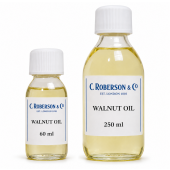
Roberson Walnut Oil
Starting at: £9.00
The introduction of Walnut Oil as a pigment binder is contemporaneous with the emergence of Linseed Oil. Their drying properties have been appreciated since the Middle Ages, and throughout history there is evidence of both oils being used alongside each other within the same painting. In fact, until the sixteenth century, it is believed that Walnut Oil was the preferred binding medium among Italian artists. It is made from mature walnut kernals, offering a pale colour and brilliant gloss. For this reason, it is sometimes chosen as a binder for light colours, as it provides a stronger paint film than Poppy Oil, and faster drying times. However, a paint film made from Walnut Oil will tend to be brittle, so it is more suited to a rigid support rather than canvas.
Learn More -
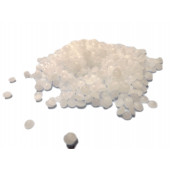
Microcrystalline Wax
Starting at: £8.50
Microcrystalline Wax is related to paraffin wax, and is used as a plasticiser in some recipes. It is characterised by the fineness of its crystals in contrast to the larger crystal of paraffin wax. It is generally more viscous, denser, tackier and more elastic than paraffin waxes, and has a higher melting point. Learn More
Currently Shopping by:
- Manufacturer: Cornelissen Remove This Item
Shopping Options
- Category
-
- Pigments, Gums, Resins (128)
- Oils, Acrylics (5)
- Canvas, Supports (10)
- Watercolour, Gouache, Egg Tempera (7)
- Drawing, Calligraphy (16)
- Gilding, Restoration (65)
- Printmaking (41)
- Brushes (14)
- Paper (4)
- Studio, Books (18)
- Signwriting, Specialist Decorating (8)
- Price
-
- £0.00 - £999.99 (289)
- £1,000.00 - £1,999.99 (1)
- £2,000.00 - £2,999.99 (1)
- £3,000.00 - £3,999.99 (1)
- £4,000.00 and above (1)
You have no items in your shopping basket.

- Search Brands
-