

Search results for 'en til for'


-
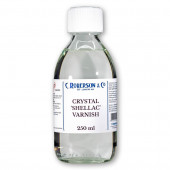
Roberson Crystal Shellac Varnish
Starting at: £10.60
Clear synthetic varnish with superior clarity. Does not discolour gold and silver leaf. Use as a protective coating over gilded surfaces to prevent tarnishing and for sealing gesso prior to gilding. Learn More -
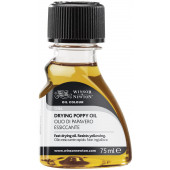
Winsor & Newton Drying Poppy Oil
Starting at: £9.85
From the Winsor & Newton website: A fast-drying, pale oil made from poppy seeds which is well suited for whites and pale colours. Reduces consistency. Increases gloss & transparency. Resists yellowing.
Learn More -
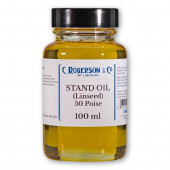
Roberson Linseed Stand Oil
Starting at: £10.50
Linseed Oil is derived from flax seeds, and appears on our shelves in many guises: Cold Pressed, Refined, Stand Oil, and as a key ingredient in many mediums. It has been appreciated for its drying properties since the Medieval period, and has become the most popular oil used in painting today due to the strong, flexible and glossy film that it creates.
Stand Oil is paler and more viscous than other Linseed Oils, having been heated and kept at temperature to provoke a molecular change. It is not suitable for grinding colours, but it is a very versatile ingredient that can be thinned with turpentine to create a glazing medium or be included in a varnish. Stand Oil is notable for its ability to smooth out brush strokes to create an enamel-like surface.
Learn More -
Roberson Copperplate Reducing Oil
Starting at: £24.00
Printing inks can be made by mixing powdered pigments with copperplate oil. Pour small quantity of oil into well of dry pigment and grind with glass muller untill smooth. Thin oil is then added until mixture has consistency of double cream. Thin, Medium or Thick. Learn More -
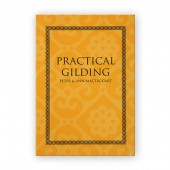
Practical Gilding
£11.95By Peter & Ann Mactaggart. This book is an attempt to set down detailed descriptions and explanations of the traditional, professional methods of both oil and water gilding in a way that can be followed by another craftsman. It does not discuss some of the methods that have been suggested recently for amateur use. (74 pages) Learn More -
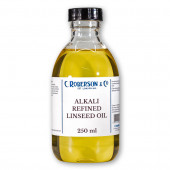
Roberson Refined Linseed Oil
Starting at: £13.30
Linseed Oil is derived from flax seeds, and appears on our shelves in many guises: Cold Pressed, Refined, Stand Oil, and as a key ingredient in many mediums. It has been appreciated for its drying properties since the Medieval period, and has become the most popular oil used in painting today due to the strong, flexible and glossy film that it creates.
Alkali Refined Linseed Oil has been treated to reduce its acidity, and is a useful ingredient in mediums and varnishes.
Learn More -
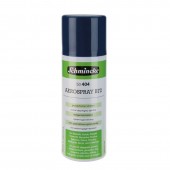
Schmincke Aerosol B72 300ml
£17.80Performs in a similar protective way as Lascaux Fixative. Non yellowing, crystal clear and age-resistant. Suitable as a fixative and protection for pencil, charcoal, pastels, watercolours, gouache, inks, metal leaf, photos and prints. Can also be used as a final varnish for oil and acrylic colours. Invisible on absorbent surfaces and semi matt very slightly glossy on non absorbent surfaces. Learn More -
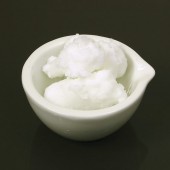
Tallow
Starting at: £34.60
Used in printmaking. Imparts softness and greasiness. An ingredient for producing soft etching ground. Learn More -
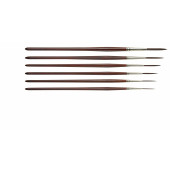
Pro Arte Series 203 Rigger Acrylix
Starting at: £4.25
Combines the strenghts of the series 202 with long hair to provide long accurate lines in all media. Learn More -
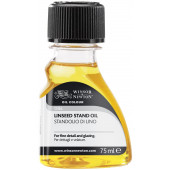
Winsor & Newton Stand Linseed Oil
Starting at: £9.85
From the Winsor & Newton website: A pale viscous oil that slows drying while imparting a tough, smooth enamel finish with no brush marks. Increases film durability. Ideal for glazing and fine detail if mixed with solvent.
Learn More -
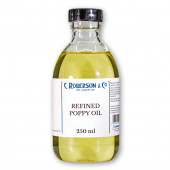
Roberson Poppy Oil
Starting at: £10.20
Poppy Oil is a slightly later addition to the artist's cabinet than Linseed Oil and Walnut Oil. It is generally used as a binder for pale colours, where the warmth of Linseed Oil is not desired. It provides a matte finish and dries very slowly, so we would not advise using it in conjunction with slow-drying pigments or in underpaintings. A paint film produced by Poppy Oil is weaker and softer than that created by Linseed Oil. This is because it contains a smaller percentage of linolenic acid than Linseed Oil; this substance imparts both strength and yellowness to an oil.
Although some of these properties can be perceived as drawbacks, paints made with Poppy Oil generally obtain a "short" or buttery texture without the addition of waxes or other additives, which can be an advantage for certain colours that produce poor consistencies in Linseed oil alone. Sometimes, the addition of a small quantity of Poppy Oil when grinding a tricky or "stringy" pigment in Cold Pressed Linseed Oil can introduce some of benefits of Poppy Oil, without transmitting its negative characteristics.
Paints made with Poppy Oil are particularly suited to "alla prima" working methods, where paint is applied spontaneously. When working in successive layers, Poppy Oil would only be appropriate for the final stages of a painting.
Learn More -
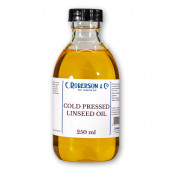
Roberson Cold Pressed Linseed Oil
Starting at: £7.50
Linseed Oil is derived from flax seeds, and appears on our shelves in many guises: Cold Pressed, Refined, Stand Oil, and as a key ingredient in many mediums. It has been appreciated for its drying properties since the Medieval period, and has become the most popular oil used in painting today due to the strong, flexible and glossy film that it creates. Cold Pressed Linseed Oil is ideal for the grinding of pigment to make oil paints. The process of producing Cold Pressed Linseed Oil results in a lower yield, but the resultant oil is of a superior quality to oil that has been extracted by other methods, creating a paint film that is more resistant to embrittlement on aging. Its yellow colour is caused by the high concentration of linolenic acid, the presence of which provides durability to the paint film. The amount of oil that each pigment requires can vary enormously. Alizarin Crimson, for example, requires a high percentage of oil compared to most other colours. We would always recommend mulling the pigment and oil together thoroughly to create a "short" or buttery paste, with evenly dispersed, well-coated pigment particles. This process contributes to the strength and flexibility of the paint film, and prevents the inclusion of excess oil. Origin: USA Learn More -
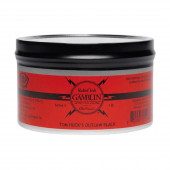
Gamblin Tom Huck's Outlaw Black Relief Ink 1 lb
£25.00Relief printing cool black for highly detailed woodblock printing on paper. Stiff bodied, cool black Intense ink for fine detail Pure burnt plate linseed oil base No fillers, additives, or modifiers Learn More -
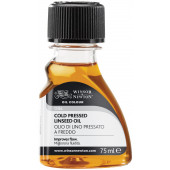
Winsor & Newton Cold Pressed Linseed Oil
Starting at: £9.85
From the Winsor & Newton website: A slightly yellow oil, which is extracted without the use of heat dries slightly quicker than refined linseed oil. Improves flow. Increases gloss & transparency. Reduces consistency and brushstrokes. Ideal for grinding pigments. Learn More -
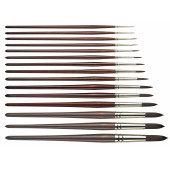
Pro Arte Series 202 Round Acrylix
Starting at: £3.45
This brush has an excellen point and spring well suited to detail work in acrylic, watercolour and oils Learn More -
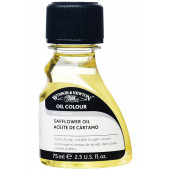
Winsor & Newton Safflower Oil 75 ml
£9.85From the Winsor & Newton website: A slow drying oil which improves flow, increases gloss and transparency. Particularly suitable for use with whites and pale colours.
Learn More -
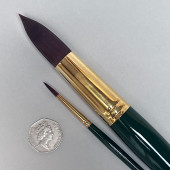
Roberson Interlon Series 63 Round
Starting at: £5.60
Made with new improved brown interlocking tapered filaments, these brushes have an excellent shape retention and firm texture. Good spring. Gold colour ferrule with bottle green handle. Learn More -
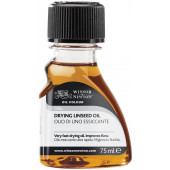
Winsor & Newton Drying Linseed Oil
Starting at: £9.85
From the Winsor & Newton website: Darker than refined Linseed Oil, this oil promotes the fastest drying rate of all the oils, whilst increasing gloss. Improves flow. Increases gloss transparency. Add to other oils to speed drying.
Learn More -
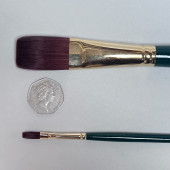
Roberson Interlon Series 62 Flat
Starting at: £5.60
Made with new improved brown interlocking tapered filaments, these brushes have an excellent shape retention and firm texture. Good spring. Gold colour ferrule with bottle green handle. Learn More -
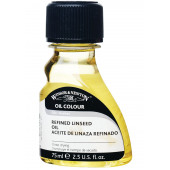
Winsor & Newton Refined Linseed Oil
Starting at: £7.30
From the Winsor & Newton website: Our most popular oil. A low viscosity alkali refined oil of pale colour that dries slowly. Reduces oil colour consistency. Increases gloss and transparency. Add to other oils to slow drying. Learn More -
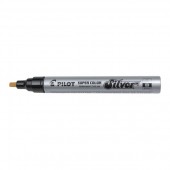
Pilot Super Colour Metallic Marker
Starting at: £5.80
Permanent marking on almost any suface - wood, metal, plastic, glass, rubber. Learn More -
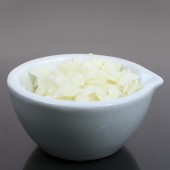
Bleached Beeswax
Starting at: £12.30
Beeswax is derived from melted honeycomb, and is available in two grades. Bleached Beeswax Pellets are white, having been bleached by the sun, and are an appropriate choice for using with pale colours, although they may revert to yellow over time. Natural Beeswax Pellets are yellow in colour, and offer a more flexible structure with a higher resin content. Beeswax has a melting point of 63-66°c, and may turn brown if over-heated. It is the most widely used wax in artists' materials, having a wide range of applications. Please see below for more details.
Learn More -
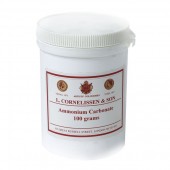
Ammonium Carbonate
Starting at: £9.70
Ammonium Carbonate is a highly Alkaline substance that reacts with the lactic acid present in casein to form a robust binder for tempera paints. It should only be used in a well-ventilated area, please see below for the Material Safety Data Sheet. Learn More -
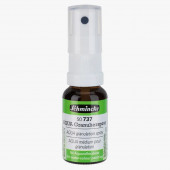
Schmincke Aqua Granulation Spray 15 ml
£8.55Create effects similar to granulation effects in watercolours, with an even paint flow. Learn More -
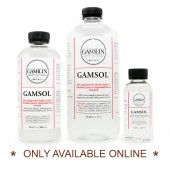
Gamblin Gamsol Mineral Sprit
Starting at: £9.30
Gamsol is an odourless mineral spirit created by the American company Gamblin. They describe it as "the safest solvent that allows oil painters to utilize all traditional painting techniques without compromise."
Please see below for Gamsol's primary applications.
Learn More -
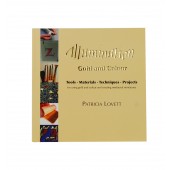
Illumination Gold and Colour Book
£15.00Patricia Lovett is one of the world’s leading authorities on the techniques and practical processes of making mediæval manuscripts. She lectures and teaches all over the world on calligraphy and illumination, and has written about a dozen books on these subjects, as well as producing a DVD – Illumination – Tools, Materials, Techniques, Projects. Patricia has run calligraphy courses as well as those on traditional manuscript gilding and painting techniques, and was awarded an MBE for her services to heritage crafts and calligraphy. This book takes the beginner and those with more experience through step-by-step processes to produce simple and easy projects using cheap metals and modern adhesives, and also to create mediæval miniatures and illuminated scrolls on vellum (animal skin). Learn More -
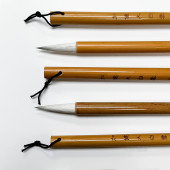
Chinese Brush, White Cloud, Bristle and Goat Hair, Large
£9.90Extra strength, 'White Cloud' brush. A versatile brush for painting and calligraphy. 4 cm brush head. Learn More -
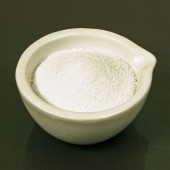
Marble Dust
Starting at: £4.70
Imparts texture when added to acrylic mediums and primers. Can also be used in lime mortar. Available in three different grades: - Coarse (irregular granules); - Medium (mesh size: 16); - Fine (mesh size: 100; most appropriate for use in paint). Learn More -
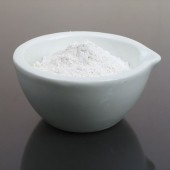
Plaster of Paris
Starting at: £6.00
For moulding when mixed with the same volume of water. Sets quickly and will not shrink. Learn More -
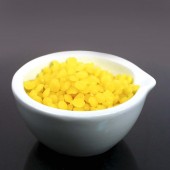
Natural Beeswax
Starting at: £11.20
Beeswax is derived from melted honeycomb, and is available in two grades. Bleached Beeswax Pellets are white, having been bleached by the sun, and are an appropriate choice for using with pale colours, although they may revert to yellow over time. Natural Beeswax Pellets are yellow in colour, and offer a more flexible structure with a higher resin content. Beeswax has a melting point of 63-66°c, and may turn brown if over-heated. It is the most widely used wax in artists' materials, having a wide range of applications. Please see below for more details.
Learn More
Shopping Options
- Category
-
- Pigments, Gums, Resins (196)
- Oils, Acrylics (197)
- Canvas, Supports (22)
- Watercolour, Gouache, Egg Tempera (93)
- Pastels (62)
- Drawing, Calligraphy (254)
- Gilding, Restoration (128)
- Printmaking (146)
- Brushes (75)
- Paper (44)
- Studio, Books (105)
- Signwriting, Specialist Decorating (32)
- Gift Vouchers (1)
- Price
-
- £0.00 - £999.99 (1163)
- £1,000.00 - £1,999.99 (2)
- £2,000.00 - £2,999.99 (3)
- £3,000.00 and above (2)
- Manufacturer
-
- Arches Aquarelle (1)
- ArtGraf (23)
- Automatic Pens (3)
- Bockingford (1)
- Brause (4)
- Canson (3)
- Charbonnel (18)
- Cornelissen (395)
- Cranfield (5)
- Creta (6)
- Da Vinci (21)
- Daler-Rowney (14)
- Daniel Smith (9)
- Daylight (1)
- e+m (11)
- Ecobra (1)
- Faber-Castell (19)
- Fabriano (10)
- Gamblin (17)
- Gillot (7)
- Golden (8)
- Hahnemuhle (2)
- Kölner (4)
- Korns (2)
- Lascaux (21)
- Lefranc et Bourgeois (5)
- Leonardt (3)
- Liquitex (12)
- London Pigment (14)
- Maimeri (6)
- Michael Harding (19)
- Milliput (1)
- Mitchell (17)
- Omega (4)
- Pelikan (4)
- Pentel (3)
- Pfeil (5)
- Pilot (8)
- Pro Arte (4)
- Rembrandt (1)
- Renaissance Workshop Materials (7)
- Roberson (98)
- Rohrer and Klingner (20)
- Schmincke (114)
- Sinopia (1)
- Somerset (2)
- Spectrum (3)
- Stabilo (7)
- Staedtler (9)
- Unison (8)
- Winsor&Newton (41)
- Factis (1)
- Swann Morton (6)
- Talens (5)
- Sennelier (39)
- Rotring (1)
- Color
You have no items in your shopping basket.

- Search Brands
-