Search results for 'the and'
-
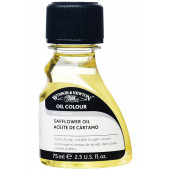
Winsor & Newton Safflower Oil 75 ml
£9.20From the Winsor & Newton website: A slow drying oil which improves flow, increases gloss and transparency. Particularly suitable for use with whites and pale colours.
Learn More -
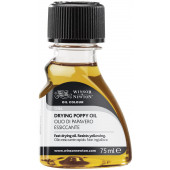
Winsor & Newton Drying Poppy Oil
Starting at: £9.20
From the Winsor & Newton website: A fast-drying, pale oil made from poppy seeds which is well suited for whites and pale colours. Reduces consistency. Increases gloss & transparency. Resists yellowing.
Learn More -
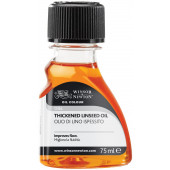
Winsor & Newton Thickened Linseed Oil
Starting at: £9.20
From the Winsor & Newton website: A pale refined oil of syrupy consistency which behaves like Linseed Stand Oil but dries quicker and darker. Improves flow and gloss. Increases the durability of paint film. Reduces brushstroke retention. Learn More -
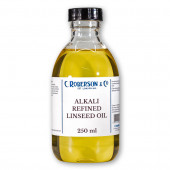
Roberson Refined Linseed Oil
Starting at: £13.30
Linseed Oil is derived from flax seeds, and appears on our shelves in many guises: Cold Pressed, Refined, Stand Oil, and as a key ingredient in many mediums. It has been appreciated for its drying properties since the Medieval period, and has become the most popular oil used in painting today due to the strong, flexible and glossy film that it creates.
Alkali Refined Linseed Oil has been treated to reduce its acidity, and is a useful ingredient in mediums and varnishes.
Learn More -
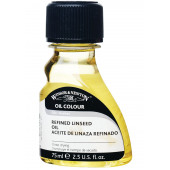
Winsor & Newton Refined Linseed Oil
Starting at: £6.85
From the Winsor & Newton website: Our most popular oil. A low viscosity alkali refined oil of pale colour that dries slowly. Reduces oil colour consistency. Increases gloss and transparency. Add to other oils to slow drying. Learn More -
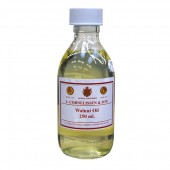
Cornelissen Walnut Oil
Starting at: £8.20
The introduction of Walnut Oil as a pigment binder is contemporaneous with the emergence of Linseed Oil. Their drying properties have been appreciated since the Middle Ages, and throughout history there is evidence of both oils being used alongside each other within the same painting. In fact, until the sixteenth century, it is believed that Walnut Oil was the preferred binding medium among Italian artists. It is made from mature walnut kernals, offering a pale colour and brilliant gloss. For this reason, it is sometimes chosen as a binder for light colours, as it provides a stronger paint film than Poppy Oil, and faster drying times. However, a paint film made from Walnut Oil will tend to be brittle, so it is more suited to a rigid support rather than canvas.
Learn More -
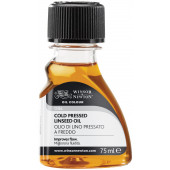
Winsor & Newton Cold Pressed Linseed Oil
Starting at: £9.20
From the Winsor & Newton website: A slightly yellow oil, which is extracted without the use of heat dries slightly quicker than refined linseed oil. Improves flow. Increases gloss & transparency. Reduces consistency and brushstrokes. Ideal for grinding pigments. Learn More -
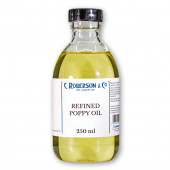
Roberson Poppy Oil
Starting at: £10.20
Poppy Oil is a slightly later addition to the artist's cabinet than Linseed Oil and Walnut Oil. It is generally used as a binder for pale colours, where the warmth of Linseed Oil is not desired. It provides a matte finish and dries very slowly, so we would not advise using it in conjunction with slow-drying pigments or in underpaintings. A paint film produced by Poppy Oil is weaker and softer than that created by Linseed Oil. This is because it contains a smaller percentage of linolenic acid than Linseed Oil; this substance imparts both strength and yellowness to an oil.
Although some of these properties can be perceived as drawbacks, paints made with Poppy Oil generally obtain a "short" or buttery texture without the addition of waxes or other additives, which can be an advantage for certain colours that produce poor consistencies in Linseed oil alone. Sometimes, the addition of a small quantity of Poppy Oil when grinding a tricky or "stringy" pigment in Cold Pressed Linseed Oil can introduce some of benefits of Poppy Oil, without transmitting its negative characteristics.
Paints made with Poppy Oil are particularly suited to "alla prima" working methods, where paint is applied spontaneously. When working in successive layers, Poppy Oil would only be appropriate for the final stages of a painting.
Learn More -
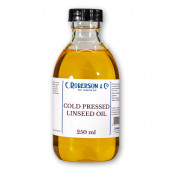
Roberson Cold Pressed Linseed Oil
Starting at: £7.50
Linseed Oil is derived from flax seeds, and appears on our shelves in many guises: Cold Pressed, Refined, Stand Oil, and as a key ingredient in many mediums. It has been appreciated for its drying properties since the Medieval period, and has become the most popular oil used in painting today due to the strong, flexible and glossy film that it creates. Cold Pressed Linseed Oil is ideal for the grinding of pigment to make oil paints. The process of producing Cold Pressed Linseed Oil results in a lower yield, but the resultant oil is of a superior quality to oil that has been extracted by other methods, creating a paint film that is more resistant to embrittlement on aging. Its yellow colour is caused by the high concentration of linolenic acid, the presence of which provides durability to the paint film. The amount of oil that each pigment requires can vary enormously. Alizarin Crimson, for example, requires a high percentage of oil compared to most other colours. We would always recommend mulling the pigment and oil together thoroughly to create a "short" or buttery paste, with evenly dispersed, well-coated pigment particles. This process contributes to the strength and flexibility of the paint film, and prevents the inclusion of excess oil. Origin: USA Learn More -
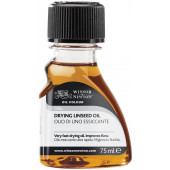
Winsor & Newton Drying Linseed Oil
Starting at: £9.20
From the Winsor & Newton website: Darker than refined Linseed Oil, this oil promotes the fastest drying rate of all the oils, whilst increasing gloss. Improves flow. Increases gloss transparency. Add to other oils to speed drying.
Learn More -
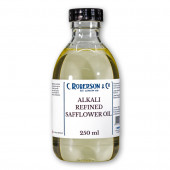
Roberson Safflower Oil
Starting at: £7.70
Safflower Oil is light-coloured, making it suitable for grinding pale pigments. It is still sometimes used as a binder for commercially available paints, although due to its very slow drying time it is best reserved for the final layers of a painting. Compared to Linseed oil, Safflower Oil will give a matte finish.
Learn More -
da Vinci Brush Sleeves
£5.20Brush sleeves are the perfect sundry item to help keep your brushes in perfect condition. Simply pull the sleeve up from from the base of the base of the brush and slide over the brush fibres. Two different sizes are included to accommodate a range of brush shapes. Keep sleeves clean for best protection and longevity. Learn More
-
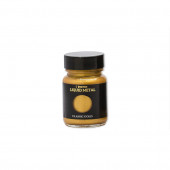
Roberson Liquid Metal 1Ltr
Starting at: £60.30
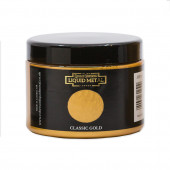
Roberson Liquid Metal 1Ltr. Roberson Liquid Metals have a rich deep colour, ideal for a wide range of applications including plaster, wood, paper & canvas. The Liquid Metal range does not tarnish and does not need to be varnished. All colours are intermixable and wash up with water. The Liquid Metal range does not tarnish and does not need to be varnished. All colours are intermixable and wash up with water. Coverage is approximately 7 square metres per litre. Two coats are required for most applications but if applied to walls or ceilings with a roller or a brush then three or four coats are recommended. Because of the highly reflective nature of the metallic paint when applying with a roller to a large area apply the paint evenly in long vertical strokes, finishing off the surface by rolling or brushing in one direction, i.e ceiling to floor. This will help to minimise overlapping and create a smooth and even finish. We recommend the use of a professional quality foam roller in order to achieve the best possible finish. When applying with a roller to a large area, apply the paint evenly in long vertical strokes. Finish off the surface by rolling one direction, i.e. ceiling to floor. This will help minimise overlapping and create a smooth, even finish. These paints can also be sprayed and this will produce the best and most consistent finish. To spray Liquid Metal Acrylics, you will need to use HVLP spray equipment with a 1.6mm or 1.8mm nozzle. To ensure proper flow, paint can be thinned with 25-30% water. Learn More -
Schmincke Drying Accelerator for Oils
Starting at: £8.55
From the Schmincke website:
Jelly-like medium for accelerating the drying of oil colours. Preserves consistency and degree of gloss. Dosage: 10% to 30% maximum. Contains: Siccative, stand oil, resin solution, mineral spirit.
Learn More -
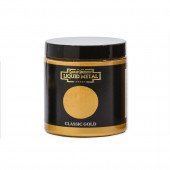
Japanese Gold & Precious Metal Powder
Starting at: £25.00
Premium quality, extra fine genuine gold precious metal powders handcrafted in Japan by experienced craftsmen, all 1 gram in weight. By crushing gold leaves finely and mixing them with melted glue, a paste is obtained, broken into pieces and transformed into powder, called « Kindei » Gold Powder. First, the 0,2 micron gold leaves are crushed into 3 microns pieces. Afterwards, the glue is washed out with water and dried. The powder obtained is as smooth and fine as flour.
Learn More -
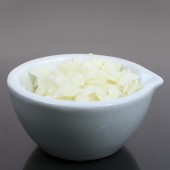
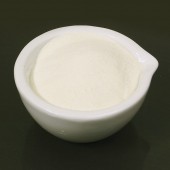
Bleached Beeswax
Starting at: £12.30
Beeswax is derived from melted honeycomb, and is available in two grades. Bleached Beeswax Pellets are white, having been bleached by the sun, and are an appropriate choice for using with pale colours, although they may revert to yellow over time. Natural Beeswax Pellets are yellow in colour, and offer a more flexible structure with a higher resin content. Beeswax has a melting point of 63-66°c, and may turn brown if over-heated. It is the most widely used wax in artists' materials, having a wide range of applications. Please see below for more details.
Learn More -
Roberson Liquid Metal 250ml
Starting at: £18.90
Roberson Liquid Metals have a rich deep colour, ideal for a wide range of applications including plaster, wood, paper & canvas. The Liquid Metal range does not tarnish and does not need to be varnished. All colours are intermixable and wash up with water. The Liquid Metal range does not tarnish and does not need to be varnished. All colours are intermixable and wash up with water. Coverage is approximately 7 square metres per litre. Two coats are required for most applications but if applied to walls or ceilings with a roller or a brush then three or four coats are recommended. Because of the highly reflective nature of the metallic paint when applying with a roller to a large area apply the paint evenly in long vertical strokes, finishing off the surface by rolling or brushing in one direction, i.e ceiling to floor. This will help to minimise overlapping and create a smooth and even finish. We recommend the use of a professional quality foam roller in order to achieve the best possible finish. When applying with a roller to a large area, apply the paint evenly in long vertical strokes. Finish off the surface by rolling one direction, i.e. ceiling to floor. This will help minimise overlapping and create a smooth, even finish. These paints can also be sprayed and this will produce the best and most consistent finish. To spray Liquid Metal Acrylics, you will need to use HVLP spray equipment with a 1.6mm or 1.8mm nozzle. To ensure proper flow, paint can be thinned with 25-30% water. Learn More -
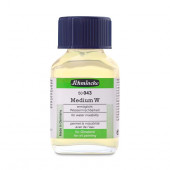
Schmincke Medium W
Starting at: £10.80
Schmincke Medium W is an odourless, jelly-like ("lean") medium for mixing oil colours with water instead of organic solvents such as turpentine or turpentine substitute. It increases gloss and transparency, reduces viscosity and harmonizes the drying process.
Dosage: 50%
Thinner: Water
Learn More -
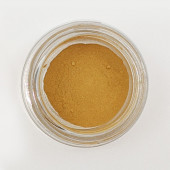
German Gold Powder 1 gram
Starting at: £47.00
Handcrafted, extra fine, genuine precious metal powders in a range of shades, all 1 gram in weight. These powders are produced using thin gold, silver and other precious metal leaf. A complex, manual process is undertaken to achieve the extremely fine-grained particle size of this extra fine powder.
Learn More -
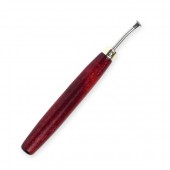
Lyons Angled-Shaft Irregular Roulette Wheel
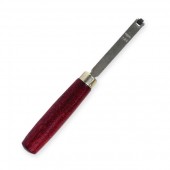
£72.00Made of high-carbon tool-steel, Lyons irregular roulette wheels produce a pebbled effect when rolled over a metal plate, enabling the printmaker to add texture and shading to their image. Total length: 12.5 cm. Learn More -
Casein Lactic
Starting at: £17.80
Casein is a protein derived from dried milk, which has been used in painting since ancient times. It can be combined with Ammonium Carbonate to form an emulsion, which acts as a durable, non-resoluble binder for pigments, producing a matte, fast-drying paint, similar in appearance to egg tempera. We use casein as a binder for our L. Cornelissen & Son Pigment Colour Charts, as it is a medium that clearly showcases the characteristics and behaviour of each pigment in its pure form. Casein paints can be applied in thin layers to watercolour paper, but would require a more rigid support, such as a gesso panel, to be applied thickly, as the comparative inflexibility of the paint layer means that it can be prone to cracking. Subsequent layers of paint should be more diluted to aid adhesion, and impasto effects are not recommended. It is possible to varnish casein paintings using an acrylic or damar varnish to obtain a glossy surface if desired, although this is not a necessary step. Casein can also be used as an ingredient in gesso, and is a suitable binder for fresco secco techniques.
Some pigments may require a wetting agent in order to fully disperse within the binder, in which case alcohol may be used.
Learn More -
Lyons Angled-Shaft Roulette Wheels
Starting at: £40.00
Made of high-carbon tool-steel, Lyons roulettes produce regular line or dot patterns on metal plates, enabling the printmaker to add texture and shading to their image. The higher the number, the denser the lines or dots will be: 45 (coarse), 85 (medium), 100 (fine) and 120 (extra fine). Total length: 12.5 cm. Learn More -
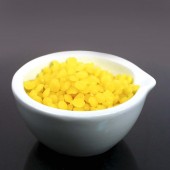
Natural Beeswax
Starting at: £11.20
Beeswax is derived from melted honeycomb, and is available in two grades. Bleached Beeswax Pellets are white, having been bleached by the sun, and are an appropriate choice for using with pale colours, although they may revert to yellow over time. Natural Beeswax Pellets are yellow in colour, and offer a more flexible structure with a higher resin content. Beeswax has a melting point of 63-66°c, and may turn brown if over-heated. It is the most widely used wax in artists' materials, having a wide range of applications. Please see below for more details.
Learn More -
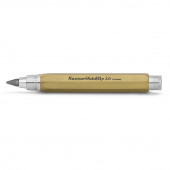
Kaweco Clutch Pencils, 5.6mm Lead
Starting at: £5.00
Kaweco Sketch Ups are solid, chunky clutch pencils made of octagonal, solid, untreated CNC-machined brass, also available with satin or chrome plating. It will age and develop its own unique patina over time unless polished. A push button on the top is used to advance or retract the 5.6mm lead. The push button also unscrews to reveal a lead sharpener inside. The Kaweco Sketch Up comes in a nostalgic Kaweco gift tin. Learn More -
Japanese Coloured Sumi Ink
Starting at: £10.00
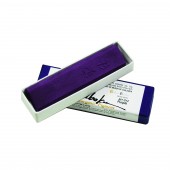
Japanese Coloured Sumi Ink. These coloured sumi inks create vivid shades that can be mixed and used with black sumi stick inks. It is recommended that they be ground using a white grinding stone as opposed to the traditional grey stone. Learn More -
Roberson Liquid Metal 500ml
Starting at: £34.20
Roberson Liquid Metals have a rich deep colour, ideal for a wide range of applications including plaster, wood, paper & canvas. The Liquid Metal range does not tarnish and does not need to be varnished. All colours are intermixable and wash up with water. The Liquid Metal range does not tarnish and does not need to be varnished. All colours are intermixable and wash up with water. Coverage is approximately 7 square metres per litre. Two coats are required for most applications but if applied to walls or ceilings with a roller or a brush then three or four coats are recommended. Because of the highly reflective nature of the metallic paint when applying with a roller to a large area apply the paint evenly in long vertical strokes, finishing off the surface by rolling or brushing in one direction, i.e ceiling to floor. This will help to minimise overlapping and create a smooth and even finish. We recommend the use of a professional quality foam roller in order to achieve the best possible finish. When applying with a roller to a large area, apply the paint evenly in long vertical strokes. Finish off the surface by rolling one direction, i.e. ceiling to floor. This will help minimise overlapping and create a smooth, even finish. These paints can also be sprayed and this will produce the best and most consistent finish. To spray Liquid Metal Acrylics, you will need to use HVLP spray equipment with a 1.6mm or 1.8mm nozzle. To ensure proper flow, paint can be thinned with 25-30% water. This range of paints is suitable for exterior use but must be applied on a dry day as acrylics take longer to dry out completely than oil-based paints. Once dry the paints cure and are hardwearing. Learn More -
Pfeil Arkansas Stone Set of 4
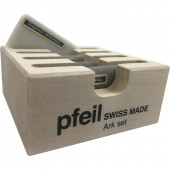
£65.00Pfeil's Arkansas Sharpening Stones are made for honing cutting edges such as lino and wood cutting tools and etching tools. Genuine Arkansas stones are among the hardest and finest of honing stones. Use with special light honing oil. Each stone measures 65mm x 25mm x 8mm, with a grit rating of circa 8,000. Learn More -
Gum Damar
Starting at: £10.00
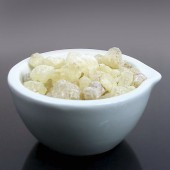
Damar is a pale, almost colourless tree resin, which is soluble in turpentine, but not in alcohol or mineral spirits. It can be used as a varnish or as a glossy painting medium in conjunction with vegetable oils, and is generally preferable to other resin-based varnishes, such as mastic varnish, as it retains its colourless appearance for a longer period of time. In encaustic painting, the inclusion of damar resin imparts toughness and gloss to the paint surface. Learn More -
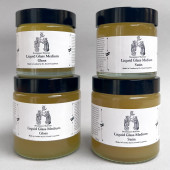
Liquid Glass Mediums
Starting at: £32.00
Renaissance Materials by Dr. David Cranswick.
A thick glazing medium of the 'Old Masters'. Liquid Glass Mediums facilitate building up layers of transparent glaze. Gloss or Satin. Contains: Damar resin, linseed oil and beeswax (for Satin medium only)
Avoid applying a final varnish. The medium can be used as a varnish.
-
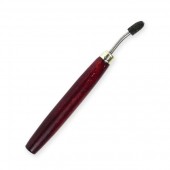
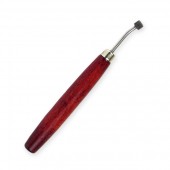
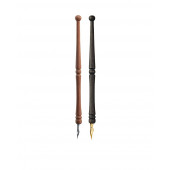
Antique Nib Holder
Starting at: £15.10
Antique style nib holder made of stained wood. 20cm in length. The mahogany holder includes a nickel plated nib and the black holder includes a gold nib. Learn More