
Pigments, Gums, Resins


-
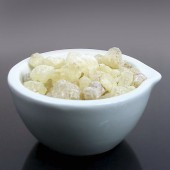
Gum Damar
Starting at: £10.00
Damar is a pale, almost colourless tree resin, which is soluble in turpentine, but not in alcohol or mineral spirits. It can be used as a varnish or as a glossy painting medium in conjunction with vegetable oils, and is generally preferable to other resin-based varnishes, such as mastic varnish, as it retains its colourless appearance for a longer period of time. In encaustic painting, the inclusion of damar resin imparts toughness and gloss to the paint surface. Learn More -
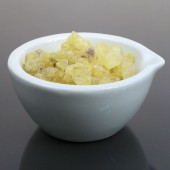
Gum Mastic
Starting at: £20.30
Call to Order
Gum Mastic is a tree resin, which dissolves into a clear varnish with alcohol or turpentine, but not with mineral spirits. Mastic varnishes are more prone to blooming and darkening with age than damar-based varnishes, and painting mediums that contain gum mastic can deteriorate in unpredictable ways. For this reason, it is primarily used in restoration, rather than in the production of artwork. Learn More -
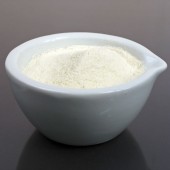
Gum Sandarac
Starting at: £8.60
Gum Sandarac, derived from a coniferous tree, is available in powdered or lump form. It can be dissolved in alcohol to create a varnish that is suitable as an isolating layer in oil painting and as a traditional top coat for egg tempera. It forms a brittle layer, so is only suitable for use on a rigid support. Another application is as a surface preparation for calligraphy; the ground gum can be dusted across a piece of prepared vellum or paper to create a resist, which shrinks ink strokes slightly, making them appear finer, with crisp edges. Learn More -
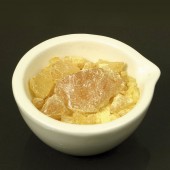
Colophony
Starting at: £7.30
Colophony is a by-product of the distillation of turpentine. It is soluble in most solvents, but considered an adulterant in varnishes and paints, as it forms a weak surface that is prone to darkening and cracking. It is, however, a key ingredient in wax-based etching grounds, imparting hardness, and can be used in powdered form (rosin) to make aquatints. Learn More -
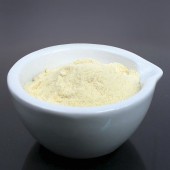
Powdered Rosin
Starting at: £13.90
Rosin is the powdered form of colophony, which is a by-product of the distillation of turpentine. Its primary application is to create tonal areas on metal plates as an aquatint resist. It is also an additive in etching grounds, where it gives a hard surface to the otherwise soft wax. Learn More -
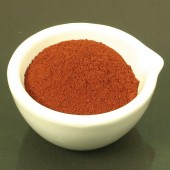
Dragon's Blood Powder
Starting at: £28.10
Dragon's Blood is a natural, resin, mentioned by Pliny in his Natural History. It has a weak tinting strength, and its rich red-colour can be fugitive in direct sunlight. It is fully soluble in alcohol, and can be used to add a warm, transparent tone to spirit varnishes. Also available in lump form.
Learn More -
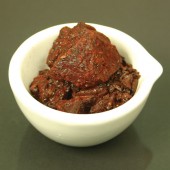
Dragon's Blood Pieces
Starting at: £25.40
Dragon's Blood is a natural, resin, mentioned by Pliny in his Natural History. It has a weak tinting strength, and its rich red colour can be fugitive in direct sunlight. It is fully soluble in alcohol, and can be used to add a warm, transparent tone to spirit varnishes. Also available in powdered form.
Learn More -
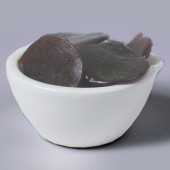
Button Shellac
Starting at: £8.40
Shellac is a natural resin that is deposited by the female lac insect on the branches of trees in India and Thailand. It is soluble with alcohol, but not with mineral spirits or turpentine. It forms a tough yet flexible film, with many applications. It is suitable as a top coat for gilding when applied thinly, a sealant for porous surfaces, an isolating layer for tempera paintings, a base for pigmented inks, a protective layer for collograph plates, and a warm varnish for wooden floors and furniture. As it is prone to darkening with age, it is not recommended as a varnish for oils, and its solubility can reduce over time. There are various grades of shellac. When mixed with alcohol, it may initially form a cloudy mixture, due to traces of wax in the shellac, but this should become clear once it has dried. The highest grades of shellac are Clear Dewaxed Shellac, which has been de-coloured using the carbon filtering method, Lemon Shellac, and Orange Shellac, which are pale in colour. Button Shellac is less refined and therefore produces a reddish varnish. It was, in fact, widely used as a red dye before synthetic dyes became available. Learn More -
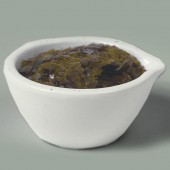
Clear Dewaxed Shellac
Starting at: £9.20
Shellac is a natural resin that is deposited by the female lac insect on the branches of trees in India and Thailand. It is soluble with alcohol, but not with mineral spirits or turpentine. It forms a tough yet flexible film, with many applications. It is suitable as a top coat for gilding when applied thinly, a sealant for porous surfaces, an isolating layer for tempera paintings, a base for pigmented inks, a protective layer for collograph plates, and a warm varnish for wooden floors and furniture. As it is prone to darkening with age, it is not recommended as a varnish for oils, and its solubility can reduce over time. There are various grades of shellac. When mixed with alcohol, it may initially form a cloudy mixture, due to traces of wax in the shellac, but this should become clear once it has dried. The highest grades of shellac are Clear Dewaxed Shellac, which has been de-coloured using the carbon filtering method, Lemon Shellac, and Orange Shellac, which are pale in colour. Button Shellac is less refined and therefore produces a reddish varnish. It was, in fact, widely used as a red dye before synthetic dyes became available. Learn More -
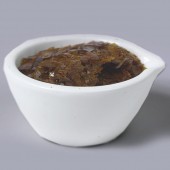
Lemon Shellac
Starting at: £8.20
Shellac is a natural resin that is deposited by the female lac insect on the branches of trees in India and Thailand. It is soluble with alcohol, but not with mineral spirits or turpentine. It forms a tough yet flexible film, with many applications. It is suitable as a top coat for gilding when applied thinly, a sealant for porous surfaces, an isolating layer for tempera paintings, a base for pigmented inks, a protective layer for collograph plates, and a warm varnish for wooden floors and furniture. As it is prone to darkening with age, it is not recommended as a varnish for oils, and its solubility can reduce over time. There are various grades of shellac. When mixed with alcohol, it may initially form a cloudy mixture, due to traces of wax in the shellac, but this should become clear once it has dried. The highest grades of shellac are Clear Dewaxed Shellac, which has been de-coloured using the carbon filtering method, Lemon Shellac, and Orange Shellac, which are pale in colour. Button Shellac is less refined and therefore produces a reddish varnish. It was, in fact, widely used as a red dye before synthetic dyes became available. Learn More -
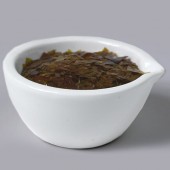
Orange Shellac
Starting at: £8.00
Shellac is a natural resin that is deposited by the female lac insect on the branches of trees in India and Thailand. It is soluble with alcohol, but not with mineral spirits or turpentine. It forms a tough yet flexible film, with many applications. It is suitable as a top coat for gilding when applied thinly, a sealant for porous surfaces, an isolating layer for tempera paintings, a base for pigmented inks, a protective layer for collograph plates, and a warm varnish for wooden floors and furniture. As it is prone to darkening with age, it is not recommended as a varnish for oils, and its solubility can reduce over time. There are various grades of shellac. When mixed with alcohol, it may initially form a cloudy mixture, due to traces of wax in the shellac, but this should become clear once it has dried. The highest grades of shellac are Clear Dewaxed Shellac, which has been de-coloured using the carbon filtering method, Lemon Shellac, and Orange Shellac, which are pale in colour. Button Shellac is less refined and therefore produces a reddish varnish. It was, in fact, widely used as a red dye before synthetic dyes became available. Learn More -
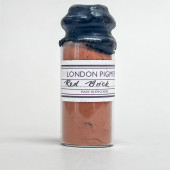
London Pigment, London Red Brick
£18.00Call to Order
Made from pulverised historic London bricks collected from the foreshore of the Thames near Tower Bridge and Wapping this deep red pigment is essentially a variety of red ochre. During the Victorian era, London Clay was dug up and fired on construction sites to produce the building materials for the city. Red brick pigment has a medium grain size and is opaque. ****Please note, these pigments are artisan made in small batches. Please email info@cornelissen.com for availability**** Learn More
-
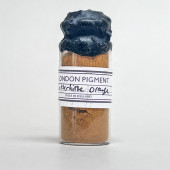
London Pigment, Rotherhithe Orange Pigment
£20.00Call to Order
This unique colour is an intense orange oxide that is made from the decay of Victorian pipes mixing with the chalk bed of the infilled docks at Rotherhithe, in south east London. Rotherhithe has a long history as a port, with many shipyards from Elizabethan times until the early 20th century and with working docks until the 1970s, when they began to be infilled due to a decline in imports to Central London. With a fine particle size and transparent quality this pigment would be great for glazing techniques.
Follow @londonpigment on Instagram for an insight into the stories behind the colours and how she makes them.
****Please note, these pigments are artisan made in small batches. Please email info@cornelissen.com for availability**** Learn More -
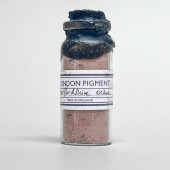
London Pigment, Herefordshire Ochre Pigment
£20.00Call to Order
This colour comes in a 20 ml glass vial with hand finished wax seal and label. ****Please note, these pigments are artisan made in small batches. Please email info@cornelissen.com for availability**** Learn More -
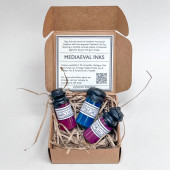
London Pigment, Medieval Inks Set, 1
£35.00Call to Order
Verdigris Ink Purple Madder and Lac Ink Purple Lac Ink Learn More -
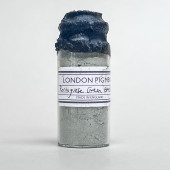
London Pigment, Portuguese Green Earth Pigment
£20.00Call to Order
This pigment comes in a 20 ml glass vial with hand finished wax seal and label. ****Please note, these pigments are artisan made in small batches. Please email info@cornelissen.com for availability**** Learn More -
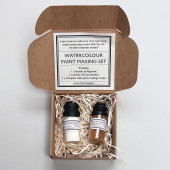
London Pigment, Watercolour Paint Making Set
£35.00Call to Order
This watercolour paint making set includes a 30ml glass vial of gum Arabic crystals and another of Hampstead Orange, a pigment rich in iron oxide. A pamphlet detailing a a watercolour recipe and an introduction to London pigment is also included. The perfect gift for artists getting into making their own art materials or those interested in handmade British earth colours. The pigment itself has a fine to medium grain size and has been washed, levigated and ground to create a stable high quality artist’s pigment.
Learn More -
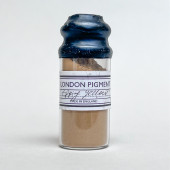
London Pigment, Epping Forest Yellow Ochre Pigment
£18.00Call to Order
This soft yellow ochre is sourced from near the ancient woodland of Epping Forest in North London. Given legal status by Henry ll as a Royal hunting ground for the Monarchy this forest has a rich cultural and geological history. This pigment is a fine particle size and is semi-opaque.
Follow @londonpigment on Instagram for an insight into the stories behind the colours and how she makes them.
****Please note, these pigments are artisan made in small batches. Please email info@cornelissen.com for availability**** Learn More
-
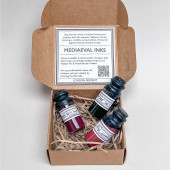
London Pigment, Medieval Inks Set, 2
£35.00Call to Order
Purple and Brown Madder Ink Orange Madder Ink Oak Gall Ink Learn More -
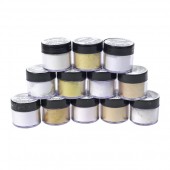
Pearl Lustre Pigments 7g
Starting at: £4.70
Pearl Lustre Pigments 7g. Colour swatch on the left indicates colour on a White Background and Colour on a Black Background on the right. Learn More -
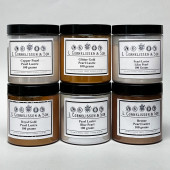
Cornelissen Pearl Lustre Pigments 100g
Starting at: £12.90
Pearl Lustre Pigments 100g. Colour swatch on the left indicates colour on a White Background and Colour on a Black Background on the right. Learn More -
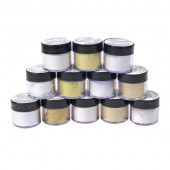
Pearl Lustre Pigments 1 kg
Starting at: £94.00
Call to Order
Pearl Lustre Pigments 1 kg. Colour swatch on the left indicates colour on a White Background and Colour on a Black Background on the right. Learn More -
-
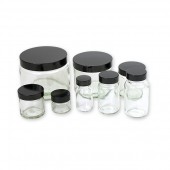
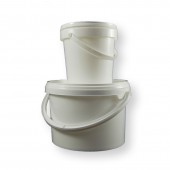
Squat & Powder Jars
Starting at: £0.75
Squat and Powder Jars in glass and plastic. *Please note, our glass jars are fragile, although they are packed very carefully we cannot guarantee they will arrive safely. Cases of jars are stored offsite, please allow extra time for your order to be processed and dispatched. Learn More -
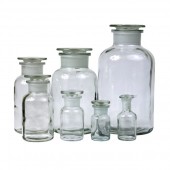
Reagent Jar
Starting at: £6.50
Our clear reagent bottles are manufactured in the EU and are made of high quality soda lime glass. They have a solid base and good wall thickness.
Learn More -
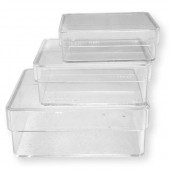
Transparent Containers
Starting at: £1.20
Rigid high quality boxes manufactured in clear Polystyrene. Medium and large sizes are ideal for storing loose nibs. Learn More -
-
-
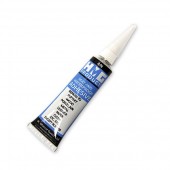
HMG Acrylic Restoration Adhesive
£6.00HMG Acrylic Restoration Adhesive. Heat and waterproof adhesive for repairs to pottery, wood, porcelain, leather etc. Not suitable for use on rubber. 14ml. Learn More -
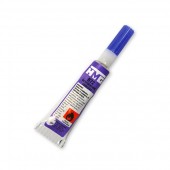
HMG B72 Restoration Adhesive
£7.70Call to Order
B72 Acrylic Adhesive is touch dry in 3-5 minutes, surface dry in 1 hour and hard dry in around 6 hours. Not having instant grab, fragments can be easily re-adjusted and surplus adhesive removed with acetone, making any joint virtually invisible. It’s ideal for repairs to pottery, wood, metal, glass, ivory and many porous substances. 14ml. Learn More
You have no items in your shopping basket.